.png?width=200&height=78&name=LR_Logo_vector_horizontal_color_shadow%20(1).png)

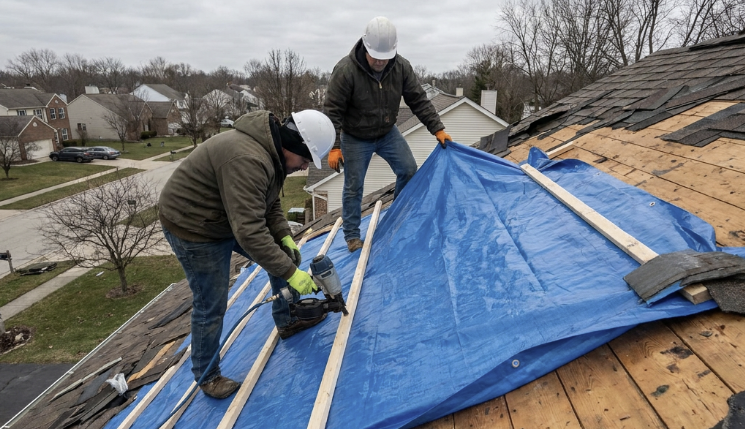
Emergency roof tarping is the fastest way to stop water from getting into your home after a storm, fallen tree, or sudden roof failure, and it typically costs between $200 and $1,500 depending on roof size and damage severity. Along the Grand Strand, where hurricane season runs nearly half the year, that window between damage and a proper tarp install is often measured in hours. A few hours of rain through an unprotected gap can soak insulation, warp sheathing, and turn a $400 fix into a $4,000 repair.
That kind of response starts with being available the moment homeowners need it: Linta Roofing answers roof emergencies 24/7. Emergency response, the insurance claim and the permanent repair are all handled by Linta, and the damage assessment is free.
Table of Contents
- How Much Does Emergency Roof Tarping Cost in 2026
- The Emergency Roof Tarping Process
- What Makes a Roof Tarp Actually Heavy-Duty
- When Do You Actually Need Emergency Roof Tarping
- Does Homeowners Insurance Cover Emergency Roof Tarping
- Ready to Protect Your Roof? We're Here When You Need Us
- Frequently Asked Questions
How Much Does Emergency Roof Tarping Cost in 2026
Labor drives most of the cost. Contractors typically charge $75-$150 per hour, and a small job takes two people about 90 minutes. A branch puncture on a single-story home costs far less than tarping a large storm-stripped section on a steep two-story roof.
|
Damage Size |
Area Covered |
Typical Price Range |
|
Small |
Up to 10 sq ft |
$200 - $400 |
|
Medium |
10-100 sq ft |
$400 - $800 |
|
Large |
100-300+ sq ft |
$800 - $1,500+ |
Same-day or overnight emergency response usually runs 25-40% more than next-business-day scheduling.
Watch for hidden fees before agreeing to anything: dispatch charges ($50-$150), after-hours surcharges, and rural trip fees can quietly add $200 or more to a quote. Use our instant estimate tool to get a transparent baseline before any crew arrives. In coastal South Carolina and North Carolina, post-storm demand spikes fast, get a written, itemized quote before work starts.
The Emergency Roof Tarping Process
A tarp that isn't properly fastened will fail in the next windstorm, so how it's installed matters as much as the decision to tarp in the first place. If your roof has already taken a hit, LintaRoofing's storm damage assistance covers emergency response across the Grand Strand. Here's how a proper install works.
A crew starts by clearing loose debris: broken shingles, branches, and cracked decking. The tarp is then sized with at least 4 feet of overhang on all sides of the breach, and secured with 2x4 wooden battens fastened directly into the roof deck using ring-shank nails, per NRCA guidelines. Battens distribute tension across the surface so wind can't peel the tarp back at its edges, something sandbags and staples simply can't do.
Whenever possible, the tarp runs over the ridge of the roof. Skipping the ridge is the most common installation error on rushed jobs, since a tarp that stops short funnels water straight into the opening it was meant to protect. That step gets missed most often when crews are under pressure right after a major storm moves through Horry or Brunswick County.
Most crews finish by applying roofing mastic along the tarp perimeter where it overlaps intact shingles. That seal prevents wind-driven rain from tracking under the edges on installs that need to hold for weeks. Once the tarp is secure, a professional roof repair assessment will define the scope of permanent work needed.
What Makes a Roof Tarp Actually Heavy-Duty
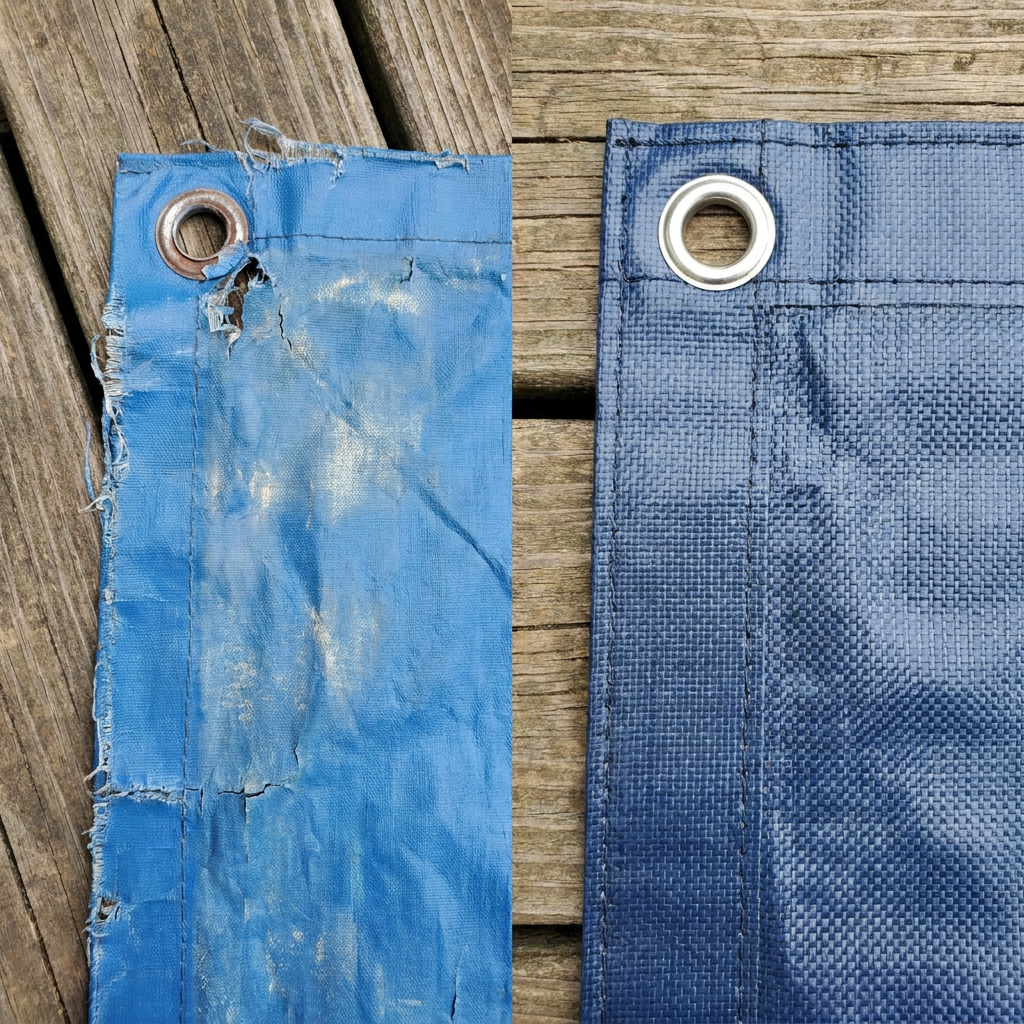
A standard blue 6-mil polyethylene tarp from a hardware store will hold for only a few days in dry weather. After about 10 days of UV exposure and wind flutter, conditions the Carolina coast delivers routinely, the material degrades at the grommets and along fold lines. Those seams open up, and you're back to an unprotected roof, often without realizing it until there's water in the ceiling.
For jobs that need to hold two to six weeks, use a 10-12 mil woven poly tarp instead. Reinforced grommets and cross-woven scrim layers resist tearing at the fastening points, which is where failures almost always start. For serious damage or extended exposure, polyethylene-coated canvas tarps offer more durability under sustained wind and rain.
The price difference between a 6-mil and a 10-mil tarp is roughly $30 on a standard residential job. Skip the 6-mil unless it's an overnight patch while you wait for better material.
When Do You Actually Need Emergency Roof Tarping
You need emergency tarping any time there's an active or imminent risk of water intrusion: visible holes or missing sections after a storm, a tree impact that's displaced decking, or a flashing failure letting water track into the attic.
If rain is forecast within 48 hours and you have exposed roof deck, tarp it. Waiting to see if it leaks is how drywall and insulation replacement get added to the bill.
A missing shingle or two in dry weather can wait for a scheduled roof inspection rather than an emergency call. Everything else is an emergency.
Does Homeowners Insurance Cover Emergency Roof Tarping
In most cases, yes. Emergency tarping qualifies as a protective measure under standard homeowners policies and is covered under dwelling coverage when the underlying damage, storm, wind, falling object, is a covered peril, which is why understanding your roof insurance claim options before a storm hits is worth the time.
The most common mistake homeowners make is documenting the damage after the tarp goes up. Once the breach is covered, photos may not clearly show the original damage, and adjusters have grounds to dispute the claim. Photograph everything before the crew starts, and consider scheduling a professional roof inspection to create a formal pre-repair damage record your insurer can reference.
File the tarp cost as part of your overall claim, not as a separate request. Confirm with your adjuster that protective measures are covered before work begins. Some insurers require emergency tarping, failing to protect the roof and allowing further water damage can be treated as negligence that reduces your payout.
Our project managers at Linta roofing are trained to HAAG forensic engineering standards, meaning damage is documented in the format insurers actually accept. That documentation often makes the difference between a smooth claim and a disputed one.
Ready to Protect Your Roof? We're Here When You Need Us
After major storms, out-of-state crews flood the Grand Strand. They install fast, charge more, and disappear before anything fails, leaving you to deal with the fallout alone. That's not how we operate at Linta Roofing.
We're local, we're available for emergency response, and our project managers document every job to HAAG forensic engineering standards, so if you need to file an insurance claim, you have the paperwork to back it up. Before you hire anyone, take a look at our roofing FAQ to know what to expect and what to watch for.
If your roof needs emergency tarping, don't wait for the damage to spread. Schedule an inspection with us today, and we'll get a crew out to protect your home the right way, the first time.
Frequently Asked Questions
How much does emergency roof tarping cost?
Professional emergency roof tarping typically runs between $200 and $1,500, depending on roof size, damage extent, and how quickly you need someone on-site. After a major storm, after-hours or same-day emergency calls can push that number toward the higher end. DIY tarping with materials alone usually costs $50-$150, but that's only realistic if the damage is minor and you can safely access the roof.
When do you need emergency roof tarping?
You need emergency roof tarping any time your roof has an active or imminent water intrusion point, storm damage, missing shingles, a fallen tree branch, or visible holes, and permanent repairs can't happen immediately. The goal is to stop interior water damage from compounding while you wait for a roofing contractor. If rain is in the forecast within 24-48 hours, don't wait.
How long does a roof tarp last?
A properly installed heavy-duty poly tarp (6-10 mil) can hold up for 90 days under normal weather conditions, and some thicker tarps are rated for up to a year. That said, UV exposure, wind, and debris will degrade them faster than the spec sheet suggests, treat a tarp as a 30-90 day stopgap, not a long-term fix. Plan to have permanent repairs completed well before the tarp reaches the end of its lifespan.
Can I tarp a roof myself?
It depends on roof pitch, damage location, and your comfort level working at height on a potentially compromised surface. A low-slope roof with minor damage is manageable for a careful DIYer with the right materials; a steep pitch or structurally weakened deck is not. When in doubt, the cost of a professional emergency roof tarping service is far less than an ER visit.
