.png?width=200&height=78&name=LR_Logo_vector_horizontal_color_shadow%20(1).png)

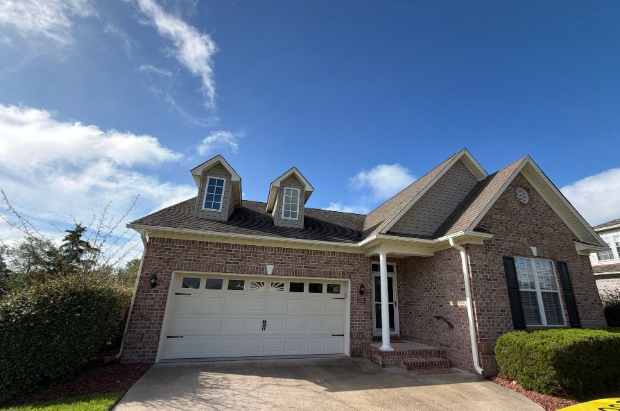
In almost every Myrtle Beach-area HOA community, yes, you need written approval from your architectural review committee before you replace your roof, even if you're matching the existing material. Your HOA's declaration sets the approved colors and materials, and most committees take 30 to 45 days to respond. Get that approval before you sign a contractor’s agreement, not after.
Here's a scenario that plays out more often than it should. A homeowner signs with a roofer, the crew shows up, the old roof comes off, and a new one goes on in a day or two. Then a letter arrives from the architectural review committee. The shingle color doesn't match the approved list, and the homeowner is told to replace it, at their own expense, before the fine clock starts running.
None of that had to happen. It happened because the HOA step came after the work instead of before it. If you live in an HOA community anywhere from Little River to Pawleys Island, your association has more say over your new roof than you might expect.
Linta Roofing has handled roof replacement across the Grand Strand since 1948, and HOA coordination has become a routine part of that work. This guide walks through exactly how the approval process works, what your committee will ask for, and how to get a yes on the first try.
Table of Content
- Does Your HOA Have to Approve a Roof Replacement?
- Where Do You Find Your Community's Roofing Rules?
- What Colors and Materials Will Your HOA Actually Approve?
- What Do You Need to Submit for Approval?
- How Long Does HOA Approval Take?
- What Happens If Your HOA Denies Your Request?
- What You Need to Know About Unincorporated Communities
- What Should You Do Before You Sign a Roofing Contract?
- How Linta Roofing Handles HOA Approval For You
- Frequently Asked Questions
Does Your HOA Have to Approve a Roof Replacement?
If your property sits inside a homeowners association, the answer is almost always yes. Your HOA's Declaration of Covenants, Conditions, and Restrictions, usually just called the CC&Rs, gives the association authority over exterior changes. A roof replacement counts, even a like-for-like swap of the same shingle brand.
South Carolina's Homeowners Association Act, in effect since 2019, requires HOAs to keep their governing documents on file and accessible to homeowners. It doesn't set a specific deadline for architectural decisions, though. That timeline comes from your own community's CC&Rs, which is why the first real step isn't calling a roofer. It's finding your rulebook.
Your HOA's authority applies whether you live in a tight-knit neighborhood in Myrtle Beach proper or a larger master-planned community further inland. The review process looks similar across most of Horry and Georgetown County, but every association writes its own guidelines, and the details vary from one gate to the next.
Where Do You Find Your Community's Roofing Rules?
Start with two documents: your Declaration (CC&Rs) and your community's Design or Architectural Guidelines, if it has a separate one. Your property management company or HOA board can send you a current copy, and many communities post them in an owner portal.
Read the section on exterior modifications closely. Look specifically for:
- An approved materials and manufacturer list
- An approved color palette, sometimes tied to your home's existing exterior colors
- The application process and where to send it
- The response timeline your committee is bound to
If the guidelines feel vague or outdated, call your property manager and ask directly what shingle colors have been approved recently. A quick phone call here saves weeks later.
What Colors and Materials Will Your HOA Actually Approve?
Most Myrtle Beach-area HOAs restrict roofing to a short list of approved shingle colors, usually earth tones like weathered wood, driftwood, or charcoal, chosen to keep the community looking uniform from the street. Some communities go further and specify an approved shingle line by name.
Architectural asphalt shingles remain the most common approved category, largely because products like GAF's Timberline HDZ come in the muted, dimensional colors HOA committees tend to favor, and they're easy to color-match if you ever need a partial repair down the road. Metal roofing is gaining approval in more communities too, particularly for accent areas or in neighborhoods built for coastal wind resistance. Higher-end developments sometimes specify tile as the only approved material.
What Do You Need to Submit for Approval?
Most architectural review committees ask for the same basic package:
- A written scope of work describing the project
- The contractor's name, license number, and proof of insurance
- The specific material, manufacturer, and color you're requesting
- A color sample or spec sheet, when the committee requires one
Some associations also want a rough project timeline, especially if the work will affect shared driveways or require a dumpster on the street for more than a day or two. Check your guidelines for a formal application form. Many HOAs require one, and a request submitted without it gets sent back before anyone even reviews the shingle color.
How Long Does HOA Approval Take?
Plan for 30 to 45 days from submission to final answer. That number breaks down roughly like this:
- Application receipt and initial review: a few business days
- Committee review: two to four weeks, depending on how often the committee meets
- Board approval: another one to two weeks, since most boards only meet monthly
Some declarations include a “deemed approved” clause that treats a request as accepted if the committee misses its own deadline. Check whether yours does, but don't count on it. Submit early, ideally before hurricane season or before your existing roof is actively failing, so a slow review doesn't leave you stuck.
What Happens If Your HOA Denies Your Request?
A proper denial should be in writing and should cite the specific rule in your CC&Rs that the proposal violates. If the committee sends back a vague “not approved” with no reason, you're within your rights to ask for the specific provision.
Most denials aren't final. If your first color choice gets rejected, ask the committee what would be approved and resubmit. Architectural standards also have to be applied consistently under South Carolina law, so if a neighbor's similar project was approved and yours wasn't, that's worth raising with the board directly.
What You Need to Know About Unincorporated Communities
If you live somewhere unincorporated, like many neighborhoods around Murrells Inlet, there's no separate town-level design review sitting behind your HOA. The association's committee is the only architectural check your project goes through before the crew shows up. That makes getting your submission right the first time even more important, since there's no second review board to catch a mismatched color before it's already on your roof.
Coverage and rules can shift meaningfully block to block across the areas Linta Roofing serves, from South Carolina's Horry and Georgetown counties into Brunswick and Columbus counties in North Carolina, so treat your own community's guidelines as the final word rather than assuming a neighboring one applies.
What Should You Do Before You Sign a Roofing Contract?
- Pull your current CC&Rs and Design Guidelines.
- Confirm the approved material and color list with your property manager.
- Get a written quote from your roofer that names the exact product and color.
- Submit that quote to your architectural review committee.
- Wait for written approval before signing a contract or scheduling work.
Skipping straight to step five is what leads to the tear-off scenario at the start of this guide. It's a slower path, but it's the only one that avoids paying for the same roof twice.
Get an Instant Estimate → if you want a written quote in hand before you approach your committee.
How Linta Roofing Handles HOA Approval For You
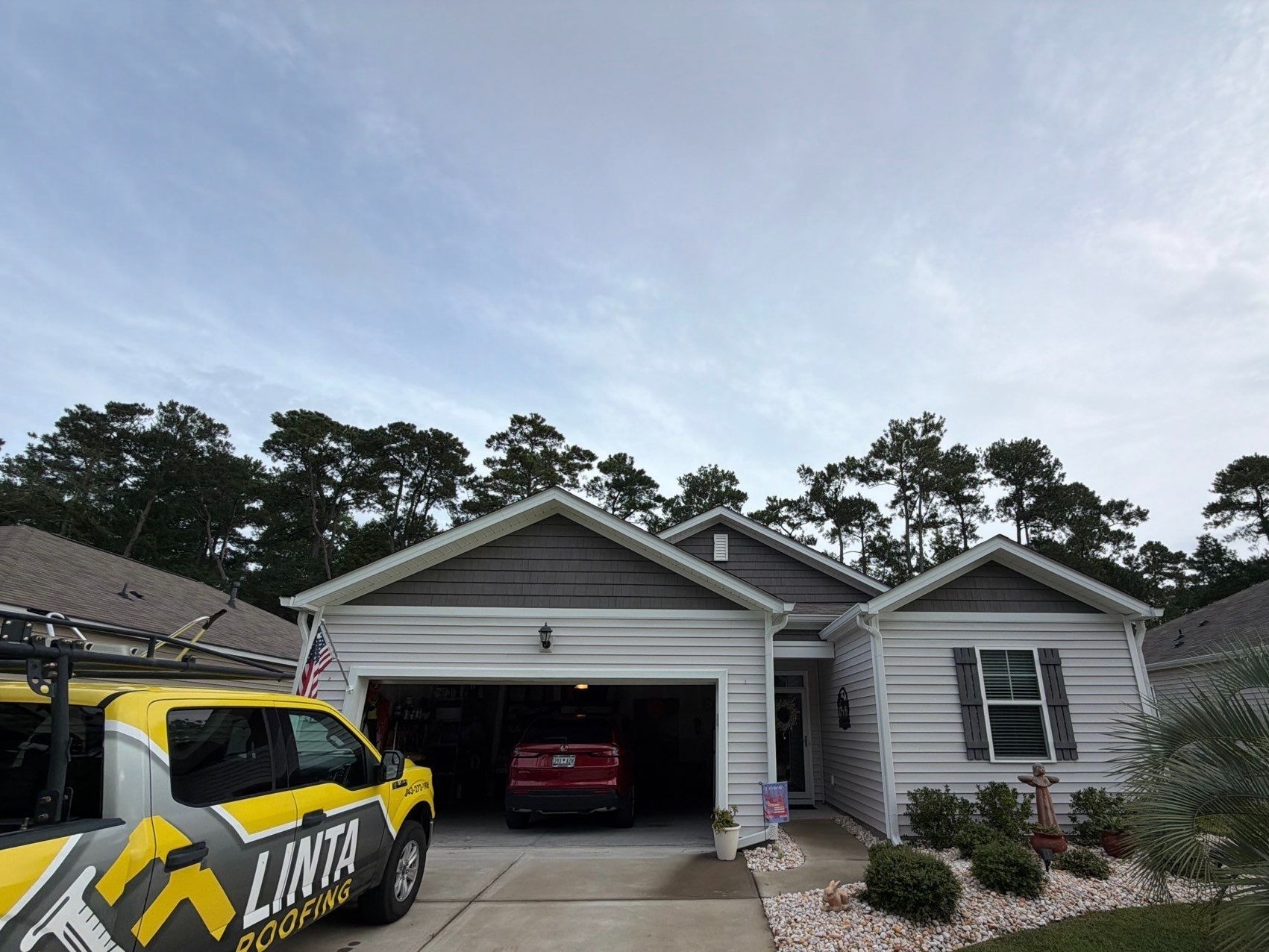 Linta Roofing builds the HOA step into the estimate process rather than treating it as an afterthought. Every quote includes a written scope of work you can hand directly to your committee, specifying the exact material, manufacturer, and color, so there's nothing left for the committee to guess at.
Because GAF Timberline HDZ shingles show up on so many approved-materials lists across the Grand Strand, they're often the easiest starting point for a first submission. If your community calls for something else, whether that's a specific metal profile or a tile pattern, the same written-quote approach applies. You can browse completed projects for a sense of what's been approved in communities like yours before you submit your own request.
Book a Free Roof Inspection to get a written scope of work started, and let your HOA and your roof move forward on the same timeline.
Frequently Asked Questions
Do I need HOA approval if I'm using the exact same shingle color as before?
Usually yes. Most CC&Rs require approval for any roof replacement, regardless of whether the new material matches the old one. Some associations waive review for an identical like-for-like replacement, but that exception should be spelled out in your guidelines, not assumed.
Does HOA approval cost anything?
Some associations charge a small application or review fee, often $25 to $100. Check your Design Guidelines or ask your property manager, since not every community charges one.
Can my HOA deny a roof replacement altogether?
An HOA can deny a specific material or color, but it generally can't deny your right to replace a roof that needs replacing. Denials should point to a specific rule your request would violate, not block the project outright.
What if my HOA never responds to my application?
Check your CC&Rs for a “deemed approved” clause, which some communities include if the committee misses its stated deadline. If yours doesn't have one, follow up in writing and keep a record of your submission date.
Do I still need approval if my roof is being replaced through an insurance claim?
Yes. Storm damage doesn't exempt the project from architectural review. Submit your insurance-approved scope of work the same way you would any other roof replacement request.
What happens if I replace my roof without HOA approval?
Your association can issue a violation notice, assess fines, and in some cases require you to redo the work in an approved material or color, entirely at your own cost. Getting approval first is almost always cheaper than fixing it after.
