.png?width=200&height=78&name=LR_Logo_vector_horizontal_color_shadow%20(1).png)

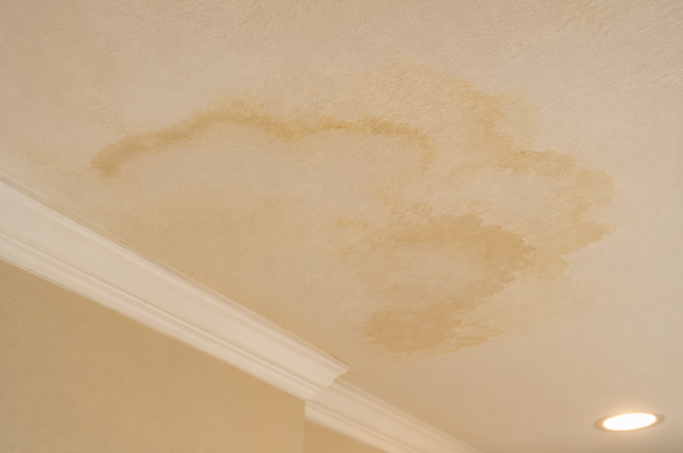
Noticed a stain on your ceiling and wondering where it's coming from?
Water rarely enters your roof and drips straight down in a clean, predictable line. It travels along rafters, insulation, and drywall before it ever shows up as a stain, so the wet spot in your living room could be several feet from the actual leak. That gap between visible damage and the real entry point is what makes roof leaks so frustrating to track down on your own.
If you cannot tell where the water is getting in, our roof leak detection service finds the entry point and gives you a written repair quote.
Here are the 7 signs to check first, and what each one usually tells you about your roof.
Table of Contents
- Water Stains on Ceilings or Walls
- Musty Odors or Mold Growth
- Missing, Cracked, or Curling Shingles
- Granules Collecting in Your Gutters
- Damaged or Lifted Flashing
- Daylight Visible in the Attic
- Sagging or Discolored Roof Decking
- What If You Can't Find the Source?
- How Linta Roofing Finds the Source of a Leak
- Frequently Asked Questions
1. Water Stains on Ceilings or Walls
Look for yellow, brown, or copper-colored patches on ceilings or upper walls. This is usually the first sign homeowners notice, and it means water has already soaked through your drywall. The stain marks where water pooled, not necessarily where it entered your roof. Note its location relative to chimneys, vents, or exterior walls. That detail helps narrow down where to look next.
2. Musty Odors or Mold Growth
A lingering musty smell in an attic, closet, or upper-floor room often means moisture is trapped somewhere out of sight. Mold and mildew grow in damp, low-airflow spaces, so a leak can be present well before any wet spot appears. Coastal humidity makes this sign easy to write off as normal. If the odor doesn't improve after you run a dehumidifier or improve airflow, treat it as a lead worth investigating.
3. Missing, Cracked, or Curling Shingles
Scan your roofline from the ground. Missing shingles leave the underlayment directly exposed to rain. Cracked or curling shingles have lost their ability to shed water, often after high winds or prolonged sun exposure. Coastal storms can lift a shingle just enough to break its seal without tearing it off completely, so a roof that looks fine from the driveway can still have a compromised spot.
4. Granules Collecting in Your Gutters
Asphalt shingles shed a small number of granules naturally over time, so a few in your gutters isn't cause for concern. A noticeable buildup, especially right after a storm, is different. It usually means the protective granule layer has worn away faster than expected, leaving the shingle underneath more exposed to water.
5. Damaged or Lifted Flashing
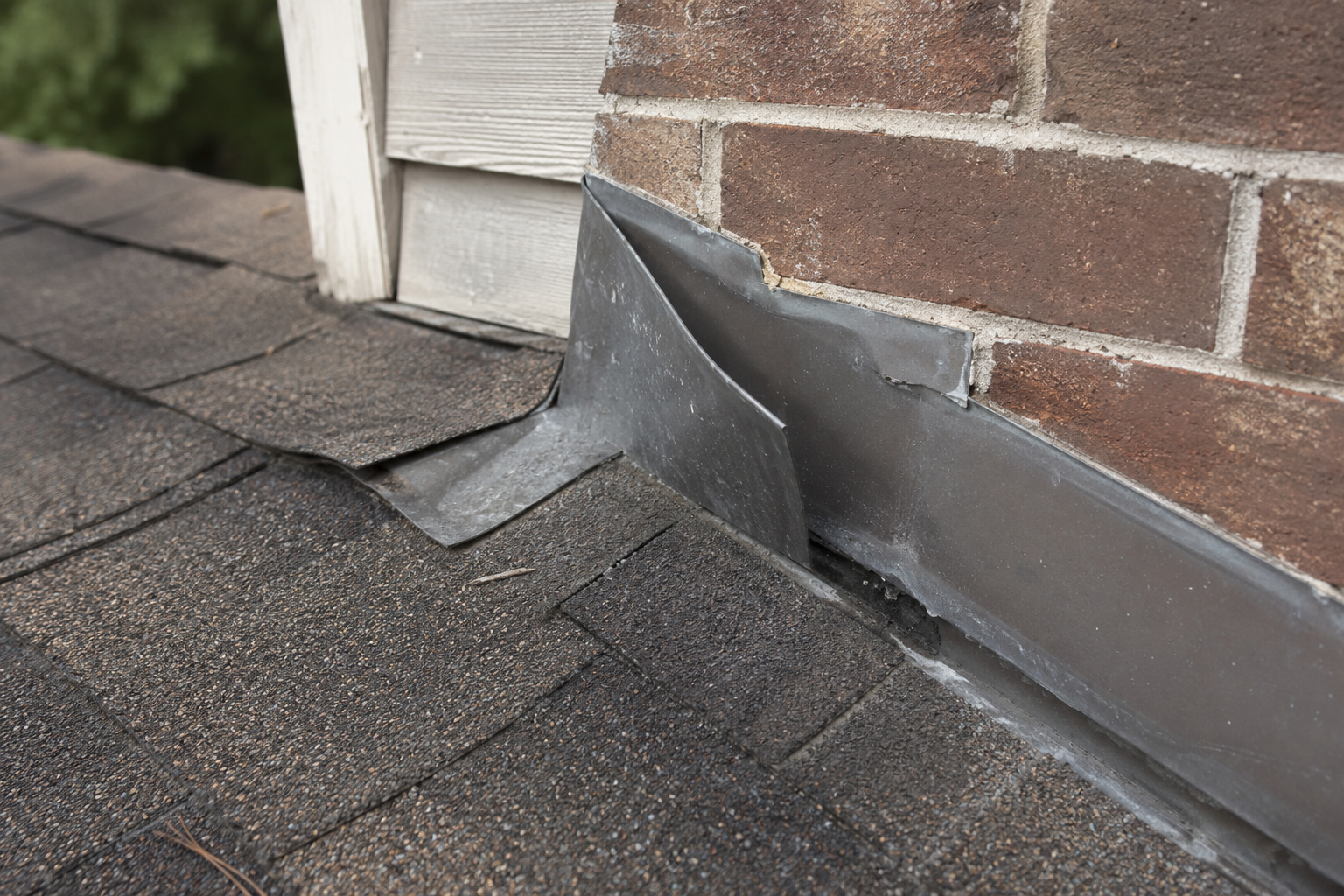
Flashing seals the seams around chimneys, skylights, vents, and roof valleys. These are some of the most leak-prone spots on any roof, which is why we walk through them in detail in our guide to the most common areas for a roof leak. Water intrusion or ceiling stains near one of these features often point to a flashing problem rather than the shingles themselves. Rust, visible gaps, or flashing that has pulled away from the roofline are all signs it may no longer be sealing properly.
6. Daylight Visible in the Attic
If you can safely access your attic, turn off the lights during the day and look up at the roof deck. Any pinpoints of light coming through mean there's a gap in the roofing materials, and that same gap is a path for water. This check works best on a clear day and gives you a fairly direct read on where a leak might be entering.
7. Sagging or Discolored Roof Decking
From inside the attic, check the wood decking and rafters for dark staining, soft spots, or visible sag. Discoloration often appears well before a leak becomes noticeable inside your living space, since water can sit against the wood for a while before it soaks all the way through. If a spot feels soft or spongy when you press it, the decking has already absorbed significant moisture.
What If You Can't Find the Source?
Some of the most common leak-prone spots, like valleys and flashing points, aren't always visible from the ground or from a quick look in the attic. Chasing an active leak without the right tools can also make the damage worse before it gets better, which is one of the risks we cover in our article on common problems homeowners run into with DIY roof repairs. If you've checked these seven signs and still can't pinpoint the source, that's a sign the problem needs a closer look than a homeowner can safely manage alone.
It also helps to rule out causes that aren't roof leaks at all. Condensation, poor attic ventilation, and insulation gaps can produce water stains, musty odors, and ceiling discoloration without any actual leak. Our article on telling a roof leak apart from other causes walks through the difference. A professional inspection can confirm which one you're dealing with, so you don't spend money fixing the wrong problem.
How Linta Roofing Finds the Source of a Leak
Linta Roofing has worked on roofs across the Grand Strand and surrounding coastal counties since 1948. We've inspected enough storm-damaged roofs in this climate to know that the sign you see inside your home is rarely the whole story.
Here's the standard that inspection is held to at Linta Roofing: Every Linta Roofing install is inspected by a quality control manager and separately reviewed by the production manager, so each job passes two sets of eyes before sign-off. The work is documented in CompanyCam, often more than 300 photos on a single job, and the homeowner is sent live photos and video as the work happens. The owner puts it simply: proof is greater than a promise.
As a GAF Master Elite certified contractor, we inspect the full roof system rather than guessing based on where a stain shows up indoors. A dedicated superintendent oversees every project from the first inspection through the final walkthrough, and you can follow progress in real time through our project tracking app. Our workmanship warranties run up to 25 years, which reflects the same standard we bring to every leak inspection: find the actual source, not just the symptom.
If you've spotted any of these signs, we're glad to come take a look and walk you through exactly what we find. Schedule an inspection and we'll help you find the source before it turns into a bigger repair.
And when repairs are needed, expect full transparency on price: Linta Roofing publishes what a roof costs on its website, so you can see the price before you ever speak to a salesperson.
Frequently Asked Questions
How much does it cost to find a roof leak?
Most roofing contractors, Linta Roofing included, offer free inspections to locate a leak's source. Costs come in once repairs are needed, and those vary depending on the extent and location of the damage.
Can a roof leak happen without any visible water inside the house?
Yes. Water can sit in the attic or along rafters for a while before it becomes visible as a ceiling stain. Musty odors and early mold growth often show up first, sometimes weeks before you ever see water.
How long does it take to find the source of a roof leak?
A thorough inspection with attic access can often locate the source in a single visit. Persistent or hard-to-find leaks may take longer to trace, particularly if water is traveling along rafters before it shows up inside the home.
Should I check my roof for leaks after every storm?
It's a good habit in a coastal area like ours. A quick visual check from the ground after high winds or heavy rain can catch missing shingles or storm debris before they turn into a bigger, more expensive problem.
