.png?width=200&height=78&name=LR_Logo_vector_horizontal_color_shadow%20(1).png)

Signs I Need a Full Roof Replacement Instead of Just a Repair
April 17th, 2026
6 min read
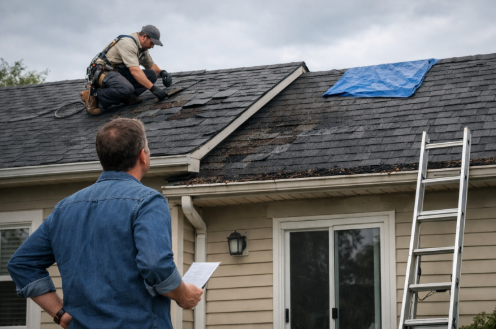
Most homeowners don't think much about their roof until something goes wrong. Then the questions come fast: Is this fixable, or am I looking at a full replacement? Will my insurance cover it? How do I know if the contractor is being straight with me?
Those are fair questions, and you deserve straight answers. By the end of this guide, you'll know what physical signs point toward replacement, when a repair actually makes more sense, what to do if storm damage is the cause, and how to navigate the insurance claim process correctly.
Here's the process standard every Linta Roofing job is held to: Every Linta Roofing install is inspected by a quality control manager and separately reviewed by the production manager, so each job passes two sets of eyes before sign-off. The work is documented in CompanyCam, often more than 300 photos on a single job, and the homeowner is sent live photos and video as the work happens. The owner puts it simply: proof is greater than a promise.
Table of Contents
- Repair vs. Replacement: How the Decision Gets Made
- Signs You Need a Full Roof Replacement
- When a Repair Is the Right Call
- Financial Considerations: Repair vs. Replacement
- How Repairs Affect Your Roof Warranty
- How to File an Insurance Claim for Storm Damage
Repair vs. Replacement: How the Decision Gets Made
Some roof damage is straightforward to repair, a handful of missing shingles after a storm, or flashing that's worked loose around a chimney. But other damage goes deeper than the surface, and patching over it only delays the inevitable while potentially making things worse.
The decision comes down to four factors: the cause of the damage, the age of the roof, the extent of the problem, and cost over time. An honest roofer will walk you through all four before recommending anything.
Signs You Need a Full Roof Replacement
Your Roof Is Over 20 Years Old
Asphalt shingles, the most common roofing material on Myrtle Beach homes are designed to last between 20 and 30 years under normal conditions. If your roof is approaching or past that window, age alone is a serious factor. Repairs on older roofs can actually stress and crack the surrounding shingles, making repeated failures more likely and turning a $2,000 patch into a recurring expense.
If your roof is 15 years old or more, replacement is worth pricing out before committing to another repair.
You're Seeing Granules in Your Gutters or on the Ground
Asphalt shingles are coated with small mineral granules that protect the underlying material from UV exposure and weather. Losing a few granules over time is normal. But heavy granule loss, gutters full of grit, bare patches visible from the ground means the shingles are breaking down and no longer protecting your home effectively. At that point, repair addresses symptoms, not the problem.
Your Roof Is Visibly Sagging
A sagging roofline is one of the most serious signs a home can show. It almost always points to structural damage in the decking or rafters beneath the shingles damage that replacement shingles alone won't fix. If you're seeing a dip, a wave, or an uneven roofline, get a professional inspection immediately.
You Have Widespread or Recurring Leaks
A single leak tied to a clear cause, damaged flashing, one missing shingle is usually repairable. But if you're dealing with leaks in multiple spots, or the same area keeps leaking after repairs, the roof has likely failed as a system. Patching individual points on a failed system is expensive and temporary.
You Can See Daylight Through Your Attic
On a bright day, go into your attic with the lights off. If you can see pinpoints or streaks of daylight coming through, those gaps are also letting in water. While you're up there, look for water stains, dark streaks, or soft spots on the decking. Any of these suggest moisture has already been working its way, in often long before a visible interior leak appears.
Your Shingles Are Discontinued or No Longer Available
If your shingles are no longer manufactured, replacement shingles won't match in colour, texture, or performance. In some cases, insurance companies will approve a full replacement rather than a mismatched repair. An experienced roofer can document this for your insurer.
Previous Work Was Poor or Widespread
If you've had nail pops across large areas of your roof, or a prior contractor did substandard work, the problem is usually systemic. Nail pops caused by improper installation don't appear in one spot, they appear everywhere. Repair treats individual nails. Replacement fixes the cause.
When a Repair Is the Right Call
Replacement isn't always the answer. A repair makes sense when:
- Your roof is under 10 years old and the damage is isolated to one area
- The cause is clear and contained, a single storm impact, one section of loose flashing, a few displaced shingles
- Your shingles are still available and compatible with the existing roof
- The damage isn't tied to a systemic installation error
One thing worth knowing: a repaired section will be visible. Shingles fade over time due to UV exposure, and new shingles rarely blend seamlessly with weathered ones , even if they're from the same manufacturer. That's cosmetic, not structural, but it's worth knowing upfront.
Financial Considerations: Repair vs. Replacement
At first glance, a repair looks cheaper. Paying $2,000 to patch a section feels very different from $20,000 for a full replacement. But for roofs nearing the end of their lifespan, the maths often shifts.
Older roofs tend to need multiple repairs in quick succession. Homeowners who repair repeatedly can find themselves spending $15,000–$20,000 over a few years, and still ending up with a replacement. Think of it like maintaining a high-mileage car: at some point, you're spending good money after bad.
Material prices are also rising. Waiting on a replacement you'll eventually need anyway could mean paying significantly more for the same job in two years.
If you're weighing the two, ask your roofer to give you an honest assessment of how many more years the current roof has in it. That number changes the maths considerably.
How Repairs Affect Your Roof Warranty
Full roof replacements typically come with two types of warranty coverage: a manufacturer's material warranty and a workmanship warranty from the installer. Together, these cover future leaks and defects for years, sometimes decades if you're working with a certified contractor.
Repairs are a different story. Because repairing an older roof can stress surrounding shingles and create new failure points, most reputable roofers won't warranty repair work. If a new leak develops near a repaired area, it may not be covered under your original warranty either, especially if the repair was done by an outside contractor.
If your roof has been touched by another company, ask your current roofer exactly what's still covered and what isn't before committing to another repair.
How to File an Insurance Claim for Storm Damage
Hurricanes, tropical storms, and the severe coastal weather that moves through Horry and Brunswick counties can cause damage that qualifies for an insurance claim, meaning you may not be out of pocket for much of the replacement cost. But storm damage claims are also one of the most mishandled situations in the roofing world. Here's how to do it right.
Step 1: Document Everything Before Anyone Touches the Roof
Before you call your insurer or let any contractor onto the roof, document the damage yourself. Photos and video from the ground, gutters, soffits, visible shingle damage, are a good start. Do not let any contractor begin work before your insurance adjuster has inspected the roof. Starting repairs prematurely can complicate or invalidate your claim.
Step 2: Contact Your Insurance Company to Open a Claim
Call your homeowner's insurer or log into their portal to open a claim. Have the storm date, a description of visible damage, and your contact information ready. They'll assign an adjuster and give you a claim number, get that in writing. It's your reference for every conversation that follows.
Step 3: Get an Independent Roofing Inspection Before the Adjuster Arrives
This step makes a real difference. A thorough inspection by a qualified local roofer before the adjuster's visit gives you an independent assessment of what's damaged and what it should cost. If the adjuster's scope comes in lower than expected, you'll have documentation to support a dispute.
Step 4: Review the Adjuster's Report Carefully
When the report arrives, check two things: whether the approved scope matches what your contractor identified, and what your deductible is. If items are missing or the estimate seems low, don't accept it without question. You have the right to dispute the findings, and many homeowners don't realise this, which costs them thousands.
Step 5: Choose a Contractor You Trust, Not Just the First One Who Knocks
After a major storm in the Myrtle Beach area, out-of-town contractors arrive fast. Storm chasers move quickly, often do substandard work, and may be gone before problems surface. A locally established contractor with a track record in Horry or Brunswick County has something to lose if the work isn't right, they'll still be here for warranty claims and callbacks after the job is done.
Step 6: Understand Your Payment Timeline
Most claims pay out in two stages. The first check, the Actual Cash Value (ACV), covers the depreciated value of your old roof and arrives after the claim is approved. The second payment, Recoverable Depreciation, is released once the work is completed and you submit documentation to your insurer. Don't let a contractor pressure you to sign over your insurance proceeds or waive your deductible. Both are red flags, and the latter is illegal in South Carolina.
The Bottom Line
Deciding between repair and replacement comes down to the age of your roof, the scope of the damage, and the cost over time. A repair makes sense when the roof is new and the damage is isolated. Replacement makes sense when problems are widespread, recurring, or the roof is past its prime.
If storm damage is involved, the insurance process matters as much as the roofing work itself, document everything, get an independent inspection, and choose a contractor with a local track record before signing anything.
Linta Roofing has served Myrtle Beach homeowners since 1948. As a GAF Master Elite certified contractor, we're trained to identify storm damage that meets the threshold for insurance claims and can guide you through the process from inspection through final payment. Schedule a roof inspection today and get a clear, honest assessment of where your roof stands.
That same transparency carries over to pricing: Linta Roofing publishes what a roof costs on its website, so you can see the price before you ever speak to a salesperson.
Jeffrey Linta is the CEO and owner of Linta Roofing, a third-generation roofer who took ownership of the family business in 2023. He began his career in high school with boots on the ground, working in the field and learning the roofing trade from his father before joining the company full time after college graduation. His professional credentials include GAF Master Elite Contractor, IKO ROOFPRO Craftsman Premier Contractor, GAF GoldElite Commercial Contractor, GAF presidents club award winner and SC Safe Home Certified Contractor. Under his leadership, Linta Roofing has earned recognition such as the Sun News' Best of the Beach in 2024 and 2025, an A+ rating from the Better Business Bureau, and hundreds of 5-star customer reviews year after year. Most recently, Linta Roofing was honored with the Best Roofing Company of the Year 2025 award from Roofing Insights. Born and raised on the Grand Strand, Jeffrey is passionate about educating homeowners so they can make confident, informed decisions about their roofing investments. Outside of work, he enjoys fishing and spending time with his wife, Erica, son, Grady, and golden retriever, Dixie. To learn more about Jeffrey Linta's story, check out his interview with Roofing Insights, a nationally recognized roofing education platform: Jeffrey Linta: Building a Roofing Company Without Fear of Competitors.
