.png?width=200&height=78&name=LR_Logo_vector_horizontal_color_shadow%20(1).png)

If you're filing a roof claim after a storm in South Carolina, the difference between a hurricane deductible and a wind and hail deductible can mean thousands of dollars out of your pocket before your insurer pays a cent. Knowing which deductible applies, and the exact dollar figure it represents, is the most critical thing to nail down before your adjuster shows up.
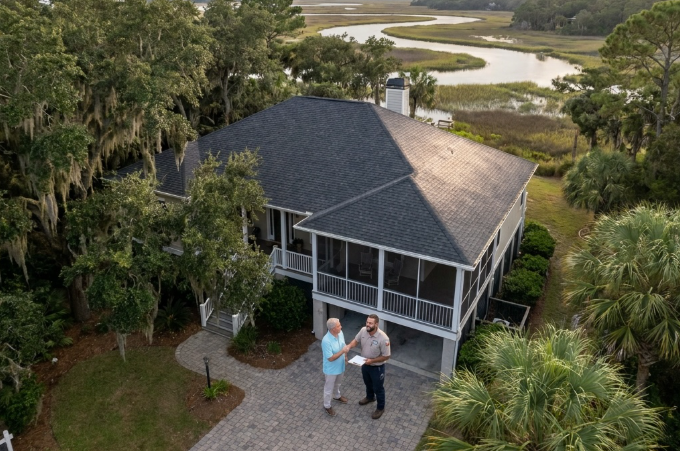
That figure only means something if the initial inspection is done right: Linta Roofing inspects storm damage to the same engineering standard insurers use to decide whether a claim is covered. Their project managers are HAAG trained, the damage assessment is free, and they meet your adjuster at the house so the approval reflects current building code instead of leaving you to pay the difference.
Wind and Hail Deductible
A wind and hail deductible applies to roof damage caused by any wind event or hailstorm that doesn't meet the specific trigger for a hurricane or named storm deductible. In South Carolina, this covers most severe weather claims along the Grand Strand and inland, and it's usually a flat dollar amount, commonly $1,000 to $2,500, rather than a percentage of your home's insured value.
Most homeowners don't realize how often the flat wind and hail deductible is the better outcome until they've done the percentage math on a hurricane deductible for the first time.
Hurricane Deductible
A hurricane deductible activates only when a named storm reaches a defined threshold, typically a hurricane watch or warning issued by the National Hurricane Center for your county. It's almost always percentage-based, running from 1% to 5% on most coastal SC policies, and up to 10% on some. On a $350,000 Myrtle Beach home, that translates to $7,000 to $17,500 out of pocket before your insurer covers a single shingle, compared to that flat $1,000 to $2,500 wind and hail deductible on the same home.
Key Differences
|
FEATURE |
WIND & HAIL DEDUCTIBLE |
HURRICANE DEDUCTIBLE |
|
Trigger |
Any wind or hail event |
Named storm with official NHC watch/warning |
|
Calculation basis |
Flat dollar or % of insured value |
% of dwelling coverage (Coverage A) |
|
Typical range |
$1,000-$2,500 flat, or 0.5%-1% |
1%-5% coastal SC; up to 10% some policies |
|
Coastal vs. inland |
Applies statewide |
More likely to trigger on SC coast |
|
Real-dollar cost at $350K home, 2% |
~$1,000-$2,500 flat |
~$7,000 |
|
Real-dollar cost at $500K home, 5% |
~$1,000-$2,500 flat |
~$25,000 |
|
SC disclosure requirement |
SC Reg. 69-56 mandates disclosure |
SC Reg. 69-56 mandates disclosure |
|
72-hour rule |
N/A |
Damage within ~72 hrs of storm may still qualify |
The single biggest difference is the calculation method. A flat wind and hail deductible is predictable regardless of your home's value. A percentage-based hurricane deductible scales directly with your insured value, the more coverage you carry, the larger your exposure when a named storm hits.
What You Should Note about Wind and Hail Deductibles
The wind and hail deductible is more homeowner-friendly in most situations. Because it's typically a flat dollar amount, you know your worst-case exposure before a storm ever forms. For hail damage, strong wind events, or squall lines that aren't tied to a named storm, this is the deductible that applies, and it keeps the out-of-pocket cost contained.
The downside is classification ambiguity. If a tropical system is in the area but hasn't officially been designated a hurricane at landfall, your insurer may still argue the hurricane deductible applies based on a watch or warning that was in effect when the storm entered your county.
What You Should Note about Hurricane Deductibles
The hurricane deductible exists because insurers needed a way to manage catastrophic loss exposure along coastlines, and South Carolina's barrier islands and coastal counties carry real risk. From the insurer's perspective, it's a reasonable cost-sharing structure. From a homeowner's perspective near Pawleys Island or along the northern Grand Strand, the percentage math is often a shock.
The underlayment replacement and decking costs alone on a full tear-off routinely push estimates well into that deductible range, which means the insurance check can land far smaller than expected. The deductible calculation is consistently the number that catches people off guard during the claims process, not the repair estimate itself, which is why knowing what to expect before filing a roof insurance claim on the Grand Strand matters. That surprise is almost entirely avoidable, but only if you run the math before the storm.
Which One Should You Choose?
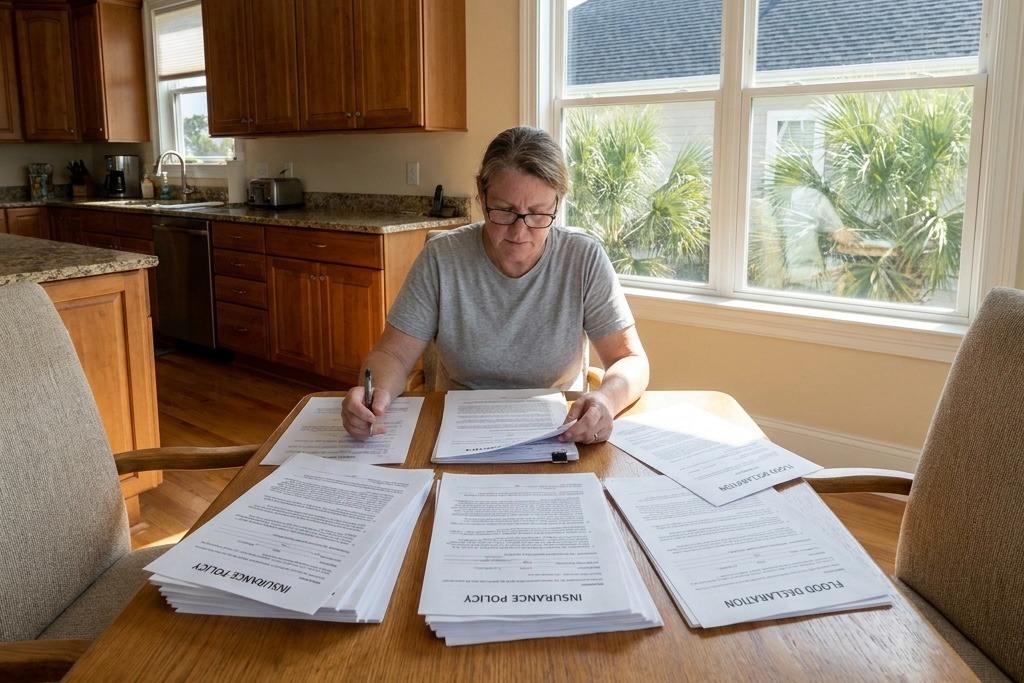
The key factor is where you live and what your home is insured for. Pull your declarations page today, find both deductible lines under SC Reg. 69-56's required disclosures, and calculate what each one costs in actual dollars. If the hurricane deductible number surprises you, renewal season is the time to address it, not the week after a named storm makes landfall near Myrtle Beach, so reach out to Linta Roofing before the next storm season starts. Our HAAG-trained project managers help review storm claims with homeowners and prevent common sources of frustration around their deductibles. Linta Roofing has helped thousands of homeowners manage the roof insurance claim process over the last 40 years and more.
Frequently Asked Questions
How much do homeowners pay out of pocket for a hurricane deductible in South Carolina?
Hurricane deductibles in South Carolina are typically percentage-based, ranging from 1% to 5% of your home's insured value rather than a flat dollar amount. On a $400,000 home with a 3% hurricane deductible, you'd owe $12,000 out of pocket before your insurer pays a cent on the roof claim. That's a meaningful number compared to a standard flat deductible, and it catches a lot of homeowners off guard after a storm.
What triggers a hurricane deductible in South Carolina?
The trigger varies by insurer, but most policies activate the hurricane deductible once the National Hurricane Center names a storm and it reaches a specified wind speed threshold, often 74 mph, in or near your area. Some policies also include a watch or warning trigger, meaning the deductible applies as soon as a hurricane watch is issued for your county, even if the storm weakens before landfall. Always read the trigger language in your specific policy, because the difference between paying a $500 flat deductible and a $10,000+ percentage deductible can come down to a single line of fine print.
Do hurricane deductibles apply to roof damage?
Yes, if a named hurricane triggers your hurricane deductible, it applies to all covered damage from that storm, including your roof. Because the deductible is percentage-based, even a partial roof repair can leave you paying far more out of pocket than you would after a non-hurricane wind event covered under a standard wind and hail deductible. This is exactly why understanding the hurricane deductible vs wind and hail deductible distinction in South Carolina matters before storm season, not after.
