.png?width=200&height=78&name=LR_Logo_vector_horizontal_color_shadow%20(1).png)

Do Metal Roofs Attract Lightning? (Myth, Explained)
August 7th, 2026
4 min read
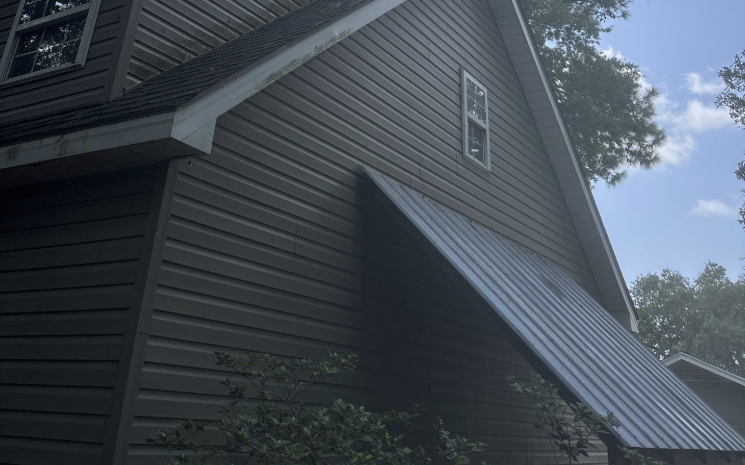
Metal roofing has a reputation problem it doesn't deserve. Ask around, and someone will swear a metal roof turns your house into a lightning magnet during a coastal storm, but that's not how lightning works, and it's not how metal roofing performs. Lightning responds to a structure's height, isolation, and shape, not what the roof is made of. A metal roof on a single-story ranch home is no more likely to be struck than an asphalt shingle roof on the same house.
The confusion usually comes from a simple mix-up between two different properties: conductivity and attraction. Metal conducts electricity well. That's true. But conducting electricity after a strike happens is a completely different thing from drawing a strike in the first place.
Metal roofing is just one of the materials Linta Roofing works with: Linta Roofing installs and repairs asphalt shingle, metal, tile, cedar and flat roofs, and have transparent pricing for every one of them. Linta also handles inspections, maintenance plans, emergency response, insurance claim support and full replacement.
In this article:
- Why This Myth Exists
- What Metal Actually Does Once Lightning Strikes
- Do You Need a Lightning Protection System?
- Does a Metal Roof Affect Your Insurance Premium?
- What This Means for Your Next Roof
- FAQ
Why This Myth Exists
Lightning forms when electrical charge builds up between storm clouds and the ground. When that charge finally discharges, it follows the path of least resistance, and that path is determined by physics happening high in the atmosphere, long before the bolt ever reaches a rooftop. By the time lightning is close enough to "choose" a target, it's already responding to which nearby object offers the shortest, most direct route to the ground.
Three factors drive that decision:
- Height: Taller structures and tall trees are more exposed because they shorten the gap between the storm and the ground.
- Isolation: A building standing alone in open ground is more vulnerable than one surrounded by taller structures or trees.
- Shape: Sharp, pointed features create a more concentrated electrical field than flat or rounded ones.
Roofing material isn't part of that list. A steel roof and an asphalt roof on identical homes, sitting at identical heights, carry identical strike risk.
What Metal Actually Does Once Lightning Strikes
Here's where metal roofing earns its reputation as a smart storm-weather material. If lightning does strike a home, what happens next depends heavily on what the roof is made of, and this is where metal has a real advantage.
Because metal is non-combustible, it won't ignite the way wood shake or some asphalt materials can under a direct strike. And because metal conducts electricity efficiently, a properly installed and grounded metal roof disperses the strike's energy across a wider surface area instead of concentrating it in one spot. That dispersal typically means less structural damage and a lower fire risk compared to other roofing materials in the same scenario.
If you're weighing metal against a more traditional roofing material, our Metal Roofing vs. Asphalt Shingles breakdown covers how the two compare on durability, cost, and storm performance, lightning included.
Do You Need a Lightning Protection System?
Most homes, metal roof or not, don't require a dedicated lightning protection system (LPS) under standard building codes. An LPS is a separate system of air terminals, conductor cables, and grounding rods, and it's typically recommended for homes that are unusually tall, isolated, or located in a high lightning-frequency area, rather than being tied to roofing material at all.
If your property sits in an exposed spot near the coast or stands taller than the surrounding tree line, it's worth a conversation with a licensed lightning protection specialist. But choosing metal roofing isn't what triggers that need, and skipping metal roofing doesn't remove it either.
Does a Metal Roof Affect Your Insurance Premium?
Homeowners sometimes worry that insurers will charge more for a metal roof because of the lightning myth. In practice, the opposite tends to be true. Many carriers offer discounts for metal roofing because of its durability, wind resistance, and fire-resistant properties, factors that matter far more to underwriters than an unfounded lightning concern.
Worried about how a claim or a policy review might treat your roof? Our guide to homeowner insurance red flags walks through what adjusters actually look for, and where roofing myths like this one don't hold up.
What This Means for Your Next Roof
A metal roof won't make your home a lightning target. What it will do is hold up better against the wind, rain, and hail that come with a coastal storm season, and if lightning ever does find your home, it's one of the more forgiving materials to have overhead.
If a recent storm has you second-guessing your current roof, or you're planning ahead of the next one, we'd be glad to walk your property and talk through what makes sense for your home. Take a look at our residential roofing services and reach out when you're ready to get started.
That installation work comes with real manufacturer-backed protection: Linta Roofing is an IKO ROOFPRO Craftsman Premier contractor, which lets it offer IKO Extended Iron Clad Protection warranties on the materials it installs.
FAQ
Does living near the coast increase my risk of a lightning strike?
Coastal areas do see more thunderstorm activity during certain seasons, but that risk applies to every home in the area regardless of roofing material. A home's height and surroundings still matter more than what's on top of it.
Is a metal roof safer than asphalt shingles during a lightning storm?
Metal roofs are non-combustible and disperse electrical energy efficiently, which generally means less fire risk and less concentrated damage compared to other roofing materials if a direct strike occurs.
Will installing a metal roof change my homeowners insurance rate?
Most insurers view metal roofing favorably due to its durability and fire resistance, and some offer discounts. The lightning myth typically has no bearing on premiums.
Do I need to add a lightning rod if I install a metal roof?
No. Lightning protection systems are recommended based on a home's height, isolation, and location, not its roofing material. A metal roof doesn't require one on its own.
Jeffrey Linta is the CEO and owner of Linta Roofing, a third-generation roofer who took ownership of the family business in 2023. He began his career in high school with boots on the ground, working in the field and learning the roofing trade from his father before joining the company full time after college graduation. His professional credentials include GAF Master Elite Contractor, IKO ROOFPRO Craftsman Premier Contractor, GAF GoldElite Commercial Contractor, GAF presidents club award winner and SC Safe Home Certified Contractor. Under his leadership, Linta Roofing has earned recognition such as the Sun News' Best of the Beach in 2024 and 2025, an A+ rating from the Better Business Bureau, and hundreds of 5-star customer reviews year after year. Most recently, Linta Roofing was honored with the Best Roofing Company of the Year 2025 award from Roofing Insights. Born and raised on the Grand Strand, Jeffrey is passionate about educating homeowners so they can make confident, informed decisions about their roofing investments. Outside of work, he enjoys fishing and spending time with his wife, Erica, son, Grady, and golden retriever, Dixie. To learn more about Jeffrey Linta's story, check out his interview with Roofing Insights, a nationally recognized roofing education platform: Jeffrey Linta: Building a Roofing Company Without Fear of Competitors.
