.png?width=200&height=78&name=LR_Logo_vector_horizontal_color_shadow%20(1).png)

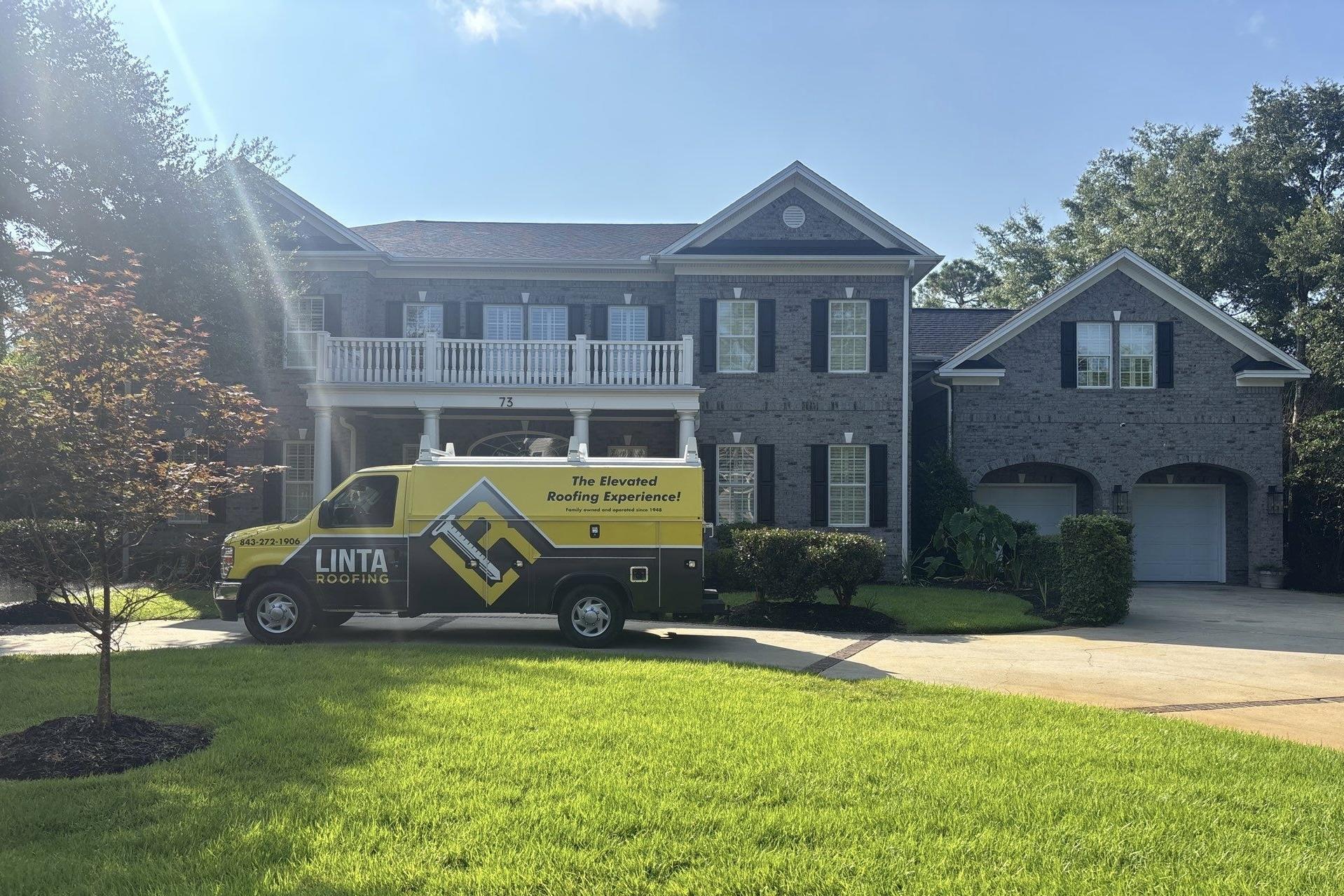
For most Grand Strand homeowners, a family owned roofer is the safer long-term choice. National chains often offer more financing plans and larger crew pools. A local family roofer usually owns its workmanship warranty, makes decisions in town, and is still here after the next hurricane. Choose based on who will answer for your roof in year ten, not just who has the lowest monthly payment.
Family owned roofer vs national chain is a choice most Grand Strand homeowners only make once, and the difference shows up years after the crew has left. Choosing a family owned roofing company near you is not only about price on the day; it decides who answers the phone in year ten.
On install day, both can look the same. You see the trucks, the ladders, and a crew that knows its work. The real test comes later. It comes when a flashing seam starts to drip, or when a storm rolls through and you need someone to pick up the phone.
If you are weighing your options, it makes sense to slow down. A roof is one of the biggest checks you will write for your home. This guide gives you an honest look at both sides. National chains do some things well, and family owned roofing companies do others. By the end, you will know which one fits your home and your peace of mind.
Table of Contents
- What Is the Difference Between a Family Owned Roofing Company and a National Chain?
- How Do Family Owned Roofers and National Chains Compare at a Glance?
- Where Do National Chains Have the Edge?
- Why Do Family Owned Roofers Win on Accountability?
- Who Handles Your Warranty When a Roofing Company Leaves?
- How Can You Tell If a “Local” Roofer Is Really Local?
- What Happens After a Hurricane Hits the Grand Strand?
- So, Which Roofer Should You Hire?
- Frequently Asked Questions
What Is the Difference Between a Family Owned Roofing Company and a National Chain?
A family owned roofer is a local business run by the same family, often for decades. The owner usually lives in the community. Decisions about pricing, warranties, and repairs get made in a local office.
A national chain operates under one brand in many states. Some chains open their own branches. Others grow by buying local companies and keeping the local name on the trucks. Either way, the big decisions are made by a corporate office or an investment group.
Think of it like a neighborhood diner and a restaurant franchise. Both can serve a good meal. When something goes wrong, only one lets you talk to the person who owns the kitchen.
How Do Family Owned Roofers and National Chains Compare at a Glance?
Here is a side-by-side view of the factors that matter most once your roof is on. The last column shows how Linta Roofing handles each one, with a link to the source.
|
Factor |
Family Owned Roofer |
National Chain |
Linta Roofing |
|
Who owns the company |
A local family that makes decisions in town |
A corporate office or investment group |
|
|
Who answers the phone |
Local office staff, and often the owner |
A call center or regional branch where staff may change |
|
|
Who owns the warranty |
The roofer backs its own workmanship |
Coverage depends on corporate policy and can shift if a branch is sold or closes |
|
|
Financing options |
Usually one or two lending partners |
Often a wider menu of payment plans |
|
|
Crew capacity |
Smaller crews that know the local codes and weather |
Can move crews between markets for large jobs |
|
|
Who is still here after the storm |
The same company, because this is home |
Branches can consolidate, relocate, or change owners |
Where Do National Chains Have the Edge?
A fair comparison should help you decide, not sell you. National chains earn credit in a few areas.
- More financing choices. Large companies often partner with several lenders, so you may see more monthly payment plans.
- Bigger crew pools. A chain can shift crews between markets, which can help with large or multi-site jobs.
- Standard processes. Many chains use the same software and checklists in every branch. That brings consistency from job to job.
- Name recognition. You may know the brand from TV or online ads, and that can feel reassuring.
If fast financing approval is your top priority, a chain may give you more options. Read the terms closely. A low monthly payment can stretch over many years and cost more in the end.
Why Do Family Owned Roofers Win on Accountability?
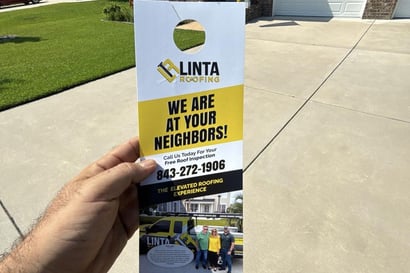 Accountability means the company that sold you the roof is still responsible for it. That is where family roofers shine.
At a family owned company, the owner’s name is on the building. Their reputation rides on every roof in the neighborhood. A bad job does not vanish into a corporate report. It shows up at church, at the grocery store, and in local reviews.
Linta Roofing is a third-generation family business founded by John Linta in 1948. The company has served the Grand Strand since 1985. President Jeffrey Linta II leads it today, and the team covers Horry and Georgetown counties in South Carolina and Brunswick and Columbus counties in North Carolina. You can read the story of Linta Roofing to see how that legacy was built.
That track record is public. Linta Roofing has more than 1,000 five-star Google reviews and an A+ rating from the Better Business Bureau. It is also a GAF Master Elite Contractor. Longevity like this matters, so it is worth checking how long a roofer has been in business before you sign anything.
Who Handles Your Warranty When a Roofing Company Leaves?
Most new roofs come with two kinds of coverage:
- Manufacturer warranty. This covers defects in the shingles and other materials.
- Workmanship warranty. This covers how the roof was installed, including flashing, fastening, and ventilation details.
A workmanship warranty is only as strong as the company behind it. If a branch closes, gets sold, or leaves town, that promise can become hard to use. You may end up calling an out-of-state hotline or filing paperwork with the shingle maker instead.
If a Linta Roofing roof ever leaks, you call Linta, not the shingle manufacturer. Linta owns the workmanship warranty itself. The team makes the decision and does the repair. Most issues are resolved within two weeks rather than the four to eight weeks a manufacturer claim usually takes. Linta offers workmanship warranties up to 25 years.
A simple test: ask every roofer, “If this roof leaks in year eight, who do I call, and who decides whether it is covered?” The answer tells you a lot.
How Can You Tell If a “Local” Roofer Is Really Local?
This is harder than it used to be. Investment groups have been buying local roofing companies at a fast pace. Roofing Contractor reported that by mid-2025, private equity firms were acquiring a U.S. roofing platform about every 48 hours. Many of those companies keep their original name and trucks.
A friendly local brand can still be owned by a firm far away. Our guide on choosing a local roofer vs private equity firm explains how that ownership can affect your price. Here is how to check:
- Ask who owns the company and when ownership last changed.
- Look for a physical office in your county, not just a phone number.
- Verify the license with the South Carolina Department of Labor, Licensing and Regulation.
- Compare quotes from truly separate companies. Three brands under one owner is not real comparison shopping.
What Happens After a Hurricane Hits the Grand Strand?
Storms are where the difference becomes clear. After a hurricane, out-of-town crews often arrive fast. Some are legitimate chain branches. Others are storm chasers who work an area for a few weeks and then move on.
Learn the warning signs of storm chasing in roofing before storm season. Door-to-door offers, pressure to sign today, and requests for full payment up front are all red flags.
South Carolina law gives you some protection. You can cancel a roofing contract within five days of learning your insurance claim is not covered, and a roofer cannot take up-front payment during that window.
A family roofer does not follow storms around the country. The crew that fixes your roof after a storm is the same crew you will see around town next month.
So, Which Roofer Should You Hire?
A national chain may fit if you want the widest menu of financing plans or you manage properties in several states.
A family owned roofer may fit better if you want:
- One company to answer for your roof for decades
- Direct access to local decision-makers
- A roofer who knows coastal weather, hurricane season, and local insurance claims
Whatever you choose, compare two or three quotes from independently owned companies. Our list of the 9 best roofing companies in Myrtle Beach is a helpful place to start.
Curious where your project lands? You can see a price range in about a minute with our instant estimate tool, or compare our published roof pricing by package.
If you prefer to talk with someone, contact our team and we will walk you through your options.
Frequently Asked Questions
Is it better to hire a local or national roofing company?
For most homeowners on the Grand Strand, a local company offers stronger long-term accountability. It usually owns its workmanship warranty and stays in the area after storms. A national company can make sense if you need a wide range of financing plans.
Are family owned roofing companies cheaper?
Not always. Price depends on your roof size, materials, and warranty. Family roofers often carry less corporate overhead, but you should compare the full scope of each quote. A cheap quote with a thin warranty can cost more over time.
What are the pros and cons of national roofing chains?
The pros are more financing options, larger crew pools, and standard processes. The cons are less local control, warranty decisions made by a corporate office, staff turnover, and branches that can close or change owners.
How do I know if a roofer is really local?
Ask who owns the company and when ownership last changed. Look for a physical office in your county, check the state license, and read reviews that go back several years.
Who handles the warranty if a national chain leaves the area?
The shingle maker usually still covers material defects. Workmanship coverage depends on your contract and whether the parent company or another branch honors it. Get the answer in writing before you sign.
