.png?width=200&height=78&name=LR_Logo_vector_horizontal_color_shadow%20(1).png)

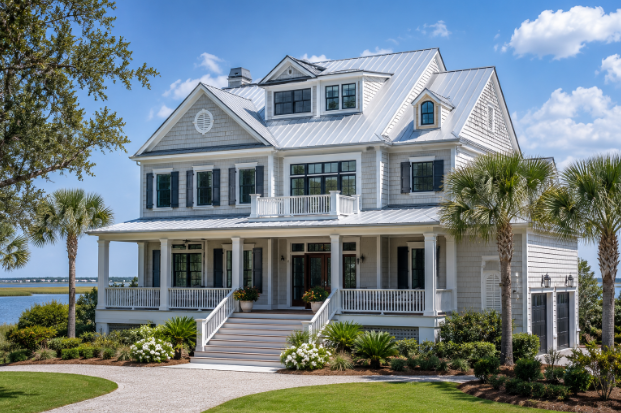
If you own a home on the South Carolina coast, you've probably heard the term "FORTIFIED roof" and wondered whether it's worth the extra cost or just another upsell. Understanding what a FORTIFIED roof is and how it stacks up against a standard roof installation is the key decision standing between you and a roof that can actually survive a serious storm season.
Standard Roof vs FORTIFIED Roof
Standard Roof
A standard roof meets South Carolina's adopted International Residential Code (IRC), typically installed using asphalt shingles or metal panels, depending on the homeowner's budget and goals. It handles normal weather fine, but "normal" doesn't describe a Category 2 hurricane making landfall near Myrtle Beach.
FORTIFIED Roof
A FORTIFIED roof meets Insurance Institute for Business & Home Safety (IBHS) standards, which push wind resistance roughly 30-40% beyond IRC minimums, and if you're new to roofing terminology, our Roofing 101 guide breaks down the basics. The key additions are a sealed roof deck and tighter fastening schedules, neither of which the code requires. An IBHS-certified inspector must verify every installation before the designation is issued.
The pattern that shows up repeatedly on coastal re-roofing jobs is that homes built to code hold up fine in a tropical storm but lose their roof deck in a sustained Category 1 or 2 event, often because roof wind damage compromises the first layer with no secondary water barrier beneath the shingles.
Key Differences
|
Feature |
Standard Roof |
FORTIFIED Roof |
|
Wind rating |
90-130 mph (typical) |
130-150+ mph (FORTIFIED Gold) |
|
Roof deck attachment |
6d nails, standard spacing |
8d ring-shank nails, 4-inch spacing |
|
Sealed roof deck |
Not required |
Required (peel-and-stick underlayment) |
|
Third-party inspection |
None |
Mandatory IBHS-certified inspector |
|
Cost premium in SC |
N/A |
$3,000-$8,000 over standard |
|
SC Safe Home Grant |
Not eligible |
Up to $7,500 available |
|
Insurance discount |
None |
20-40% reduction with many SC insurers |
Strengths and Weaknesses
Standard Roof
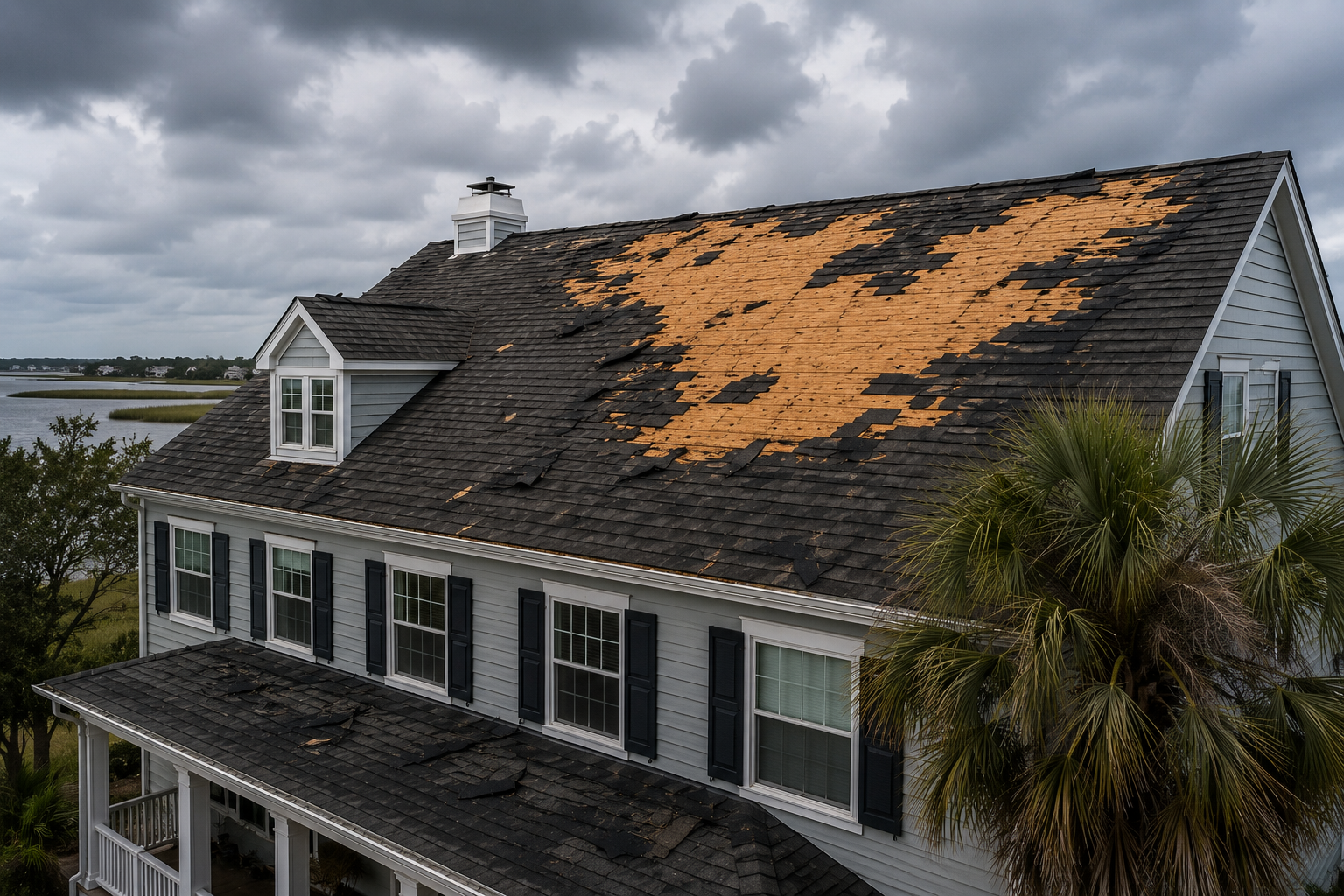
Cost is the clear advantage. A standard asphalt shingle roof on a 2,000 sq ft coastal SC home runs $8,000-$14,000 installed, any licensed roofer can do the work, and there's no inspection or insurer paperwork involved.
The tradeoff is exposure. Without a secondary water barrier, the moment shingles lift, your interior is vulnerable. Post-storm repairs in Horry and Georgetown counties routinely hit $20,000-$40,000 once interior damage is factored in, especially when insurance coverage for roof damage doesn't stretch as far as homeowners expect. That's not a worst case, it's what a direct hit on a code-minimum roof typically produces.
FORTIFIED Roof
The layered construction, sealed deck, ring-shank nails, and enhanced wall connections are designed to keep the roof intact even when individual shingles are lost, making it particularly well-suited for homes exposed to heat, humidity, and salt air year-round. Financially, the SC Safe Home grant (up to $7,500), combined with annual insurance savings of $1,000-$2,000 on a typical coastal policy, can close the payback gap within five to seven years.
The real friction isn't the upfront cost. Finding a FORTIFIED-certified contractor who knows the IBHS checklist well enough to pass inspection on the first attempt is harder than it sounds. Not every Lowcountry roofer holds that certification. Linta Roofing carries both FORTIFIED Roofing Contractor and SC Safe Home certified installer credentials, which matters because the third-party inspection process is unforgiving on documentation, and storm damage assistance is also available if you're starting from a weather event rather than a planned replacement. Worth noting: the designation also requires re-inspection if you make certain roof modifications down the road.
That certification carries real financial weight: Linta Roofing is a certified installer for both South Carolina roof grant programs, which can take up to $7,500 off a qualifying job. SC Safe Home and FORTIFIED both fund hurricane hardening for homeowners who qualify.
Which One Should You Choose?
If your home is within 10 miles of the SC coast, Horry, Georgetown, Beaufort, Jasper, or Colleton counties, the FORTIFIED upgrade is worth pursuing, full stop. The grant offsets a meaningful portion of the premium, the insurance savings compound annually, and the designation transfers to the next buyer. Check SC Safe Home eligibility to see if your property qualifies before assuming the grant is out of reach.
If you're inland, on a tight budget, or replacing a roof on a property with limited insurance exposure, a well-installed asphalt shingle roof is a reasonable choice.
The deciding factor is how close you are to the coast and how long you plan to stay. Check your SC Safe Home grant eligibility at scdoi.sc.gov, then get quotes from at least two IBHS-certified roofers, and if hail is part of your storm history, it's worth reviewing how to identify hail damage on your roof before any contractor walkthrough. We can walk you through both the grant application and contractor selection.
Financing can help close whatever gap remains, too. Linta Roofing offers third-party roof financing that does not run a hard credit inquiry. Linta also states that there are five main ways to pay for a roof and that it offers all five.
Frequently Asked Questions
What roofing material best survives a direct hurricane hit?
No single material guarantees survival of a direct hit, the installation system matters as much as the material itself. A properly installed FORTIFIED roof using asphalt shingles with a sealed deck and ring-shank nails will outperform a poorly installed metal roof in most storm scenarios.
Is metal roofing worth the extra cost for hurricane protection?
Metal roofing can be worth the premium for coastal SC homeowners, particularly when paired with FORTIFIED certification, but it's not automatically superior to a well-built FORTIFIED asphalt shingle roof. The bigger question is whether the installation meets IBHS standards, a metal roof that doesn't have a sealed deck and correct fastening still won't carry a FORTIFIED designation.
How much do insurance premiums decrease with hurricane-resistant roofing?
Many South Carolina insurers offer 20-40% premium reductions for FORTIFIED-certified roofs, which on a typical coastal policy translates to roughly $1,000-$2,000 in annual savings. A standard roof, even one built with upgraded materials, doesn't qualify for those discounts without the IBHS designation.
What's the difference between wind resistance and impact resistance ratings?
Wind resistance measures how well a roof system holds together under sustained high-speed wind loading, while impact resistance measures how well individual shingles or panels survive debris strikes. FORTIFIED certification addresses primarily wind resistance through deck attachment and uplift performance. Impact resistance ratings (like Class 4) are a separate product-level designation that may earn additional insurer discounts but don't substitute for FORTIFIED certification.
Does roof slope/pitch affect hurricane performance?
It depends, very low-slope roofs can be more vulnerable to wind uplift at the edges, while very steep roofs can catch more lateral wind load. Mid-range pitches (4:12 to 6:12) generally perform well in wind events when the rest of the assembly is correct. That said, pitch is a secondary factor compared to deck attachment and the presence or absence of a secondary water barrier.
Are FORTIFIED roofs worth it for coastal South Carolina homes?
For homes within 10 miles of the SC coast, particularly in Horry, Georgetown, Beaufort, Jasper, or Colleton counties, yes, the FORTIFIED upgrade is worth it. The combination of the SC Safe Home grant, compounding insurance discounts, and the real post-storm repair costs that code-minimum roofs routinely produce makes the financial case straightforward for anyone staying in the home more than a few years.
