.png?width=200&height=78&name=LR_Logo_vector_horizontal_color_shadow%20(1).png)


If you’re in the market for a new roof, you may have come across the SC Safe Home Mitigation Grant Program. This program helps eligible coastal South Carolina residents strengthen their homes against hurricanes and high winds.
This is a proactive wind-mitigation grant, and homeowners can be eligible for different types of grants. But not everyone is approved for the SC Safe Home Grant.
So, how can you know if you’re eligible for the SC Safe Home Mitigation Grant?
As certified SC Safe Home inspectors and installers, we’ve helped dozens of coastal South Carolina homeowners retrofit their roofs through funds offered by this program. And there are a few requirements to be eligible to receive it.
Linta Roofing is a certified installer for both South Carolina roof grant programs, which can take up to $7,500 off a qualifying job. SC Safe Home and FORTIFIED both fund hurricane hardening for homeowners who qualify.
Here, we’ll talk about eligibility requirements and what else a wind-mitigation grant can do for you beyond your roof.
Let’s get started.
Who Qualifies for the SC Safe Home Grant?
The SC Safe Home Mitigation Grant Program helps eligible South Carolina homeowners strengthen their homes against hurricanes and high winds. This is a proactive wind-mitigation grant, not a repair or insurance program.
SC Safe Home Eligibility Requirements: For Coastal South Carolina Residents
To receive the SC Safe Home Grant, you must be located in an eligible coastal South Carolina counties, such as:
- Beaufort County
- Berkeley County
- Charleston County
- Colleton County
- Dorchester County
- Florence County
- Georgetown County
- Horry County
- Jasper County
- Marion County
- Williamsburg County
The SC Safe Home Grant is available to homeowners who live in the home as their primary residence. To qualify, the property must be a single-family home and can’t have already received a roof through the SC Safe Home program. You’ll also need an active homeowner’s insurance policy and to complete a required wind mitigation inspection. Finally, your household income must fall within the program’s income guidelines for the type of grant you’re applying for.
SC Safe Home Eligibility: For Owner-Occupied Home
The home must be owner-occupied and used as your primary residence.
SC Safe Home does not apply to rental properties, vacation homes, or investment properties. This requirement ensures public funds are used to protect full-time residents and reduce long-term recovery costs after major storms.
SC Safe Home Eligibility: Single Family Homes Only
Only single-family residential homes qualify for the SC Safe Home Grant. Multi-family buildings, apartments, condos, and commercial properties are not eligible.
SC Safe Home Eligibility: One Grant Per Structure
Each structure is eligible for one SC Safe Home grant total.
If a home has already received a grant in the past, it cannot receive another, even if ownership has changed.
SC Safe Home Eligibility: Insurance & Inspection Requirements
To apply, homeowners must:
- Have an active homeowner’s insurance policy
- Complete a wind certification and hurricane mitigation inspection by a SC Safe Home–approved inspector
No retrofit work can begin until after inspection and grant approval, or the project may become ineligible. If you’re not sure, you can use their website to find an SC Safe Home-approved inspector, here: SC Safe Home Inspectors and Contractors.

SC Safe Home Eligibility: Income May Affect Grant Type
Yes, household income can affect the type of grant you receive, but it does not automatically disqualify you.
Depending on income level, homeowners may qualify for:
- A matching grant, or
- A reduced, or non-matching, grant
Grant structure and thresholds may change, so homeowners should confirm current guidelines during the application process.
SC Safe Home Grant Amounts
You may receive a matching or non-matching grant. A matching grant means that every dollar contributed by the homeowner or another source, the program will also contribute a certain amount. On the other hand, non-matching grants do not require any contributions from the homeowner or other courses to access funds. The program provides a certain amount of funding without any home owner obligation.
To get a better understanding of what SC Safe Home offers, check out their award types.
|
Mitigation Award Type |
Award Requirements |
Award Amounts |
|
Resilient Mitigation Award |
Roof upgrades that follow the guidelines of both SC Safe Home Retrofit & the Institute for Business & Home Safety FORTIFIED ROOF Program retrofits. |
Non-matching Grants: $7,500 Matching Grants: $6,000 |
|
Sustainable Mitigation Award |
Roof upgrades follow either SC Safe Home Retrofit Guidelines, or window replacement & opening protection retrofits adhere to SC Safe Home Opening Protection Guidelines. |
Non-matching Grants: $5,000 Matching Grants: $4,000 |
|
Hurricane Shuttering & Protective Barrier Systems Award |
Installing hurricane shutters and protective barriers in accordance with SC Safe Home Opening Protection Guidelines. |
Non-matching & Matching Grants: $3,000 |
To see which grant you may qualify for, check out the: SC DOI’s Award Calculator
SC Safe Home: What Can the Grant Be Used for?
Strengthening roof deck attachments
This refers to improving how the roof decking (the plywood or OSB beneath your shingles) is fastened to the roof structure. Older homes often used fewer or smaller nails, which makes roofs more vulnerable in high winds. Strengthening roof deck attachments typically involves adding additional fasteners or using approved fastening patterns to reduce the chance of the roof decking lifting or detaching during a storm.
Installing secondary water barriers
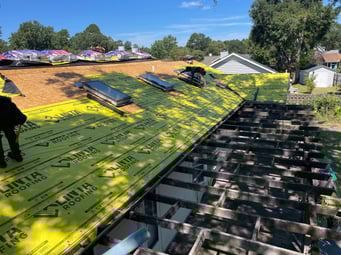 A secondary water barrier is an extra layer of protection installed beneath the roof covering to help prevent water from entering the home if shingles are damaged or blown off. This is often achieved with self-adhering membranes or sealed underlayment. In severe wind or rain events, a secondary water barrier can significantly reduce interior water damage.
Reinforcing roof-to-wall connections
Roof-to-wall connections are the points where the roof structure attaches to the home’s walls. In high winds, these connections are under extreme stress. Reinforcing them usually involves installing metal connectors, such as hurricane straps or clips, which help keep the roof securely attached to the home during hurricanes or tropical storms.
Bracing gable ends
Gable ends are the triangular sections of wall found at the ends of some homes. These areas are especially vulnerable to wind pressure. Bracing gable ends involves adding structural supports in the attic to stabilize these walls, reducing the risk of collapse or failure during high-wind events.
Protecting windows and doors with wind-rated products
This includes upgrading to impact-rated or wind-rated windows, doors, or protective systems like storm shutters. These products are designed to withstand flying debris and strong wind pressures. Protecting openings in the home helps prevent sudden changes in air pressure that can lead to roof or structural failure.
Replacing or upgrading exterior elements to better withstand high winds
The grant may also be used to upgrade exterior components such as garage doors, soffits, fascia, or other vulnerable building elements. Wind-rated upgrades help reduce the likelihood of these components failing during a storm, which can otherwise expose the home to wind and water intrusion.
Thinking About an SC Safe Home Grant? Here’s How to Apply
In our coastal climate, you want a strong roof. And SC Safe Home offers just that for Horry County residents and beyond. The grant can lower the cost of a roof replacement in South Carolina.
They typically open the application process twice each year, so your next step is signing up to receive emails about when this grant opportunity will open up this year. To sign up, follow this link: SC Safe Home Mitigation Grant Program.
Grants aren't the only option worth knowing about, either. Linta Roofing offers third-party roof financing that does not run a hard credit inquiry. Linta also states that there are five main ways to pay for a roof and that it offers all five.
As a certified SC Safe Home installer, we at Linta Roofing are happy to help with any questions or services you may need from us as you through this process. If you have any questions, don’t hesitate to contact us today.Linta Roofing was included in the Sun News list of South Carolina roof inspection companies.