.png?width=200&height=78&name=LR_Logo_vector_horizontal_color_shadow%20(1).png)

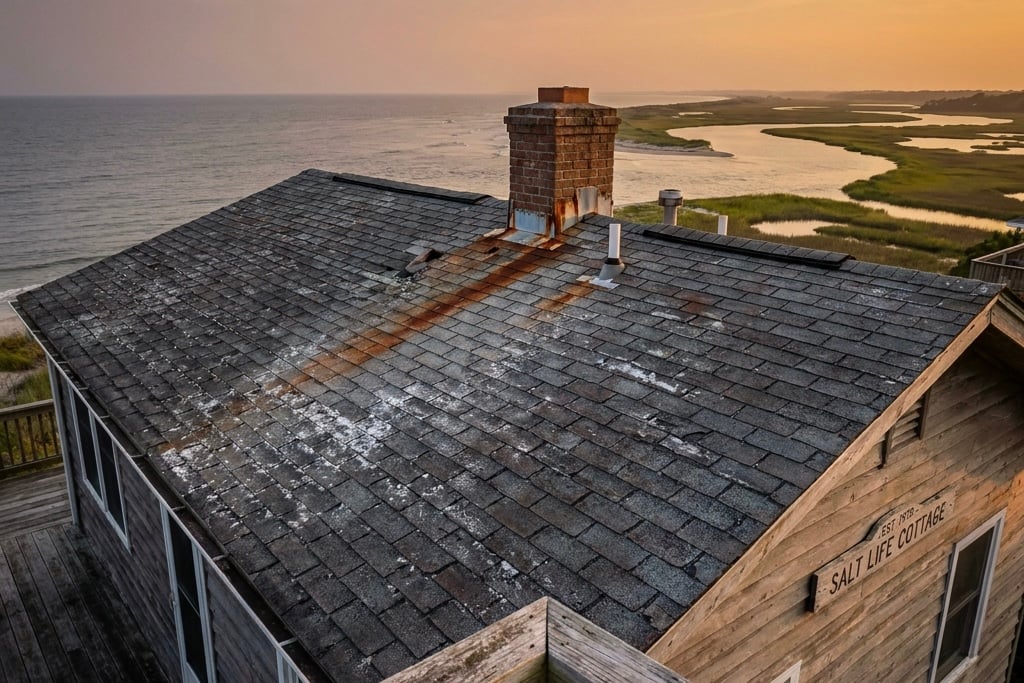
Salt air roof damage moves faster along Brunswick County's coastline than most homeowners expect, and the stretch from Cherry Grove to Sunset Beach is one of the more aggressive environments in the Carolinas. The Atlantic exposure here is direct, the Intracoastal Waterway adds a secondary source of salt-laden humidity, and the region averages enough nor'easters and tropical systems each season to keep roofs under near-constant chemical stress. A 30-year architectural shingle warranty means little when the actual lifespan at the beachfront is closer to 12 years.
Guides like this one are part of a broader effort to educate homeowners: Linta Roofing runs a roofing learning center and a YouTube channel where the owner answers homeowner questions to provide first-person education to everyone. The Roofing Resource Channel covers questions such as the seven things to know before starting an insurance claim.
Table of Content
- Why Cherry Grove, Ocean Isle, and Sunset Beach Are High-Risk Zones for Salt Air Roof Damage
- The Science Behind Salt Air Corrosion: How It Actually Destroys Your Roof
- Salt Air Corrosion Timelines, Coastal vs. Inland Roof Lifespans
- Which Roofing Materials Hold Up Best in Brunswick County's Coastal Climate
- Warning Signs Your Roof Is Already Losing the Battle Against Salt Air
- The Right Maintenance Schedule for Oceanfront Homes in the Cherry Grove to Sunset Beach Corridor
- Work With a Coastal Roofing Team That Knows Brunswick County
- Frequently Asked Questions
Why Cherry Grove, Ocean Isle, and Sunset Beach Are High-Risk Zones for Salt Air Roof Damage
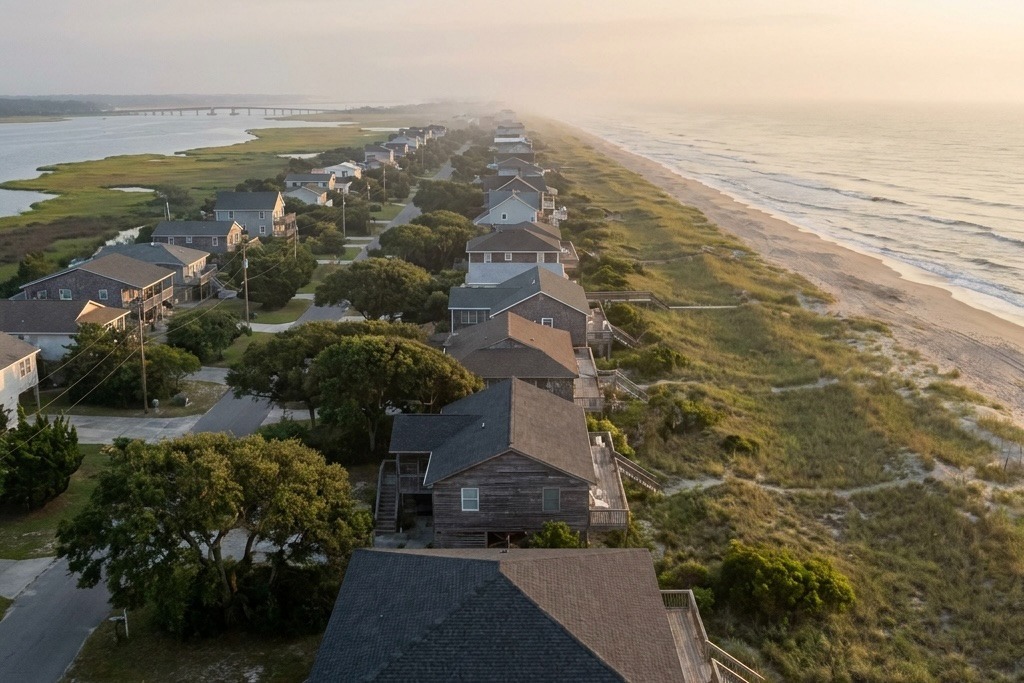
Brunswick County's barrier island communities sit at the convergence of two salt sources: ocean-driven aerosols from the Atlantic and the quieter, persistent humidity rising off the Intracoastal Waterway (ICW). That combination means salt particles aren't just landing on your roof during storms. They're settling daily, even on calm mornings with a light onshore breeze.
Cherry Grove faces the Atlantic almost directly, with a limited landmass buffer. Ocean Isle Beach is a narrow barrier island surrounded by water on both sides. Sunset Beach, though slightly more protected, still sees salt deposition from the ICW to the north. All three sit in what coastal engineers call a high-deposition zone, where salt concentration in the air is measurably higher than even 10 miles inland near Shallotte or Bolivia.
Most people don't realize how much the combination of storm salt and daily passive deposition compounds over time, by the time a nor'easter rolls through in January, it's landing on a roof that's been accumulating residue since the previous March.
The Science Behind Salt Air Corrosion: How It Actually Destroys Your Roof
Salt corrodes roofing the same way it destroys a car left near the ocean. Salt particles land on your roof, absorb atmospheric moisture, and form a weak electrolyte solution. That solution accelerates rust on metal flashings, fasteners, and ridge caps, often years before you'd see the same corrosion in a non-coastal environment, and metal roof rust repair becomes a more urgent conversation the closer you are to the water.
For asphalt shingles, the mechanism is different but equally damaging. Salt crystals work into the granule matrix on the shingle surface, then expand and contract with temperature swings. Over time, that cycling loosens granules, exposes the asphalt underlayer, and speeds up UV degradation. Roofs that might last 20-25 years in Raleigh are showing significant granule loss at 10-12 years in Cherry Grove, and how long a shingle roof actually lasts near the coast tells a very different story than what the packaging says.
Salt Air Corrosion Timelines, Coastal vs. Inland Roof Lifespans
Here's how common roofing materials hold up at different distances from the Brunswick County coastline:
|
MATERIAL |
INLAND (10+ MILES) |
3-10 MILES |
1-3 MILES |
0-1 MILE |
|
Asphalt 3-Tab |
15-20 yrs |
12-15 yrs |
8-12 yrs |
7-10 yrs |
|
Architectural Asphalt |
22-28 yrs |
17-22 yrs |
12-16 yrs |
10-13 yrs |
|
Metal (standard steel) |
35-45 yrs |
25-35 yrs |
15-20 yrs |
10-15 yrs |
|
Metal (Galvalume/aluminum) |
40-50 yrs |
35-45 yrs |
25-35 yrs |
20-28 yrs |
|
Standing Seam Metal |
40-60 yrs |
35-50 yrs |
28-38 yrs |
22-30 yrs |
These ranges assume proper installation and regular maintenance. Skip the maintenance, and you're looking at the low end of each range or worse.
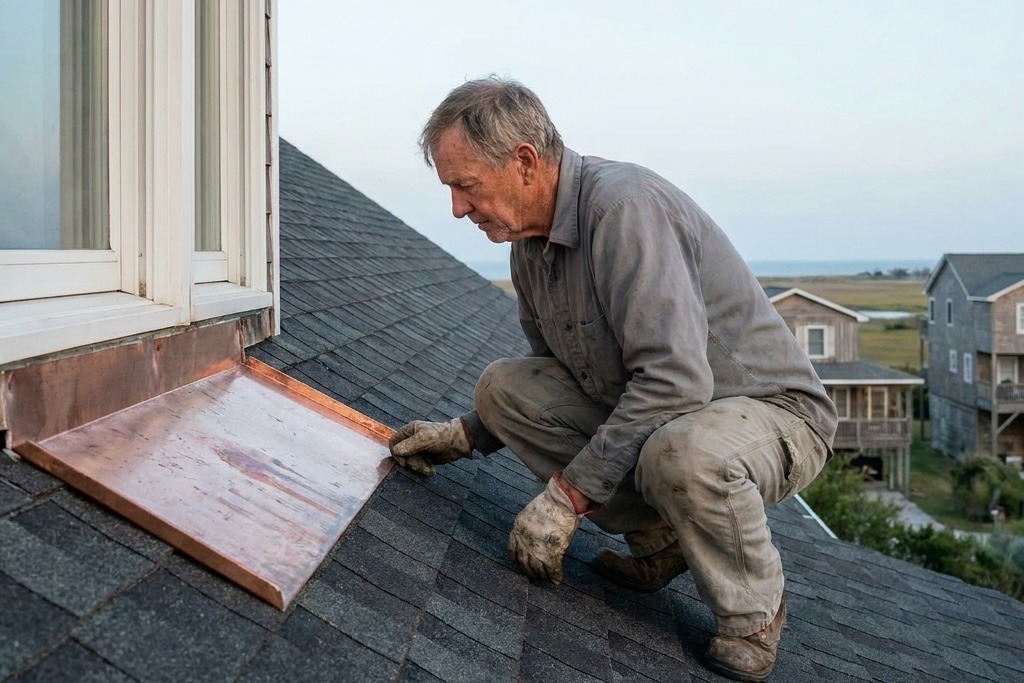
Have your flashings, fasteners, and ridge cap inspected every spring by a contractor familiar with Brunswick County's salt exposure conditions, these components fail years before the surface shingles show visible damage.
Which Roofing Materials Hold Up Best in Brunswick County's Coastal Climate
If you're replacing a roof in the Cherry Grove to Sunset Beach corridor, material selection is the most important decision you'll make. Standard galvanized steel is a poor choice this close to the coast, manufacturer durability ratings are based on ASTM test conditions that assume moderate coastal exposure, not a direct Atlantic-facing deposition zone where salt load runs well above those baselines.
- Aluminum and Galvalume standing seam panels are the highest-performing options for oceanfront and near-oceanfront homes. Aluminum doesn't rust, and Galvalume's aluminum-zinc alloy resists salt corrosion far better than standard galvanized steel. The upfront cost is higher, but the lifespan differential within a mile of the water makes it the practical choice.
- For homeowners committed to asphalt, architectural shingles with a higher granule density outperform 3-tab in coastal conditions. Pair them with a synthetic underlayment rather than felt, synthetic handles moisture intrusion and salt migration far better, with less tendency to degrade when saturated.
Brunswick County's building code has specific wind uplift requirements for coastal zones, so confirm your contractor is specifying products that meet those thresholds. A GAF Master Elite certified contractor is held to installation standards that align with both manufacturer specs and local code requirements, which matters more in a high-deposition coastal zone than most homeowners realize until something goes wrong.
Warning Signs Your Roof Is Already Losing the Battle Against Salt Air
Most salt air damage isn't dramatic until it's expensive. The early signs are easy to dismiss.
Rust staining on exterior walls below roof flashings is one of the clearest indicators. The flashing itself may look intact, but the staining means oxidation is already active underneath. Granules in the gutters are normal in small quantities after installation; heavy granule loss after 8-10 years near the beach means the salt cycling has started in earnest. Missing or lifting shingles after a storm suggest the fasteners have already corroded enough to lose holding strength.
The repair-versus-replacement line tends to get crossed very covertly. By the time you notice the exterior rust staining and granule loss together, the underlayment beneath has usually been compromised for a season or two already.
Interior staining near the roofline after rain events means the underlayment has already failed somewhere. If you've purchased a vacation home or rental property in this area and don't know the roof's history, a professional inspection is the only reliable starting point, there's no safe assumption about condition based on surface appearance alone.
The Right Maintenance Schedule for Oceanfront Homes in the Cherry Grove to Sunset Beach Corridor
For homes within a mile of the water, once-a-year maintenance isn't enough. A practical schedule runs on two rhythms: spring and fall. Each spring, after nor'easter season ends, do a ground-level visual inspection for lifted shingles, rust staining, and granule color variation across the surface. Clean gutters and downspouts both spring and fall, salt-saturated debris sitting against the fascia accelerates corrosion faster than most homeowners expect.
In late summer, rinse the roof surface with fresh water if you're within half a mile of the ocean to remove salt deposits before they work deeper into the surface material. Every three to five years, have a roofing professional do a hands-on inspection covering flashing integrity, fastener condition, and underlayment status at any penetration points, especially after a named storm, even one that seemed minor at the time.
For property owners managing multiple rentals or investment properties along this corridor, a contractor with a structured maintenance program takes the tracking burden off your plate entirely.
Work With a Coastal Roofing Team That Knows Brunswick County
Linta Roofing has been serving coastal homeowners since 1948, through storm seasons, insurance claims, and the kind of slow-burning salt damage that most contractors don't catch until it's a full replacement conversation. As a GAF Master Elite certified contractor, every installation comes with workmanship warranties up to 25 years, a dedicated superintendent on-site throughout the project, and real-time progress tracking through their project app so you're never left wondering what's happening on your roof.
If your home sits in the Cherry Grove to Sunset Beach corridor and you're not sure where your roof stands, a professional inspection is the place to start. Schedule your inspection with us today.
Linta Roofing, at lintaroofing.com, is a third-generation family roofing contractor based in Little River, South Carolina, serving four counties across two states.
Frequently Asked Questions
What are the best roofing materials to resist salt air corrosion near Ocean Isle, NC?
For homes near Ocean Isle, metal roofing with a Kynar-coated or galvalume finish holds up significantly better against salt air roof damage than standard galvanized steel or bare aluminum. Concrete and composite tiles also perform well because they don't oxidize the way metal does. Whatever material you choose, the fasteners and flashings need to be rated for coastal exposure too, upgrading the roof surface while leaving standard hardware is a common mistake that causes early failures.
How often should coastal roofs be inspected or maintained near Sunset Beach, NC?
Roofs near Sunset Beach should be professionally inspected at least twice a year, once in spring before hurricane season and once in fall after it ends. Salt air roof damage compounds quietly between inspections, so catching early corrosion at flashings and ridge caps before it spreads is far cheaper than addressing it after water has already entered. Rinsing the roof surface with fresh water every few months also slows the salt buildup between professional visits.
What are the early signs of salt air roof damage in coastal North Carolina?
The earliest signs of salt air roof damage are usually rust staining around metal flashings, discoloration near fastener heads, and granule loss on asphalt shingles that looks premature given the roof's age. You might also notice paint peeling on soffits or fascia boards, which often means moisture is already working its way in. These signs show up at the edges and penetrations first, not the field of the roof, so that's where to look.
Why is roof underlayment important for homes exposed to salt air in Cherry Grove, Ocean Isle, and Sunset Beach?
Underlayment is the last line of defense once salt air corrosion compromises the outer roofing layer, and in coastal areas like Cherry Grove, Ocean Isle, and Sunset Beach, that outer layer takes a beating faster than most homeowners expect. A synthetic underlayment rated for high-humidity, high-wind environments holds up far better than standard felt, which can degrade and allow moisture infiltration before the damage is even visible from the outside. Skimping on underlayment quality is one of the most common ways coastal roofing jobs fail within just a few years.
