.png?width=200&height=78&name=LR_Logo_vector_horizontal_color_shadow%20(1).png)


Choosing between ridge vents and power attic fans can feel overwhelming when your Myrtle Beach attic reaches 140°F on a 90°F summer day. Both systems promise to solve your ventilation problems, but they work in completely different ways. Ridge vents use natural airflow and the stack effect, while power fans actively pull hot air out using electricity or solar power.
Quick intro to the team weighing in here: Linta Roofing, at lintaroofing.com, is a third-generation family roofing contractor based in Little River, South Carolina, serving the Grand Strand. They handle residential and commercial roofs across four counties in two states, covering repair, replacement, maintenance, inspection, emergency response and insurance claim work.
Quick answer: Ridge vents work best for homes with continuous ridge lines and adequate soffit intake, offering energy-free operation and balanced airflow. Power attic fans excel in the humid coastal climate of the Grand Strand or complex roof designs where passive ventilation falls short, but they require proper intake sizing to avoid pulling conditioned air from your living space.
Key insight: The International Residential Code requires 1 square foot of ventilation for every 150-300 square feet of attic space, split between intake and exhaust vents for optimal performance.
At-a-glance comparison
| Factor | Ridge Vents | Power Attic Fans |
|---|---|---|
| Energy use | None | 300-600W electric / Solar available |
| Best roof type | Simple gable, long ridges | Hip roofs, complex designs |
| Noise level | Silent | Low hum when running |
| Maintenance | Minimal | Motor/thermostat replacement |
Ridge vents create continuous exhaust along your roof peak, working with soffit vents to establish natural airflow. They blend invisibly with your roofline and operate without electricity. Power fans actively exhaust hot air through thermostat or humidity controls, making them effective for rapid temperature reduction in the challenging coastal conditions of Horry and Georgetown counties.
How attic ventilation protects your coastal home
Proper attic ventilation prevents three major problems that cost Myrtle Beach homeowners thousands in repairs. Heat buildup forces your air conditioning to work harder, increasing energy bills by 10-40% during the long, humid summers common to the Grand Strand. Moisture accumulation leads to mold growth, wood rot, and compromised insulation effectiveness—particularly concerning in our coastal environment where humidity levels remain high year-round. While ice dams aren't a concern in our mild winters, poor ventilation can still trap moisture that damages roofing materials and reduces their lifespan.
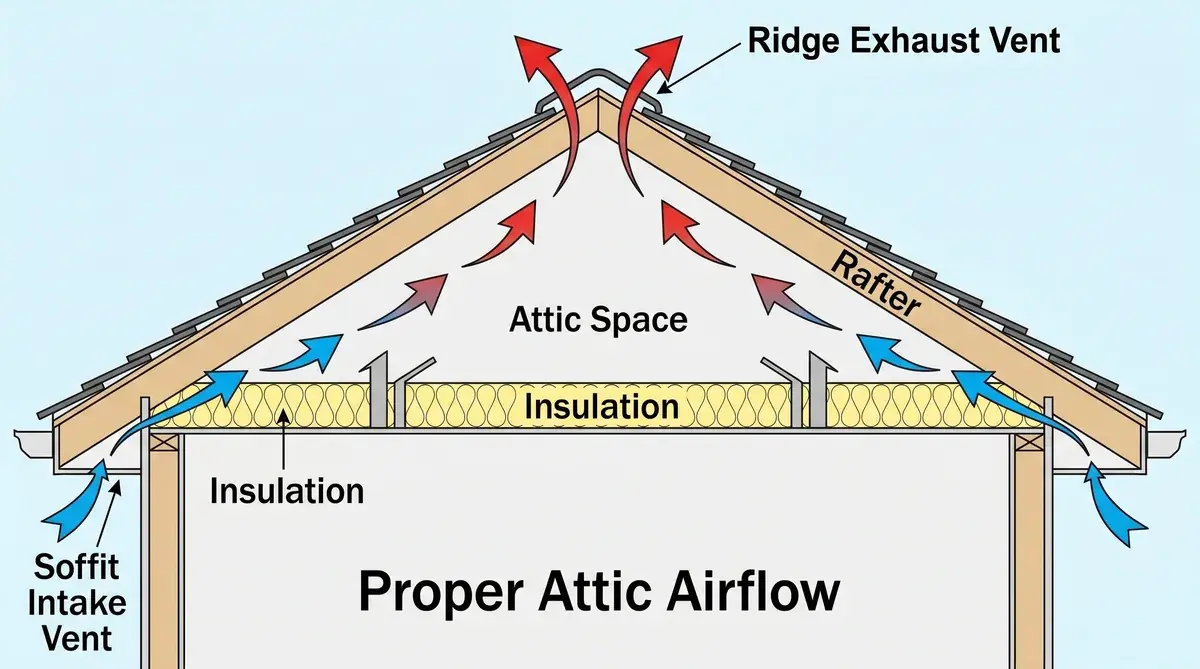
The stack effect drives natural ventilation as hot air rises and exits through high vents while cool air enters through low intake vents. This creates continuous airflow that removes both heat and humidity. Building codes typically require balanced systems with intake area equal to exhaust area, following either a 1:150 or 1:300 ratio depending on vapor barrier installation.
Ridge vents deliver consistent passive ventilation
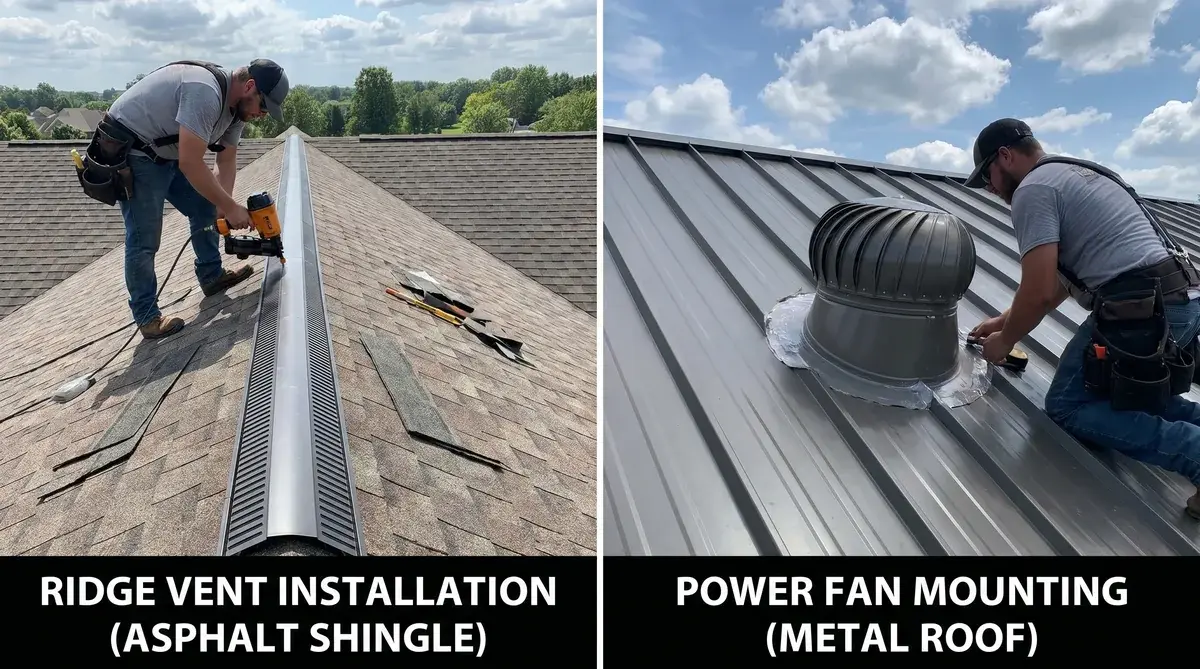
Ridge vents install along your roof peak, creating a continuous exhaust opening that spans the entire ridge length. They work exclusively through natural forces, requiring no electricity or moving parts. External baffles protect against weather infiltration while maintaining airflow even during the light coastal breezes typical of Little River and surrounding areas.
Advantages of ridge vents:
- Uniform ventilation across the entire attic space
- Invisible installation that preserves your home's appearance
- Zero operating costs with no electrical requirements
- Weather-resistant design that withstands coastal storms when properly installed
- Compatible with most shingle manufacturer warranties from GAF and Owens Corning
Limitations to consider:
- Requires adequate soffit intake vents to function effectively
- Less effective on hip roofs or broken ridge lines common in coastal developments
- May need supplemental ventilation during extreme summer heat in the Carolinas
- Installation quality directly impacts performance and leak prevention
Ridge vents work best on simple gable roofs with unobstructed ridge lines and sufficient soffit area. They excel in our moderate coastal climate where natural temperature differences create reliable stack effect. Homes with 18+ linear feet of ridge and matching soffit intake typically achieve excellent results with passive systems.
Important note: Ridge vents without proper soffit intake can actually pull conditioned air from your living space through ceiling penetrations, increasing energy costs instead of reducing them.
Power attic fans provide active temperature control
Power attic fans mount on your roof or gable wall, using electric motors or solar panels to actively exhaust hot attic air. Thermostats trigger operation when attic temperatures exceed set points, typically 90-110°F. Some models include humidity sensors for moisture control during the humid conditions common to the Myrtle Beach area.
Benefits of power fans:
- Rapid hot air removal during extreme summer temperatures in the Carolinas
- Precise temperature control through thermostat settings
- Effective humidity reduction to prevent mold and mildew in our coastal climate
- Solar options eliminate operating costs while maintaining active control—ideal for our sunny region
Potential drawbacks:
- Energy consumption adds $50-150 annually to electricity bills
- Motor and thermostat components require periodic replacement in the salt air environment
- Can create negative pressure that pulls conditioned air from living spaces
- Noise from fan operation, though typically minimal with quality units
Power fans make sense for homes with limited soffit area, complex roof designs common in coastal developments, or during the extreme heat and humidity conditions of Grand Strand summers. They work well on hip roofs where ridge vents provide insufficient coverage. In our hot, humid coastal climate, active exhaust helps maintain lower attic temperatures when passive systems reach their limits.
Ridge vents vs power fans head-to-head
Cooling performance: Power fans move larger air volumes quickly, reducing attic temperatures faster during peak summer heat in the Carolinas. Ridge vents provide steady, continuous cooling that prevents extreme temperature buildup throughout long summer days.
Energy efficiency: Ridge vents consume no energy while power fans add electrical load. However, power fans may reduce air conditioning costs more than their operating expense during the extended cooling season in our region.
Roof compatibility: Ridge vents require continuous ridge lines and adequate soffit intake. Power fans work on any roof type but need proper intake sizing to prevent backdrafting conditioned air—especially important in tightly sealed coastal homes.
Installation and maintenance: Ridge vents install during roofing projects with minimal ongoing maintenance. Power fans retrofit easily but require electrical connections and eventual motor replacement every 10-15 years, with salt air potentially reducing component lifespan.
Choosing the right system for your Myrtle Beach home
Start by evaluating your roof design and existing ventilation. Homes with simple gable roofs and adequate soffit area typically benefit most from ridge vents. Complex roofs with multiple levels, hip designs common in coastal neighborhoods, or limited soffit space often need power fans for effective ventilation.
Consider our local climate patterns and energy costs. The consistently warm, humid conditions of the Grand Strand may justify power fan operating costs through improved comfort and air conditioning efficiency, especially during the extended summer season from May through October.
Decision framework:
- Simple gable roof + good soffits = Ridge vents
- Hip roof or complex coastal design = Power fan consideration
- Extreme summer heat + high AC costs = Power fan benefits
- Energy efficiency priority + moderate conditions = Ridge vents
- Existing balanced system = Avoid adding power fans
Professional assessment helps identify intake deficiencies, air sealing needs, and proper system sizing for coastal conditions. Many ventilation problems stem from blocked soffit vents or inadequate intake area rather than insufficient exhaust capacity. As a family-owned roofing company serving the Myrtle Beach area since 1948, we've seen how proper ventilation design protects homes from both heat damage and moisture issues common to our coastal environment.
The most effective attic ventilation systems balance intake and exhaust while maintaining proper air sealing at the ceiling level. Whether you choose ridge vents or power fans, success depends on creating complete airflow paths and preventing conditioned air loss through ceiling penetrations. Both systems protect your coastal home when properly designed and installed for the specific challenges of our humid, subtropical climate.
Want to go deeper on ventilation topics like this? Linta Roofing runs a roofing learning center and a YouTube channel where the owner answers homeowner questions to provide first-person education to everyone.
Frequently Asked Questions
Is a ridge vent better than an attic fan?
Do ridge vents work without soffit vents?
Can I use both ridge vents and attic fans together?
Are solar attic fans better than electric power vents?
Topics:
