.png?width=200&height=78&name=LR_Logo_vector_horizontal_color_shadow%20(1).png)

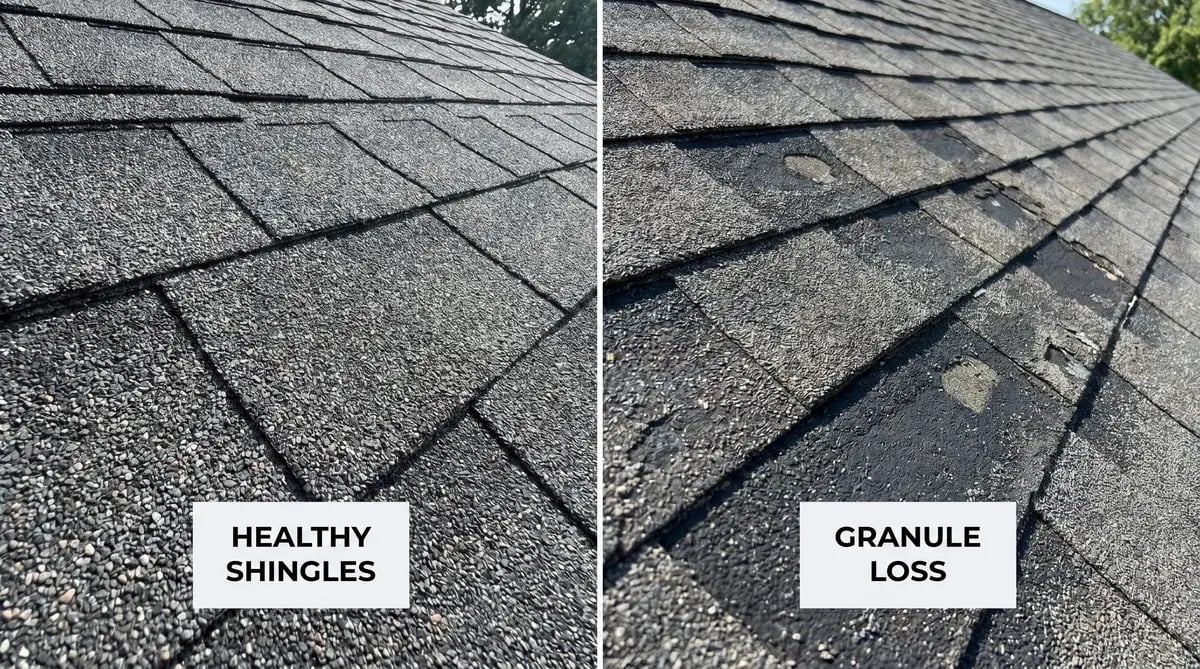
Have you noticed small, sand-like particles collecting in your gutters or around your downspouts? Those aren't just random debris – they're granules from your asphalt shingles, and finding them might have you wondering if your roof is failing. The good news is that some granule shedding is completely normal, especially on newer roofs. However, excessive granule loss can signal that your roof's protective armor is wearing thin, potentially shortening its lifespan and leaving your home vulnerable to leaks.
Key insight: While all asphalt roofs naturally shed granules over time, heavy accumulation in gutters or visible bald patches on shingles typically indicates your roof needs professional attention within 2-5 years.
Understanding what granule loss means, what causes it, and when it becomes a serious concern can help you make informed decisions about repairs versus replacement. This guide will walk you through everything you need to know to assess your roof's condition and take the right next steps. As a family-owned roofing company serving the Myrtle Beach area since 1948, we've seen how coastal conditions can accelerate granule loss and want to help homeowners recognize when action is needed.
Here's a closer look at that company: Linta Roofing, at lintaroofing.com, is a third-generation family roofing contractor based in Little River, South Carolina, serving the Grand Strand. They handle residential and commercial roofs across four counties in two states, covering repair, replacement, maintenance, inspection, emergency response and insurance claim work.
What are roof shingle granules and why do they matter?
Think of granules as your roof's protective armor. These small, crushed mineral particles – typically made from ceramic-coated rock, basalt, or slate – are embedded into the surface of asphalt shingles during manufacturing. They serve three critical functions that directly impact your roof's performance and longevity.
First, granules block harmful UV rays from reaching the asphalt layer beneath. Without this protection, the sun would quickly dry out and crack the asphalt, causing your shingles to become brittle and fail prematurely. This is especially important in the Myrtle Beach area, where intense coastal sun and salt air create challenging conditions for roofing materials. Second, they provide fire resistance, helping your roof meet building code requirements for fire safety ratings. Finally, granules give your roof its color and help water shed efficiently during storms – a crucial function given our region's heavy rainfall and hurricane exposure.
When granules start disappearing, the underlying asphalt becomes exposed to direct sunlight and weather. This accelerates the aging process dramatically – what would normally take years of gradual wear can happen in a single season once the protective granule layer is compromised.
What causes granule loss on asphalt shingles?
Several factors can cause your shingles to lose their protective granules, and understanding the cause helps determine how urgently you need to act.
Normal aging is the most common culprit. As shingles approach their expected 20-30 year lifespan, the bond holding granules to the asphalt naturally weakens. This process accelerates on south-facing slopes that receive the most intense sun exposure throughout the day. In coastal South Carolina, the combination of salt air and UV exposure can accelerate this natural aging process.
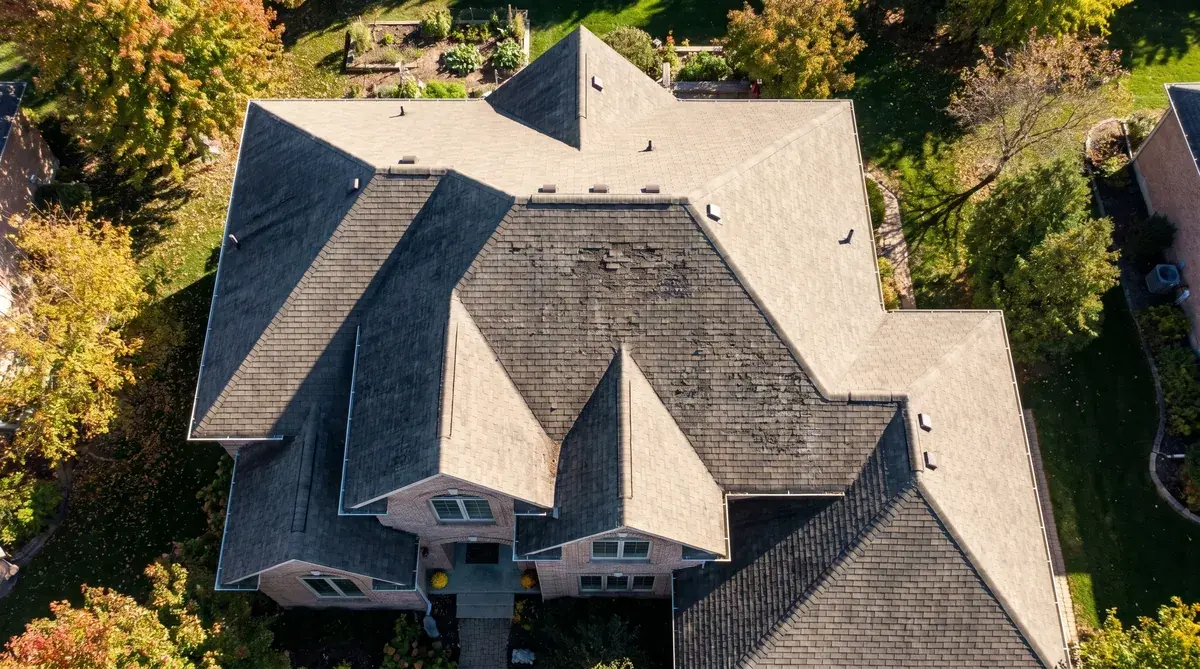
Hail and storm damage can strip granules suddenly and extensively. Even moderate hail can create impact marks that dislodge granules in concentrated patches across your roof. Wind-driven debris like tree branches also acts like sandpaper, gradually grinding away the granule surface over time. Living in Horry and Georgetown counties, homeowners face regular threats from Atlantic hurricanes and severe thunderstorms that can cause significant granule displacement.
Important note: Foot traffic from service technicians, holiday light installers, or DIY maintenance can crush granules into the asphalt and scrape them loose, creating visible paths of damage across your roof.
Poor attic ventilation causes another common problem called blistering, where trapped heat builds up under shingles and causes the asphalt to bubble and shed granules prematurely. This is particularly problematic in our humid coastal climate where proper ventilation is essential. Manufacturing defects, though rare with major brands like GAF and Owens Corning that we work with, can also cause unusually heavy granule loss within the first few years after installation.
How to identify problematic granule loss from the ground
You can assess your roof's condition without ever climbing a ladder by following a systematic ground-level inspection approach.
Start by examining your roof from across the street or your yard, looking for patches where shingles appear darker, smoother, or shinier than surrounding areas. These bald spots indicate exposed asphalt where granules have worn away. Use binoculars if needed to get a closer look at suspicious areas.
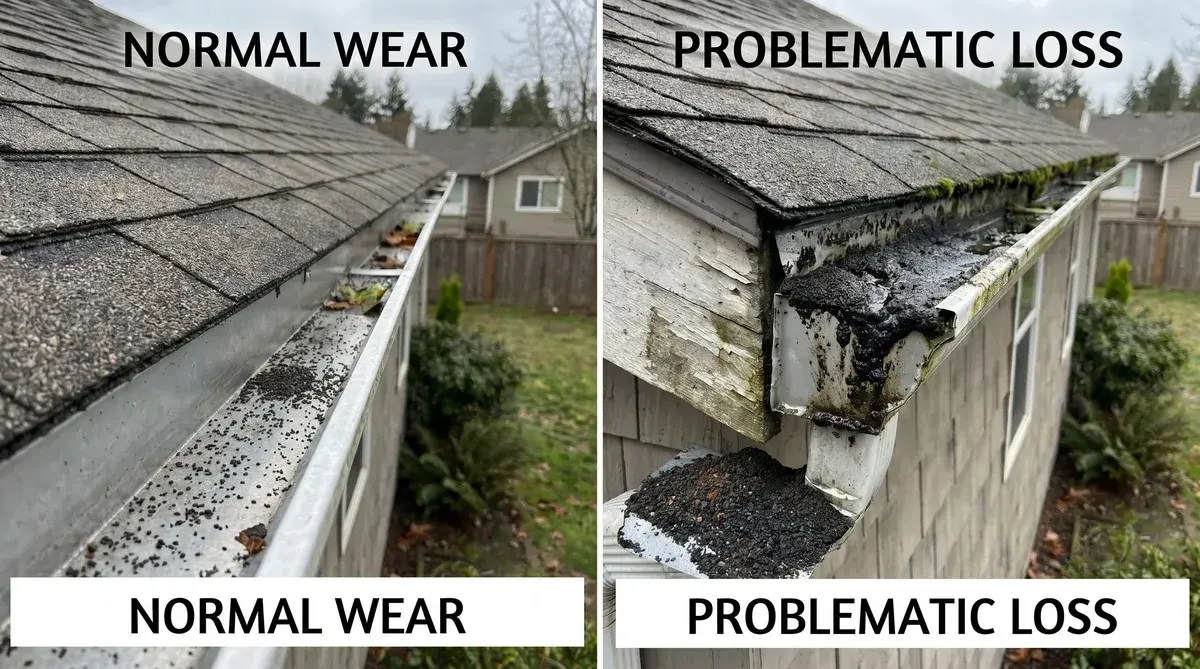
Next, check around your downspouts and splash blocks for granule accumulation. A light dusting after heavy rain is normal, especially on newer roofs shedding excess manufacturing granules. However, finding handfuls of granules or seeing repeated heavy deposits after every storm signals active, concerning loss.
| Roof Age | Normal Granule Loss | Concerning Signs |
|---|---|---|
| 0-5 years | Light shedding in first year | Heavy deposits or visible bald patches |
| 6-15 years | Minimal granules in gutters | Consistent accumulation after storms |
| 16+ years | Gradual, uniform thinning | Widespread bare spots or curling edges |
If you can safely access your gutters, look for granule buildup that resembles coarse, dark sand. The color should match your roof – if it does, that confirms where the material is coming from. Heavy accumulation that covers the bottom of clean gutters indicates accelerated shedding that warrants professional evaluation.
When granule loss means it's time for action
The severity and pattern of granule loss, combined with your roof's age, determines whether you need immediate replacement, can manage with repairs, or should simply monitor the situation.
For roofs under 15 years old, localized granule loss from hail damage or mechanical wear might only require targeted shingle replacement. This approach makes financial sense when the majority of your roof remains in good condition and the damage is contained to specific areas.
However, widespread granule loss on roofs approaching 20 years typically signals it's time to start planning for replacement. Once significant areas of asphalt are exposed, deterioration accelerates rapidly in our coastal environment. The remaining shingles become more vulnerable to cracking, curling, and water infiltration – problems that can develop quickly in the humid conditions common to the Little River and Myrtle Beach area.
Storm-related granule loss operates under different rules. If hail or severe weather causes sudden, extensive granule displacement, this may qualify for insurance coverage regardless of your roof's age. Proper documentation through professional inspection becomes crucial for successful claims. As a GAF and Owens Corning certified contractor, we can provide the detailed assessment insurance companies require for storm damage claims.
The key is recognizing that granule loss alone doesn't automatically mean emergency replacement, but it does mean your roof's protective capacity is diminishing. Taking action while you still have time prevents the much higher costs and stress of dealing with active leaks and interior water damage.
Understanding granule loss helps you make informed decisions about your roof's future. While some shedding is inevitable as your roof ages, knowing when normal wear crosses into problematic territory protects both your home and your budget. When in doubt, a professional inspection provides the detailed assessment needed to determine your best course of action and timeline for any necessary work.
Want more homeowner tips like this? Linta Roofing runs a roofing learning center and a YouTube channel where the owner answers homeowner questions to provide first-person education to everyone.
FAQ
Is it normal for new shingles to lose granules?
Does granule loss always mean I need a new roof?
Why are there roof granules in my gutters and downspouts?
Is granule loss from hail damage covered by homeowners insurance?
Topics:
