.png?width=200&height=78&name=LR_Logo_vector_horizontal_color_shadow%20(1).png)

What Happens When Your Roofer Meets the Insurance Adjuster
October 6th, 2026
5 min read
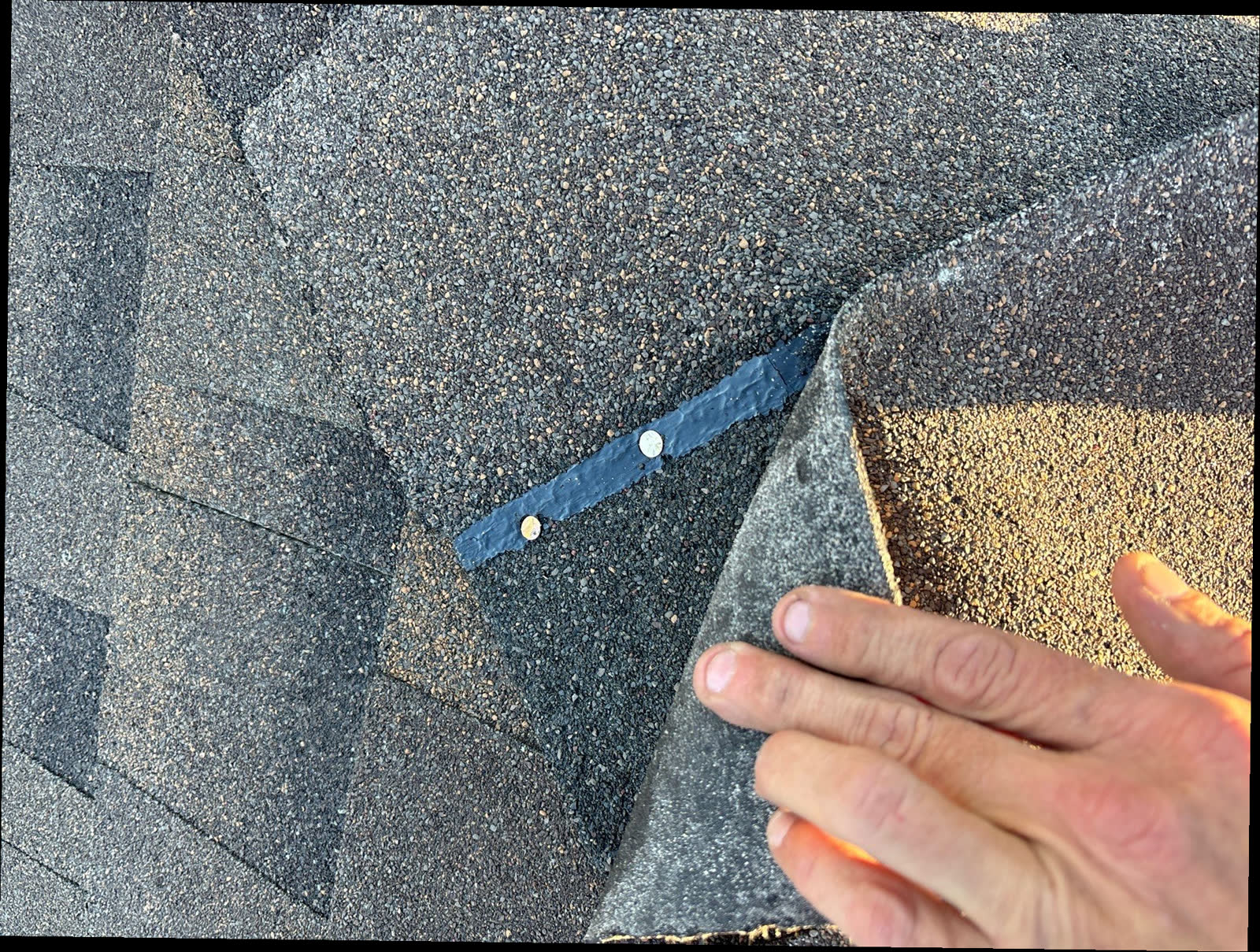
When your roofer meets the insurance adjuster on site, the outcome of your claim is usually decided in that hour, because the scope is agreed on the roof and is hard to change afterward. The roofer documents the storm damage, points out code items, and helps settle the approved scope before the adjuster leaves the property.
That hour is the most important one in a storm claim, and most homeowners have no idea what happens on the roof while they wait inside.
We are HAAG-trained project managers at Linta Roofing, and we are experienced with insurance adjuster inspections. Here is how that visit goes, from the driveway to the final scope.
We inspect storm damage to the same engineering standard insurers use to decide whether a claim is covered. Our project managers are HAAG trained, the damage assessment is free, and we meet your adjuster at the house so the approval reflects current building code instead of leaving you to pay the difference.
Our visit starts before the adjuster's does
Once your carrier gives you an inspection date, we go to the house ahead of the appointment window. We confirm the date of loss, review the photos from your free damage assessment, and walk the property so nothing is a surprise.
Homeowners often ask whether a roofer should be present for the adjuster inspection. Yes. Adjusters usually have a full schedule of inspections, so the time spent on your roof is limited. We are there to make sure that time covers every slope and every detail.
The storm report gets handed over
When the adjuster arrives, we introduce ourselves and hand over the storm report for your address. It lists the date of the storm, the reported hail size or wind speed, and how close the event was to your home.
With the weather data already on the table, the adjuster can skip the question of whether a storm hit and start on what it did to the roof. Our photos from your free assessment back up the report, so the inspection begins from a shared set of facts.
The roof gets walked and test squares get marked
The insurance adjuster roof inspection usually starts with a walk of the ground, gutters, downspouts, and soft metals. Dents in vents and flashing help confirm the direction and size of hail. Then we go up together.
On the roof, the adjuster marks test squares. A test square is a 10 by 10 foot section of each roof slope, and the damage inside it is counted and compared against the carrier's threshold. We count alongside the adjuster and take our own photos of every square.
Two people counting the same square catches missed hits before they become a disagreement. It also matters that we inspect the engineering standard the adjuster's own company relies on. We are not arguing with the method. We are checking that it is applied to every slope.
Code items the adjuster misses come up
This is where a roofer in the room changes the outcome. Adjusters focus on visible storm damage. Many of the items that make a replacement code compliant do not show up in a damage count.
We raise them on the spot. Drip edge, starter strips, ventilation, flashing, and underlayment requirements are common examples. When those items are left out, the homeowner ends up paying the difference between the insurance payout and the real cost of a compliant roof. Our page on code upgrade coverage for your roof explains what a policy may cover and why the wording matters.
We keep this part factual. We point to the code requirement, show the location on the roof, and ask the adjuster to confirm it in the scope.
The scope gets agreed on the spot
By the end of the visit, the adjuster has a damage count, photos, and our list of code items. We go through the scope line by line before anyone leaves the driveway. That is the moment the roofer's presence pays off, because agreement reached on site is much easier to keep than a supplement request weeks later.
Adjusters use pricing software and regional labor costs to build the estimate. If you want to see how the numbers come together, read how insurance companies determine roof cost.
Homeowners should know what to say to the roof insurance adjuster
Many homeowners want to know what to say to a roof insurance adjuster. The short version is to be honest, stay factual, and let your roofer handle the technical points. Do not guess about the age of the roof, past repairs, or the cause of damage.
Some phrases can hurt a claim without the homeowner realizing it. We put together a full guide on what not to say to an insurance adjuster for anyone who wants to prepare.
The process behind the visit is not improvised
Linta Roofing has helped thousands of homeowners manage the roof insurance claim process over the last 40 years and more. That volume is why the team has a clear 3-step process and does not improvise per storm.
You can read the full breakdown of how Linta helps with the insurance process. If your home is on the coast, our storm damage insurance assistance in Myrtle Beach page covers the local details.
The approved scope becomes a documented installation
Once the claim is approved, the same standard carries into the work itself. Linta Roofing assigns a dedicated quality control manager to each installation and sends the homeowner live photos and videos as the work happens.
Every Linta Roofing install is inspected by a quality control manager and separately reviewed by the production manager, so each job passes two sets of eyes before sign-off. The work is documented in CompanyCam, often more than 300 photos on a single job, and the homeowner is sent live photos and video as the work happens. The owner puts it simply: proof is greater than a promise.
Book the inspection before the adjuster visit is scheduled
The best time to bring in a roofer is before the adjuster's date is set. A free assessment gives us time to document the roof and prepare the storm report, so we are ready when the adjuster shows up.
FAQ
1. Should my roofer be there when the insurance adjuster comes?
Yes. A roofer on site can document damage, count test squares alongside the adjuster, and raise code items that would otherwise be left out. Agreement reached during the visit is usually easier to keep than a change requested afterward.
2. What does a roof insurance adjuster look for?
The adjuster looks for storm damage tied to the date of loss, such as hail hits, wind creasing, lifted or missing shingles, and dented soft metals. They count damage inside test squares on each slope and compare it to the carrier's threshold. They also note the roof's age and condition.
3. Can a roofer talk to my insurance adjuster?
Yes. Roofers routinely meet adjusters at the property with the homeowner's permission. The roofer speaks to the technical side, including damage, measurements, and code requirements, while the homeowner stays responsible for the claim and the policy.
4. What happens if the adjuster and roofer disagree?
The first step is to resolve it on the roof, using photos, test square counts, and the code requirement in question. If a disagreement remains, the roofer can submit documentation with a supplement request after the visit. Homeowners can also ask the carrier about its formal review process.
5. How long after the adjuster visit do I get a decision?
Timing varies by carrier and by state rules. Many homeowners receive an estimate or a coverage decision within days to a couple of weeks. Your claim paperwork or your carrier can confirm the deadline that applies to your policy.
6. What should I have ready before the adjuster inspects my roof?
Gather your claim number, your policy information, the date of the storm, and any photos you took after it. Records of past repairs and the roof's age help too. If your roofer already did a free damage assessment, share those photos so everyone starts from the same set of facts.
7. What if the adjuster misses damage or code items?
Tell the adjuster during the visit and ask for it to be added to the scope. If it is still left out, your roofer can submit photos and code documentation with a supplement request. Many carriers also allow a re-inspection, so ask yours how to request one.
Jeffrey Linta is the CEO and owner of Linta Roofing, a third-generation roofer who took ownership of the family business in 2023. He began his career in high school with boots on the ground, working in the field and learning the roofing trade from his father before joining the company full time after college graduation. His professional credentials include GAF Master Elite Contractor, IKO ROOFPRO Craftsman Premier Contractor, GAF GoldElite Commercial Contractor, GAF presidents club award winner and SC Safe Home Certified Contractor. Under his leadership, Linta Roofing has earned recognition such as the Sun News' Best of the Beach in 2024 and 2025, an A+ rating from the Better Business Bureau, and hundreds of 5-star customer reviews year after year. Most recently, Linta Roofing was honored with the Best Roofing Company of the Year 2025 award from Roofing Insights. Born and raised on the Grand Strand, Jeffrey is passionate about educating homeowners so they can make confident, informed decisions about their roofing investments. Outside of work, he enjoys fishing and spending time with his wife, Erica, son, Grady, and golden retriever, Dixie. To learn more about Jeffrey Linta's story, check out his interview with Roofing Insights, a nationally recognized roofing education platform: Jeffrey Linta: Building a Roofing Company Without Fear of Competitors.
