

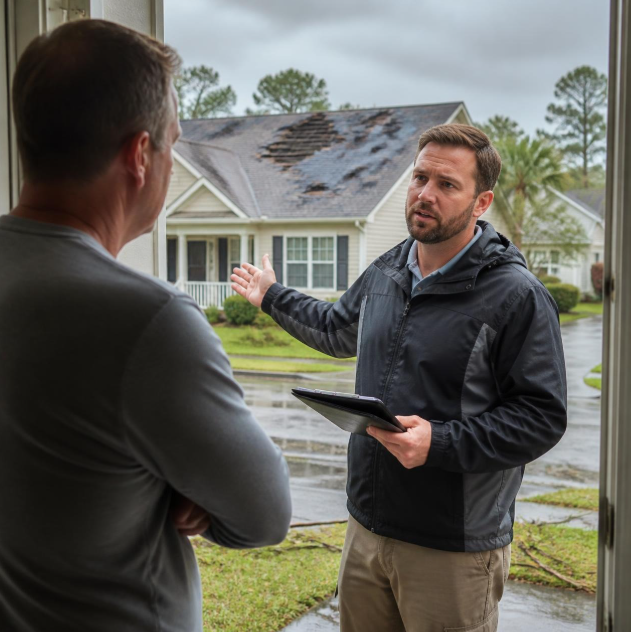
A roofing scam after a storm is usually an out-of-state crew that follows the storm path to your door, pushes you to sign the same day, and asks for money or your insurance claim before any work starts.
These contractors count on you being stressed, sleep-deprived, and unfamiliar enough with the repair process that a pitch at your front door feels like relief. On our jobs after every named storm on the Grand Strand, we meet homeowners who were knocked on before the power was back on. What follows is a timeline of how these scams unfold and exactly where to push back at each stage.
Understand Why Storm Chasers Target the Grand Strand
Storm chaser roofing companies are out-of-state or out-of-area crews who mobilize toward a disaster zone specifically to solicit work. They have no reputation to protect here, no crew to stand behind six months from now, and no reason to pick up the phone once they've cleared the county.
Our family has been roofing since 1948 and serving the Grand Strand since 1985, and the pattern after every hurricane season is consistent: the storm chasers arrive fast, work the hardest-hit neighborhoods, and are gone within weeks. The homeowners they leave behind are the ones calling us to fix what those crews either botched or never finished.
This guide covers the scams by the order you'll encounter them, from the door knock to the final payment. For two specific fraud tactics we cover in depth elsewhere, see our posts on fake wind damage roof scam and roofers who fake damage on purpose.
Spot Roofing Scam Red Flags at the Door in the First 72 Hours
The timeline starts at your front door, usually within 24 to 72 hours of the storm. The pitch sounds helpful: they were working in the neighborhood, noticed your roof, and just wanted to take a quick look. It's fast, friendly, and hard to refuse when you're staring at a tree branch in your attic. The same pitch also comes by phone, from callers who say they work with your insurance company and that your home was flagged for damage. Hang up and call your insurer at the number on your policy.
A few things to check before you let anyone on your property:
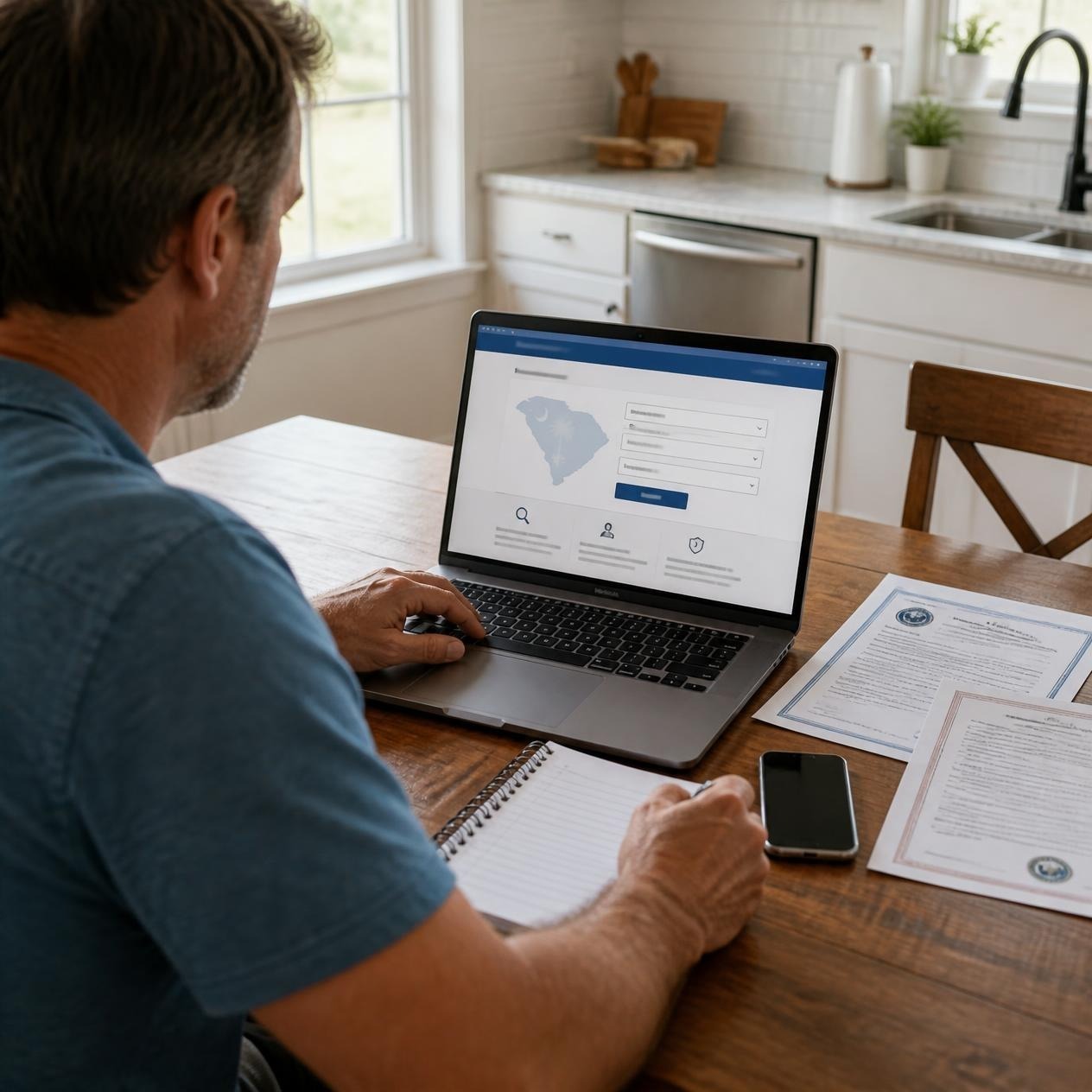
Ask for a South Carolina contractor's license number and look it up yourself at llr.sc.gov before the conversation goes any further. In South Carolina, residential roofers must be registered with the SC Residential Builders Commission, and commercial or larger jobs require a license from the SC Contractor's Licensing Board. Some storm chasers hold a license in their home state and work without one here. The license has to be valid in South Carolina. Ask for certificates of general liability insurance and workers' compensation too, and confirm both are active by calling the insurer named on each certificate. For a full walkthrough of what to verify, see our guide on how to check a roofing contractor's license and insurance.
Also ask how long the company has operated locally. An established Grand Strand roofer will have a verifiable address, local reviews, and a history that predates the storm by more than a few years. We have more than 1,000 five-star Google reviews and an A+ rating from the Better Business Bureau, and we'd expect any contractor you're considering to be able to show you something comparable.
Know What a "Free Inspection" Is Actually Offering
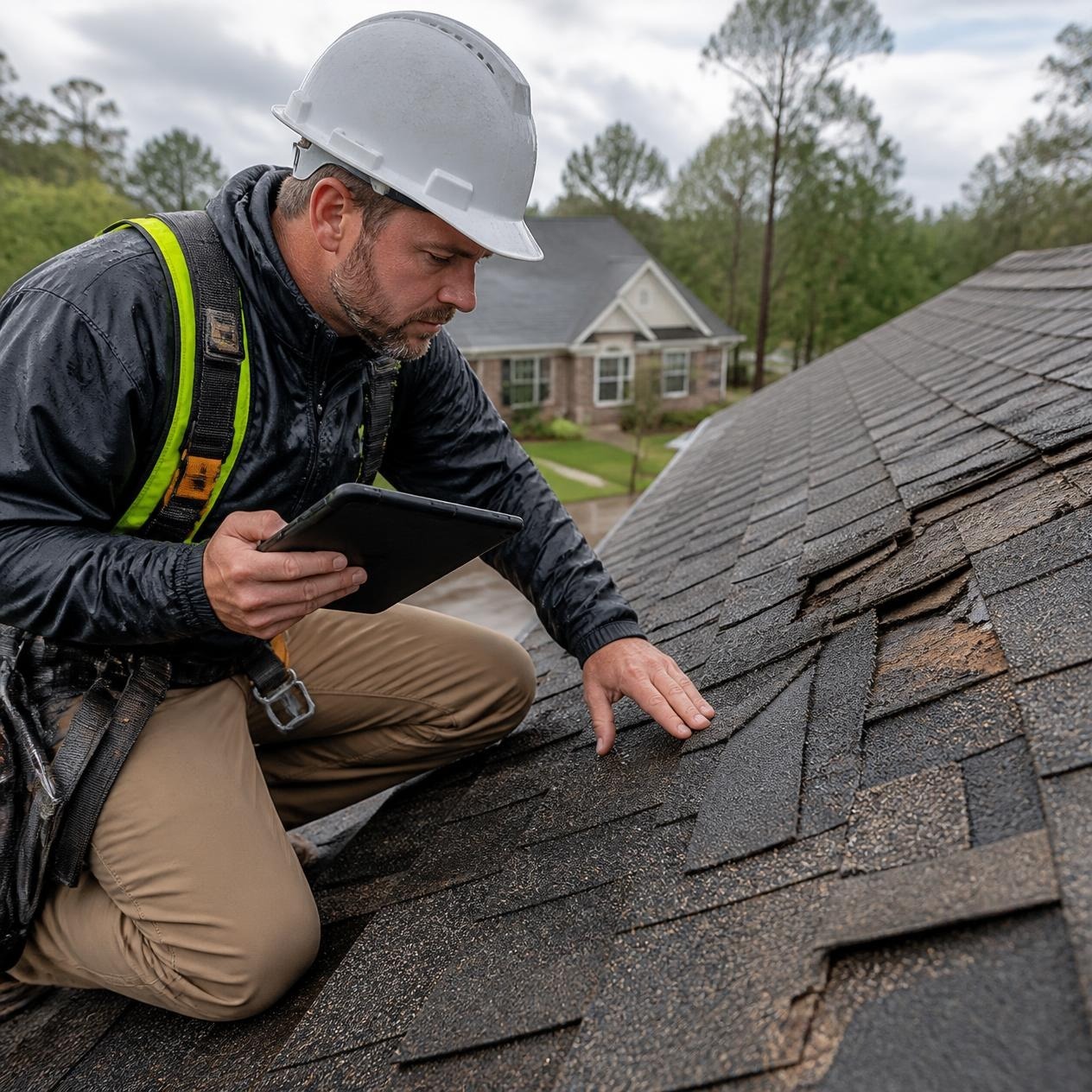
Once someone is on your roof, the next step is usually a photo presentation. They show you images of cracked shingles, lifted tabs, or granule loss and tell you the damage is severe enough to file a claim. You cannot verify those photos from the ground, and some may not be from your roof.
We inspect storm damage to the same engineering standard insurers use to decide whether a claim is covered. Our project managers are HAAG-trained (the same storm damage inspection training many insurance adjusters take), the storm damage assessment is free, and we meet your adjuster at the house so the approval reflects current building code rather than leaving you to cover the difference out of pocket. That process looks very different from a contractor handing you a tablet and asking you to sign before you've spoken to your insurer.
If a contractor is pushing you toward a claim before your insurance company has sent their own adjuster, slow down. You are not required to have a contractor present for the initial inspection, and you should not let someone you met 20 minutes ago speak on your behalf to your insurer.
Recognize the Deductible Offer for What It Is
Somewhere in the conversation, often framed as a favor, a storm chaser will offer to "eat" your deductible or cover it out of their fee. This is the offer that sounds most appealing and carries the most risk.
The contractor inflates the damage claim to cover both their costs and your deductible, your insurer pays the inflated amount, and you end up with a roof that was never checked for quality or code compliance. Beyond the workmanship risk, South Carolina law bars contractors from promising to pay or rebate any part of your insurance deductible to win the job (S.C. Code § 40-59-25). Your insurer can deny the claim if they discover it. For a full explanation of the legal and financial exposure, read our post on why a roofer will not cover your deductible.
Any contractor making this offer depends on inflating your claim. End the conversation.
Understand What You're Signing Before You Sign It
If the inspection goes forward and damage is confirmed, the paperwork stage is where the most consequential mistakes happen.
The document to watch for is an Assignment of Benefits, or AOB. Signing one transfers your right to your insurance claim directly to the contractor. Your insurer then communicates with them, not you, and if a dispute arises about scope, quality, or payment, you've already signed away your position. Storm chasers often present AOB forms as routine or as a convenience. They are not.
The other paperwork trap is a vague estimate. Ask for the shingle brand, product line, and color in writing, so what gets installed has to match the quote. Material substitution after the contract is signed is common, and undetectable without a written spec.
For a detailed look at how the adjuster meeting and claim process should work with a legitimate contractor, see our post on what happens when your roofer meets the insurance adjuster.
Watch out for: Any contractor who describes an Assignment of Benefits as standard paperwork or tells you it just speeds things up. Once signed, you have no direct standing in your own claim. Read every document before the adjuster visit, not after.
Protect Your Payment at Every Stage
Deposit and payment requests are the final pressure point. Keep any upfront deposit small. Legitimate contractors have supplier accounts and do not need a large cash advance to begin ordering materials. If someone needs several thousand dollars before touching the roof, walk away.
Watch for contractors who ask to be named on the insurance check or who request that the check be signed over to them before work starts. You have the right to control your own insurance proceeds. An established local contractor does not need to intercept your payment to feel confident they will be paid.
Do not release the final payment until the work has passed a local building inspection and the installed materials match the written specification. That last step is the one most homeowners skip, and it is the one that matters most when something fails two years later.
What "Hurricane-Proof" and "50-Year" Claims Actually Mean
One more pattern we see consistently: the upgrade pitch. After the damage is assessed, a storm chaser will often recommend a premium product described as hurricane-proof or rated for 50 years. No roofing system is hurricane-proof. Shingles are rated by wind resistance in miles per hour, and those ratings come with installation requirements and warranty conditions that vary by manufacturer.
A contractor making sweeping longevity claims without referencing product documentation or manufacturer warranties is either uninformed or hoping you won't ask. Ask. A legitimate contractor will walk you through the product specs, explain what the warranty covers and what voids it, and give you that information in writing before you commit.
Know What to Do If You Think You've Been Scammed
Stop any further payments, gather every contract, text and receipt, and call your insurance company. Then report the contractor to the SC Department of Consumer Affairs and the SC Department of Insurance.
In short: Storm chaser scams follow a predictable sequence from the door knock to the final check. Each stage has a specific red flag. The defense is the same throughout: slow down, verify credentials, and get everything in writing before anyone touches your roof.
If you've had storm damage or you're not sure whether your roof was affected, our storm damage overview explains what we look for and how the process works from inspection through installation.
Linta Roofing was founded by John Linta in 1948 and is run today by his grandson Jeffrey Linta II. We were named Roofing Company of the Year 2025 by Roofing Insights and have been a repeat winner of The Sun News Best of the Beach award voted by Grand Strand readers. We're not going anywhere, and that matters when something goes wrong.
Before any contractor sets foot on your roof, pull up llr.sc.gov and run their license number. It takes two minutes and costs nothing, and it is the most reliable filter you have. If they can't pass that check, nothing else they say matters. Book a free storm damage assessment and we'll meet your adjuster at the house.
Frequently Asked Questions
How do you spot roofing storm chasers?
Storm chasers show up at your door within hours of a storm, often in unmarked trucks, pushing you to sign something before your insurer has even called you back. They tend to offer free inspections on the spot and pressure you to decide the same day. A legitimate local roofer doesn't need to knock on your door. You call them.
What are the red flags of a roofing scam after a storm?
The clearest red flags of a roofing scam after a storm are high-pressure same-day deadlines, requests for large upfront cash payments, and contractors who ask you to sign over your insurance claim before work begins. No local business address, no verifiable license number, and no written estimate are also serious warning signs. If any one of these shows up, stop the conversation and move on.
Should I let a roofer who shows up unsolicited inspect my roof?
No. An unsolicited roofer showing up after a storm is the most common setup for a roofing scam. Call your insurer first to get an adjuster out, then hire a contractor you've researched and contacted yourself.
What should I do first if I suspect roof damage after a storm?
Call your insurance company before you contact any contractor. Your insurer will send an adjuster to document the damage, which protects you from inflated repair claims and gives you your insurer's own record of the damage before any roofing quotes come in.
How can I verify a roofing contractor is legitimate?
Ask for their South Carolina license or registration number and look it up at llr.sc.gov, then ask for proof of general liability insurance and workers' compensation. Look for a confirmed local address, online reviews that predate the recent storm, and a written estimate with itemized costs. Any contractor who resists providing these details is not worth hiring.
How long after a storm can you file a roof insurance claim?
Most South Carolina homeowner policies give you one to two years from the date of the storm to file a roof claim, but many carriers set a shorter window, often 180 days, and some require notice of the damage within 30 days. Check the deadline in your own policy and report damage as soon as you find it. Our post on how long after a storm you can file a claim explains the timelines in more detail.
What do roofing scam texts look like?
Scam texts after a storm usually say your address was flagged for roof damage, claim your insurer has approved a free inspection or replacement, or push you to tap a link and book a slot before they fill up. Your insurer will not text you out of the blue to send a roofer. Do not tap the link, and call your insurer at the number on your policy.
Is it illegal for a roofer to waive my deductible in South Carolina?
Yes. South Carolina law says a builder or contractor shall not advertise or promise to pay or rebate any part of an insurance deductible to win the job (S.C. Code § 40-59-25). A violation is a misdemeanor and can cost the contractor their license. If a roofer offers to cover your deductible, end the conversation.
What is an assignment of benefits, and should I sign one the same day?
An assignment of benefits, or AOB, is a form that transfers your rights under your insurance claim to the contractor, so your insurer deals with them instead of you. Do not sign one the same day, and do not sign one before you have read it, spoken to your insurer and checked the contractor's license. You can hire a roofer without signing an AOB.
