.png?width=200&height=78&name=LR_Logo_vector_horizontal_color_shadow%20(1).png)

How to Check a Roofing Contractor's License and Insurance
April 17th, 2026
4 min read
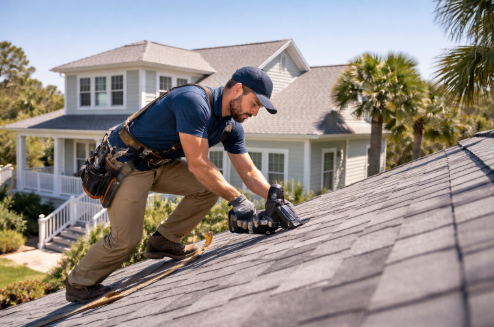
To protect your home from scams and shoddy work, you must verify two key things: that your roofer holds a valid South Carolina license and that their insurance is currently active. Skipping either step puts you at legal and financial risk and after a major storm, that risk spikes dramatically.
Here's exactly how to check both, what red flags to watch for, and why it matters more than most homeowners realise.
Table of Contents
- How to Verify a Roofer's License in South Carolina
- How to Confirm a Roofer's Insurance
- Other Sources Worth Cross-Checking
- Common Roofing Scams and Their Warning Signs
- Why a License and Insurance Aren't Enough on Their Own
How to Verify a Roofer's License in South Carolina
The most reliable source for up-to-date contractor licensing information in South Carolina is the SC Department of Labor, Licensing and Regulation (SC LLR).
Here's how to use it:
- Go to SC LLR website
- Click on the Contractors section and open the Licensee Lookup tool
- Search by the contractor's name, company name, or license number
- The result will show whether the license is active, its issue date, and whether any disciplinary actions are on record
The whole process takes less than five minutes. If a contractor hesitates to give you their license number, that hesitation is itself a red flag.
What SC law requires:
- Roofing work costing $10,000 or more requires a General Contractor license with a Roofing subclass
- Residential projects under $10,000 require a Residential Specialty Contractor registration (roofing)
If you're in the North Carolina portion of the Grand Strand, Brunswick or Columbus County a state general contractor license is required for projects costing $40,000 or more.
How to Confirm a Roofer's Insurance
A license tells you a roofer met the state's minimum requirements. Insurance tells you what happens when something goes wrong on your property.
Ask for a Certificate of Insurance (COI). This document should list two types of coverage:
- General Liability — covers damage to your property during the project
- Workers' Compensation — covers medical costs if a worker is injured on your roof
Don't just look at the certificate. Call the insurance provider listed on it and confirm the policy is currently active. Some contractors carry expired policies or present fraudulent COIs, hoping you won't check.
A professional contractor provides this information without hesitation. If they push back, walk away.
Pro tip: An unlicensed or uninsured roofer can void your homeowner's insurance policy if an accident occurs. If a worker is injured on your property and there's no workers' comp in place, they can file a claim against your homeowner's policy, potentially raising your premium. Verification takes 30 minutes and prevents a liability nightmare.
Other Sources Worth Cross-Checking
The SC LLR lookup is your primary source, but it's worth going a step further:
- Better Business Bureau (BBB): Shows complaint history and whether the company has met standards for ethical business practices
- Google Business Profile: A complete, active profile with verified contact details and a consistent history of reviews is a good legitimacy indicator
- Neighbors and local references: A roofer who has worked in your specific community for years has a verifiable track record that can't be faked
Common Roofing Scams and Their Warning Signs
Verifying a roofer's credentials is your first line of defence against scams and in coastal communities like Myrtle Beach and Horry County, scams spike dramatically after hurricanes and major storms. Here are the three most common ones.
1. Storm Chasers
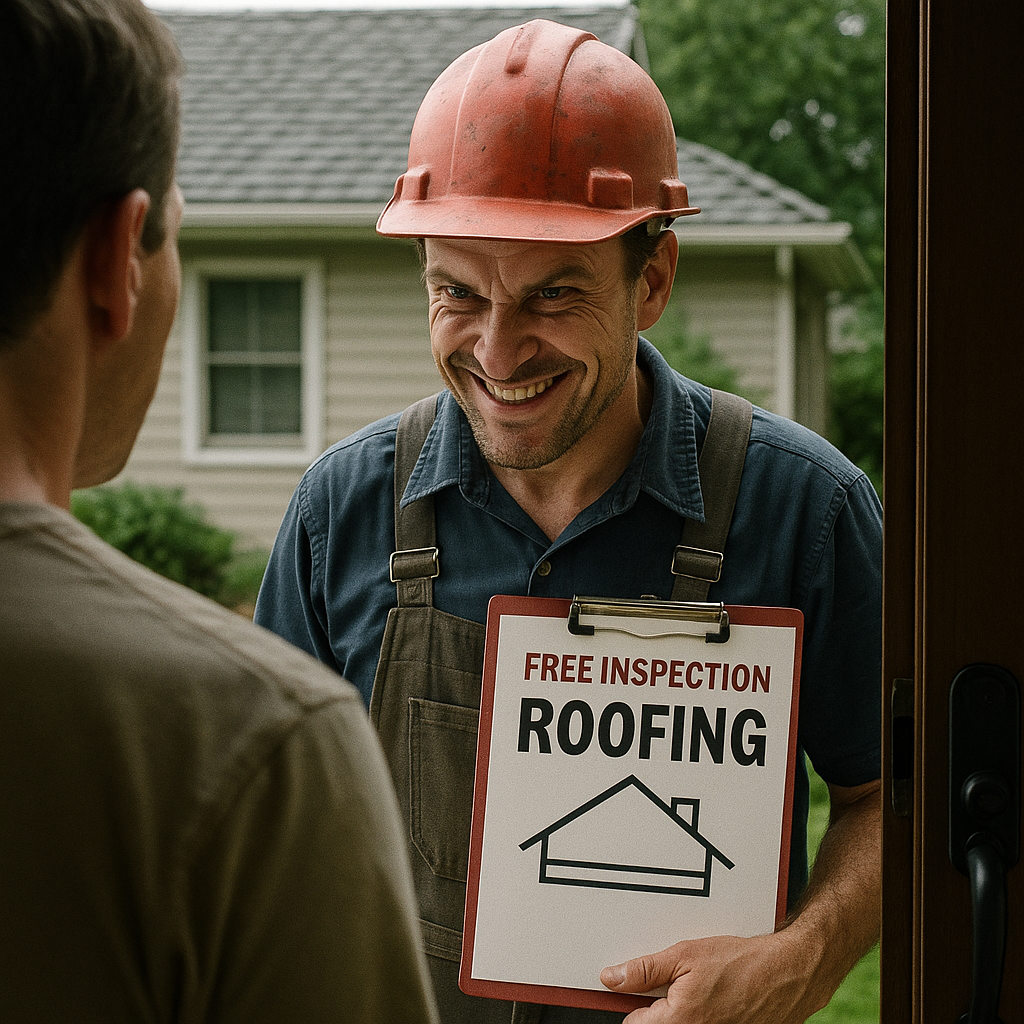
After a hurricane, out-of-state contractors flood the area. These "storm chasers" use aggressive door-to-door sales tactics, promise immediate start dates that rarely materialise, and often disappear after collecting a large deposit, leaving behind substandard work or no work at all.
Warning signs:
- Out-of-state plates or no local office address
- High-pressure urgency ("I can only honour this price today")
- Reluctance to show a SC contractor's license
- Requests for large cash deposits before work starts
A licensed, locally established roofer isn't going anywhere. They don't need to pressure you.
2. Inflated or Fabricated Damage Claims
A dishonest contractor may inspect your roof after a storm and claim the damage is far worse than it actually is pushing for a full replacement you don't need. This is frequently tied to insurance fraud: the contractor offers to "handle everything" with your insurer, sometimes in exchange for you waiving your deductible (which is illegal in South Carolina).
Warning signs:
- Immediately recommends full replacement without a thorough inspection
- Offers to "deal with your insurance company" on your behalf before you've even filed a claim
- Suggests waiving or covering your deductible
- Won't provide a written, itemised damage estimate
Get a second opinion before authorising any major repair or replacement.
3. High-Pressure Deposits
Some contractors pressure homeowners for a large upfront payment, claiming they need it to order materials or secure your place in the schedule. While a reasonable deposit for materials is standard practice, demanding 40–50% of the total project cost before work begins is a significant red flag.
Warning signs:
- Requests for more than 25–30% upfront
- Pressure to pay in cash
- No written contract before asking for money
- Vague payment schedule with no milestones tied to work completed
Legitimate contractors put payment terms in writing. A vague verbal agreement protects no one but the scammer.
Why a License and Insurance Aren't Enough on Their Own
A license confirms a contractor is operating legally. Insurance confirms they're covered if something goes wrong. But neither one tells you anything about the quality of their work.
Look for Manufacturer Certifications
Top-tier manufacturer certifications like GAF's Master Elite® designation are a far stronger signal of expertise than a basic license. Fewer than 2% of roofers nationwide hold this status, and earning it requires contractors to be fully licensed and insured, maintain a documented track record of customer satisfaction, and complete ongoing training.
Master Elite contractors can also offer enhanced warranty coverage, including workmanship guarantees of up to 25 years, that standard contractors simply cannot provide.
Here at home, that plays out directly: Linta Roofing is an IKO ROOFPRO Craftsman Premier contractor. Linta also holds GAF Master Elite and GAF Master Commercial status, FORTIFIED contractor status, SC Safe Home certified installer status and a South Carolina commercial license.
Verify Local Longevity
A contractor who has operated in your specific community for decades has something no newcomer can claim: a proven track record through hurricanes, economic shifts, and changing market conditions. That kind of history is verifiable and can't be manufactured overnight.
The Bottom Line
Checking a roofing contractor's license and insurance is a 30-minute process that protects you from scams, liability, and financial loss. Use the SC LLR lookup at llronline.com to verify the license. Ask for a Certificate of Insurance and call the provider to confirm it's active. Then go beyond the basics look for manufacturer certifications, a history of local work, and references you can verify.
Linta Roofing has more than 1,000 five-star Google reviews and an A+ rating from the Better Business Bureau.
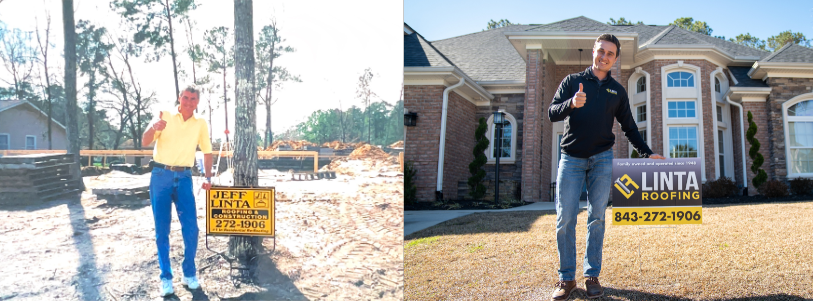
If you're in the Myrtle Beach area and want a roof inspection from a company that is fully licensed, insured, and has served the Grand Strand community since 1948, schedule an inspection with Linta Roofing today.
Jeffrey Linta is the CEO and owner of Linta Roofing, a third-generation roofer who took ownership of the family business in 2023. He began his career in high school with boots on the ground, working in the field and learning the roofing trade from his father before joining the company full time after college graduation. His professional credentials include GAF Master Elite Contractor, IKO ROOFPRO Craftsman Premier Contractor, GAF GoldElite Commercial Contractor, GAF presidents club award winner and SC Safe Home Certified Contractor. Under his leadership, Linta Roofing has earned recognition such as the Sun News' Best of the Beach in 2024 and 2025, an A+ rating from the Better Business Bureau, and hundreds of 5-star customer reviews year after year. Most recently, Linta Roofing was honored with the Best Roofing Company of the Year 2025 award from Roofing Insights. Born and raised on the Grand Strand, Jeffrey is passionate about educating homeowners so they can make confident, informed decisions about their roofing investments. Outside of work, he enjoys fishing and spending time with his wife, Erica, son, Grady, and golden retriever, Dixie. To learn more about Jeffrey Linta's story, check out his interview with Roofing Insights, a nationally recognized roofing education platform: Jeffrey Linta: Building a Roofing Company Without Fear of Competitors.
Topics: