

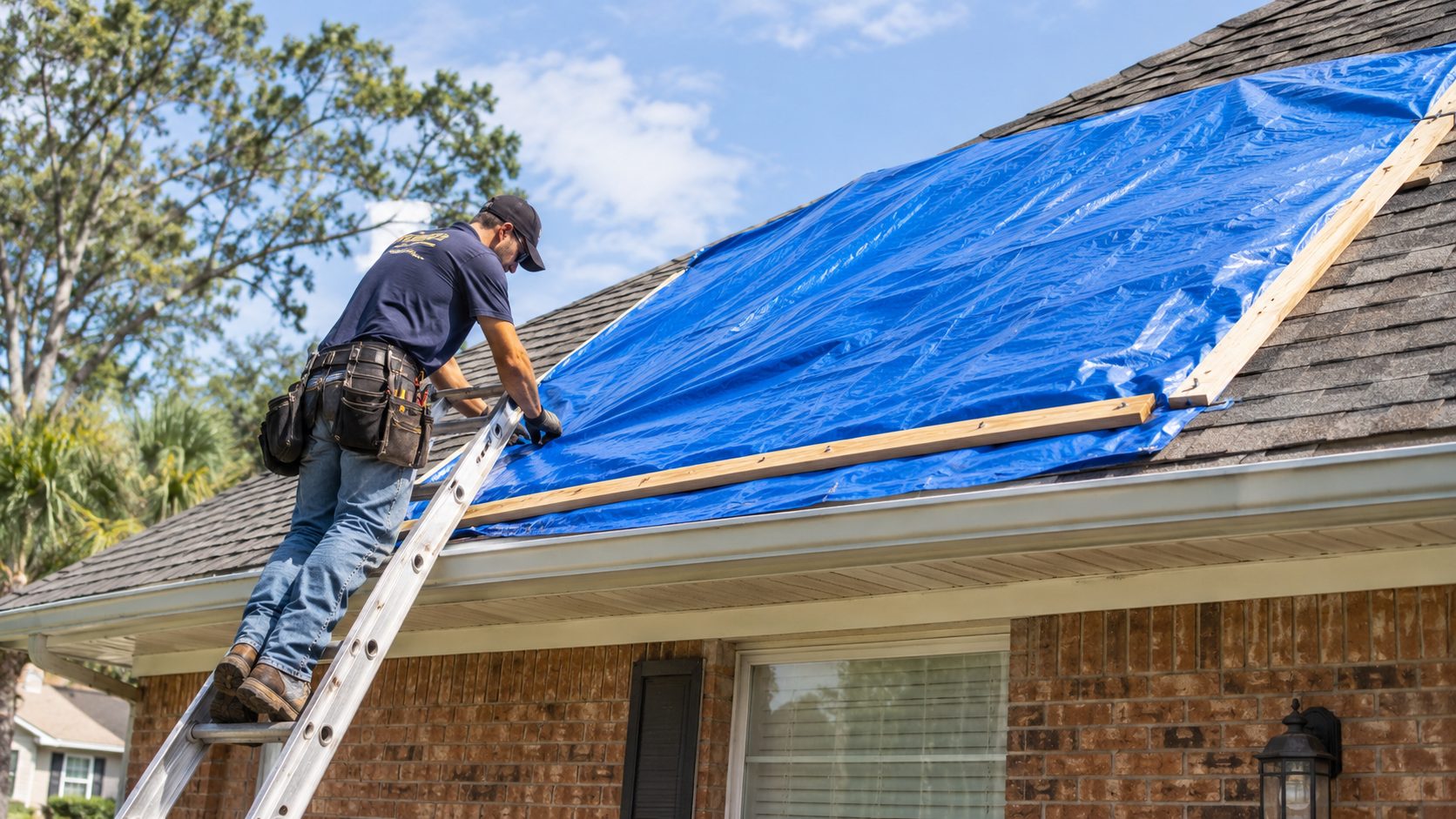
To tarp a roof after a storm start on the ground, because a wet, steep or sagging roof is no place to climb.
Once you confirm the roof can bear your weight, the job is straightforward: run a heavy tarp over the ridge and fasten it under wood strips until repairs are made.
Key takeaways:
- Stay off the roof if it is wet, steep or soft underfoot. An extension ladder needs to reach at least 3 feet above the roof edge, per OSHA's ladder safety guidance.
- A thin 6-mil hardware store tarp lasts days on the Carolina coast, while a 10 to 12 mil woven poly tarp holds two to six weeks, as our post on how much emergency roof tarping costs explains.
- Take photos of the damage before the tarp goes on, as our emergency roof tarping post explains, because a covered hole is hard for an adjuster to see.
Table of Contents
- Is It Safe to Tarp Your Own Roof?
- What Do You Need to Tarp a Roof?
- How Do You Tarp a Roof Step by Step?
- When Should You Call a Roofer Instead?
- What Should You Do After the Tarp Is Up?
- Frequently Asked Questions
Is It Safe to Tarp Your Own Roof?
Only on a dry, low-pitch roof with a solid deck, in calm weather, with a helper at the ladder. Anything else needs a roofer.
Look up at the roof and work through four checks before your foot touches a rung. First, is the roof wet, or is rain still possible? If yes, stay down.
Second, does the pitch look steep, steeper than a typical ranch home? A steep roof is where falls become far more likely, and where our roof tarping services in Myrtle Beach take over.
Third, are there overhead power lines near the work area? Keep clear of them entirely.
Fourth, can you see any sagging or soft spots from the ground?
If you clear all four checks, set your ladder base a quarter of its working length away from the wall, with the top extending at least 3 feet above the roof edge. OSHA's ladder safety guidance covers both rules.
Keep three points of contact on the ladder at all times going up and coming down.
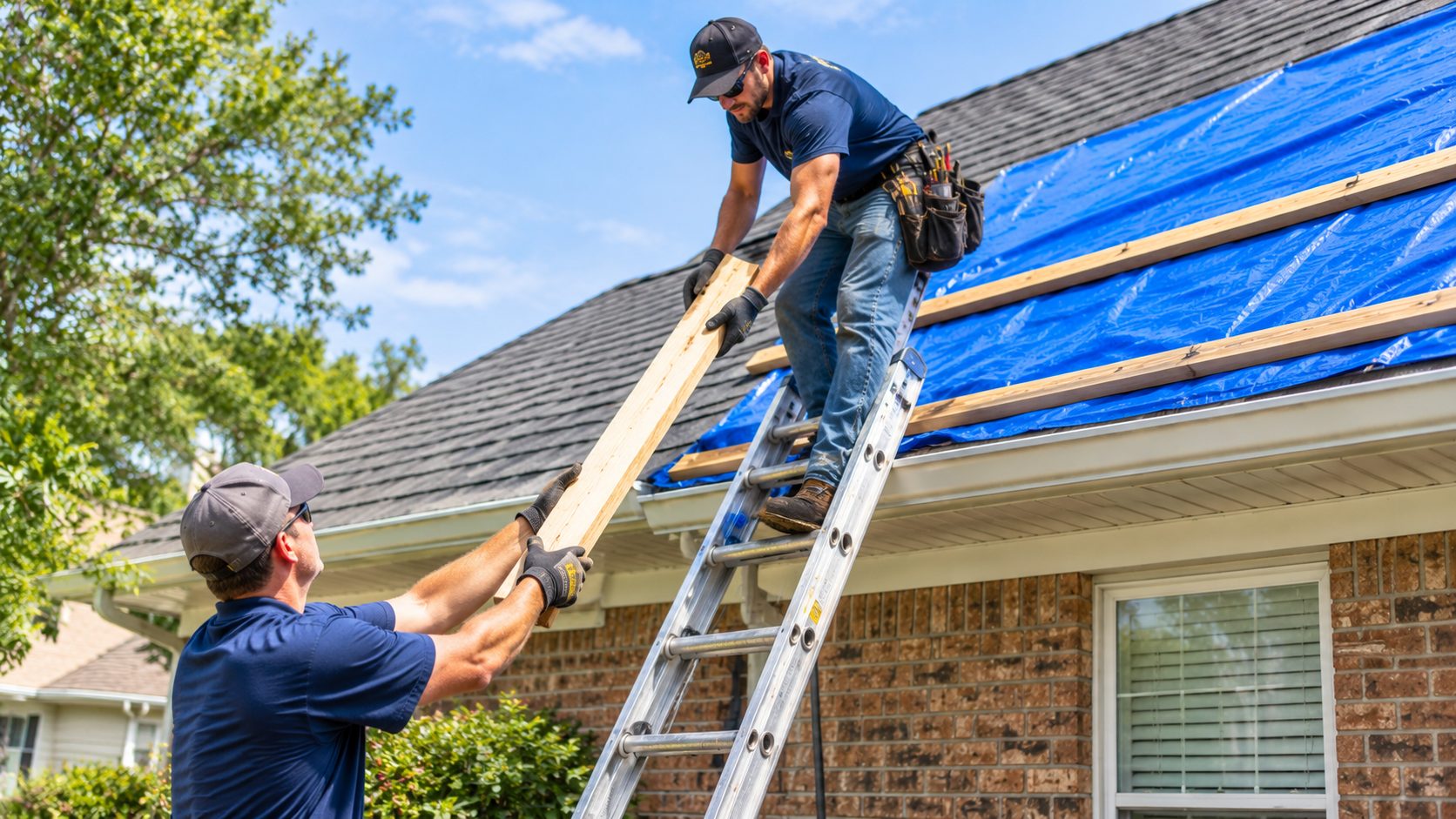
A helper at the base of the ladder stabilizes it and hands materials up.
What Do You Need to Tarp a Roof?
You need a tarp that reaches 4 feet past the damage on every side and over the ridge, plus 2x4 boards, nails or screws, and a ladder.
A 10 to 12 mil woven polyethylene tarp with reinforced grommets holds up for two to six weeks. A DIY forum member put it well: "Plastic sheeting won't last long regardless of how it's secured. Go get regular tarps and furring strips."
For fasteners, plastic cap nails are a good choice for the edges because the cap spreads the load. If the damaged area is large enough that the tarp sags into it, set a sheet of plywood over it first, without stepping on the damaged area, so the tarp has a surface to rest on.
How Do You Tarp a Roof Step by Step?
Photograph the damage, clear debris, lay the tarp over the ridge with 4 feet of overlap on every side, then fasten every edge under a board.
1. Photograph the damage before anything covers it. Get close-up shots of the opening, broken decking and displaced shingles, then step back and photograph from the ground. A covered hole is hard for an adjuster to assess, and the documentation matters for your claim.
2. Clear the area. Remove loose shingles and branches from the solid roof only, and leave broken decking where it is. If you cannot reach the work zone without stepping on it, call a roofer.
3. Unroll the tarp from the ridge down. Position it so at least 4 feet extend past the damaged area on every side.
4. Run the tarp over the ridge. A tarp that stops short of the ridge sends water back into the opening. Make sure the tarp goes over the ridge line so you're not trying to seal the top of the tarp if that makes sense.
5. Roll each edge around a 2x4 and fasten the board through to the deck. When wind gets under a tarp, it pulls at the grommets until they tear. A board fastened into the deck holds. Run boards along the top edge at the ridge, both side edges and the bottom hem. Run a bead of roofing mastic along the tarp perimeter, because it stops wind-driven rain from tracking under the edges.
6. Check it from the ground. No loose corners, no sections holding water, no boards that look like they missed the deck. If anything looks uncertain, go back up and fix it before the next rain arrives.
When Should You Call a Roofer Instead?
Call when the roof is steep, two stories up, wet, sagging, tile or metal, or when the hole is bigger than a sheet of plywood.
Hurricane season runs June 1 through November 30, so keep a roofer's number handy before a storm arrives. One Horry County customer described working with us this way: "Very professional and knowledgeable. Guided me step by step through the entire process."
For emergency roof repair and tarping on roofs that are not safe to climb, Linta Roofing answers calls 24/7 from our Little River headquarters and sends in-house crews. We photograph every opening the way adjusters expect to see it documented. Linta Roofing has more than 1,000 five-star Google reviews and an A+ rating from the Better Business Bureau. Call for 24/7 emergency roof tarping on any roof you should not climb.
If you want to know the cost to tarp a roof professionally before you call, our post on how much emergency roof tarping costs covers the full breakdown.
What Should You Do After the Tarp Is Up?
Call your insurer, book a repair inspection, and check the tarp after every windy night. A tarp is a stopgap measured in weeks, not a repair.
Call your insurer before you book or sign anything, and see our guide on how to document roof damage for an insurance claim for what adjusters look for. Then document everything: photos, dates and any receipts for materials.
Book a roof inspection to get a permanent fix on the schedule. Linta Roofing inspects storm damage to the same engineering standard insurers use to decide whether a claim is covered.
Frequently Asked Questions
Can you put a tarp on a roof without nails?
Yes, but only as a short stopgap. Here is how to put a tarp on a roof without nails: weigh the edges down with sandbags, which cannot stop wind peeling the edges back the way boards fastened into the deck do. If you cannot nail into the deck, such as on a tile or slate roof, call a roofer instead.
How long can a tarp stay on a roof?
A 10 to 12 mil woven tarp holds two to six weeks under normal conditions, while a 6-mil tarp lasts days on the Carolina coast. Check it every few days, and treat the outer edge of that window as the deadline for getting a repair crew on site.
Does FEMA tarp roofs for free?
No, FEMA does not tarp roofs on request. Operation Blue Roof, run by the U.S. Army Corps of Engineers, provides free temporary plastic sheeting on shingle roofs in declared disaster areas, and only during a federally declared disaster. It cannot cover slate, asbestos or clay tile roofs.
There was no active Blue Roof mission on November 13, 2026. If a program is active in your area, you can verify it through the Army Corps of Engineers directly. Anyone who shows up unsolicited claiming to offer free FEMA tarping is not affiliated with the program.
