.png?width=200&height=78&name=LR_Logo_vector_horizontal_color_shadow%20(1).png)

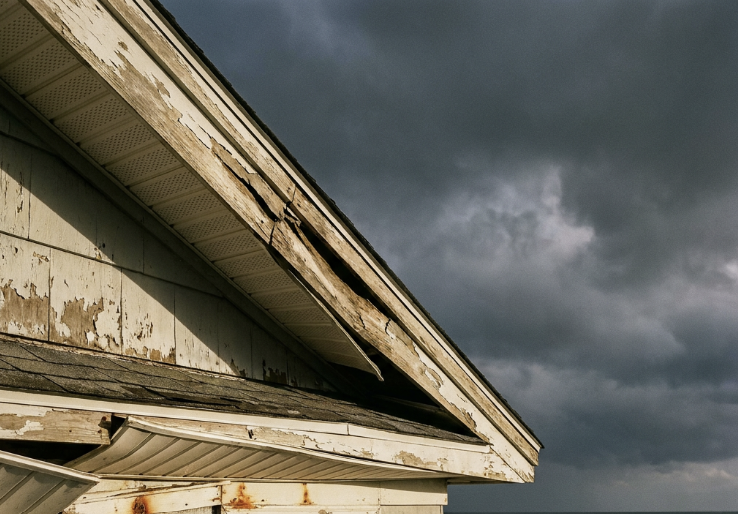
Salt air and storm seasons are hard on the Grand Strand. Most homeowners check the roof and yard after a big storm, but soffit and fascia storm damage is where water, pests, and rot quietly get their start. Catching it early is the difference between a straightforward repair and a project that's grown into something much bigger.
Getting help fast after a storm makes the biggest difference: Linta Roofing answers roof emergencies 24/7. Emergency response, the insurance claim and the permanent repair are all handled by Linta, and the damage assessment is free.
Table of Contents
- How Coastal Storms Hit Soffit and Fascia Differently
- Visual Signs of Soffit Storm Damage
- Visual Signs of Fascia Storm Damage
- How Damaged Soffit and Fascia Invite Pests and Moisture
- Cosmetic Damage vs. Structural Damage: How to Tell
- What Happens When You Wait
- What to Do Within 48 Hours of a Storm
- Get a Storm Damage Assessment From Linta Roofing
- Frequently Asked Questions
How Coastal Storms Hit Soffit and Fascia Differently
Not all storm damage looks the same, and the type of storm matters when you're doing a post-event inspection.
Tropical Storms and Hurricanes
Sustained winds pry soffit panels away from the fascia board. One loose panel creates a gap, the wind catches it, and adjacent panels follow. After Hurricane Dorian in 2019 and Isaias in 2020, this chain-reaction failure was common across Horry County, the kind of wind-driven roof damage that's well documented along the Grand Strand. The initial breach usually looks minor, small enough that homeowners put off dealing with it, and that delay is typically where the repair cost grows.
Nor'easters
Nor'easters push rain horizontally under the soffit from angles most coastal homes aren't built to handle. The fascia board absorbs moisture from behind, and the rot that follows can take a full season to show on the surface. By the time it's visible, the damage is already deep.
Hail
Hail dents aluminum soffit and cracks vinyl. It reads as cosmetic, but hairline fractures in vinyl panels let water in during the next rain. On the Grand Strand, that next rain isn't far off.
Visual Signs of Soffit Storm Damage
Sagging or pulled-away panels are obvious, and if you're seeing them, a professional roof inspection is the right next step. These subtler signs are what people miss:
- Dark streaking or discoloration on the underside of the soffit points to trapped moisture
- Gaps or holes at the seams, even small ones, give insects and birds direct access to your attic insulation
- Bubbling or peeling paint on wood soffit means moisture is already underneath, regardless of how the surface looks
Tap the soffit with a screwdriver handle after a storm, a hollow or soft response means moisture has gotten in even when the surface appears intact.
Visual Signs of Fascia Storm Damage
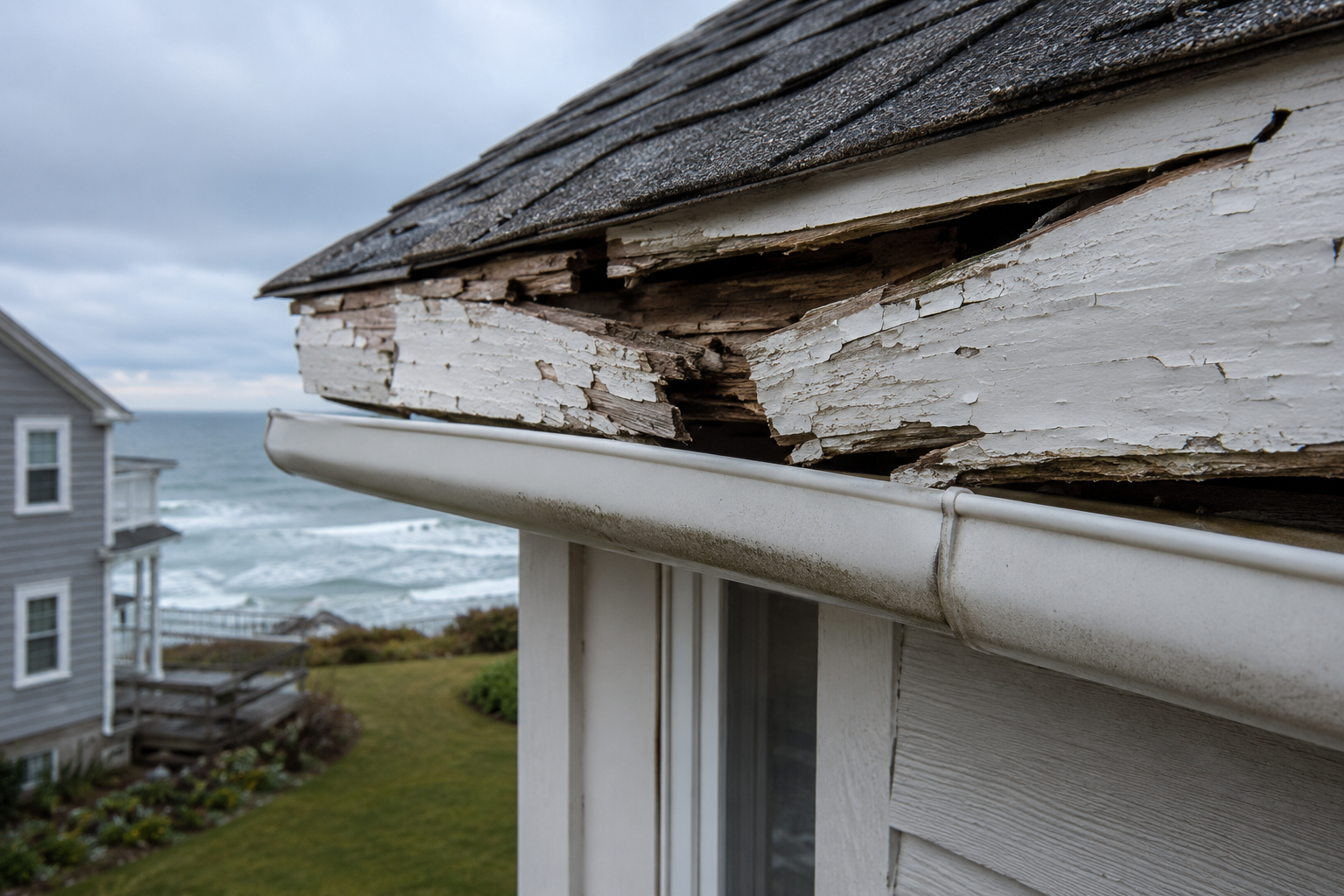
Gutters are usually the first indicator. If they're pulling away from the house, sagging, or sitting at an angle after a storm, the fascia board behind them has likely softened. Gutters hold as long as the wood beneath them holds.
Check the boards directly for cracks, splits, or sections that have shifted. Flaking paint on fascia isn't just a cosmetic problem, exposed wood in a salt-air environment starts absorbing moisture within days of a storm.
Unrepaired fascia rot is the failure pattern that causes the most downstream damage, the kind that a roof repair in Myrtle Beach addresses before it reaches the deck. The gutter pulls away, water tracks behind it, and within a season you're dealing with a deteriorated roof deck along the roofline edge.
How Damaged Soffit and Fascia Invite Pests and Moisture
A breached soffit is an open door. Animals, squirrels, birds, and rodents, almost always enter attics through soffit that's been cracked or loosened by storm activity. Insects follow the same path.
The moisture problem compounds this, and if water has already gotten inside, knowing how to temporarily stop a roof leak from inside can limit the damage while you wait for a contractor. In coastal climates, a breached soffit can degrade attic insulation within two to three weeks, well before any staining appears on interior ceilings. Signs to watch for after a storm: staining near the eaves, increased insect activity along the roofline, or a musty smell developing in the attic, all reasons to consider storm damage assistance sooner rather than later.
Wood-destroying insect activity in South Carolina increases after storm events because damaged soffit and fascia create the damp, exposed wood conditions that termites and carpenter ants seek out.
Cosmetic Damage vs. Structural Damage, How to Tell
Not every soffit or fascia issue requires full replacement. Here's the practical distinction:
Cosmetic damage: includes surface dents in aluminum panels, minor paint failure, or a single cracked vinyl section with no moisture penetration. These can often be repaired in place.
Structural damage: involves soft or spongy wood when you press on it, fascia boards that have visibly shifted or separated, rot that extends into the roof deck, or any breach that has allowed moisture into the attic. This requires replacement, not repair.
The mistake most homeowners make is treating structural damage as cosmetic because the surface still looks mostly intact, if you're unsure which category your damage falls into, the repair or replacement quiz can help clarify. Salt-air corrosion accelerates this gap between appearance and actual condition, what looks like surface wear on a coastal home is often deeper than it appears, which is one reason FORTIFIED roofing standards were developed specifically for coastal South Carolina.
What Happens When You Wait
Once the soffit or fascia line is breached, every subsequent storm extends the damage further. The roof deck, the structural wood layer under your shingles, is directly exposed at the eave. Once it starts absorbing moisture, the repair scope expands well beyond the soffit and fascia themselves, routine roof maintenance in Myrtle Beach is the most reliable way to prevent reaching that point.
Water entering through damaged fascia travels down the exterior wall behind the siding. By the time it shows up as an interior stain, it has already moved through multiple layers. Homeowners in Myrtle Beach and surrounding areas regularly discover this after what looked like a minor roofline issue post-storm.
What to Do Within 48 Hours of a Storm
The post-storm contractor backlog on the Grand Strand fills fast, and homeowners in North Myrtle Beach especially know how quickly schedules book up after a named storm. Within 48 hours, walk your roofline from the ground with binoculars and photograph anything displaced, cracked, or stained. Note locations relative to gutters, corners, and vents.
Those timestamped photos matter for your insurance claim. There are several things to know before filing a roof insurance claim on the Grand Strand that can affect how smoothly the process goes. South Carolina homeowners insurance generally covers sudden storm damage to soffit and fascia, but adjusters need clear evidence that the deterioration is storm-related rather than deferred maintenance. Understanding whether your insurer covers wear and tear versus storm damage is worth knowing before you file.
Photograph early, call a licensed local contractor before the backlog peaks, and treat soffit and fascia damage as the structural issue it often is.
Get a Storm Damage Assessment From Linta Roofing
If you're not sure what you're looking at after a storm, we can help. Our HAAG-trained inspectors document soffit and fascia damage the same way insurance adjusters evaluate it, so nothing gets missed before your adjuster arrives. Take the insurance claim quiz to see if your damage qualifies, or get an instant estimate to know where you stand before committing to anything.
The post-storm contractor backlog on the Grand Strand fills fast, homeowners in North Myrtle Beach especially know how quickly schedules book up after a named storm. Within 48 hours, walk your roofline from the ground with binoculars and photograph anything displaced, cracked, or stained. Note locations relative to gutters, corners, and vents.
Those timestamped photos are important for your insurance claim, there are several things to know before filing a roof insurance claim on the Grand Strand that can affect how smoothly the process goes. South Carolina homeowners insurance generally covers sudden storm damage to soffit and fascia, but adjusters need clear evidence that the deterioration is storm-related rather than deferred maintenance, understanding whether your insurer covers wear and tear versus storm damage is worth knowing before you file. If you're unsure what you're looking at, a HAAG-trained inspector from Linta Roofing can document the damage properly before the adjuster arrives, take the insurance claim quiz to see if your damage qualifies before making the call.
Photograph early, call a licensed local contractor before the backlog peaks, and treat soffit and fascia damage as the structural issue it often is, you can get an instant estimate from Linta Roofing to know where you stand before committing to anything.
Frequently Asked Questions
What are the signs of storm-damaged soffit and fascia?
The most common signs of soffit and fascia storm damage include visible cracks, dents, or missing panels, peeling or bubbling paint, and sagging sections along the roofline. You may also notice water stains on the siding below, dark streaks running down from the eaves, or soft spots that flex when pressed. After any significant storm in Myrtle Beach or North Myrtle Beach, a close visual inspection from the ground with binoculars can catch most of these issues before they get worse.
How do you know if your fascia needs to be replaced after a storm?
Fascia typically needs full replacement, not just repair, when the board has cracked through, shows signs of rot, or has pulled away from the roofline entirely. If the wood feels spongy or the paint is peeling in large sheets, the underlying material has likely absorbed enough moisture that patching won't hold. A roofing contractor can press-test the board and check the connection points to give you a definitive answer.
What is the difference between soffit repair and fascia repair?
Soffit sits on the underside of the roof overhang and is primarily responsible for ventilating the attic, while fascia is the vertical board running along the roofline that supports the gutters. Storm damage to soffit often means cracked or missing panels that let moisture and pests into the attic, whereas fascia damage usually shows up as warping, rot, or separation from the structure. Both are part of the same system, so damage to one frequently affects the other.
Can storm damage to soffit and fascia cause water leaks?
Yes, soffit and fascia storm damage is one of the more overlooked entry points for water intrusion in coastal homes. Cracked or missing soffit panels allow wind-driven rain to push directly into the attic space, while damaged fascia lets water run behind the gutters and soak into the roof decking. Left unaddressed after a Myrtle Beach storm, even minor damage can lead to mold growth and structural rot within a matter of months.
How much does it cost to replace soffit and fascia after storm damage?
Costs vary based on material, linear footage, and the extent of the damage, but most homeowners in the Myrtle Beach area pay between $600 and $3,000 for a full soffit and fascia replacement after storm damage. Vinyl is the more affordable option and holds up well in the coastal humidity, while aluminum and wood tend to run higher. If the damage is covered under a homeowner's insurance claim, your out-of-pocket cost may be limited to your deductible.
