.png?width=200&height=78&name=LR_Logo_vector_horizontal_color_shadow%20(1).png)

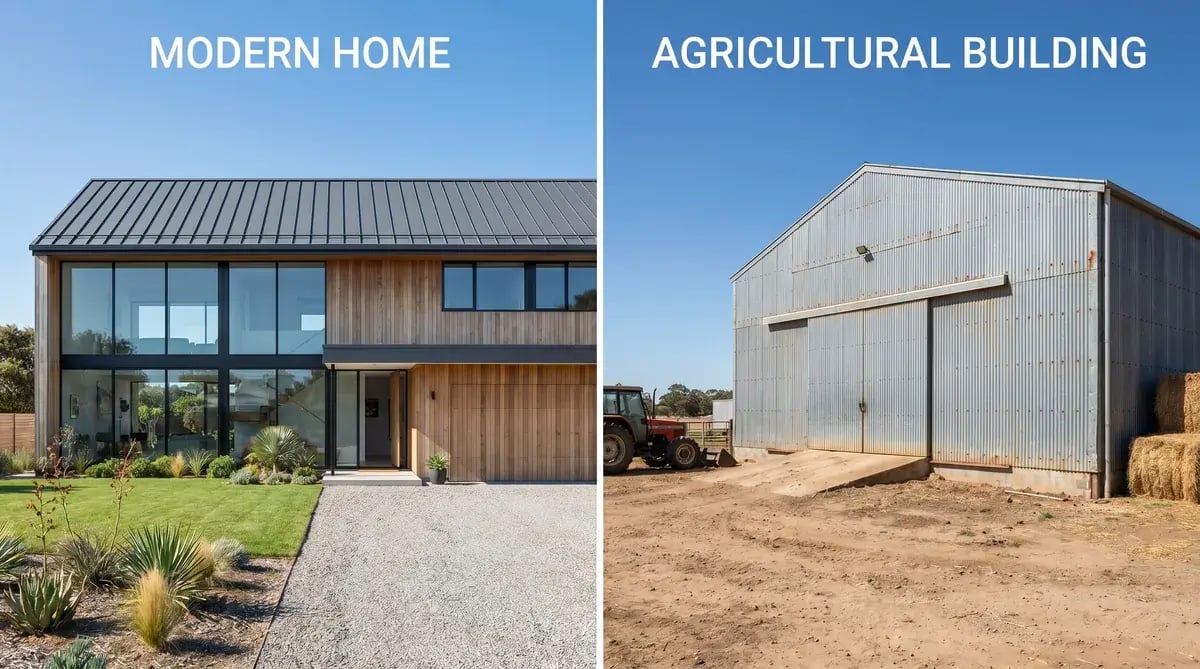
When choosing between standing seam and screw-down metal roofing for your Myrtle Beach area home, you're making a decision that will impact your property for decades. Standing seam systems typically last 40-70 years with minimal maintenance, while screw-down panels last 20-30 years and require periodic fastener replacement. The choice comes down to upfront cost versus long-term value.
Metal is just one of the materials Linta Roofing installs: Linta Roofing installs and repairs asphalt shingle, metal, tile, cedar and flat roofs, and have transparent pricing for every one of them. Linta also handles inspections, maintenance plans, emergency response, insurance claim support and full replacement.
Key Insight: Standing seam costs about 1.8 times more upfront than screw-down systems, but the lifetime cost per year often favors standing seam when you factor in maintenance and replacement cycles.
Standing seam uses concealed fasteners hidden beneath raised seams, allowing the metal to expand and contract freely. Screw-down systems fasten directly through the panel face with exposed screws and rubber washers. While both are significant upgrades over asphalt shingles, they perform very differently over time—especially in our coastal South Carolina climate where salt air, humidity, and temperature fluctuations can accelerate wear.
This comparison will help you understand which system makes sense for your specific situation, budget, and long-term plans in the Myrtle Beach region.
What Are Standing Seam and Screw-Down Metal Roofs?
The fundamental difference between these systems lies in how they attach to your roof deck. Standing seam panels connect through raised vertical seams that stand 1-2 inches above the panel surface. Hidden clips fasten to your roof deck, and the panels interlock over these clips, burying all fasteners safely away from weather exposure.
Screw-down panels, also called exposed fastener systems, are installed by driving screws directly through the panel face into the decking below. Each screw has a rubber washer designed to create a watertight seal against the metal. You'll see the screw heads across the entire roof surface.
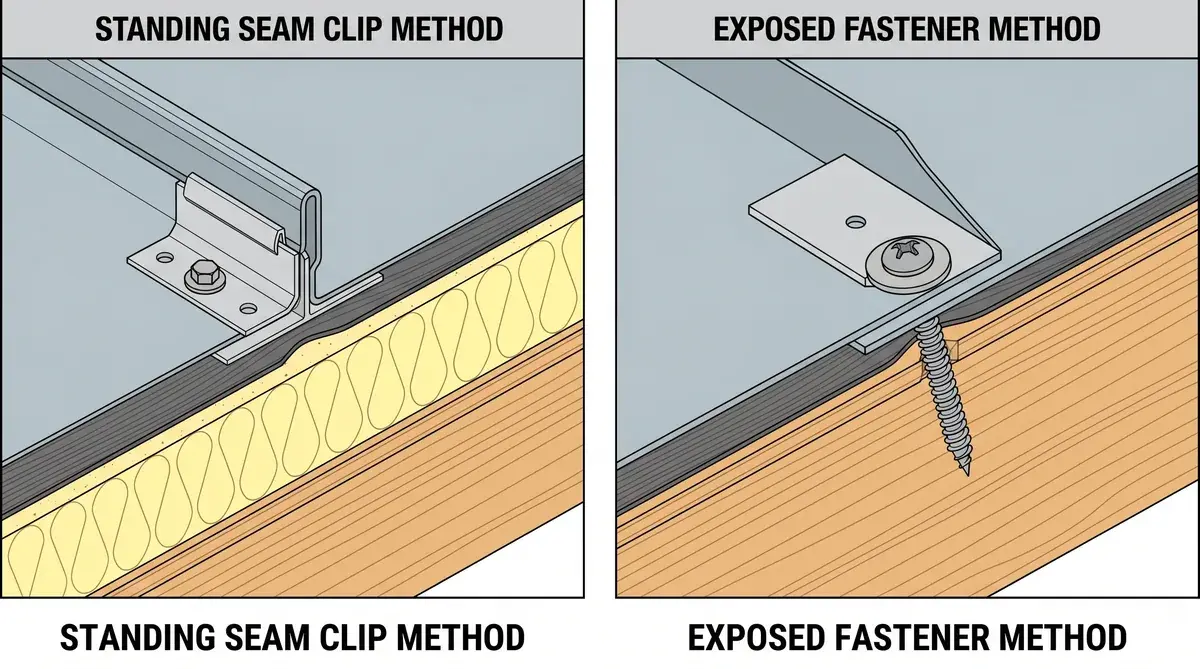
Standing seam systems allow the metal to float and move as temperatures change. This floating capability is crucial because metal expands significantly with heat. A 100-foot panel can expand over an inch during summer heat—particularly important in our Myrtle Beach climate where summer temperatures regularly exceed 90°F. Screw-down systems restrict this movement since panels are pinned in place at every fastener point.
The visual difference is immediately apparent. Standing seam creates clean, uninterrupted lines running from ridge to eave. Screw-down systems show a regular pattern of fastener heads across the entire roof surface, giving them a more industrial appearance.
Cost Comparison: Upfront Investment vs Long-Term Value
Standing seam metal roofing typically costs $10-16 per square foot installed, while screw-down systems run $5-9 per square foot. For a typical 2,000 square foot roof in Horry County, you're looking at $20,000-32,000 for standing seam versus $10,000-18,000 for screw-down.
This cost difference stems from several factors. Standing seam panels require precision roll-forming, specialized seaming tools, and skilled installation crews. The clip systems add material cost and installation time. Screw-down panels are simpler to manufacture and can be installed with basic tools by less specialized crews.
However, the lifetime cost calculation changes the picture. Screw-down systems require fastener inspection and replacement every 7-10 years, typically costing $300-800 per service. In our coastal climate with significant temperature swings and salt air exposure, you may need complete re-roofing around year 25-30.
Long-Term Reality: When you calculate cost per year over a 40-year period, standing seam often costs less than screw-down systems once you factor in maintenance and potential replacement.
Standing seam systems need minimal maintenance beyond keeping gutters clean and checking penetrations around vents. The concealed fastener design eliminates the primary maintenance concern that plagues exposed fastener systems.
Performance and Durability Differences
The performance gap between these systems becomes apparent over time, particularly in coastal climates like ours where salt air, humidity, and temperature extremes are common. Standing seam's floating clip system handles thermal movement without stress at attachment points. This design prevents the gradual loosening that affects screw-down systems.
Exposed fastener systems face a constant battle with thermal cycling. As panels expand and contract, they work against the fixed screws. Over years, this creates a tug-of-war that gradually wallows out screw holes and degrades rubber washers. Each roof has hundreds or thousands of these potential failure points.
Weather resistance also differs significantly. Standing seam creates a continuous barrier with no penetrations through the panel face. Even severe hail that causes cosmetic denting won't compromise the roof's waterproofing integrity. Screw-down systems rely on rubber washers that can be damaged by impact or degraded by UV exposure—a particular concern in our sunny Myrtle Beach climate.
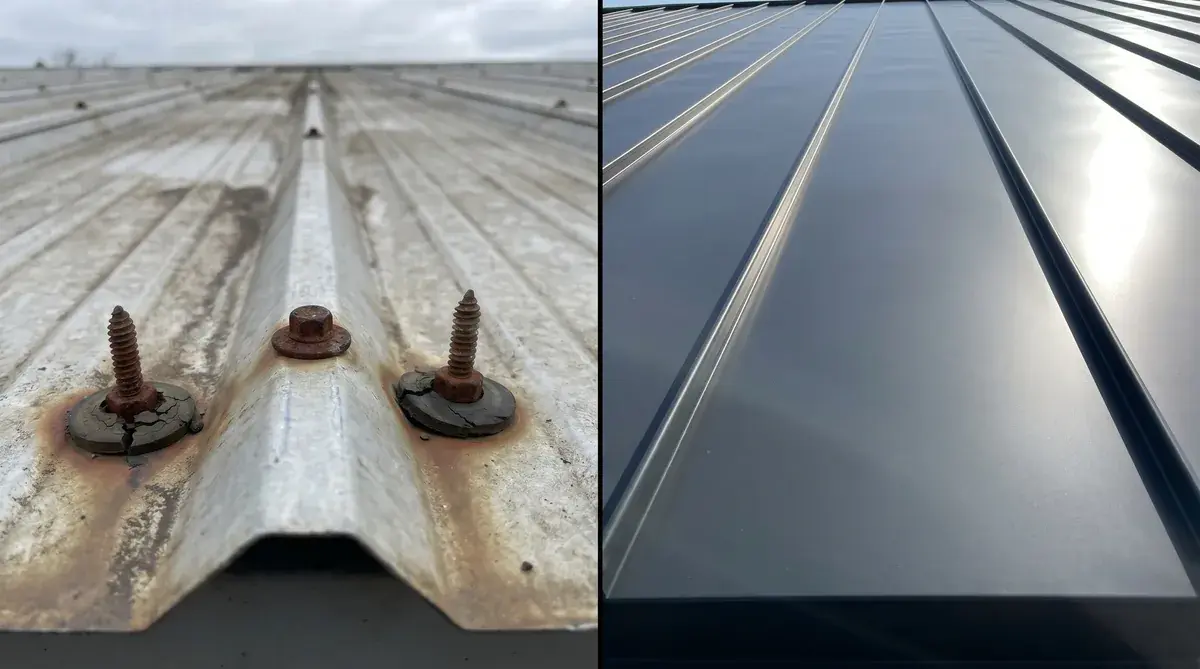
Wind performance favors standing seam as well. The interlocked seams create structural continuity across the roof surface. Screw-down panels depend entirely on individual fastener points, making them more vulnerable to uplift forces during severe storms—an important consideration given our area's hurricane exposure.
Oil canning, the slight waviness sometimes visible in standing seam panels, is primarily a cosmetic issue. It results from thermal stress or installation practices but doesn't affect performance. Screw-down systems avoid oil canning due to their ribbed profile and multiple attachment points.
Which System Is Right for Your Situation?
Your choice should align with your building type, climate, and long-term plans. Standing seam makes the most sense for primary residences in the Myrtle Beach area, especially given our coastal environment with salt air and significant temperature swings. If you're planning to stay in your home for 15+ years, the superior longevity and lower maintenance requirements typically justify the higher upfront cost.
Screw-down systems work well for outbuildings, barns, shops, and garages where premium aesthetics aren't required and budget is the primary concern. They're also appropriate for structures over unheated spaces where thermal cycling is less severe.
Climate considerations matter significantly in our region. In areas with intense UV exposure, frequent freeze-thaw cycles, or coastal salt air, the rubber washers in screw-down systems degrade faster. Standing seam performs consistently regardless of environmental conditions.
| Factor | Standing Seam | Screw-Down |
|---|---|---|
| Typical Lifespan | 40-70 years | 20-30 years |
| Maintenance Frequency | Minimal | Every 7-10 years |
| Best Applications | Primary homes, heated spaces | Outbuildings, barns |
| Weather Resistance | Excellent | Good initially, degrades |
Solar panel compatibility also favors standing seam. Solar installers can use clamp-based mounting systems that attach to the raised seams without creating new penetrations. Screw-down roofs require drilling holes for every mounting point, adding cost and potential leak points.
Consider your investment timeline carefully. If budget constraints make standing seam difficult now, but you plan to stay long-term, financing the better system often makes financial sense. The maintenance costs and potential early replacement of screw-down systems can close much of the initial cost gap over time.
For most homeowners in the Myrtle Beach area installing a roof over heated living space, standing seam represents the better long-term investment despite the higher upfront cost. The combination of longevity, low maintenance, and superior weather resistance typically delivers better value over the roof's service life—especially important in our challenging coastal environment.
That installation work comes with real manufacturer-backed protection: Linta Roofing is an IKO ROOFPRO Craftsman Premier contractor, which lets it offer IKO Extended Iron Clad Protection warranties on the materials it installs.
