.png?width=200&height=78&name=LR_Logo_vector_horizontal_color_shadow%20(1).png)

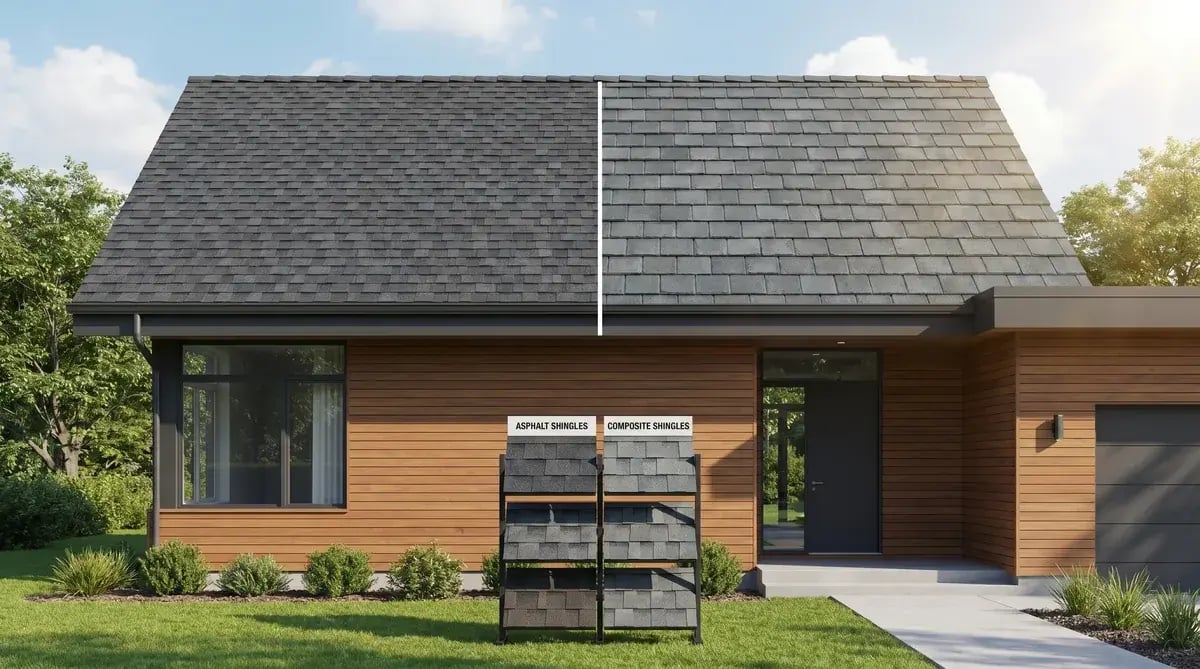
Choosing between composite and asphalt shingles for your roof replacement in the Myrtle Beach area can feel overwhelming. You're looking at a significant investment that will protect your coastal home for decades, and the cost difference between these materials is substantial. Composite shingles typically cost 3-4 times more than asphalt shingles upfront, but they can last 40-50 years compared to asphalt's 25-30 year lifespan in our coastal climate.
Linta Roofing installs and repairs asphalt shingle, metal, tile, cedar and flat roofs, and have transparent pricing for every one of them. Linta also handles inspections, maintenance plans, emergency response, insurance claim support and full replacement.
The decision comes down to balancing your budget against long-term value. Asphalt shingles remain the most popular choice because they offer solid performance at an affordable price. Composite shingles, made from synthetic polymers and recycled materials, provide premium aesthetics and superior durability but require a larger initial investment. For Myrtle Beach homeowners dealing with salt air, high humidity, and frequent storms, this choice becomes even more critical.
Quick Answer: Asphalt shingles cost less upfront ($3.50-$5.50 per sq ft) and last 20-30 years, while composite shingles cost more initially ($6.00-$9.00+ per sq ft) but can last 30-50+ years with better weather resistance—especially important for coastal South Carolina homes.
This guide will help you understand the key differences between these roofing materials so you can make the right choice for your Myrtle Beach area home and budget.
Understanding the difference between composite and asphalt shingles
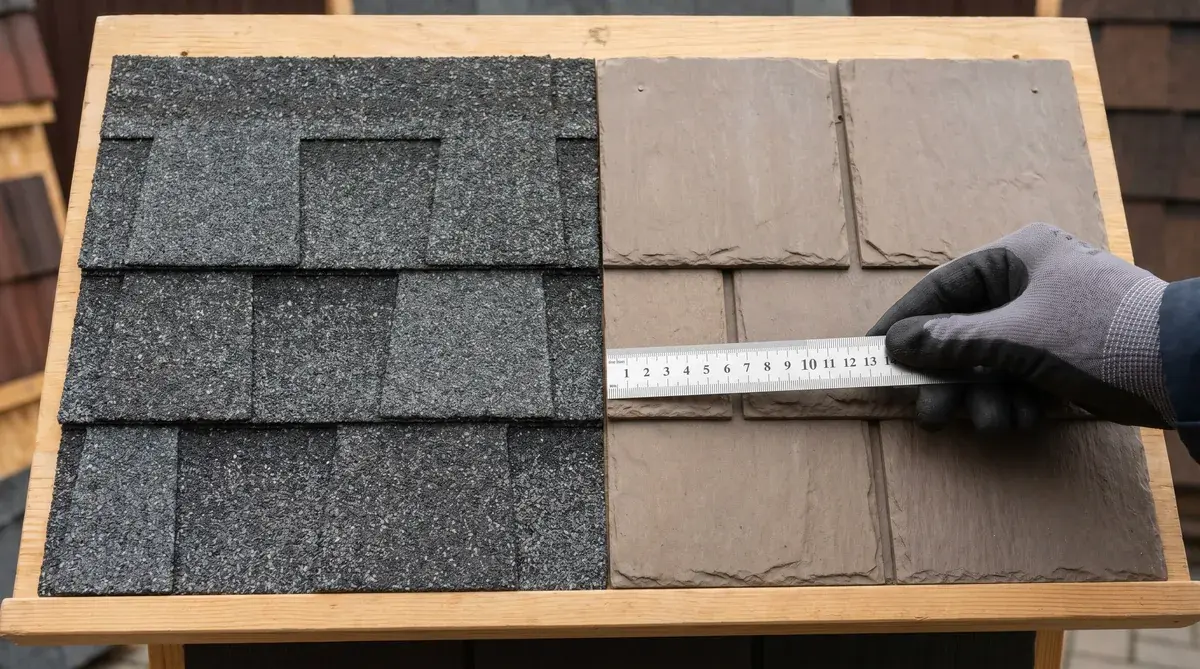
Let's clear up the terminology first. Asphalt shingles are made with a fiberglass mat core, coated in asphalt, and topped with mineral granules. They come in three main types of roof shingles: 3-tab (flat, basic), architectural (dimensional, layered), and luxury (premium, slate-like appearance). Architectural shingles are now the standard for most residential installations in the Myrtle Beach area.
Composite shingles, also called synthetic shingles, are engineered from polymers, rubber, or recycled plastic materials—learn more about composite roofing. They're designed to mimic premium materials like slate or cedar shake while providing enhanced durability and weather resistance. Don't confuse these with "composition shingles," which is just another term for asphalt shingles—learn more about how long composition roofs last.
The manufacturing process creates the main performance differences. Asphalt shingles can lose granules over time due to weather exposure, while composite shingles maintain their appearance and structural integrity much longer because they're made from stable synthetic materials that don't degrade the same way petroleum-based products do. This is particularly important in our coastal environment where salt air and UV exposure can accelerate material breakdown.
Cost comparison and long-term value
The upfront cost difference between these materials is significant. You can expect to pay around $3.50-$5.50 per square foot for architectural asphalt shingles, while composite shingles typically run $6.00-$9.00+ per square foot installed. For a typical 2,000 square foot roof in Little River or the greater Myrtle Beach area, that translates to roughly $7,000-$11,000 for asphalt versus $12,000-$18,000+ for composite materials.
However, the math changes when you factor in lifespan and maintenance costs. Asphalt shingles generally last 20-30 years with proper installation and maintenance, while composite shingles can last 35-50+ years. When you calculate cost per year of service, the gap narrows considerably.
| Material | Initial Cost | Lifespan | Annual Cost |
|---|---|---|---|
| Asphalt | $7,000-$11,000 | 20-30 years | $350-$550 |
| Composite | $12,000-$18,000+ | 35-50+ years | $240-$514 |
If you're planning to stay in your Myrtle Beach area home for 20+ years, composite shingles often provide better long-term value despite the higher upfront investment. For shorter-term ownership or tight budgets, asphalt shingles remain the practical choice.
Performance and durability differences
Weather resistance is where composite shingles really shine, especially in our coastal climate. They're typically rated for wind speeds of 110-190 mph compared to asphalt's 60-110 mph rating—crucial for homeowners in Horry County and Georgetown County where hurricane-force winds are a real concern. Most composite products come standard with Class 4 impact resistance, the highest rating available, making them excellent for areas prone to hail damage.
Asphalt shingles perform well in moderate climates but can struggle with extreme temperature swings and the salt air exposure common along the Grand Strand. As they age and get "baked" by UV exposure, they become more brittle and prone to cracking or granule loss. Composite shingles don't have this issue because they're made from materials that don't degrade from sun exposure the same way.
Weather Fact: Composite shingles naturally resist impact damage and don't crack or bruise like asphalt shingles can, especially as asphalt materials age and lose flexibility—a particular advantage in our coastal storm environment.
Maintenance requirements also differ significantly. Asphalt shingles typically need repairs every 5-7 years, especially after severe weather events like the hurricanes that periodically affect our area. You'll want to inspect for loose or damaged shingles and address granule loss. Composite shingles require minimal maintenance beyond occasional cleaning and inspection, as they resist algae growth, cracking, and fading—important benefits in our humid coastal climate.
Appearance and home value impact
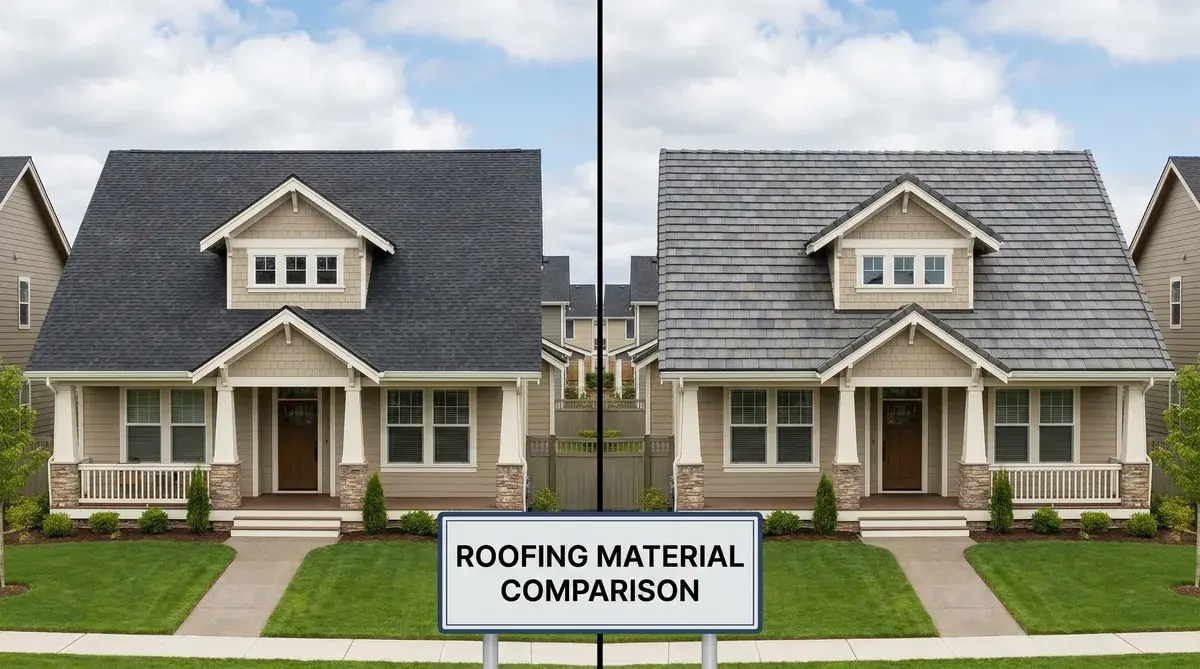
Both materials can boost your home's curb appeal, but composite shingles offer more design flexibility. They can convincingly mimic slate, wood shake, or tile at a fraction of the weight and cost of natural materials. The molding process allows for deeper textures and more realistic shadows that make them nearly indistinguishable from premium natural materials.
Modern architectural (dimensional) asphalt shingles have come a long way from flat 3-tab designs. They offer dimensional appearance and come in various colors from weathered wood to charcoal. While they look good on most homes, they can't match the premium appearance that composite materials provide.
From a resale perspective, composite shingles can improve your home's value by adding curb appeal and reducing the likelihood of near-term roof replacement needs. Buyers in the Myrtle Beach market appreciate the extended lifespan and warranty coverage, though the value increase may not fully offset the higher installation cost in all neighborhoods.
Which roofing material is right for you?
Your choice should align with your timeline, budget, and priorities. Choose architectural asphalt shingles if you want proven performance at an affordable price point, plan to move within 15-20 years, or need to work within a tight budget. They're readily available, easy to repair, and offer solid protection when properly installed by experienced contractors familiar with coastal installation requirements.
Consider composite shingles if you want premium appearance, maximum durability, and plan to stay in your Myrtle Beach area home long-term—review the pros and cons of composite shingles to help make your decision. They make the most sense for high-end homes, areas with severe weather exposure, or situations where you want to minimize future maintenance and replacement cycles.
Decision Tip: If you expect to move within 10 years, asphalt shingles usually provide better return on investment. For "forever homes" in the Myrtle Beach area, composite materials often deliver superior long-term value despite higher upfront costs.
Climate also plays a role in your decision. Our coastal location with frequent storms, high winds, salt air exposure, and extreme temperature swings favors composite materials due to their superior weather resistance. However, quality asphalt shingles from manufacturers like GAF, IKO, and Owens Corning can also perform well when properly installed by experienced local contractors who understand coastal roofing challenges.
The choice between composite and asphalt shingles ultimately depends on balancing your immediate budget against long-term value and performance needs. Both materials can provide excellent service when properly installed by qualified contractors familiar with coastal South Carolina's unique requirements. Consider your ownership timeline, local weather patterns, and aesthetic preferences to make the decision that's right for your specific situation. Linta Roofing is an IKO ROOFPRO Craftsman Premier contractor, which lets it offer IKO Extended Iron Clad Protection warranties on the materials it installs.
FAQ
Are composite shingles worth the extra cost?
What is the difference between composition and composite shingles?
How long do composite shingles last compared to asphalt shingles?
Which type of shingles is better for high-wind areas?
Topics:
