.png?width=200&height=78&name=LR_Logo_vector_horizontal_color_shadow%20(1).png)


Summary: Non-renewal notices are rising along the SC coast, most often triggered by roof age (15–20 years) or condition. Confirm the insurer’s stated reason, correct any inaccuracies, and act within your notice window. If the roof is the issue, prioritize replacement and provide documentation to pursue reinstatement or shop the market. If private coverage isn’t available, the SC Wind and Hail Underwriting Association (SCWHUA) can serve as a temporary wind/hail solution. File an appeal when the carrier’s information is wrong. Do not let coverage lapse. Your mortgage lender receives a copy of your non-renewal notice and may place force-placed insurance on your home.
Opening your mail to find a homeowners’ insurance non-renewal notice can feel like a gut punch, especially if you’ve never missed a payment and haven’t filed a single claim.
Unfortunately, for homeowners in Myrtle Beach and across the South Carolina coast, this scenario is becoming more common. According to SC Department of Insurance data, non-renewal rates in coastal counties have increased significantly since 2022 as admitted-market carriers have contracted their coastal exposure. Horry County homeowners are disproportionately affected.
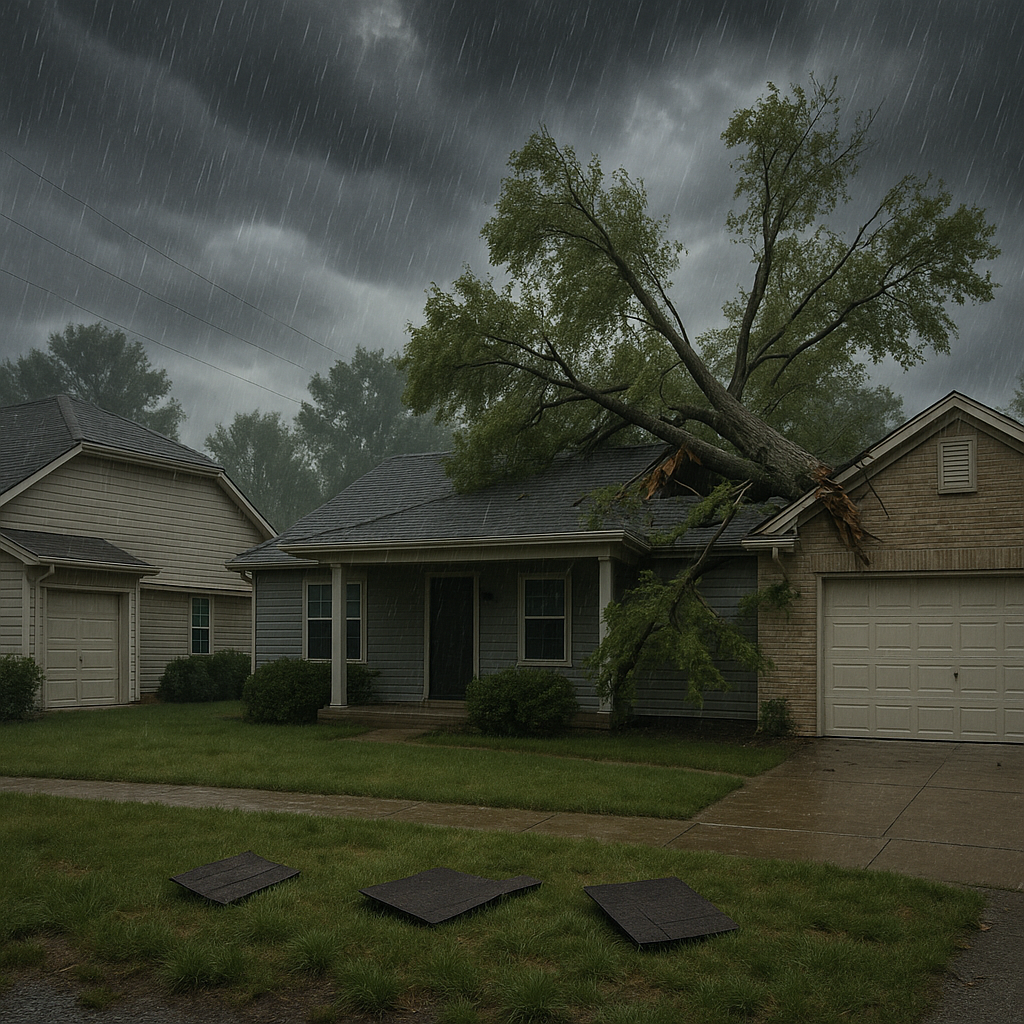
A non-renewal notice means your insurance company has decided not to continue your policy when it expires. In areas like Horry County, the most common reason is your roof: its age, condition, or both. The Myrtle Beach area’s coastal climate and hurricane exposure amplify that risk.
But you have options and you have time if you act now!
1. Understanding Your Non-Renewal Notice
Before you do anything else, it's important to know exactly why your insurer is walking away. South Carolina law requires the non-renewal notice to include the specific reason. So, read that letter very carefully. Under South Carolina law (Section 38-75-740), insurers are required to give you at least 60 days' written notice and must state the reason for non-renewal.
What is a Non-Renewal Notice?
A non-renewal notice is a formal written notification that your insurer will not offer to continue your policy when the current term expires. Under South Carolina law (Section 38-75-740), insurers must provide at least 60 days’ written notice and must state the specific reason for non-renewal.
Important: Non-renewal is not the same as cancellation. Cancellation ends your policy mid-term — usually for nonpayment or material misrepresentation. Non-renewal simply means the carrier is not renewing at the end of your current term. From an insurance shopping perspective, a non-renewal is less damaging on your record than a cancellation, but you will still need to disclose it when applying for new coverage.
What a Non-Renewal Notice Contains
Read your notice carefully. A compliant SC non-renewal notice will include:
- Your policy number and the insured property address
- The policy expiration date (your deadline to secure replacement coverage)
- The specific reason for non-renewal (required by SC law)
- The appeal deadline, if one is offered
- Contact information for the insurer’s underwriting department
Your insurer must state the specific reason for non-renewal. If the notice does not include a reason, contact the SC Department of Insurance at (803) 737-6160.
Common Reasons for Non-Renewal in Coastal South Carolina
|
Reason |
What It Means |
How Common |
|---|---|---|
|
Roof age (15–20+ years) |
Carrier considers the roof a high-liability risk regardless of condition |
Very common in Horry County |
|
Roof condition |
Algae, debris, visible wear flagged in aerial/drive-by inspection |
Common |
|
Claims history |
Too many claims in prior 3–5 years (Note: SC prohibits non-renewal for Acts of God claims alone) |
Moderate |
|
Underwriting retreat |
Carrier reducing its overall coastal SC footprint |
Increasingly common post-2022 |
Because we live in a coastal climate, storms, rain, and salty air all have an affect on the condition of your roof.
How Insurers Inspect Your Roof (Without Visiting)
Most non-renewal decisions related to roof condition are made without a physical inspection. Insurance carriers use aerial imagery vendors (commonly EagleView or Verisk) to evaluate roofs remotely. These systems analyze satellite and flyover imagery to estimate:
- Approximate roof age based on shingle weathering patterns
- Visible algae staining, moss growth, or debris accumulation
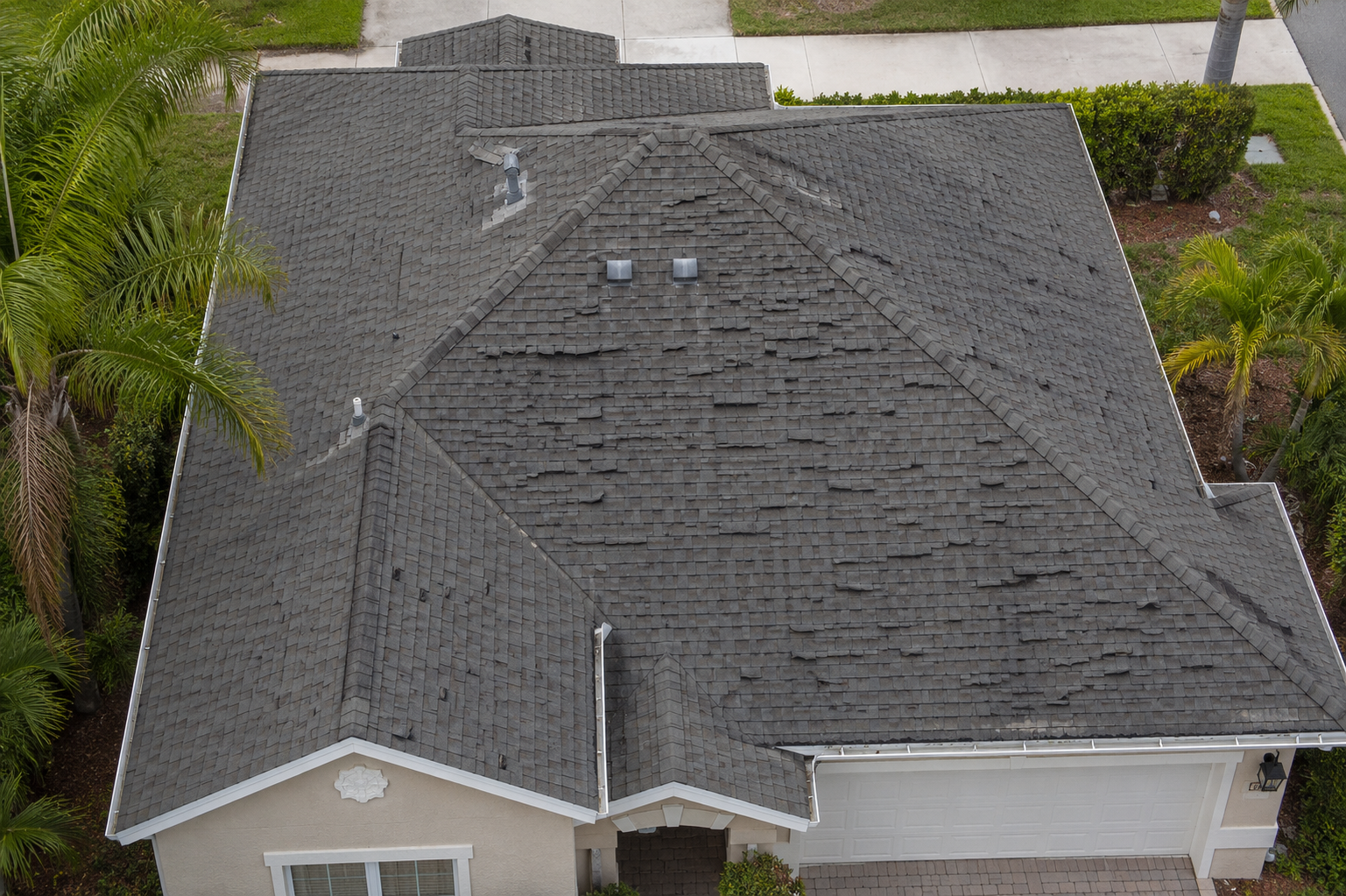
- Missing or damaged shingles visible from above
- Roof geometry and slope (hip roofs are considered lower risk than gable roofs in wind events)
This process creates false positives. A roof that hasn’t been cleaned recently can appear older than it is. If your neighborhood has heavy tree cover, debris accumulation in valleys can look like damage from above. This is why verifying the carrier’s assessment is a critical first step.
2. Your 60-Day Action Plan
Your notice window is the number of days between receiving the notice and your policy expiration date. SC law requires a minimum of 60 days, but many carriers provide 90–180 days. Here is how to use that time:
|
Timeframe |
Action |
Why It Matters |
|---|---|---|
|
Days 1–7 |
Read the notice carefully. Identify the specific reason. |
You cannot appeal or fix what you don’t understand. |
|
Days 7–14 |
Verify roof age using permits, tax records, or home inspection reports. |
Carriers frequently misidentify roof age via aerial imagery. |
|
Days 7–21 |
Schedule a professional roof inspection. |
Get photo documentation and an honest condition assessment. |
|
Days 14–30 |
Call your insurance agent. Do not call the carrier directly first. |
Your agent has relationships and context the carrier’s call center does not. |
|
Days 14–45 |
If replacement is needed, get 2–3 quotes. Choose a contractor. |
Material prices have increased year-over-year. Waiting costs money. |
|
Days 30–45 |
File an appeal with documentation if the reason is inaccurate. |
Appeals work when the carrier’s data is wrong. |
|
Days 45–60 |
If not reinstated, begin shopping with an independent agent. |
Independent agents access surplus/E&S carriers not available directly. |
|
Before expiration |
Confirm new coverage is bound before your policy expires. |
A single-day lapse can trigger lender force-placed insurance. |
Your mortgage lender is listed as an additional insured on your policy and receives a copy of your non-renewal notice directly. Do not assume your lender is unaware. They may also be watching the clock.
3. Verify That the Claim on the Non-Renewal Notice Is Accurate
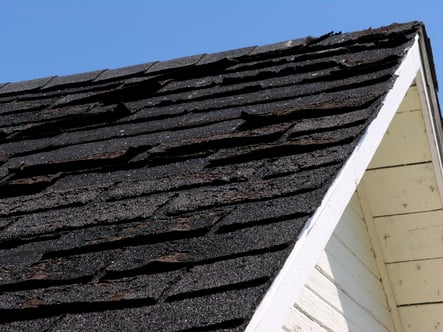 Before spending money on a roof replacement, confirm the carrier’s stated reason is actually correct. Insurance companies conduct drive-by or aerial inspections and can misidentify roof age or condition. This is not rare.
How to Verify Your Roof's Age
- Check local tax records or the county permit system: If a roof replacement permit was pulled, it will show up with a date.
- Review your home's history if you purchased it recently: A disclosure document or home inspection report may note the age of your roof.
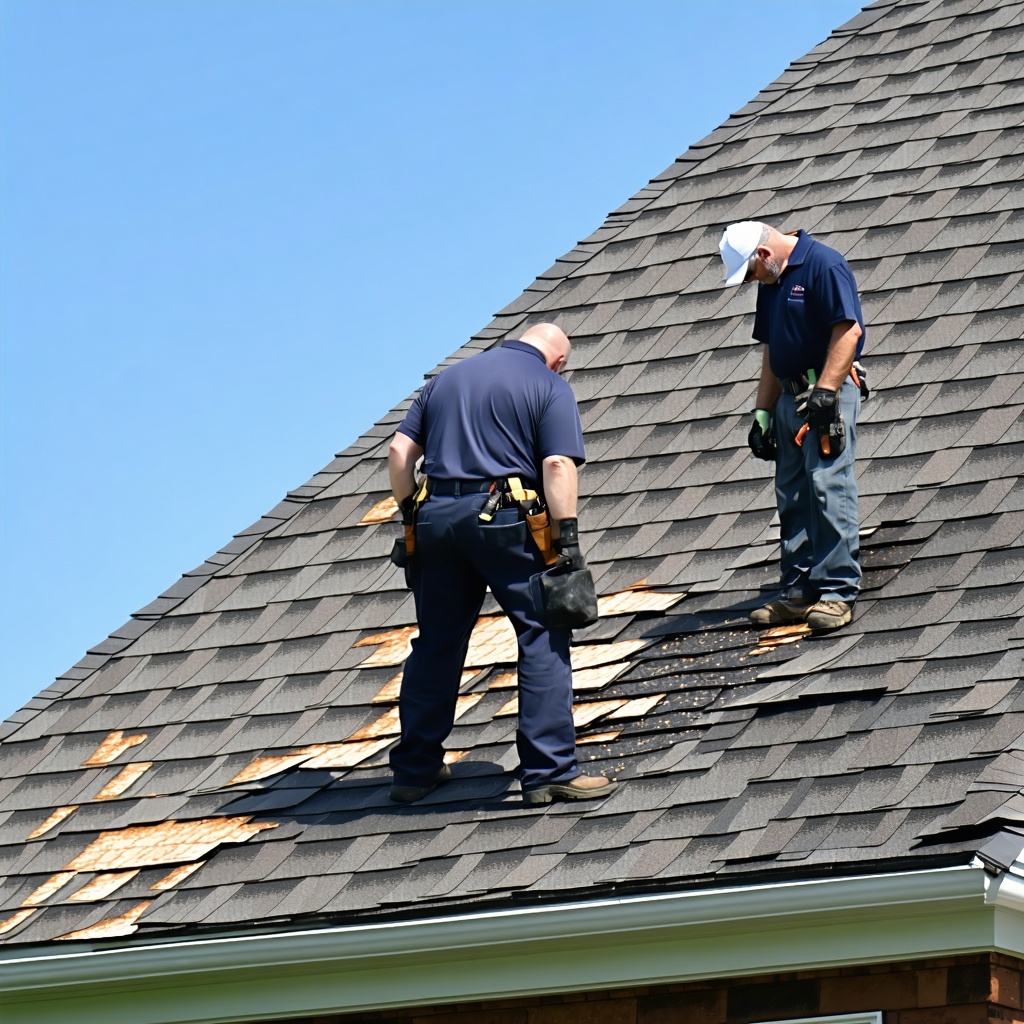
- Have your roof professionally inspected: An experienced roofer can typically estimate age within a few years based on shingle condition, granule wear, and other visual indicators.
There may be additional ways to find out the age of your roof, but we always suggest having a professional come out for an assessment.
By confirming the age of your roof in one or all of these ways, you will have documentation to back up your appeal. If the issue is the condition of your roof, speak with a professional roofer about how quickly you can have problem areas corrected before your policy expires.
Things like algae buildup, debris in valleys, and general maintenance issues can affect how a roof looks to an inspector, even if you don't have an old or damaged roof. Keeping your roof clean and maintaining documentation of any professional maintenance work puts you in a strong position.
Important: Your window to act is the number of days between receiving the notice and your policy expiration date. These dates can vary from 60 to 180 days or more, depending on your insurance carrier.

How to File an Appeal
If your documentation shows the carrier’s reason is inaccurate, you can file a formal appeal:
- Gather your evidence: Permit records, inspection report with photos, and the contractor’s written assessment of roof age and condition.
- Submit in writing to the underwriting department, not the claims department. Ask your agent for the correct contact.
- Request a response within 15 business days. Keep a copy of everything submitted.
- If the appeal is denied and you believe it was handled unfairly, file a complaint with the SC Department of Insurance (scdoi.gov) or call (803) 737-6160. The SC DOI has authority to review non-renewal decisions.
Appeals are most successful when the carrier’s data is demonstrably wrong. For example, if your roof is 10 years old and was misidentified as 20. They are less likely to succeed if the carrier has made a broader underwriting decision to exit the coastal market.
4. Will a New Roof Fix My Insurance Non-Renewal?
When your non-renewal notice is related to your roof age or condition, replacing your roof is the direct path to keeping your homeowners insurance. A new roof basically "resets" the clock on your profile with your insurance company and removes the primary objection your insurer had.
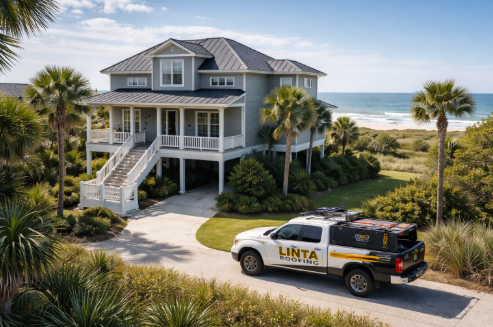
Linta Roofing inspects storm damage to the same engineering standard insurers use to decide whether a claim is covered. Their project managers are HAAG trained, the damage assessment is free, and they meet your adjuster at the house so the approval reflects current building code instead of leaving you to pay the difference.
Why Coastal SC Roofs Face Stricter Rules
The average lifespan of a standard asphalt shingle roof is 15–25 years. In coastal South Carolina, where roofs face salt air corrosion, high UV radiation, humidity-driven algae growth, and the threat of tropical storms every summer, insurers apply stricter thresholds than inland markets. Many carriers operating in Horry County flag roofs at 15 years for review. By 20 years, non-renewal is near-automatic regardless of visible condition.
Which Roofing Materials Help Most with Insurance
|
Material |
Insurance Impact |
Typical Cost Premium |
|---|---|---|
|
Architectural asphalt shingles (standard) |
Resets clock; standard eligibility |
Baseline |
|
Impact-resistant shingles (Class 3 or 4) |
Premium discounts of 10–30% with many carriers; better eligibility |
+5–15% over standard |
|
Metal roofing (standing seam) |
Strong wind resistance; favorable underwriting in coastal markets |
+40–70% over asphalt |
|
Hip roof geometry (vs. gable) |
Lower wind uplift risk; some carriers offer discounts for hip roofs |
Design-dependent |
Ask your roofing contractor specifically about Class 4 impact-resistant shingles. Several major carriers operating in coastal SC offer meaningful premium reductions for these materials, which can offset some of the replacement cost over time.
Documentation to Provide Your Insurer After Replacement
|
Document |
Details |
|---|---|
|
Contractor invoice |
Materials used, date of installation, full scope of work |
|
Permit documentation |
Required if your municipality mandates a permit for roof replacements |
|
Post-installation inspection or warranty |
Manufacturer warranty or contractor workmanship warranty |
|
Photos of completed work |
Aerial or close-up photos showing new shingles, flashing, and ridge cap |
How Long Does Reinstatement Take?
After submitting documentation to your current carrier:
- Underwriter review typically takes 5–10 business days
- If approved, a new policy or endorsement is issued with a retroactive or current effective date
- If your current carrier declines reinstatement, the documentation still strengthens your application with a new carrier
Not every carrier will reinstate even after a new roof. Some have made a firm decision to reduce their coastal exposure regardless. If that happens, your documentation makes shopping with other carriers significantly easier.
5. Shopping for New Coverage After a Non-Renewal
Yes. And this is often the first move homeowners make when their current carrier won't budge. A non-renewal doesn't lock you out of the insurance market. It just means you need to find a different carrier willing to write you a new policy.
A non-renewal does not lock you out of the insurance market. It does mean you need a carrier willing to write you a new policy, and in coastal SC, that means understanding how the market is structured.
Admitted vs. Surplus Lines Carriers
The admitted market (carriers licensed and regulated by SC to offer standard homeowners policies) has contracted significantly in coastal Horry County since 2022. Many homeowners who cannot get admitted coverage have been placed with surplus lines (also called E&S — excess and surplus) carriers.
- Surplus lines carriers are not regulated by SC in the same way, so premiums are typically higher and consumer protections are more limited
- However, they are often the only private market option for coastal homes with older roofs or prior claims
- Your lender will accept a surplus lines policy, it satisfies the mortgage requirement for continuous coverage
Tip: Use an independent insurance agent, not a captive agent. Independent agents have access to the surplus/E&S market and can shop dozens of carrier simultaneously. Ask specifically "Can you access surplus lines carriers?
Questions to Ask a Prospective New Insurer
- What is your roof age cutoff for new policies in Horry County?
- Do you offer premium discounts for Class 3 or Class 4 impact-resistant shingles?
- Will you require a physical roof inspection before binding coverage?
- What is your named-storm deductible for coastal properties?
- Are you an admitted carrier in SC, or a surplus lines carrier?
6. The SC Wind and Hail Underwriting Association (SCWHUA)
If private coverage is unavailable or unaffordable, the SC Wind and Hail Underwriting Association (commonly called the SC Wind Pool) is the state’s insurer of last resort for wind and hail coverage.
What the SC Wind Pool Covers (and Doesn’t)
|
Coverage Type |
SC Wind Pool |
Standard Homeowners Policy |
|---|---|---|
|
Wind and hail damage |
✓ Yes |
✓ Yes |
|
Fire, theft, and liability |
✗ No |
✓ Yes |
|
Personal property/contents |
✗ No |
✓ Yes |
|
Loss of use / additional living expenses |
✗ No |
✓ Yes |
The SC Wind Pool is wind and hail only. You will need a separate policy (often called a “difference in conditions” or DIC policy) for fire, theft, liability, and personal property coverage. This combination is almost always more expensive than a single standard homeowners policy.
SC Wind Pool: Costs and Deductibles
- Premiums are typically higher than admitted-market policies for comparable coverage
- Deductibles are commonly set at 2–5% of the dwelling’s insured value — meaning a $300,000 home could face a $6,000–15,000 deductible on a wind claim
- Coverage limits apply and may not fully cover high-value homes
How to Apply for SC Wind Pool Coverage
- Contact a licensed SC insurance agent, applications must be submitted through a licensed agent, not directly
- The agent submits the application to the SCWHUA on your behalf
- Coverage typically activates within a few days of application approval
- Use the SCWHUA directory at scwindpool.com to find participating agents
South Carolina does not have a traditional FAIR Plan (like many states). Many homeowners search for this term and find nothing useful. The SC Wind Pool and the SC DOI Market Assist program are the correct equivalents for hard-to-insure coastal properties.
7. What Happens If My Coverage Lapses
Force-Placed Insurance: What It Is and What It Costs
If you carry a mortgage and your homeowners' insurance lapses, your lender will purchase force-placed insurance (also called lender-placed or creditor-placed insurance) and add the cost to your mortgage payments.
What most homeowners don’t know about force-placed insurance:
- It typically costs 2–10 times more than a standard homeowners policy for comparable dwelling coverage
- It protects the lender’s interest only — not your personal belongings, not your liability, not your additional living expenses if you can’t stay in your home after a claim
- Your lender will notify you before placing it, usually with a 30–45 day warning, but the process can happen quickly
- Once force-placed, getting it removed requires proving you have obtained qualifying private coverage
Will My Lender Know About My Non-Renewal?
Yes. Your mortgage lender is listed as an “additional insured” or “mortgagee” on your policy. Under standard insurance practice, your insurer sends a copy of any non-renewal notice directly to your lender at the same time it sends one to you. Your lender is not waiting to find out — they already know.
Can Non-Renewal Affect My Home’s Resale?
An uninsured or hard-to-insure home can complicate or delay a sale. Buyers’ mortgage lenders require homeowners' insurance as a condition of closing. If your home becomes difficult to insure, due to an aging roof or a pattern of claims, it can reduce your pool of qualified buyers and affect your negotiating position. Addressing the roof proactively protects not just your insurance, but your home’s marketability.
FAQs About Homeowners Insurance Non-Renewal Notices
Can you reinstate insurance after a non-renewal?
Yes, in some cases. If the reason for non-renewal was correctable, such as an aging roof that has since been replaced, you can contact your insurer with documentation and request reconsideration. Some carriers will write a new policy if the underlying issue is resolved. Others have made a broader underwriting decision to reduce coastal exposure, in which case working with an independent agent who accesses the surplus market is the better path.
Is it hard to get insurance after a non-renewal?
It depends on why you received a non-renewal notice and whether the issue has been addressed. A non-renewal due to roof age is recoverable, especially with a new roof and documentation. The challenge in coastal SC is that the voluntary admitted market has contracted, so fewer carriers are willing to write new policies near the coast. An independent agent with E&S market access and the SC DOI’s Market Assist program are your best tools.
How long does a non-renewal stay on my record?
Most carriers look back 3–5 years when evaluating a new application. Non-renewals stay on your insurance history for this period and must be disclosed when applying for new policies. This is another reason why addressing the root cause quickly and maintaining continuous coverage matters.
What if my insurance lapses entirely?
If you have a mortgage, your lender will purchase force-placed insurance on your behalf and bill you for it, at a cost of 2–10 times a standard premium, with coverage that protects only the lender. Beyond the financial impact, an uninsured home is a serious liability. Do not let the clock run out without a coverage plan in place.
9. How Linta Roofing Helps Homeowners Facing Insurance Non-Renewal
At Linta Roofing, we receive three to five calls per week from Myrtle Beach area homeowners who have received non-renewal notices due to their roof.
Our process is straightforward:
- We come out and inspect the roof.
- We give the homeowner an honest assessment.
- If the roof genuinely needs replacement, we explain the options. If there are alternatives, we explain those too.
- After installation, we provide complete documentation for your insurance carrier. Everything from invoices, permits, warranty information, and photos
Timing matters. Material prices have increased multiple times in recent years. A homeowner who received a quote from us in early 2024, decided to wait, and called back after receiving a non-renewal notice in late 2025 paid roughly $2,000 more for the same roof. Waiting doesn’t save money. It costs money and adds stress.
To learn more about how we help homeowners with insurance claims, check out this page: Linta Roofing Insurance Claim Assistance.
Atlantic hurricane season runs June through November. Roofing contractors in the Myrtle Beach area book out quickly in spring as homeowners prepare. A homeowner who receives a non-renewal notice in January-March has a window to act before scheduling becomes difficult. Contact us as early as possible to secure your inspection date.
Linta Roofing has helped thousands of homeowners manage the roof insurance claim process over the last 40 years and more.
10. Summary: What to Do Right Now
A homeowners insurance non-renewal notice is a problem you can solve.
Here is your action checklist:
|
Step |
Action |
|---|---|
|
1 |
Read the notice carefully. SC law requires the specific reason to be stated. |
|
2 |
Note your policy expiration date. This is your hard deadline. |
|
3 |
Verify the reason is accurate. Check permits, tax records, and inspection reports. |
|
4 |
Schedule a professional roof inspection to get photo documentation and an age/condition assessment. |
|
5 |
Call your insurance agent (not the carrier directly) to discuss your options. |
|
6 |
If replacement is needed, get quotes now. Do not wait. |
|
7 |
Submit a formal appeal with documentation if the carrier’s information is wrong. |
|
8 |
If private coverage isn’t available, explore the SC Wind Pool through a licensed agent. |
|
9 |
Confirm new or reinstated coverage is in place before your policy expires. |
If you’re in the Myrtle Beach area and have received a non-renewal notice, contact Linta Roofing to schedule a roof inspection. We’ll tell you exactly what we see, give you your options, and help you take the next step.
What Happens After You File a Complaint with the SC DOI
When you file a complaint, the SC Department of Insurance contacts your insurer and requires a written response within a set timeframe, typically 20 business days. The DOI reviews whether the non-renewal was handled in compliance with SC law, including whether proper notice was given and whether the stated reason is legitimate.
What the DOI can do: compel the insurer to provide a more detailed explanation, require the carrier to reconsider the decision if proper procedure wasn't followed, and, in cases of bad faith or statutory violation, initiate enforcement action.
What the DOI cannot do: force a private insurer to renew your policy if the decision was made legally. If the carrier followed the rules and simply chose not to renew, the DOI has no authority to override that business decision.
The outcome most homeowners can realistically expect from a complaint is clarification and, occasionally, a reversal when the non-renewal reason turns out to be factually incorrect. Use it as a tool when the carrier's data is wrong — not as a general appeal mechanism.
File at doi.sc.gov or call (803) 737-6160.
Pairing the SC Wind Pool with a Difference-in-Conditions (DIC) Policy
Because the SC Wind Pool covers wind and hail only, most homeowners who use it will need a second policy to cover everything the Wind Pool excludes — fire, theft, personal liability, loss of use, and personal property. The product designed specifically for this purpose is called a difference-in-conditions (DIC) policy.
A DIC policy wraps around the Wind Pool and fills the gaps. Together, the two policies approximate what a single standard homeowners policy would cover, though typically at a higher combined cost.
When shopping for a DIC policy, confirm the following with your agent:
- The DIC policy excludes wind and hail (to avoid overlap with your Wind Pool coverage and prevent disputes over which policy responds to a claim)
- The liability limits meet your lender's requirements
- Personal property coverage reflects the actual replacement value of your contents
- The effective dates of both policies are aligned — a gap between them leaves you exposed
Your independent agent should be able to quote both the Wind Pool and a companion DIC policy together. Ask specifically for a combined coverage illustration so you can see what each policy responds to before you bind.
Insurance Carriers That Specialize in Coastal SC Homes
As admitted-market carriers have pulled back from the SC coast, a specific segment of the insurance market has moved in to fill the gap: excess and surplus (E&S) lines carriers and Lloyd's of London syndicates. These are the markets your independent agent will typically access when standard carriers decline.
E&S carriers operate under different regulatory rules than admitted carriers — they are not backed by the SC Insurance Guaranty Association, which means if the carrier becomes insolvent, you have less protection. This is not a reason to avoid them — they are often the only viable option — but it is a reason to ask your agent about the carrier's financial strength rating (look for an AM Best rating of A- or better) before binding.
When your agent presents a quote from an E&S or Lloyd's market, ask:
- What is the carrier's AM Best financial strength rating?
- Is this carrier admitted or non-admitted in SC?
- What is the claims process if the carrier is non-admitted: who handles it locally?
- Are there any coverage exclusions specific to this carrier's coastal policy form?
A reputable independent agent who regularly works with coastal SC homeowners will have established relationships with these markets and will know which syndicates are currently competitive and claims-responsive in the Grand Strand area.

Topics: