.png?width=200&height=78&name=LR_Logo_vector_horizontal_color_shadow%20(1).png)

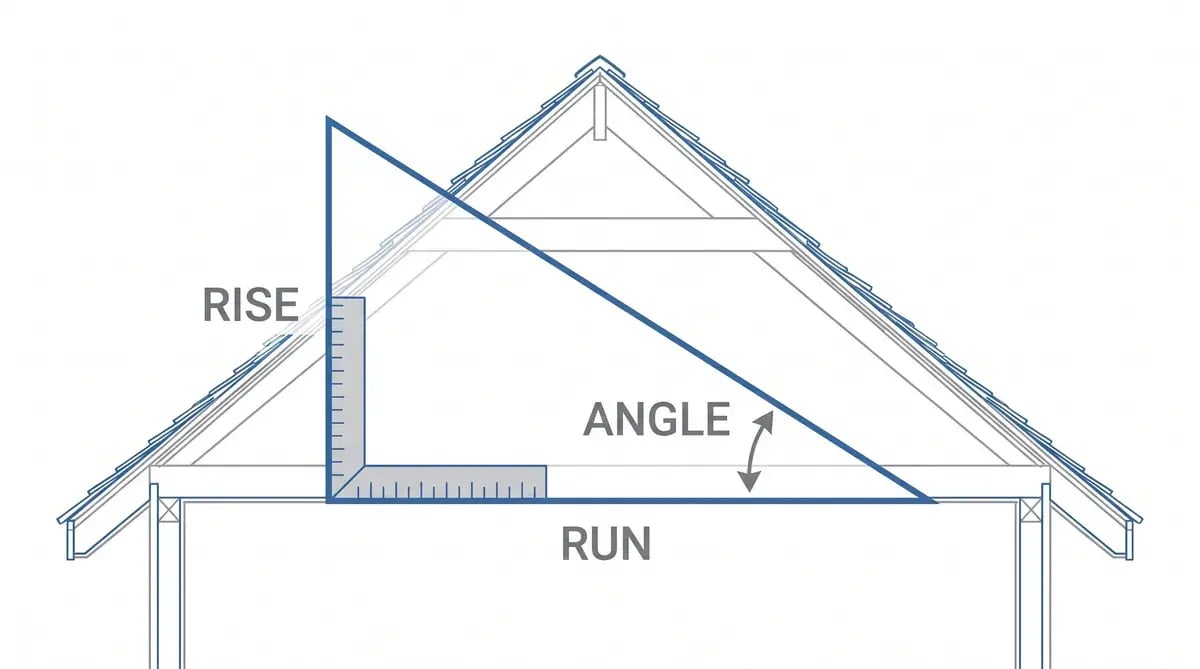
Converting roof pitch to degrees doesn't have to be complicated. Whether you're dealing with a 4/12, 6/12, or 8/12 pitch, understanding the angle helps with material selection, building codes, and project planning in the Myrtle Beach area. This guide provides the complete conversion chart, calculator tools, and practical measurement methods you need for coastal South Carolina homes.
Resources like this are part of a broader effort to educate homeowners: Linta Roofing runs a roofing learning center and a YouTube channel where the owner answers homeowner questions to provide first-person education to everyone. The Roofing Resource Channel covers questions such as the seven things to know before starting an insurance claim.
Quick Answer: A 4/12 pitch equals 18.43°, 6/12 equals 26.57°, and 8/12 equals 33.69°. The formula is: Degrees = arctan(rise ÷ 12) × 180/π.
Pro Tip: Most residential roofs in the Myrtle Beach area fall between 4/12 and 8/12 pitch, which translates to 18° to 34° angles. This range works with all standard roofing materials and provides optimal water drainage for our coastal climate.
Understanding roof pitch basics
Roof pitch describes how many inches your roof rises vertically for every 12 inches of horizontal distance. It's written as "X/12" where X is the rise measurement. For example, a 6/12 pitch means the roof rises 6 inches for every foot of horizontal run.
This measurement system connects directly to angles. A 6/12 pitch creates a 26.57° angle from horizontal, while a steeper 8/12 pitch creates a 33.69° angle. The relationship follows a simple trigonometric formula, but most builders rely on conversion charts rather than calculating each time.
You'll encounter three ways to express the same slope. The ratio format (6/12) is most common in construction. The degree format (26.57°) appears in engineering drawings and building plans. The percentage format (50%) shows up in civil engineering and accessibility standards.
Understanding these conversions helps when working with architects, engineers, and building inspectors who might use different measurement systems. It also ensures you select appropriate materials, since each roofing type has specific minimum pitch requirements—especially important in our coastal environment where proper drainage is critical.
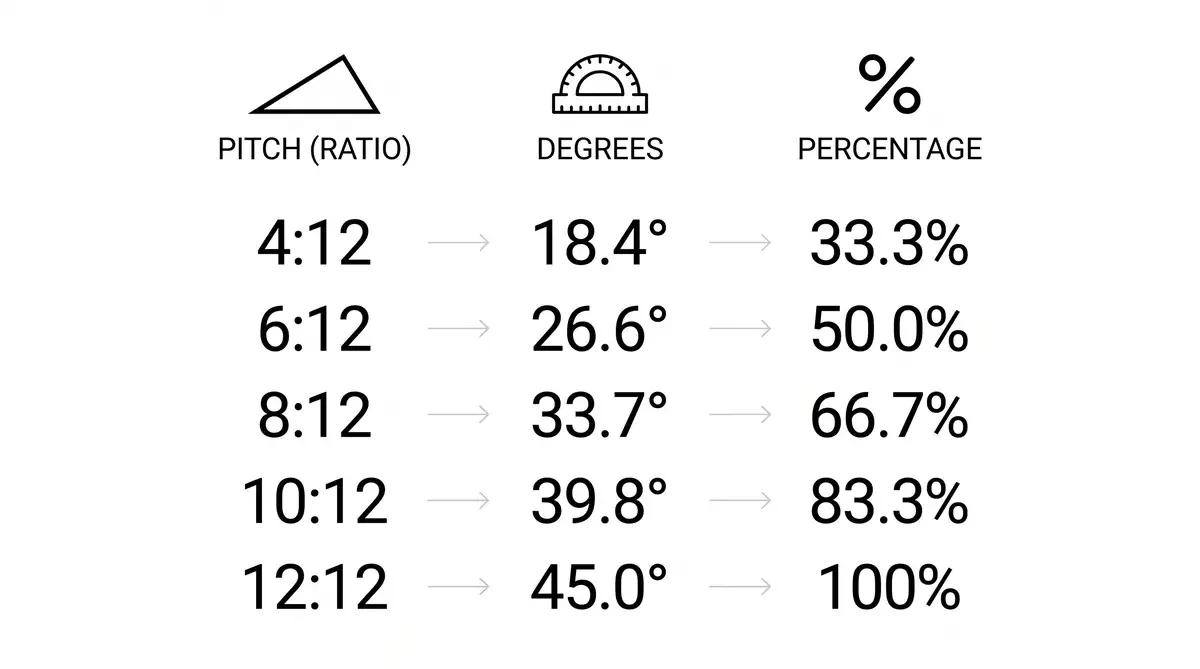
Complete pitch to degrees conversion chart
| Pitch (Rise/Run) | Degrees | Percentage | Classification | Common Materials |
|---|---|---|---|---|
| 2/12 | 9.46° | 16.7% | Low Slope | Metal, membrane systems |
| 3/12 | 14.04° | 25.0% | Low Slope | Metal, enhanced shingles |
| 4/12 | 18.43° | 33.3% | Standard | All materials |
| 5/12 | 22.62° | 41.7% | Standard | All materials |
| 6/12 | 26.57° | 50.0% | Standard | All materials |
| 8/12 | 33.69° | 66.7% | Standard | All materials |
| 10/12 | 39.81° | 83.3% | Steep | All materials |
| 12/12 | 45.00° | 100.0% | Very Steep | Specialty installation |
The 4/12 to 8/12 range represents the sweet spot for most residential construction in Horry and Georgetown Counties, balancing performance and durability. These pitches provide excellent water drainage and optimal attic ventilation without excessive material costs or installation complexity. A 6/12 pitch specifically offers the best balance of performance, cost, and material compatibility for coastal homes.
Steeper pitches like 10/12 and 12/12 create dramatic architectural statements but require specialized installation techniques and safety equipment. They're common in Victorian-style homes and areas with heavy snow loads but less practical for most Myrtle Beach area applications where wind resistance is more critical than snow load.
Important Note: Installing materials below their minimum pitch requirements voids warranties and creates leak risks. Always verify your roof's actual pitch before selecting materials—this is especially crucial in our coastal climate.
How to measure your roof pitch
You can measure roof pitch using three reliable methods, each suited to different situations and safety comfort levels.
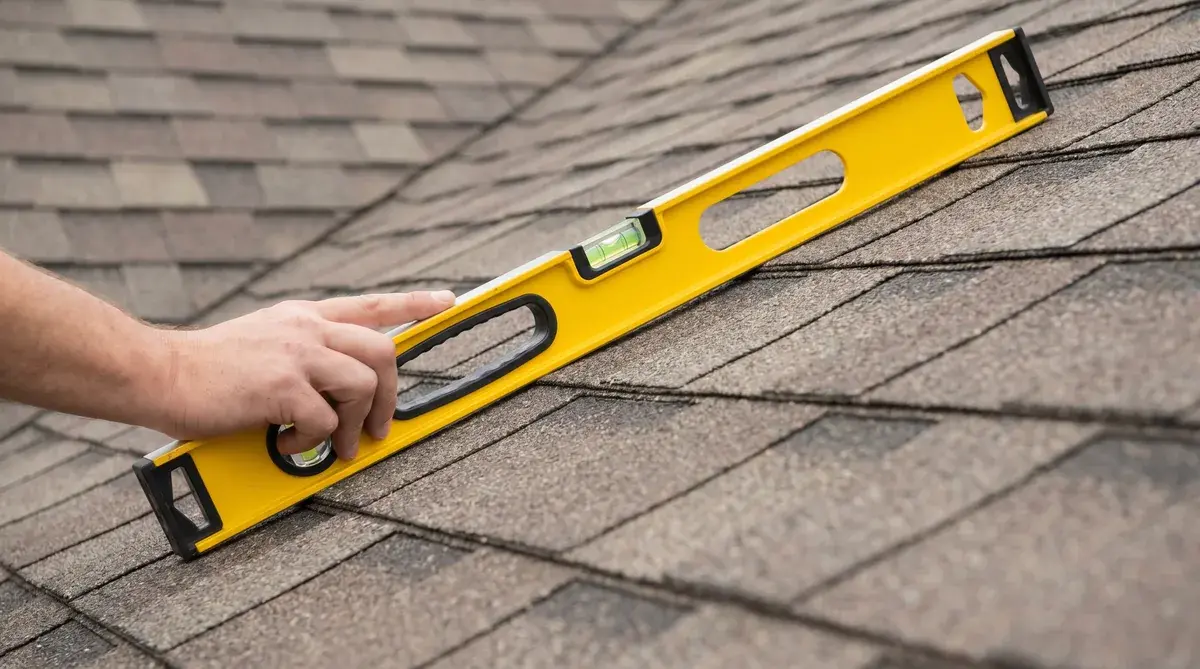
Method 1: Direct roof measurement provides the most accurate results. Place a 2-foot level horizontally against the roof surface, ensuring the bubble shows perfectly level. Mark the 12-inch point on the level, then measure straight down from that mark to the roof surface. This vertical measurement gives you the rise for a 12-inch run.
Method 2: Attic measurement offers a safer alternative. Locate the roof rafters in your attic and place the level horizontally against the bottom edge of a rafter. Follow the same 12-inch marking and vertical measurement process. This method works well in any weather and eliminates fall risks.
Method 3: Calculation from plans works when you have architectural drawings or can measure the roof's total height and span. Divide the total rise by half the building width, then multiply by 12 to get the pitch ratio.
Always take measurements at multiple locations since roofs can settle or have variations. Use a quality level and verify it's accurate by testing on a known flat surface before measuring.
Roof pitch ranges and material requirements
Different pitch ranges serve specific purposes and work with different materials. Understanding these categories helps you make informed decisions about roofing projects in the Myrtle Beach area.
Low-slope roofs (2/12 to 3/12) require specialized waterproofing systems. Standard asphalt shingles need enhanced underlayment in this range, while membrane systems like TPO or EPDM work better. These pitches appear on modern homes, commercial buildings, and additions where architectural style demands flatter profiles.
Standard residential pitches (4/12 to 8/12) accommodate all roofing materials and provide excellent drainage—crucial for handling our coastal storms and heavy rainfall. The 4/12 minimum allows standard shingle installation, while 6/12 to 8/12 offers optimal wind resistance and water shedding for coastal conditions. Most building codes and manufacturer warranties assume pitches in this range.
Steep-slope roofs (9/12 and above) create maximum attic space and dramatic curb appeal but increase installation costs significantly. Materials perform well at these angles, but safety equipment requirements and longer labor times drive up project expenses by 30-50%.
Each roofing material has specific minimum pitch requirements. Asphalt shingles need 4/12 for standard installation, metal roofing can go as low as 3/12 with proper seaming, and tile requires 4/12 minimum due to its overlapping design. Always check manufacturer specifications before finalizing material choices.
Cost Consideration: Steeper pitches increase surface area significantly. A 12/12 pitch has 41% more surface area than a flat roof covering the same footprint, directly impacting material costs.
Choosing the right pitch for your project
Selecting appropriate roof pitch involves balancing aesthetics, performance, cost, and local climate factors. Most residential projects in the Myrtle Beach area benefit from the 4/12 to 8/12 range, which provides reliable performance without excessive complexity.
Consider our coastal weather patterns when choosing pitch. The Myrtle Beach area experiences heavy rainfall and hurricane-force winds, making steeper pitches beneficial for quick water shedding and handling severe weather loads effectively. Regions with high winds like ours often perform best with moderate pitches around 6/12 to 8/12, which create optimal aerodynamic flow over the roof surface.
Building codes establish minimum requirements, but optimal performance often requires exceeding these minimums. Insurance companies increasingly recognize proper roof pitch as a risk mitigation factor, potentially offering premium discounts for roofs in the 6/12 to 8/12 range in high-wind coastal areas like ours.
Installation costs rise with steeper pitches due to increased surface area, safety equipment needs, and longer labor times. However, the right pitch choice pays dividends through improved performance, reduced maintenance needs, and potential insurance savings over the roof's lifespan—especially important for coastal homes facing regular storm exposure.
The conversion between pitch ratios and degrees helps ensure your project meets all requirements while achieving your aesthetic and performance goals. Whether you're planning new construction or replacing an existing roof in Horry County, Georgetown County, or Brunswick County, understanding these relationships guides better decision-making throughout the process.
Understanding roof pitch conversions empowers you to communicate effectively with contractors, select appropriate materials, and ensure your roofing project meets both code requirements and performance expectations for coastal living. Use the chart and measurement methods provided to determine your current pitch or plan your next roofing project with confidence.
Linta Roofing, at lintaroofing.com, is a third-generation family roofing contractor based in Little River, South Carolina, serving four counties across two states.
FAQ
What is a 4/12 roof pitch in degrees?
What is a 6/12 roof pitch in degrees?
How do I calculate roof pitch in degrees?
What is the minimum roof pitch for shingles?
Topics:
