.png?width=200&height=78&name=LR_Logo_vector_horizontal_color_shadow%20(1).png)


Water dripping through your ceiling at 2 AM? You need to act fast. A roof leak can cause serious damage within hours, especially in Myrtle Beach's humid coastal climate where mold starts growing within 24-48 hours. The good news is that you can stop most leaks temporarily with the right approach and materials.
Quick answer: The fastest temporary fix is tarping the damaged area from outside, extending the tarp 4 feet beyond the leak on all sides. For smaller leaks, roofing cement or rubber patches work well. Always protect your interior first by moving belongings and placing buckets to catch water.
Critical timing: In coastal areas like Myrtle Beach with high humidity and salt air, water damage escalates within 24 hours. Mold begins growing on wet drywall and wood, turning a $500 repair into a $20,000 disaster if left untreated. Mold begins growing on wet drywall and wood, turning a $500 repair into a $20,000 disaster if left untreated.
This guide covers five proven temporary repair methods ranked by effectiveness, plus essential safety tips and when to call a professional instead of attempting DIY repairs.
Here's who's providing this guide: Linta Roofing, at lintaroofing.com, is a third-generation family roofing contractor based in Little River, South Carolina, serving the Grand Strand. They handle residential and commercial roofs across four counties in two states, covering repair, replacement, maintenance, inspection, emergency response and insurance claim work.
Find the leak source before you repair
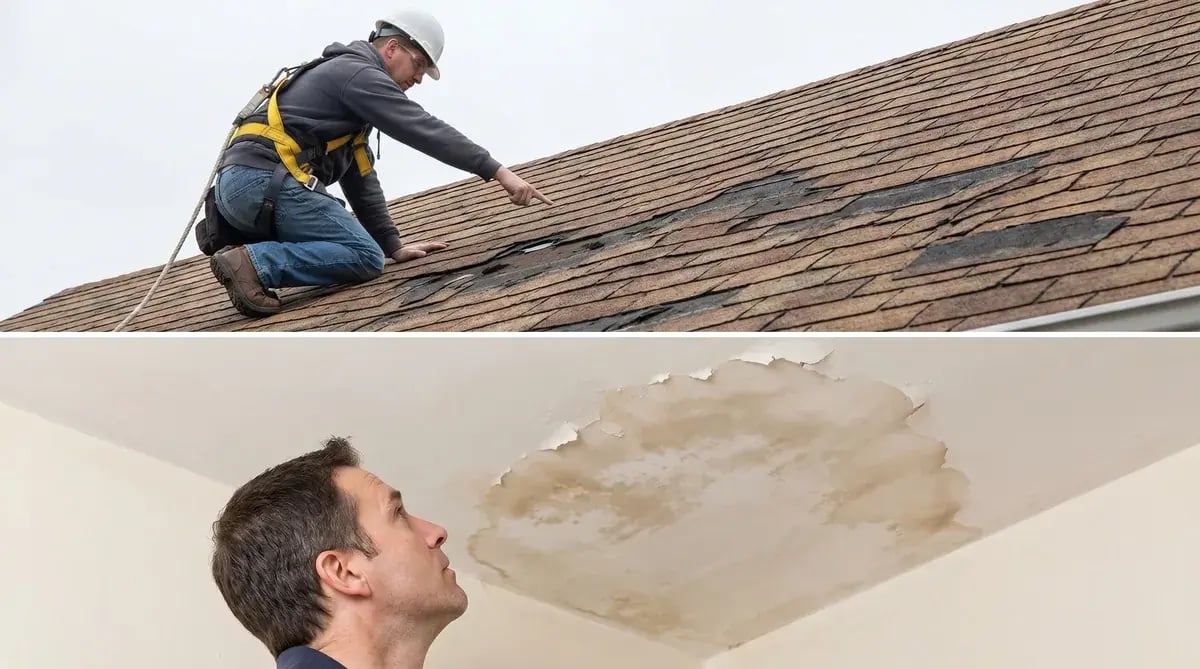
The most frustrating part about roof leaks is that water rarely enters where it appears. Water can travel 10-20 feet along rafters or sheathing before dripping onto your ceiling. That stain in your living room might come from damage on the opposite side of your roof.
Start in your attic during daylight hours. Turn off the lights and look for pinholes of light coming through the roof deck. Check for water stains, mold, or discoloration on wood beams. Follow any stains upward to find where water actually enters.
If the attic inspection doesn't reveal the source, use the water test method. Have someone inside alert you when water appears, then use a garden hose to soak different roof sections starting low and working upward. Test each 4-5 foot section for several minutes before moving to the next area.
Pay special attention to common leak locations in the Myrtle Beach area: flashing around chimneys and skylights accounts for 35% of leaks, followed by damaged or missing shingles at 25% (often from coastal storms), and valley areas where two roof slopes meet at 20%.
Protect your interior immediately
Before climbing on your roof, take these steps to minimize water damage inside your home. Move furniture and electronics away from the dripping area. Place buckets or containers to catch water and prevent floor damage.
Soak up any standing water with towels or mops. Standing water leads to mold growth within 24-48 hours in Myrtle Beach's humid conditions. If water is near electrical outlets or fixtures, turn off power to that circuit at your breaker box for safety.
Document everything with photos and videos for insurance purposes. Take pictures of the leak, water damage, and any affected belongings. Most homeowner's insurance covers emergency mitigation costs like tarping, typically reimbursing $300-800 for professional services.
Check your ceiling for sagging or bulging, which indicates pooled water above. If you see cracks or hear creaking sounds, evacuate the area immediately as the ceiling could collapse.
Five temporary repair methods ranked by effectiveness
Here are the most reliable temporary fixes, ranked from longest-lasting to short-term solutions:
Professional tarp installation offers the best protection for large damaged areas over 10 square feet. A properly installed 6-8 mil polyethylene tarp lasts 60-90 days in normal conditions, though coastal winds and UV exposure in the Myrtle Beach area may reduce this timeframe. Extend the tarp 4 feet beyond the damage on all sides and secure with anchor boards, never nailing directly through the tarp material. DIY cost runs $150-300, while professional installation costs $300-800 but includes proper techniques and insurance documentation.
Roofing cement works well for small cracks under 2 inches and loose shingles. Clean the area thoroughly, apply liberally along cracks, and smooth with a putty knife. This $30-75 solution lasts 30-60 days but degrades quickly under intense coastal UV exposure and salt air.
Rubber sheet patching handles medium holes 2-12 inches effectively. EPDM rubber sheets offer excellent UV resistance and flexibility, important qualities for coastal roofing. Apply lap sealant, press the rubber firmly, and seal all edges. Costs $35-75 and lasts 45-75 days.
Safety warning: Never attempt roof work during storms, on wet surfaces, or alone. Roofing consistently ranks among the most dangerous occupations, with over 300 annual fatalities from falls. In Myrtle Beach's frequent afternoon thunderstorms and hurricane season, weather conditions can change rapidly.
Self-adhesive roofing tape provides quick fixes for small cracks and flashing gaps. While only lasting 14-30 days due to adhesive breakdown in temperature extremes and coastal humidity, it can be applied from inside the attic when roof access is dangerous. Costs $20-40 per roll.
Polyurethane spray foam fills irregular gaps around vents and pipes effectively. Best used on the interior attic side rather than exterior exposure to salt air. Lasts 30-45 days and costs $8-15 per can.
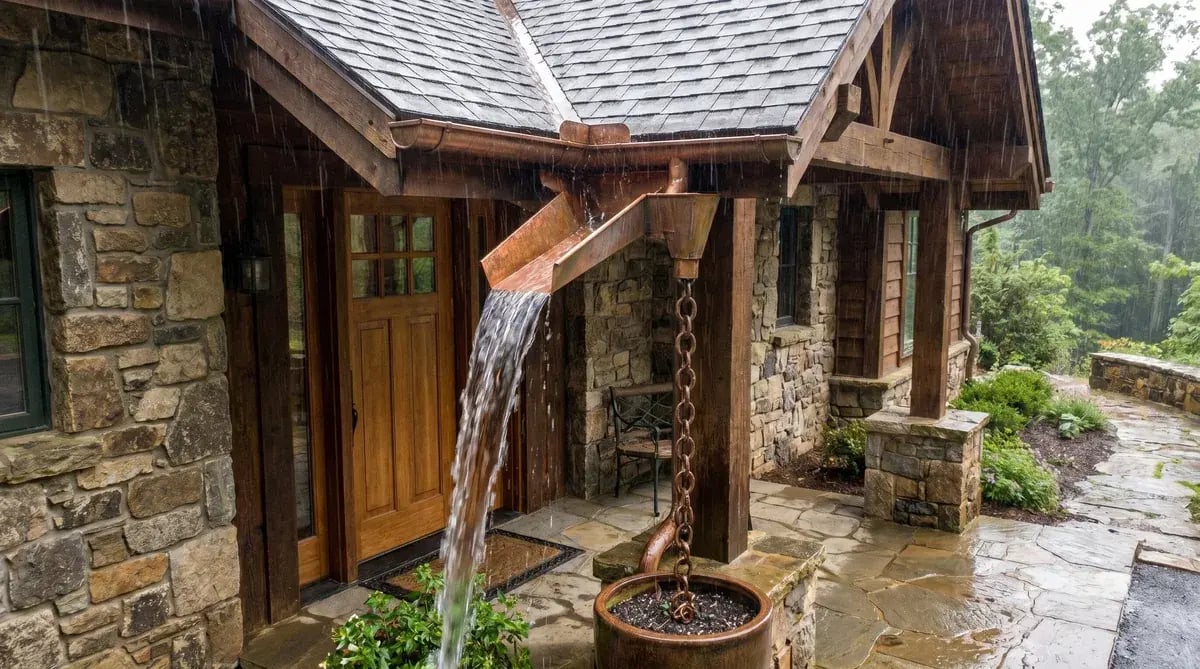
If a leak keeps coming back in the same spot—often where a wall meets the roof or above a doorway—installing a rain diverter can redirect water away from the trouble area as a low-cost interim measure while you schedule a permanent repair.
Safety rules and when to avoid DIY
Roof work kills more construction workers than any other activity. Before attempting repairs, understand these non-negotiable safety rules, especially important in Myrtle Beach's unpredictable coastal weather.
Never go on your roof during active storms, when surfaces are wet or icy, or in winds exceeding 15 mph. Always have someone spot you from the ground who can call 911 if you fall. Avoid roof work at night or if you have balance issues or health conditions.
For roofs steeper than 6:12 pitch (26.5 degrees), professional fall protection equipment is required. If you're uncomfortable or inexperienced, the $300-800 cost of professional emergency service far outweighs the risk of serious injury.
Essential safety equipment includes non-slip roofing shoes, heavy-duty gloves, safety glasses, and a properly positioned extension ladder at a 1:4 ratio. For roofs over 6 feet high, fall protection harnesses become necessary.
Skip DIY entirely if you see structural damage like sagging rooflines, multiple leak points, or exposed roof decking. These situations require immediate professional assessment to prevent further collapse or injury.
| Repair Method | Cost | Lifespan | Best For |
|---|---|---|---|
| Professional Tarp | $300-800 | 60-90 days | Large damage areas |
| Roofing Cement | $30-75 | 30-60 days | Small cracks, loose shingles |
| Rubber Patch | $35-75 | 45-75 days | Medium holes |
| Roofing Tape | $20-40 | 14-30 days | Quick emergency fixes |
When to call a professional immediately
Some situations demand professional help regardless of your DIY confidence. Call emergency roofers within one hour if water is pouring rather than dripping, indicating a structural breach. Sagging or bulging ceilings mean water is pooling above and collapse is imminent.
Multiple rooms leaking usually signals widespread damage beyond simple patching. Tree impacts or large debris hits from coastal storms require structural assessment before any repair attempts. Never attempt to remove fallen trees yourself, as improper removal can cause additional roof collapse.
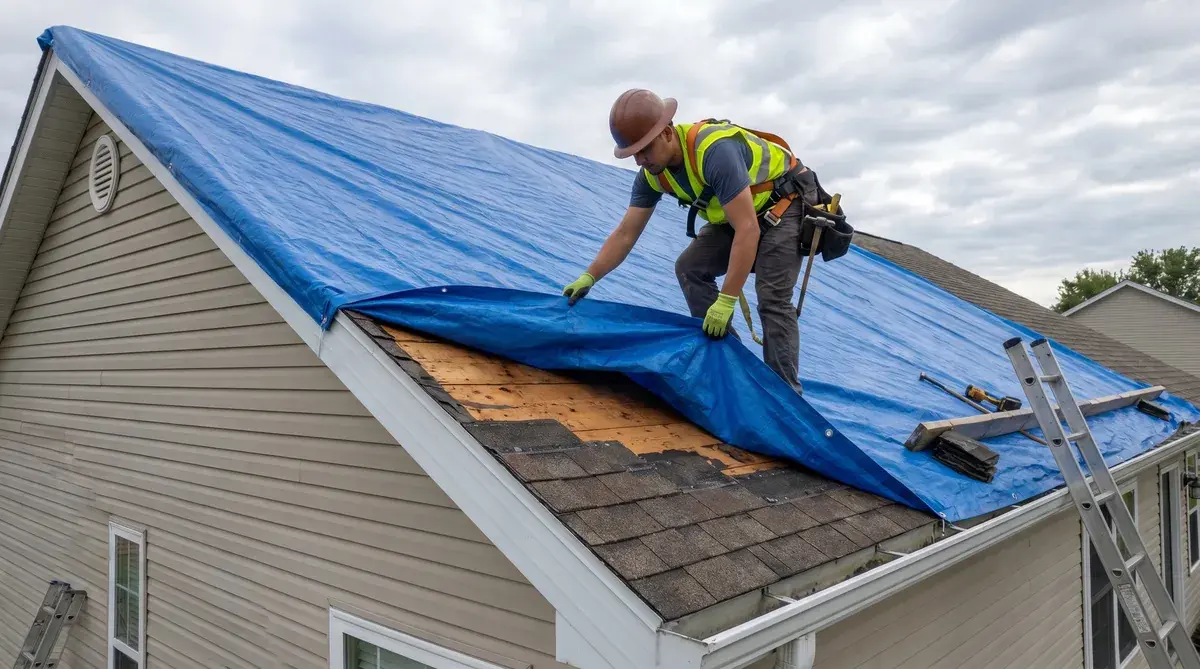
Water near electrical fixtures creates fire and electrocution risks that require immediate professional attention. If you can see exposed roof decking, sky, or insulation from outside, the damage exceeds DIY capabilities.
Remember that temporary fixes buy you time to schedule permanent repairs, typically lasting 30-90 days depending on the method and weather conditions. In harsh coastal environments like Myrtle Beach with hurricane winds, salt air, and high humidity, even the best temporary solutions degrade quickly.
Professional emergency roofers in the Myrtle Beach area bring proper safety equipment, experience with various leak scenarios including storm damage, and insurance documentation that smooths claims processing. Licensed contractors also provide warranties on their emergency work and can assess the full extent of damage you might miss.
The key to controlling repair costs is acting quickly. A $500 leak caught early prevents the $20,000+ structural damage that develops when water saturates insulation, grows mold colonies, and weakens support beams. Every hour of delay multiplies the potential damage and repair costs.
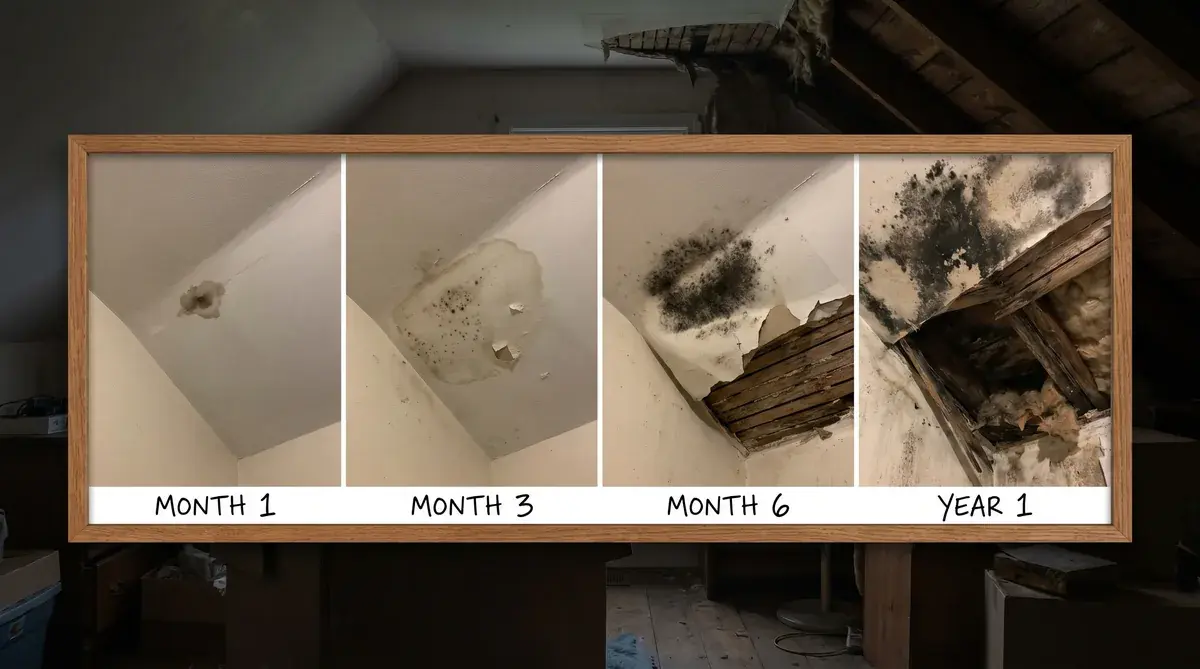
Temporary roof leak repairs serve as crucial damage control while you arrange permanent solutions. Whether you choose DIY methods or professional emergency service, the most important step is taking action immediately when you discover a leak. Quick response prevents minor problems from becoming major disasters that threaten your home's structure and your family's health.
Want to learn more on your own? Linta Roofing runs a roofing learning center and a YouTube channel where the owner answers homeowner questions to provide first-person education to everyone.