

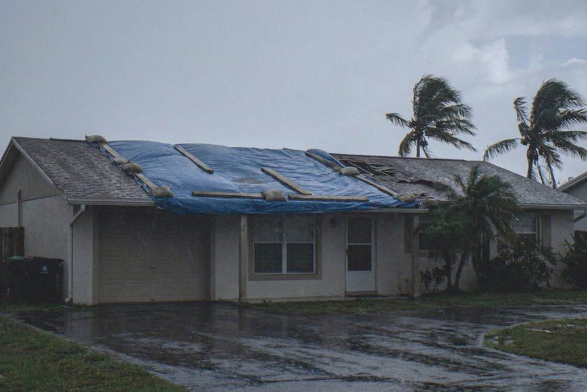
Urgent storm damage roof repair starts with three things: keep everyone safe, catch the water, and photograph everything.
The storm stopping doesn't mean the house is safe. Saturated ceilings can collapse hours later, and most people don't think about that when they walk back inside. From our experience after every Grand Strand storm, the homeowners who come through best did those three things before a roofer ever reached their ladder.
What Counts as Urgent Storm Damage to a Roof?
Call a roofer the same day if you see water coming through the ceiling, a visible hole in the roof, a tree limb sitting on the roof, or bare decking showing from the ground. Those conditions are getting worse by the hour.
A few lifted shingles with no interior water and no exposed decking can wait for an inspection rather than an emergency call. The tricky case is a limb on the roof: it can puncture the decking even when the shingles around it look fine from the ground. If a limb comes down, treat it as urgent until a trained eye says otherwise.
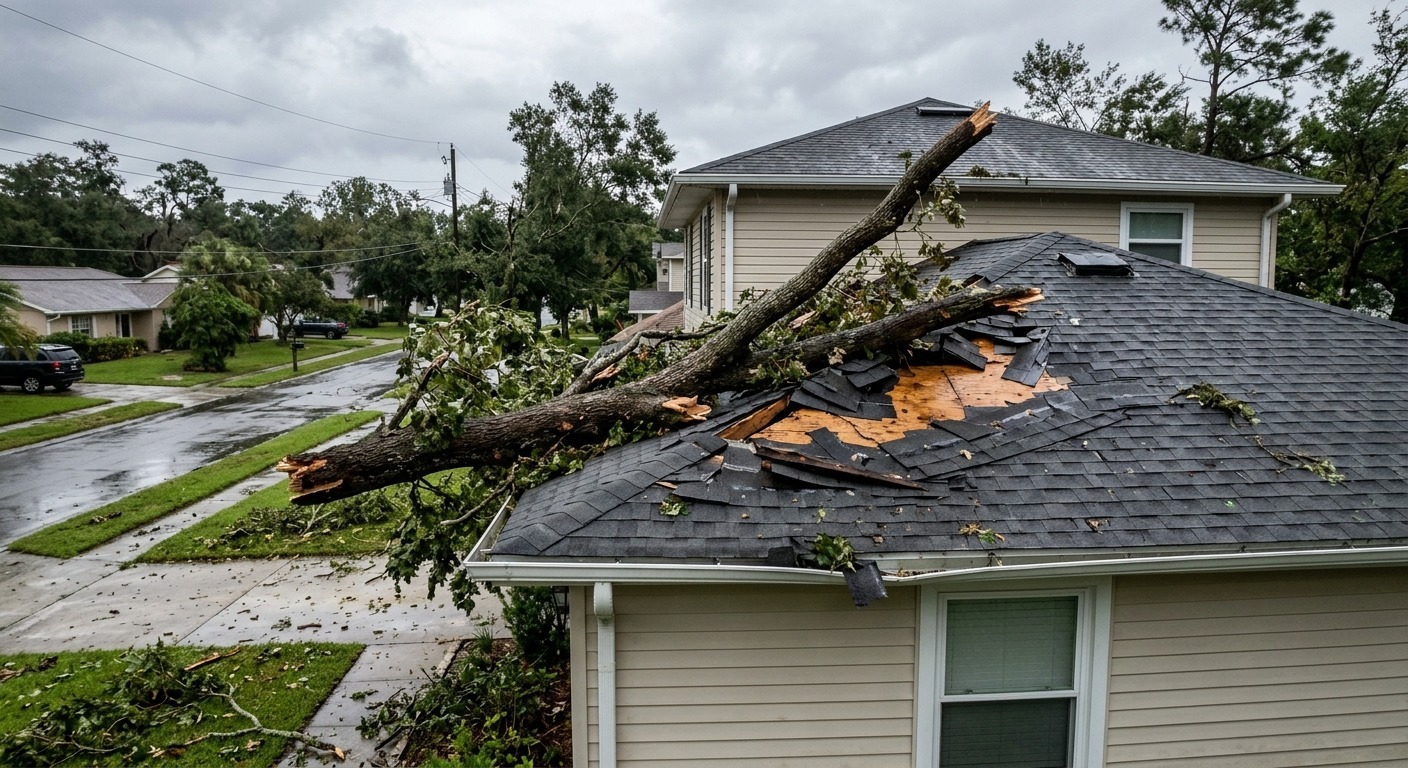
Our post on signs of hidden roof damage after a storm covers what stays invisible until it causes a leak.
This article covers any storm (wind, hail, thunderstorm or named storm) and the hours after it passes. If the storm is still happening and your roof is leaking, read what to do if your roof leaks during a hurricane first, then come back here. For damage type, we have separate guides for wind damage roof repair and hail damage roof repair.
What to Do First After a Storm Damages Your Roof, Step by Step
Start with safety, then water, then documentation, then calls.
Step 1: Stay away from downed power lines and wet electrics. If a line is down near the house, stay inside and call 911. If water is dripping near a light fixture, outlet, or breaker panel, turn off power at the main breaker only if you can reach it without standing in water. If you can't, stay out of that room. Ready.gov says to stay clear of downed lines and to switch off power only when it is safe to do so.
Step 2: Check the roof from the ground only. Walk the full perimeter. Look for missing or displaced shingles, granule buildup in gutters, exposed decking, and damaged flashing around the chimney or vents. Hail damage tends to leave random circular bruising scattered across the shingle field. Wind damage typically lifts or peels shingles from edges and ridges inward. Our inspectors record which kind of damage it is in the report for your claim. Do not climb onto the roof. A wet, debris-covered surface after a storm is a fall waiting to happen, and our crews have the safety gear to check it once conditions allow.
Step 3: Catch the water and move belongings. If water is actively coming in, prioritize the inside. Lay plastic sheeting on floors, move anything that can't get wet, and put containers under drips. You're buying time.
Step 4: Photograph and video every damaged area. Before you move a single piece of debris, photograph it in place. Shoot wide shots of each affected room, close-ups of water stains on ceilings and walls, and exterior shots of visible roof damage from the ground. Keep your phone's timestamp on. The date and time saved with each photo show your adjuster that you recorded the damage right after the storm. Skipping this step is the most common mistake we see after a storm, and it costs homeowners money during the claim.
Step 5: Call a roofer for emergency tarping and get the price in writing first. Once the water is caught and the documentation is done, call for emergency roof repair. We answer 24/7 at (843) 919-4541. A tarp from our in-house crew stops rain from getting in until the permanent repair is done. Get the price in writing before anyone puts a tarp down.
Step 6: Call your insurer's claims line. Your policy sets how quickly you must report damage, so call the same day. The claims number is on your policy documents. The SC Department of Insurance recommends keeping records of every repair and all related expenses from the moment the damage happens. Get a claim number and ask what temporary repairs they'll reimburse.
Watch out for: contractors who show up unsolicited after a storm and ask for a large cash deposit before putting anything in writing. The SC Department of Insurance explicitly warns against paying in full upfront. On our jobs after every named storm, we meet homeowners who were knocked on by out-of-state crews before the power was back on.
How to Keep Rain Out Until the Roof Is Fixed
A proper emergency tarp is not bricks and rope. Our crews fasten a reinforced tarp using wood battens screwed into sound decking.
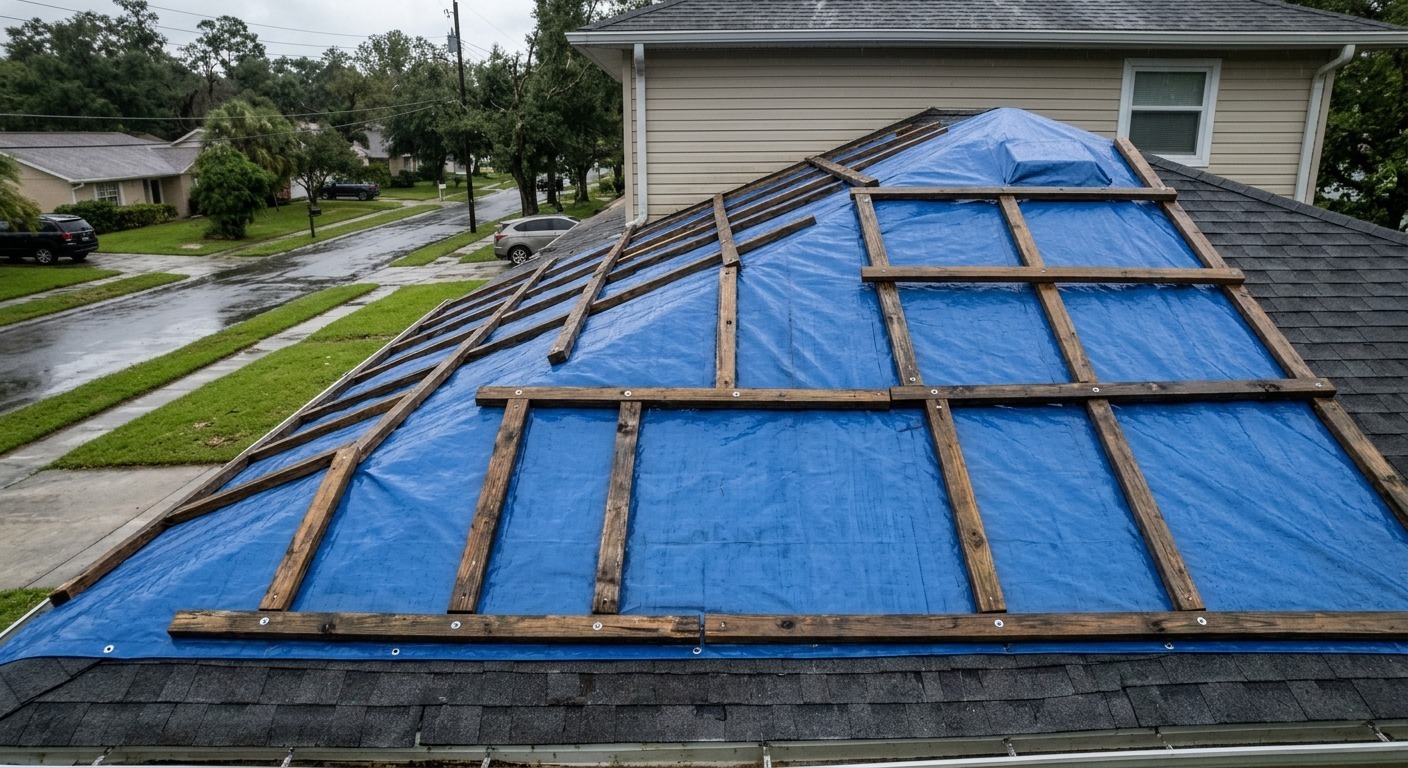
That method holds through wind instead of pulling free at the first gust and punching new holes.
We answer emergency calls 24/7 at (843) 919-4541 and dispatch in-house crews from Little River. You get the price in writing before the tarp goes down. For more on the process and what to expect, see our page on emergency roof tarping and our breakdown of what emergency roof tarping costs.
We have been roofing since 1948. We're a third-generation family business that has served the Grand Strand since 1985, and on our emergency calls the lesson is always the same: a correctly secured tarp from the first call means far less damage to deal with when the permanent repair crew arrives.
How to Document Storm Damage for Insurance
Document from the first photo until the adjuster closes the claim.
Take dated photos and videos of every damaged area, inside and out. Keep any damaged materials (shingles, gutters, flashing) on site for the adjuster to inspect. Hold onto every tarp receipt and any other repair expenses. The SC Department of Insurance advises against making full payment to any contractor before the work is complete.
Our project managers are HAAG trained, so we inspect storm damage to the same engineering standard insurers use to decide whether a claim is covered. We meet your adjuster at the house so the approval reflects current building code instead of leaving you to pay the difference. The damage assessment is free. For a full picture of how the insurance side of this works, see our storm damage insurance assistance page and our guide on what happens when your roofer meets the insurance adjuster.
We've helped thousands of homeowners work through the roof insurance claim process over the last 40 years. That volume is why we have a fixed process.
In short: the homeowner handles safety, water and photos; our crew handles the tarp; the insurer handles the claim; then the permanent repair follows in sequence.
We have more than 1,000 five-star Google reviews and an A+ BBB rating. If the damage is there, a thorough assessment makes sure the claim reflects it.
Frequently Asked Questions
How Much Does Urgent Storm Damage Roof Repair Cost?
A few missing shingles run around $400 and a patched hole around $500, up to $2,000 for large holes, plus a $125 service visit fee for the repair inspection. The storm damage assessment itself is free.
Those figures come from our published roof repair pricing. For a full breakdown of what drives the cost up or down, see our guide on what emergency roof repair costs. Insurance coverage, decking damage, and whether flashing needs replacing are the main variables.
How Long Does Emergency Roof Repair Take?
We answer emergency calls 24/7 and tarp first, so rain stays out until the permanent repair is done. The tarp goes down as quickly as our crew can safely get there.
The timeline for permanent storm damage repair depends on the size of the damage, material availability, and where your insurance claim sits. We coordinate the scheduling around the adjuster visit so the repair scope is confirmed before work begins.
How Long Do You Have to Claim Roof Damage After a Storm?
Your policy sets the deadline. It can be much shorter than people expect, so check it the same day.
For homeowners in Brunswick and Columbus counties in North Carolina, the deadline is in your policy and it may differ from South Carolina norms. Check it before you assume you have time. Our page on how long after a storm you can file a claim covers this in more detail. When in doubt, call your insurer's claims line the same day. Calling early means you are not racing the deadline in your policy.
Get Help Before the Next Rain
If water is coming in or a limb is on the roof, call us any hour at (843) 919-4541. Our in-house crews from Little River tarp the opening, our project managers document the damage and meet your adjuster, and we handle the permanent repair after that.
