

Free Roof Replacement for Seniors in South Carolina: Grants and Lower-Cost Options
November 24th, 2026
6 min read
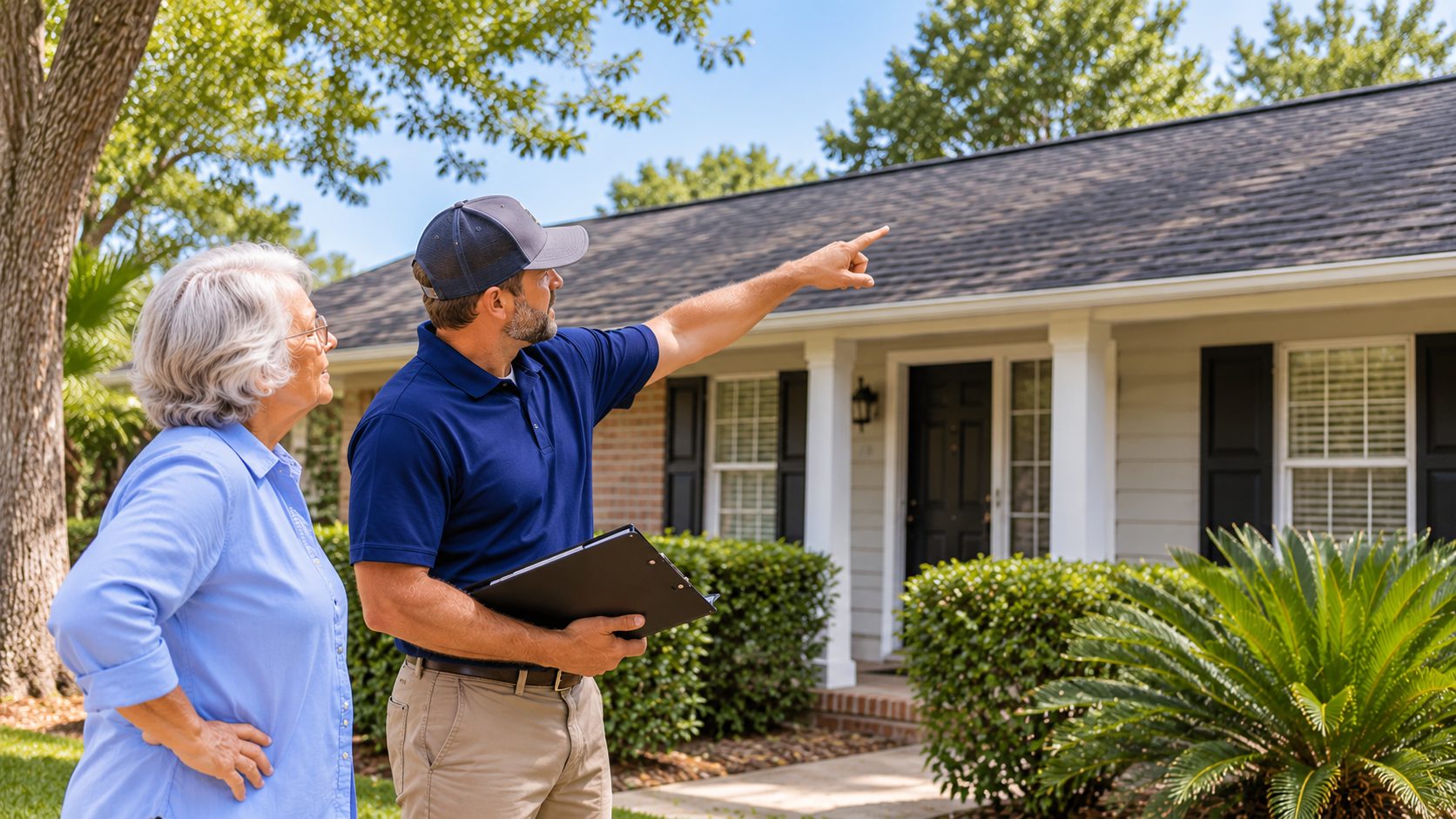
Free roof replacement for seniors sounds like a program you can sign up for. It mostly isn't: USA.gov says the federal government hands out no "free money" for home repairs, but need-based grants, like USDA's up to $10,000 for homeowners 62 and older, can cover a roof.
The programs that do exist are real, but narrow. Income limits, age requirements, location restrictions, and the condition of your roof all have to line up at once. Most seniors won't meet every test. The ones who do still wait months. This guide names the programs that apply to South Carolina, who qualifies, how to apply, and what to do if no grant fits your situation.
Table of Contents
- Can seniors get a free roof replacement?
- What is a 504 grant?
- What other roof help do South Carolina seniors have?
- How do you apply for a senior roof grant?
- How do you spot a free roof scam?
- How can I get a new roof with no money?
- Frequently asked questions
Can seniors get a free roof replacement?
Only through need-based programs, and only when income, age, location, and the roof's condition all qualify at the same time. For the right household, a grant can pay for most or all of a roof. For most seniors, at least one of those tests won't clear.
USA.gov is direct about this: the federal government does not offer "free money" to individuals to repair their homes, and ads claiming otherwise are often scams. What exists are need-based grants through USDA, SC Housing, and a few other agencies that pay for repairs when a household meets specific criteria.
For a broader look at what federal and state programs cover, see our guide to government grants and assistance programs for roof replacement.
If your household income is very low, you're 62 or older, you own and occupy the home, and you live in a USDA-eligible rural area, you may qualify for a grant that covers a significant portion of the cost.
Outside those parameters, the options shift from grants to loans, insurance claims, or partial assistance programs.
What is a 504 grant?
The USDA Section 504 Home Repair grant is a federal grant for rural homeowners aged 62 or older with very low income, paying up to $10,000 to fix health and safety hazards, including a failing roof. It is the main federal grant for this purpose, and it applies in South Carolina.
Per USDA Rural Development:
|
Detail |
Grant |
Loan |
|
Age requirement |
62 or older |
Any age |
|
Income limit |
At or below county very low limit |
Low or very low income |
|
Credit requirement |
Not part of the grant test |
Unable to get affordable credit elsewhere |
|
Occupancy |
Must own and live in the home |
Must own and live in the home |
|
Location |
USDA-eligible rural area |
USDA-eligible rural area |
|
Maximum amount |
$10,000 (lifetime) |
$40,000 at 1% over 20 years |
|
Combined maximum |
$50,000 |
$50,000 |
|
Repayment |
Repaid if home sold within 3 years |
1% fixed, 20-year term |
The $10,000 cap surprises most applicants. A full replacement often costs more than that cap, so most households pair the grant with a loan or other funds.
If the job comes in above $10,000, the program can combine the grant with a 1% loan to cover the rest. That combination is workable, but it isn't a pure grant.
What other roof help do South Carolina seniors have?
Beyond the USDA 504, roof repair assistance for seniors in South Carolina includes the Housing Trust Fund through a county sponsor, SC Safe Home for coastal homes, VA grants for disabled veterans, and the Area Agency on Aging. Every program has its own eligibility gate.
The table below lists them in the order worth trying, as of 13 Nov 2026:
|
Program |
Who Qualifies |
What It Pays |
How to Apply |
|
USDA Section 504 |
62+, very low income, rural, own and occupy |
Grant up to $10,000; loan up to $40,000 at 1% |
Local USDA Rural Development office, year-round |
|
SC Housing Trust Fund Housing Preservation Initiative |
Low and very low income homeowners |
Repairs under $20,000 are a grant; above that, a forgivable loan |
Through your county's SC Housing approved sponsor |
|
SC Safe Home |
Coastal county, owner-occupied, award by household income |
Up to $7,500 for a roof meeting SC Safe Home and FORTIFIED standards (up to $5,000 for SC Safe Home standards alone); homeowner pays the rest |
SC Department of Insurance portal; NOT accepting applications as of 13 Nov 2026, opens twice a year |
|
VA Specially Adapted Housing |
Qualifying service-connected disability |
Up to $126,526 for FY 2026 |
VA.gov |
|
Waccamaw Regional COG Aging Services |
Georgetown, Horry, and Williamsburg counties |
Connects seniors with local services |
Waccamaw Regional Council of Governments |
A note on SC Safe Home: the program is not accepting applications as of 13 Nov 2026, and it opens twice a year, so signing up for the reopening notice is worth doing now rather than waiting. Before the window opens, read who is eligible for the SC Safe Home grant and how the SC Safe Home and FORTIFIED roof grants work together.
One gap worth knowing about: Habitat for Humanity's Aging in Place program, which many families have heard of, is no longer widely available. A daughter researching options for her parents reported on Reddit: "Habitat for Humanity told me they stopped their 'Aging in Place' program a few years ago and cannot help with my request."
How do you apply for a senior roof grant?
Check your address and the county income limits first, then contact the program office, and wait for written approval before any contractor starts work. Each program has its own office and sequence, so the steps below go in the order most seniors need them.
A 504 applicant who asked online about work already completed was told: "it has to be before the work is done." If a contractor starts work before a grant is approved, the program will not reimburse it.
Here are the steps, in order:
1. Check your address on the USDA eligibility map and confirm the county income limit for very low income households.
2. Call your local USDA Rural Development office and submit the optional Section 504 intake form, Form RD 3550-35, to start prequalification.
3. For the Housing Trust Fund, contact your county's SC Housing approved sponsor. They coordinate the work with qualified contractors and manage the process on your behalf.
4. For SC Safe Home, sign up for the reopening notice through the SC Department of Insurance portal and apply as soon as the window opens.
5. Wait for written approval before any contractor begins work. This applies to every program listed.
Linta Roofing is a certified installer for South Carolina roof grant programs, which can take up to $7,500 off a qualifying job. We've been on the SC Safe Home approved contractors list since 2013 and as an inspector since 2019. If you want to get the roof assessed before your application moves forward, schedule an inspection and we'll document what the program will need.
How do you spot a free roof scam?
Real programs never knock on your door. A free roof offered on the spot, a rushed signature, or money asked up front means you should walk away and call someone you trust, such as a family member or the program office.
A thread from r/MyrtleBeach shows how badly this goes. An 82-year-old homeowner "thought she was financing 4K for 24 months with assistance from Habitat (they told her they were affiliated with them)" and ended up signing a $43,000 loan at 14.9% interest over 20 years. She didn't know what she'd signed until a family member read the contract.
The "free roof through insurance" pitch is the most common version of this. A contractor knocks after a storm, says your insurance will cover everything, asks for your policy information, and pressures you to sign a direction of payment right away.
That's not how legitimate insurance claims work. For a fuller breakdown of what these pitches look like and how to recognize them, see our guide on how to spot a roofing scam after a storm.
The honest version of "free roof replacement for seniors" is narrow: a need-based grant, applied for before work starts, through a government agency or approved nonprofit.
How can I get a new roof with no money?
If no grant fits, check whether storm damage makes it an insurance claim, weigh a targeted repair against a full replacement, and then look at financing. Working through them in that order often shows a cheaper path before you sign anything.
On the repair side: if the damage is concentrated in one section, a repair is worth pricing seriously before agreeing to a full tear-off. A repair inspection through Linta runs $125. Replacing a few damaged shingles is around $400. Flashing repair runs around $600. See our full roof repair and replacement pricing for details. A targeted repair won't last forever, but it buys several years.
On the insurance side: wind, hail, and hurricane damage are covered events under many South Carolina homeowner policies, so check your policy and deductible.
Linta Roofing has helped thousands of homeowners manage the roof insurance claim process over the last 40 years and more. One past customer described it this way in a Google review: "My insurance denied my claim. Three years later they dropped me. I went through a process. Linta was there to help with the inspector and the financing." If your claim was denied or you're not sure whether the damage qualifies, we can help you work through that before you give up on it.
On financing: Linta Roofing offers third-party roof financing that does not run a hard credit inquiry. For a full look at your options, see 5 ways to pay for a new roof. If you're at the point of needing a full replacement and weighing all your paths forward, our roof replacement in Myrtle Beach page covers what the process looks like with us.
Frequently asked questions
Does the VA help veterans with home repairs?
Yes, for veterans with a qualifying service-connected disability: the VA Specially Adapted Housing grant pays up to $126,526 for FY 2026, per VA.gov as of 13 Nov 2026. It adapts a home to the disability, such as ramps or wider doorways, so it is not a general roof repair grant. Veterans apply through VA.gov directly.
Do you have to pay back a 504 grant?
No, unless the home is sold within three years of receiving it, per USDA Rural Development as of 13 Nov 2026. In that case the grant must be repaid. The separate 504 loan is repaid at a fixed 1% over 20 years regardless of when the home is sold.
Does homeowners insurance cover an old roof?
Insurance covers sudden events like wind, hail, or storm damage regardless of the roof's age. It does not cover deterioration from age or lack of maintenance, which insurers classify as wear and tear. For a detailed breakdown of what policies do and don't cover, see our post on does homeowners insurance cover roof leak repair from wear and tear.
Jeffrey Linta is the CEO and owner of Linta Roofing, a third-generation roofer who took ownership of the family business in 2023. He began his career in high school with boots on the ground, working in the field and learning the roofing trade from his father before joining the company full time after college graduation. His professional credentials include GAF Master Elite Contractor, IKO ROOFPRO Craftsman Premier Contractor, GAF GoldElite Commercial Contractor, GAF presidents club award winner and SC Safe Home Certified Contractor. Under his leadership, Linta Roofing has earned recognition such as the Sun News' Best of the Beach in 2024 and 2025, an A+ rating from the Better Business Bureau, and hundreds of 5-star customer reviews year after year. Most recently, Linta Roofing was honored with the Best Roofing Company of the Year 2025 award from Roofing Insights. Born and raised on the Grand Strand, Jeffrey is passionate about educating homeowners so they can make confident, informed decisions about their roofing investments. Outside of work, he enjoys fishing and spending time with his wife, Erica, son, Grady, and golden retriever, Dixie. To learn more about Jeffrey Linta's story, check out his interview with Roofing Insights, a nationally recognized roofing education platform: Jeffrey Linta: Building a Roofing Company Without Fear of Competitors.
