.png?width=200&height=78&name=LR_Logo_vector_horizontal_color_shadow%20(1).png)

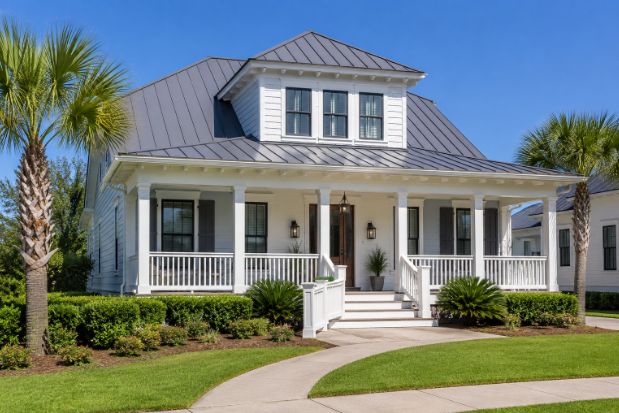
Replacing a roof is expensive. For homeowners in Horry, Georgetown, and Brunswick counties, though, several programs exist specifically to help cover that cost. In 2026, they're better funded than they've been in years.
The right program depends on where you live, your income, and whether your roof has existing damage. Here's what's currently available.
Table Of Content:
- SC Safe Home Grant
- SC Fortification Tax Credit and Insurance Discounts
- NC Homeowners: NCIUA Strengthen Your Roof Programs
- SC Housing Trust Fund (For Lower-Income Homeowners)
- USDA Section 504 (For Rural and Very Low-Income Homeowners)
- Working with a Certified Contractor Matters
- FAQ
SC Safe Home Grant
The SC Safe Home Grant is the most accessible program for Myrtle Beach-area homeowners. Administered by the South Carolina Department of Insurance, it provides grants from $4,000 to $7,500 to coastal homeowners who upgrade their roofs to wind-resistant standards.
Horry and Georgetown counties are both eligible. There are no income limits to apply, though your income determines your grant type. Non-matching grants don't require a contribution from you. Matching grants require you to contribute alongside the state award.
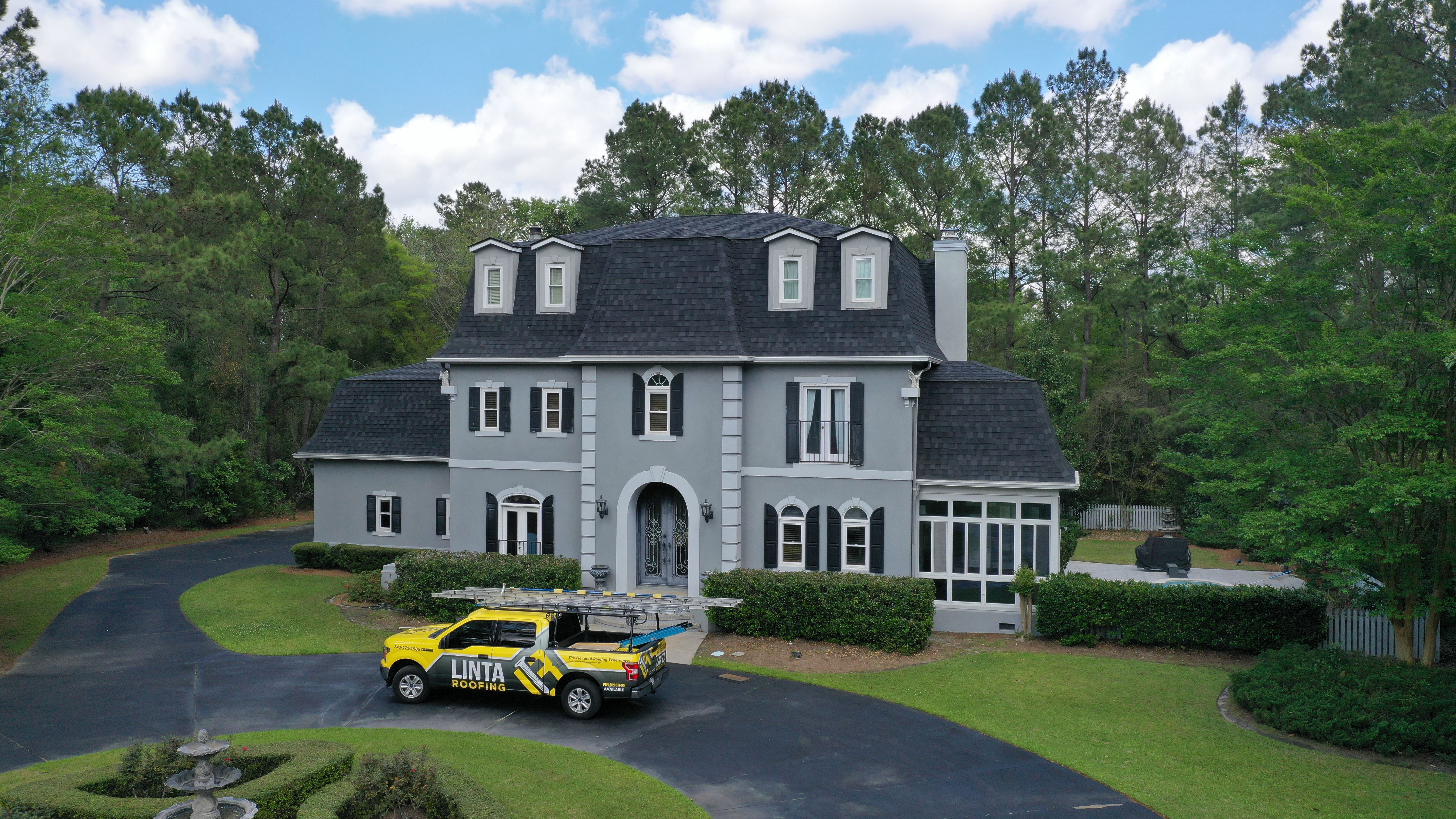
That's the kind of savings Linta helps homeowners capture directly: Linta Roofing is a certified installer for both South Carolina roof grant programs, which can take up to $7,500 off a qualifying job. SC Safe Home and FORTIFIED both fund hurricane hardening for homeowners who qualify.
Who qualifies:
- You own and occupy the home as your primary residence
- The home is a freestanding, single-family structure (condos and duplexes don't qualify)
- The home has no existing unrepaired storm damage
- The property hasn't previously received an SC Safe Home grant
The rule that disqualifies applicants: you must apply and receive approval before roofing work begins. If your roof already has storm damage, file your insurance claim first. This program funds mitigation upgrades, not storm repairs.
The 2026 portal opened February 10, with a second cycle opening April 8. In previous years, funds have been exhausted within days.
SC Fortification Tax Credit and Insurance Discounts
If your roof upgrade meets the IBHS FORTIFIED Roof™ standard, two additional benefits stack on top of the SC Safe Home grant.
South Carolina offers a Fortification Tax Credit equal to 25% of your qualifying out-of-pocket costs, up to $1,000. This credit is available statewide, so coastal county residency isn't required to claim it.
Most insurers also offer premium discounts of 10% to 35% on the wind portion of your policy for FORTIFIED-certified homes. For homeowners already dealing with homeowners insurance non-renewal notices, a FORTIFIED certification can make your home significantly more insurable. That discount adds up meaningfully year over year.
A $7,500 grant, a $1,000 tax credit, and annual insurance savings combined can make a FORTIFIED retrofit net-positive within three to five years for many homeowners.
NC Homeowners: NCIUA Strengthen Your Roof Programs
Homeowners in Brunswick County have access to a similar program through the North Carolina Insurance Underwriting Association (NCIUA).
The Strengthen Your Coastal Roof program covers areas above the Intracoastal Waterway, including much of Brunswick County, providing up to $6,000 toward a FORTIFIED Roof™ installation. Homes on the Outer Banks and barrier islands fall under the Strengthen Your Roof program, which offers up to $10,000 given the higher wind exposure in those areas.
There are no income limits. Eligibility centers on holding a qualifying NCIUA homeowners or windstorm policy and owning a home in a covered county. Grants are first-come, first-served.
SC Housing Trust Fund (For Lower-Income Homeowners)
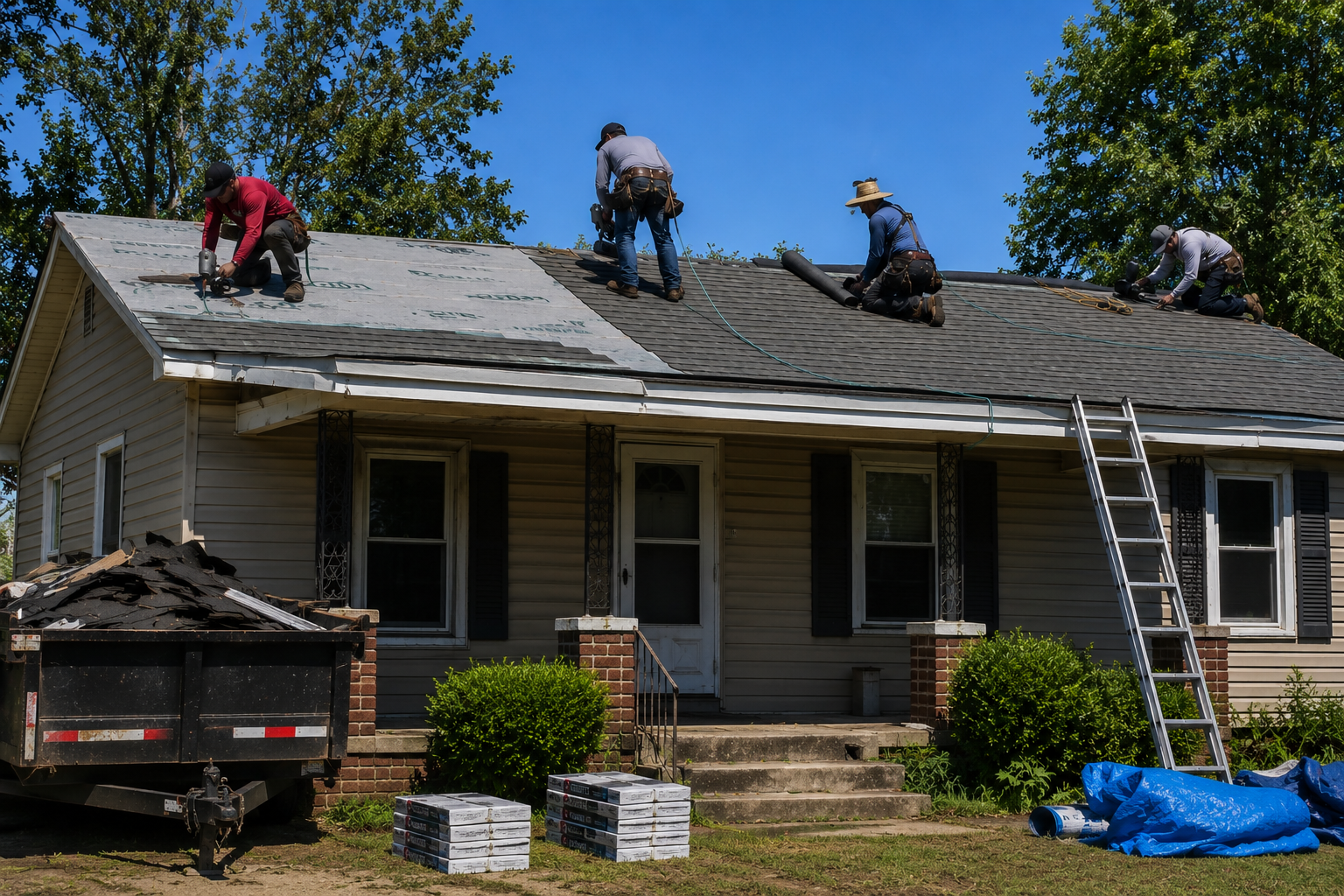
The South Carolina Housing Trust Fund covers roof replacement for households at or below 80% of Area Median Income. Repairs under $15,000 are provided as outright grants. Projects above that threshold are structured as forgivable loans, provided the home remains your primary residence.
You don't apply to the state directly. The program runs through approved nonprofit partners, including local Habitat for Humanity affiliates and Community Action Agencies. Contact your regional Council of Governments to find which organization is currently administering HTF funds in your county.
USDA Section 504 (For Rural and Very Low-Income Homeowners)
The USDA Section 504 Home Repair Program provides low-interest loans and grants to eligible rural homeowners. Qualified applicants can borrow up to $40,000 at a fixed 1% interest rate over 20 years. Homeowners 62 or older may also qualify for grants up to $10,000, with no repayment required.
A failing roof qualifies as a health and safety hazard under program guidelines. Applications are accepted year-round through your local USDA Rural Development office. Confirm your property falls within an eligible rural area using the USDA eligibility map at rd.usda.gov before applying.
Working with a Certified Contractor Matters
Every program on this list requires approval before work begins and work performed by a contractor whose installation meets program standards. It's worth verifying your contractor's credentials before committing to anyone for a grant-funded project.
Jeffrey Linta II is a certified SC Safe Home contractor and FORTIFIED Roofing Contractor. As a GAF Master Elite and IKO ROOFPRO Craftsman Premier certified company serving the Grand Strand since 1948, we know what these programs require and how to navigate the documentation process alongside you.
Grants aren't the only lever for lowering the bill, either. Linta Roofing offers third-party roof financing that does not run a hard credit inquiry. Linta also states that there are five main ways to pay for a roof and that it offers all five.
If you're planning a roof replacement this year, contact us to schedule an inspection. We'll help you understand your options before any work starts, because with these programs, getting the sequence right is everything.
Frequently Asked Questions
Can I apply for the SC Safe Home grant if I've already replaced my roof?
No. The program requires approval before any work begins. Completed projects are not eligible for reimbursement.
Can I use the SC Safe Home grant alongside my insurance claim?
Not for the same project. If your roof has existing storm damage, resolve your insurance claim first. Once repairs are complete, you can apply for a grant to fund future mitigation upgrades.
Does my rental property qualify for the SC Safe Home grant?
No. The property must be your primary residence. Rental properties, vacation homes, and investment properties don't qualify.
What is a FORTIFIED roof, and do I need one to qualify?
A FORTIFIED Roof™ is a construction standard developed by the Insurance Institute for Business and Home Safety (IBHS) that goes beyond standard building code. It's required to access the highest grant tiers, including the $7,500 SC Safe Home award and the NCIUA grants in North Carolina, and is what unlocks insurance premium discounts.
Can I combine multiple programs to cover more of my roof replacement cost?
Sometimes. The SC Safe Home grant and the SC Fortification Tax Credit can be used together on the same project. The USDA Section 504 loan and grant can also be combined. You can't use multiple grants to cover the exact same costs.
How long does the SC Safe Home grant application take?
There's no guaranteed timeline. Apply as early as possible once the portal opens, since funding is capped and awarded on a first-come, first-served basis.
Topics: