.png?width=200&height=78&name=LR_Logo_vector_horizontal_color_shadow%20(1).png)

When you’re getting ready to shell out a couple thousand dollars for a roof replacement, it’s natural to wonder “can I offset this expense in any way?"
After all, a new roof isn’t a small purchase, but rather one of the biggest investments you make in your home. For many homeowners, it raises a bigger question: is a new roof tax deductible in South Carolina?
As a roofing company in the Myrtle Beach area for over 40 years, we’ve never heard that a new roof is tax deductible. So, we decided to look into it and lay it all out for you here.
Let’s get into it.
Can a New Roof Be Deducted from My Taxes?
In short, a new roof is not tax deductible in the state of South Carolina.
Though it isn't a tax break, there are still ways to make the upfront cost easier. Linta Roofing offers third-party roof financing that does not run a hard credit inquiry. Linta also states that there are five main ways to pay for a roof and that it offers all five.
 A roof replacement is considered home improvement, which is not a cost you can deduct from your taxes. The IRS classifies a roof replacement as something called a capital improvement. A capital improvement is a large, permanent upgrade to your home that adds value, lasts a long time, and becomes a permanent part of your home. A capital improvement is often something that extends the life of your home, like a sturdy new roof.
While a roof replacement is certainly home improvement, it is not tax deductible in South Carolina.
However, a roof replacement is considered a home improvement that increases the “basis” of your home.
What is the Basis of My Home and How Can a Roof Replacement Increase it?
Your home’s basis is the amount you paid for your property plus closing costs. Whenever you make long term improvements like a roof replacement, you add value and extend the life of your home. These costs are known to increase your adjusted basis. This matters if you ever plan to sell your home, because your adjusted basis is what is used to calculate your taxable gain. When you have a higher basis, you have the potential to lower taxable gain.
Basically, because you already put money into your home, the IRS sees your profit as smaller, which means you’re less likely to owe taxes when the federal exclusion kicks in. Federal exclusion limits are the amount of money you’re allowed to keep from selling your house without paying the IRS.
To get an idea of what can increase your home’s basis, here’s what the IRS Publication 523 lists as qualifying home improvements:
- Roof Replacements
- Rewiring your home
- Installing central air conditioning
- Paving your driveway
- Adding rooms or additions to your home
To help you make the best, most informed decision, it’s important to know that there are homeowners who never really “see” this benefit directly because the market may not always reflect the added dollar-for-dollar value. Not only that, but homeowners usually have to wait for it. Homeowners only benefit from increasing their home’s basis at the point of sale.
So while increasing your basis might reduce taxable gain, you won’t receive the money immediately. It only matters if you sell the home at a gain above federal exclusion limits.
However, there are potential tax credits you may qualify for in South Carolina.
Are There Potential Tax Credits for a New Roof in South Carolina?
Though a roof replacement is not tax deductible in South Carolina, the state does offer hurricane retrofit credits that may apply if the work qualifies for it.
A tax credit is like receiving a coupon from the government that will lower the amount of taxes you owe dollar-for-dollar. Essentially, it’s a discount on your tax bill.
These are not considered roofing credits, but rather wind-resistance retrofit credits. These apply when the roof work meets specific state standards, which is why it’s incredibly important to vet your roofer well before signing a contract with them.
To get an idea of who the reliable roofing companies are here in Myrtle Beach, check out this article: 9 Best Roofing Companies in Myrtle Beach.
Let’s go over the potential tax credits you might qualify for.
South Carolina Residential Retrofit Tax Credit
If you make certain hurricane-resistant upgrades to your primary residence, South Carolina can provide you with an income tax credit. Here are the verified components of the credit per South Carolina Code.
-
- Applies only to your legal South Carolina residence
- Equal to 25% of qualifying retrofit costs, up to $1,000 per year
- Roof work may qualify only if it is part of a certified hurricane-resistant retrofit, which includes:
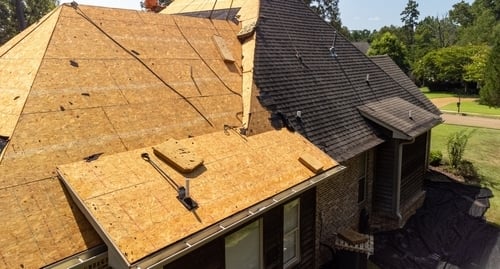
- Strengthening your roof deck
- Installing stronger roof coverings
- Bringing the roof up to a recognized standard: Examples include SC Safe Home and FORTIFIED. To learn more about these retrofit opportunities, check out this article: SC Safe Home and FORTIFIED Roof Grants Explained
- Requires documentation: This may come in the form of receipts, proof of retrofit standards, and a certificate
- Claimed using South Carolina Form TC-43
Most homeowners don’t even know these credits exist, but they can make a meaningful difference for homeowners considering SC Safe Home or FORTIFIED grants.
South Carolina Sales Tax Credit for Retrofit Supplies South Carolina Sales Tax Credit for Retrofit Supplies
Separate from the income tax credit, South Carolina also provides a smaller credit for sales or use tax paid on qualifying retrofit materials. This can be up to $1,500.
There are some requirements. These include:- Applies only to materials used for hurricane-resistant upgrades
- Does not apply to ordinary roofing shingles
- Often applies when strengthening the roof structure, not just replacing the roof
Federal Clean Energy & Solar Credits (If Applicable)
Traditional roofs do not qualify for federal tax credits. Meaning asphalt shingles, metal roofing, architectural shingles, and energy-efficient shingles are not eligible for federal energy tax credits.
Federal Clean Energy & Solar Credits (If Applicable) The Federal Clean Energy Credit (30%) only applies to solar equipment. This includes: - Solar Shingles
- Solar Tiles
- Solar Electric Systems
TurboTax clarifies that this does not apply to the roof, but rather the solar panels themselves. This can be somewhat confusing, as some solar companies aggressively market this benefit without explaining it in full. If you’re familiar with other articles we’ve written, you may already know that we at Linta Roofing don’t typically recommend having solar panels installed on your home. When installing solar panels, it's required to put a number of holes in your roof. Unfortunately, we’ve seen roofs fail under these conditions, and cost homeowners a lot of money to remove the panels, get their roof replaced, and have the panels re-installed.
The Bottom Line: If You Want a Tax Credit for Your New Roof, Choose a Retrofitted Option
Roofing and taxes can be confusing, even for experts. As it can be surprising what qualifies and what doesn’t. The most important thing to know is this: the standard roof is not tax deductible and does not qualify your home for federal energy credits. On the other hand, specific hurricane-resistant upgrades can qualify for South Carolina tax credits.
There are two times a year you can apply for retrofit upgrades with SC Safe Home so it’s a great idea to sign up for their email alerts. This way you can be on top of your application.
As SC Safe Home certified installers, we understand that this process can be a lot for a homeowner. If you need help or more information about SC Safe Home, don’t hesitate to contact us so we can help you through the process. We’re happy to answer your questions and help wherever we can. Linta Roofing is a certified installer for South Carolina roof grant programs, which can take up to $7,500 off a qualifying job.
If you’re thinking about a new roof, and curious about the cost, check out our instant online estimator below!

Topics: