.png?width=200&height=78&name=LR_Logo_vector_horizontal_color_shadow%20(1).png)

When a flat roof starts leaking, the repair-vs-replacement question comes down to whether the membrane has failed in one place, or whether the whole system is breaking down. Patching a failing membrane delays the inevitable and costs more over time. Replacing a roof that had years left wastes money you didn't need to spend.
At Linta Roofing, we've been inspecting and replacing flat roofing across Myrtle Beach, Horry County, and the Grand Strand since 1948. This guide will help you understand what your roof is made of, what failure looks like on each material, and which signs mean it's time to stop repairing.
Linta Roofing installs and repairs asphalt shingle, metal, tile, cedar and flat roofs, and have transparent pricing for every one of them. Linta also handles inspections, maintenance plans, emergency response, insurance claim support and full replacement.
Table of Contents
- What type of flat roof do you have?
- 7 Signs Your Flat Roof Needs Replacement, Not a Repair
- Does roof age affect your insurance coverage?
- When repair is the right call
- Schedule a flat roof inspection
- FAQ
What type of flat roof do you have?
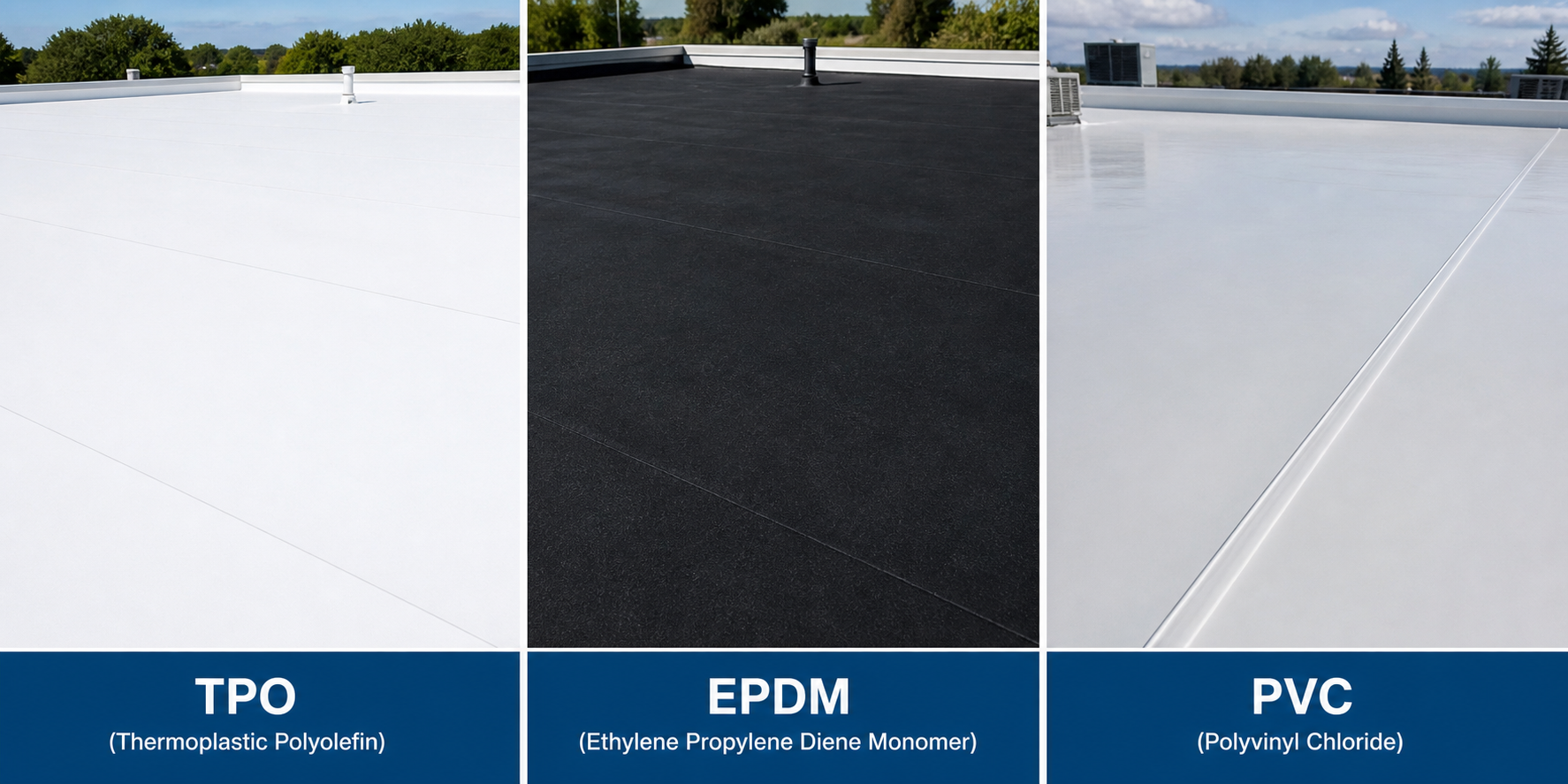
The three most common flat roofing membranes in commercial and low-slope construction are TPO, EPDM, and PVC. They age differently and fail differently, which matters when you're deciding whether a repair makes sense.
|
Material |
Typical Lifespan |
How It Fails |
Coastal Consideration |
|---|---|---|---|
|
TPO |
15–20 years |
Shrinks and pulls away from seams and curbs |
White surface reflects UV well, but shrinkage accelerates in high-heat environments |
|
EPDM |
20–25 years |
Adhesive bonds degrade; membrane lifts at seams and flashings |
Wind-driven rain can exploit lifted edges quickly |
|
PVC |
20–30 years |
Becomes brittle with age; seams hold longer due to heat welding |
Strong chemical resistance; higher upfront cost |
These lifespans shorten in coastal environments where UV exposure, salt air, and humidity compound normal wear.
7 Signs Your Flat Roof Needs Replacement, Not a Repair
1. Leaks in more than one unrelated area
A single leak tied to a specific penetration like an HVAC unit, a pipe boot, or a drain is usually repairable. When you're tracking leaks in two or three separate areas with no clear connection, the membrane has broken down across the whole surface. Patching individual spots won't address the underlying failure.
2. Saturated insulation beneath the membrane
Water can sit in the insulation layer for months before it shows up as a ceiling drip. By then, the insulation has lost its thermal value and the deck is at risk. A core sample or infrared scan during inspection will find it. If a significant portion of the insulation board is saturated, it needs to be replaced along with the membrane. You can't dry it out and repair over it.
3. Seam separation on TPO or PVC
When a thermoplastic membrane shrinks, it puts tension on every seam and perimeter edge. You'll often see the membrane pulling taut at corners or flashing separating from parapet walls. Re-welding a seam on a membrane near the end of its life usually creates a new failure point next to the repair. If seams are separating in multiple places, the membrane is done.
4. Widespread adhesive failure on EPDM
EPDM depends on adhesive bonding at seams and flashings. When that adhesive breaks down, the membrane lifts, which is often visible as tenting at edges and corners. A lifted section in a coastal wind event can peel back quickly. We see this regularly after storms along the Grand Strand, and in most cases the wind didn't cause the failure. It revealed a roof that was already past its serviceable life.
5. Ponding water that doesn't drain within 48 hours
Some ponding after rain is normal. The industry standard is 48 hours, water still standing after that signals a drainage or slope problem. The more urgent concern is when ponding appears in areas that previously drained. That's often a sign of deck deflection, meaning the substrate beneath the membrane is compromised. No roofing repair solves a structural problem.
6. Blistering or ridging across large sections
Small, isolated blisters can sometimes be addressed locally. Widespread blistering, or ridging across the membrane surface, indicates systemic bonding failure between the membrane and substrate. A patch on top of a buckled or ridging membrane doesn't restore structural adhesion.
7. The roof is at or past its expected lifespan
A 22-year-old EPDM roof that's leaking isn't failing because of one seam. It's at the end of its designed life. Continued repairs on a system past its service window cost more over time than a planned replacement, and they don't resolve the underlying condition for insurance purposes either.
Does roof age affect your insurance coverage?
In South Carolina, insurers have become more aggressive about roof age across both residential and commercial lines. A documented leak history on an aging flat roof can complicate a storm damage claim and create problems at policy renewal.
Replacing a roof proactively, before a claim situation, gives you more control over the outcome and a cleaner record for coverage purposes. For a deeper look at what your insurance will and won't cover after a storm, and the insurance red flags South Carolina carriers are watching for, both are worth reading before your next renewal.
When repair is the right call
If you're seeing one sign from this list and your roof has several years of lifespan remaining, a roof repair is often the right move. We'll tell you that directly when it's the case.
If you're seeing two or more signs, or if your membrane is approaching end of life, the more honest conversation is about replacement. Continuing to repair a failing system costs more over time and doesn't protect your building the way a new roof does.
Schedule a flat roof inspection
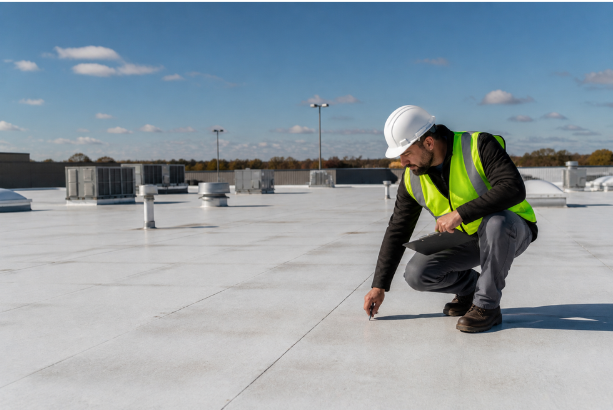
If you're not sure whether your commercial flat roof needs repair or replacement, the right starting point is an honest inspection. Linta Roofing has been doing this in the Myrtle Beach area since 1948. We're GAF Master Elite and IKO ROOFPRO Craftsman Premier certified, back our workmanship with warranties up to 25 years, and put a dedicated superintendent on every project.
Schedule a flat roof inspection and get a straight answer.
FAQ
How do I know what type of flat roof membrane I have?
If you have installation records or a warranty document, it should be listed there. If not, a roofing contractor can identify it during an inspection. TPO is typically bright white, EPDM is matte black or gray, and PVC has a glossy appearance with visible heat-welded seams.
Can a flat roof be repaired after storm damage?
Yes, depending on the extent of the damage and the roof's age. If the storm caused isolated damage to a membrane that is otherwise in good condition, repair is appropriate. If the storm revealed underlying deterioration that was already there, replacement is the better investment.
How long does a commercial flat roof replacement take?
For most commercial properties in the Myrtle Beach area, a flat roof replacement takes one to three days depending on the size and membrane system selected. Your Linta project superintendent will give you a timeline before work begins and keep you updated through our real-time tracking app throughout the job.
What flat roofing materials does Linta Roofing install?
We install TPO, EPDM, and PVC membrane systems for commercial and low-slope roofs in Horry and Georgetown counties in South Carolina and Brunswick and Columbus counties in North Carolina.
Topics: