.png?width=200&height=78&name=LR_Logo_vector_horizontal_color_shadow%20(1).png)

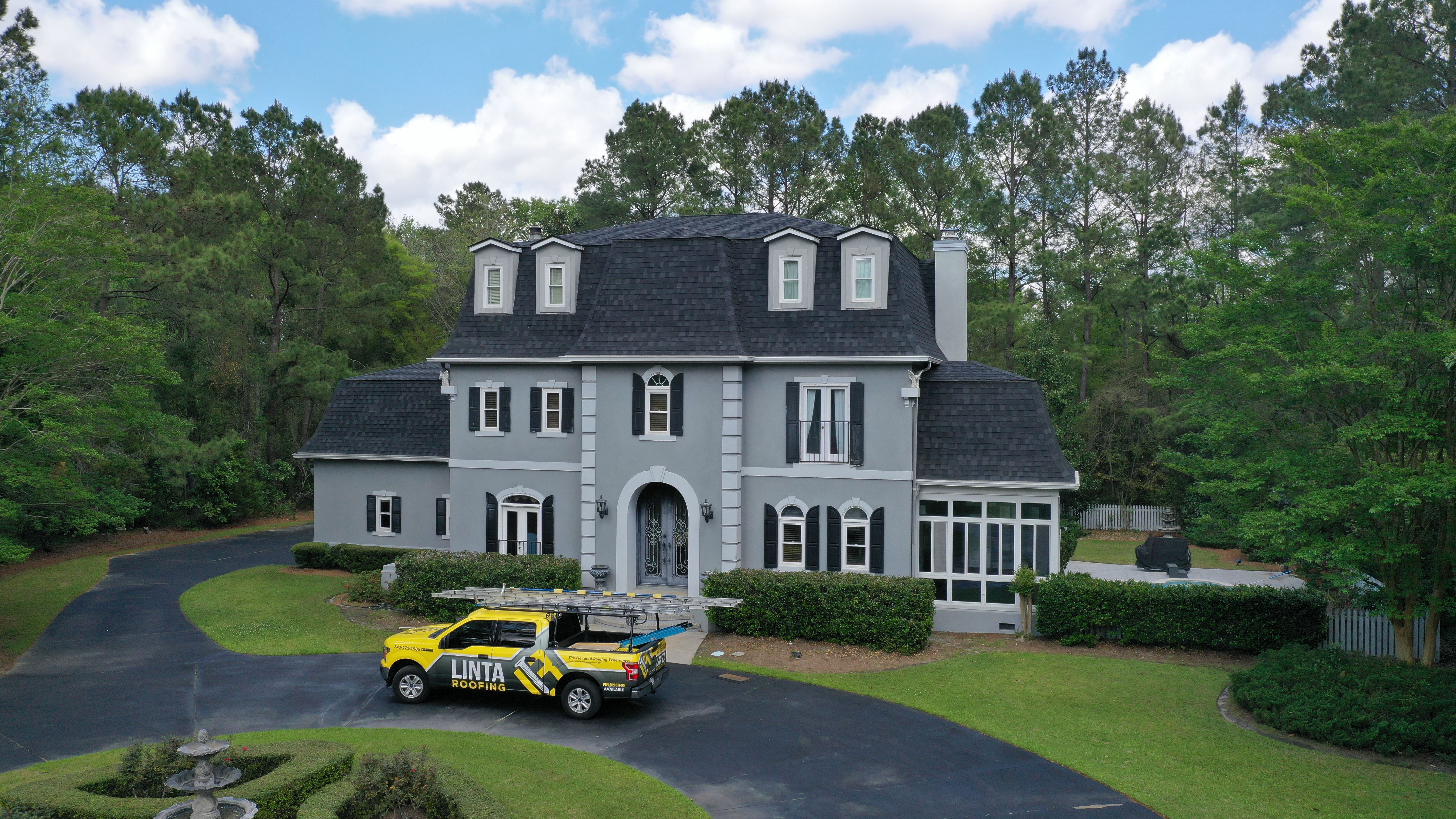
Quick answer: A new architectural-shingle roof in Myrtle Beach typically runs $10,500 to $16,500 for an average 30-square (about 3,000 sq ft) home, roughly $350 to $550 per square, before factors like pitch, height, accessories, and tear-off. Premium options such as designer shingles or standing-seam metal cost more.
Cost factors at a glance
These are the main factors that raise the price above the base per-square cost:
| Cost factor | Added cost |
|---|---|
| Roof pitch 7/12 to 9/12 | +$40 to $70 per square |
| Roof pitch 10/12 to 12/12 | +$70 to $110 per square |
| Roof pitch over 12/12 | +$110+ per square |
| Two-story height | +$20 to $40 per square |
| Accessories (skylights, upgraded underlayment, hip/ridge caps, pipe boots) | +$40 to $200 per square |
| Tear-off (per layer) | +$30 to $60 per square |
| Ladder-vator delivery | +$6 to $12 per square |
Are you concerned about the cost of replacing your shingle roof due to a recent wind, rain, or hail event? Are you concerned about getting a fair price from your roofing contractor?
After reading this article you will know the cost of a shingle roof in Myrtle Beach, 8 factors that affect the cost, and be prepared to make an educated decision about your upcoming roofing project.
The 8 Factors:

- Shingle Type
- Roof Size
- Roof Pitch
- Roof Complexity
- Roof Height
- Accessory Types
- Tear-off
- Delivery Methods
With 38 years of experience in the roofing industry, we are pleased to provide you with clarity around this common question. Before we go into detail on how each of these factors affect the cost of your roofing project, let’s look at the average cost for a roof in Myrtle Beach.
That clarity carries through to how we price every project. Linta Roofing publishes what a roof costs on its website, so you can see the price before you ever speak to a salesperson. The published price is the price everyone pays.
The Average Cost of a New Roof Per Square
The bigger your roof, the more your project will cost. Contractors often use the term "per square" which means a 10 ft x 10 ft area on your roof. It's important to note that your roof's square footage will be larger than the square footage of your home.
In Myrtle Beach, the average roof size is 30 squares (or 3,000 square feet). The cost for architectural shingles ranges from $350 to $550 per square, depending on various factors. So, you can expect to pay between $10,500 to $16,500 for your roof depending on factors stated in this article.
8 Factors That Affect Roof Price
1. Shingle Type
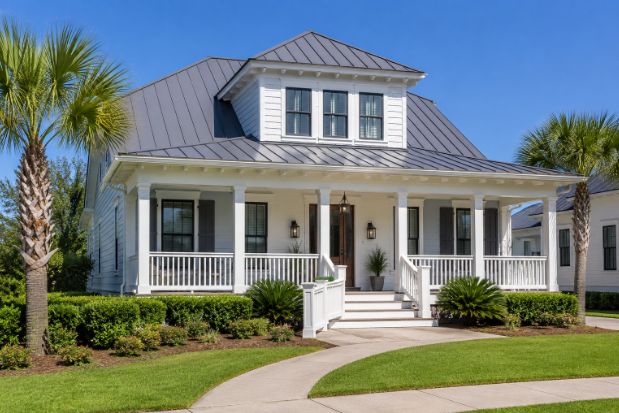
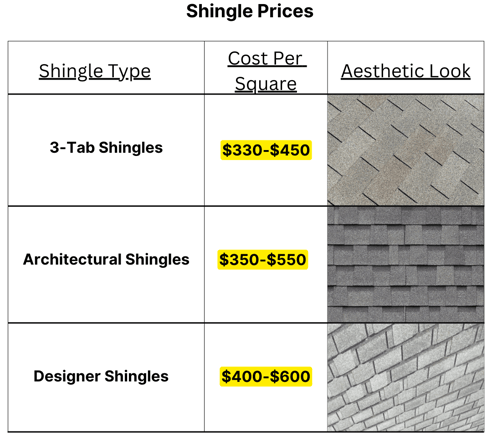 There are 3 main types of shingles: 3-tab shingles, architectural shingles, and designer shingles. These types are most commonly installed on residential properties.
The cost varies based on the durability, design, and longevity of each shingle type. 95% of our customers opt for shingles, which are cost-effective and stylish. There are a wide variety of colors and styles to choose from. The pros, cons, and quality vary based on the type of shingle you choose.
While the above prices are accurate in most cases, your personal preferences and the uniqueness of your roof will be factors in determining the final price. Let’s take a look at the other factors that affect the cost of your roofing project.

2. Roof Size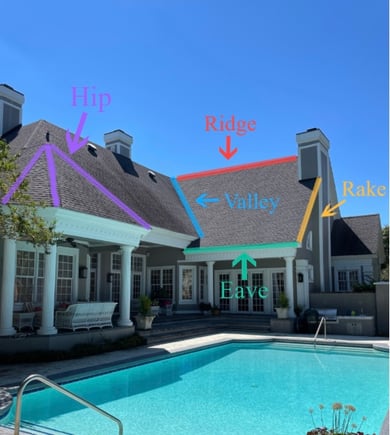
Roof Size is determined by elements like ridges, hips, valleys, rakes and eaves.
These areas are also taken into consideration when looking at size, as different shingle materials are used in each of these different areas (Ex: cap shingles at ridges and starter shingles at eaves and rakes). This impacts price because these details are factored into the amount of materials needed to complete your roof project.
All of these areas on the roof are considered and included in the price per square.
3. Roof Pitch
You may also hear the pitch referred to as the roof slope. Your contractor will express the pitch as a ratio. The pitch is determined by the vertical rise and horizontal run of your roof. The horizontal run is always expressed as 12 inches, while the vertical rise in inches determines the pitch.
To get an idea of pricing, here is how pitch will affect the cost during install:
- 7/12-9/12: an additional $40 to $70 per square
- 10/12-12/12: an additional $70 to $110 per square
- Over 12/12: an additional $110 per square or more
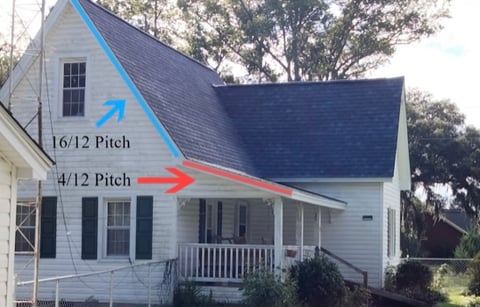
For example: A pitch ratio of 4/12 indicates that the vertical rise is 4 inches for every 12-inch horizontal run. Not only that, but the pitch will increase the square footage of your roof, making it significantly larger than the square footage of your home.
4. Roof Complexity
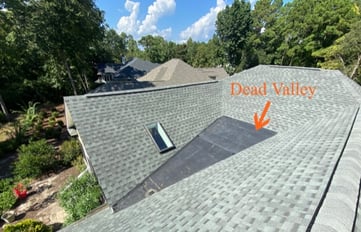
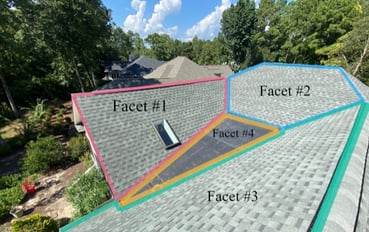
This term refers to the unique design of your roof. Roof complexity includes valleys, facets, rake, eaves, hips, flashing, dead valleys, and more.
These areas on your roof will require your roofers to cut and shape the shingles to fit just right. If your roof is more complex, it needs more materials and there will be a larger waste factor on the job. A typical roofing project will amass anywhere from 10% to 25% of material waste.
5. Roof Height
A 2-story home will have an additional $20 to $40 price increase per square. A roof that is 2 stories or taller will raise the cost of your roof. The price is situational on any home over 3-stories. This is due to the added price for lifts, cranes, and possibly other machinery.
6. Accessory Types
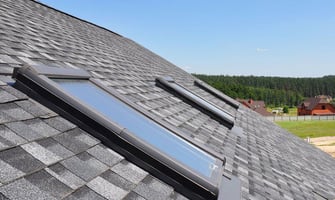 Customers can expect to spend anywhere between $40 to $200 per square depending on the combination of accessories you choose. Roof accessories include things like skylights, premium underlayment, upgraded hip and ridge caps, upgraded pipe boots, etc.
Upgrades have a varying impact on the price depending upon what you decide to upgrade. Not only that but also the number of upgrades you choose to have on your roof.
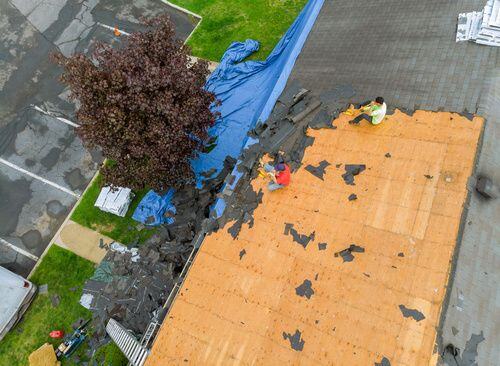
7. Tear-off
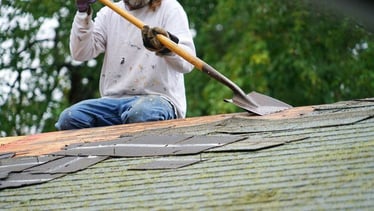 The cost of a tear-off looks a little different for each customer. The price can be an additional $30 to $60 per square depending on your roofing contractor and the materials that are being removed.
If your project is a new construction build, you will not have to worry about tear-off costs. However, if you are having a roof replacement, it is best practice to remove existing shingles before new shingles are installed. This is the tear-off process. If there are multiple layers, that extra cost will be applied to each layer of shingling that is torn off.
8. Delivery Method
The method used to deliver your shingles will affect the cost of your roofing project. In most cases, your contractor will use a boom truck. A boom truck is used to place roofing materials on top of your home. With this method, shingles are removed from the pallet and put on top of your home. The shingles will be placed in a way that ensures weight is distributed evenly on your roof. The boom truck method prevents the additional labor cost that comes with bringing shingles onto the roof manually. 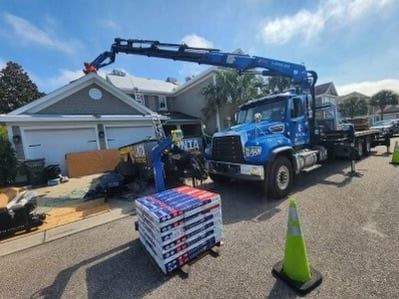
If you opt for the manual method, the shingles will be removed from the pallet and placed on the ground. Shingles placed on the ground would be carried up via ladder vator or other methods.
A ladder vator is a ladder with a small elevator that brings shingles to the top of the roof. This method would increase the price of your project by around $6 to $12 per square depending on what your contractor charges.
It is important to consider the moving parts that go into the cost of a roof. In light of the evolving costs and the financial commitment involved, it is natural to want to make informed decisions as you budget a new roof.
Is A Roof Replacement in Your Budget?
With the everchanging cost of roofing materials, it can be difficult to know whether your roofing contractor is offering a fair price. After all, this is a major financial commitment and a necessary safety measure for you and your family. You want to make sure you get it right, and that’s understandable.
As you plan your budget, you will want to keep in mind that roofing costs are always rising. With this in mind, you might find yourself asking “What is the best time of year to have my roof replaced?” If you know a new roof is in your near future, but now is not the best time financially, you may want to consider the top 3 Reasons You Shouldn’t Stall on a Roof Replacement.
Having read this breakdown, you can go into your roofing project with clarity of the costs associated with a roof. Not only that but when you use the Instant Estimator Tool, you can have a leg up on what to expect.
Once you know what drives the price, here's how to pay for it: the roofing companies that finance in Myrtle Beach and what to check first.
Linta Roofing guarantees you will not overpay. Find the same roof cheaper after you have signed, and they return your deposit plus $100.
You are now one step closer to a new high-quality roof! And if you have any additional questions about your roofing project, we're always here to provide you with high-quality solutions to your roofing problems!