.png?width=200&height=78&name=LR_Logo_vector_horizontal_color_shadow%20(1).png)

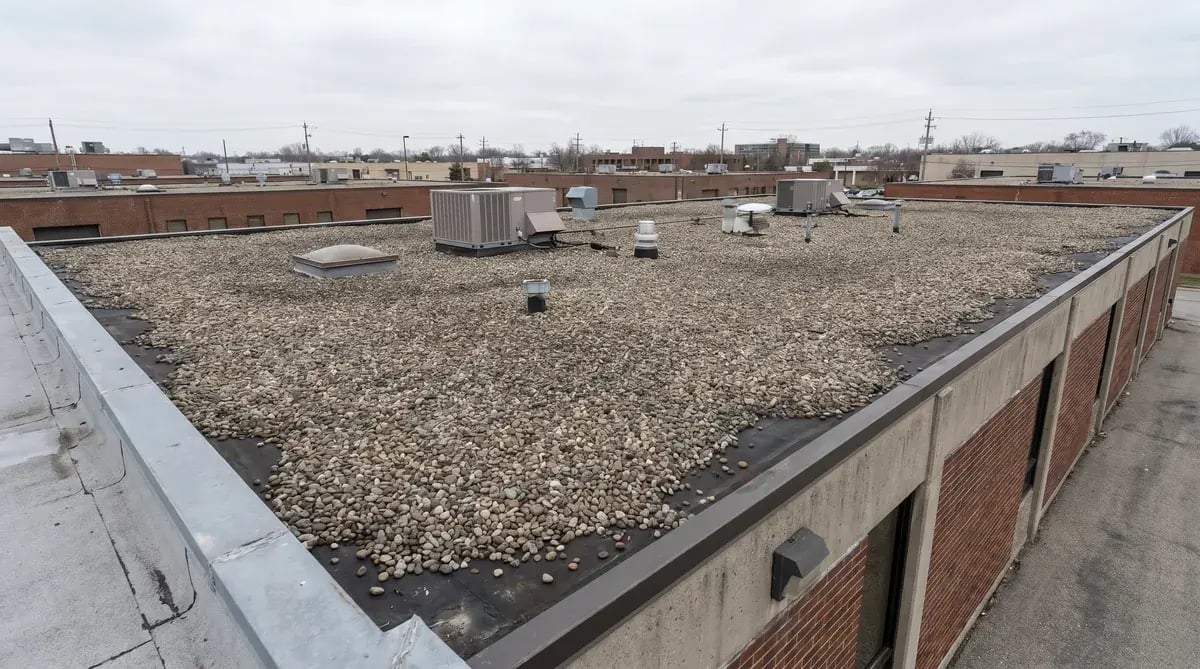
If you own a commercial building or flat-roof property in the Myrtle Beach area with a tar and gravel roof, you're probably wondering whether this decades-old system still makes sense in today's roofing landscape. The short answer is that tar and gravel roofs typically last 20-30 years and are still used, but many property owners in coastal South Carolina are choosing modern alternatives for good reasons.
Tar and gravel roofs, also known as built-up roofing (BUR), have served as a reliable flat roofing solution for over a century. They're constructed with multiple layers of felt and hot-applied bitumen, topped with a protective gravel layer. While these systems can be durable and cost-effective initially, newer roofing technologies offer significant advantages in leak protection, energy efficiency, and maintenance ease—particularly important considerations in our coastal climate.
Key Insight: Water can travel horizontally under gravel layers before appearing inside your building, making leak detection extremely challenging and time-consuming compared to single-ply systems.
Whether you're dealing with recurring leaks, considering replacement options, or simply evaluating your current roof's future, understanding the pros and cons of tar and gravel systems will help you make an informed decision about your property's protection. At Linta Roofing, we've seen firsthand how coastal conditions in Horry and Georgetown counties can impact these traditional roofing systems.
It's part of a broader range of services: Linta Roofing installs and repairs asphalt shingle, metal, tile, cedar and flat roofs, and have transparent pricing for every one of them. Linta also handles inspections, maintenance plans, emergency response, insurance claim support and full replacement.
What is a tar and gravel roof and how does it work?
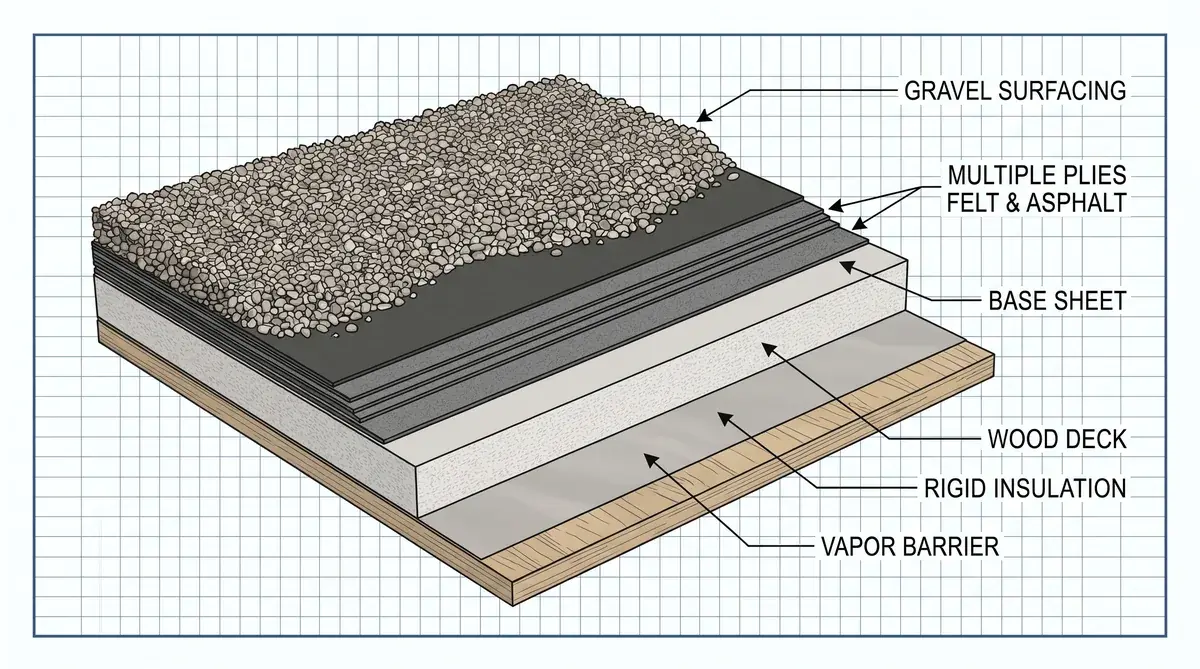
A tar and gravel roof consists of alternating layers of reinforcing felt and hot-applied bitumen (either asphalt or coal tar pitch), creating what's called a built-up roofing system. The installation process involves laying down multiple plies of felt, each mopped with hot bitumen, then finishing with a flood coat and approximately 400 pounds of gravel per 100 square feet.
The gravel serves multiple purposes beyond just appearance. It protects the underlying bitumen from UV radiation, provides fire resistance, adds weight for wind uplift protection, and creates a durable walking surface for maintenance activities. This multi-layered approach creates redundancy, meaning if one layer fails, others continue providing waterproof protection.
You'll typically find these systems on commercial buildings, multi-family housing, and some residential properties with flat or low-slope roofs. The system's popularity stems from its relatively low upfront cost and the widespread availability of materials and experienced contractors, though this landscape is changing as newer technologies gain market share in the Myrtle Beach area.
How long do tar and gravel roofs actually last?
Most tar and gravel roofs deliver 20 to 30 years of service life, though this range depends heavily on climate conditions, installation quality, and maintenance practices. In our coastal South Carolina climate, with its high humidity, salt air exposure, and intense summer heat, you might see performance toward the lower end of this range without proper maintenance.
Several factors significantly impact longevity in the Myrtle Beach area. Regular inspections and prompt repairs can add years to your roof's life, while neglected maintenance accelerates deterioration. Poor drainage leading to ponding water is particularly damaging to asphalt-based systems, and our area's frequent summer storms make proper drainage critical. Coal tar pitch actually performs better under standing water conditions, though it's less commonly used today.
The number of plies also matters for durability. A three-ply system might last 20-25 years, while four or five-ply installations often reach 25-30 years. However, as materials age, tar becomes brittle and loses flexibility, gravel may shift or become sparse during coastal storms, and the multiple layers that once provided redundancy can complicate repairs and hide developing problems.
Important Note: Many tar and gravel roofs installed in the 1990s and early 2000s throughout the Grand Strand are now approaching or exceeding their expected service life, making replacement evaluation increasingly relevant for property owners.
What problems should you watch for with aging tar and gravel systems?
The most frustrating issue with tar and gravel roofs is leak detection difficulty. Unlike shingle roofs where you can often trace leaks directly to damaged or missing materials, water can enter your tar and gravel roof at one point and travel horizontally between layers before appearing inside your building. This means the ceiling stain might be 20 feet away from the actual roof penetration—a challenge we frequently encounter when inspecting properties in Little River and surrounding areas.
Gravel displacement creates another common problem, especially in our coastal environment. Over time, foot traffic, weather, and building settlement can shift gravel, leaving bare spots where UV rays directly attack the bitumen underneath. Coastal storms and high winds common to the Myrtle Beach area can accelerate this gravel displacement. These exposed areas crack and become brittle, creating entry points for water that may not become apparent until significant damage occurs.
Ponding water poses a serious threat to most tar and gravel systems in our climate. While the gravel provides protection, it also traps moisture in low areas. Standing water gradually breaks down asphalt-based systems, and with our area's frequent summer thunderstorms, proper drainage becomes even more critical. Unfortunately, most modern installations use asphalt rather than coal tar due to health and environmental concerns.
The weight factor shouldn't be overlooked either. Tar and gravel systems add 5-10 pounds per square foot to your building's structural load. On a 20,000 square foot roof, that's 100,000 to 200,000 extra pounds your building must support, potentially requiring structural reinforcement on older buildings not designed for such loads.
When does repair stop making sense compared to replacement?
The decision between repair and replacement often comes down to your roof's age, leak frequency, and the extent of underlying damage. If your roof is under 15 years old with isolated leak issues, targeted repairs usually make financial sense. However, once you're dealing with multiple recurring leaks on a roof over 20 years old, replacement becomes more cost-effective—especially important for property owners in our hurricane-prone coastal region.
Consider replacement when you notice widespread problems like extensive ponding, multiple soft or spongy areas when walking the roof, or interior damage from repeated leaks. If your annual repair costs are approaching 10-15% of replacement cost, or if structural issues like sagging are evident, it's time to evaluate modern alternatives that can better withstand our coastal conditions.
| Roof Condition | Typical Age | Leak Frequency | Recommended Action |
|---|---|---|---|
| Isolated leaks, good overall condition | Under 15 years | Rare, single incidents | Targeted repairs |
| Multiple problem areas | 15-20 years | 2-3 times per year | Evaluate replacement |
| Widespread issues, ponding | Over 20 years | Ongoing, recurring | Plan replacement |
| Structural concerns, extensive damage | Any age | Frequent, multiple areas | Immediate replacement |
Modern single-ply systems like TPO and EPDM typically cost more upfront but offer longer warranties, better energy efficiency, and significantly easier maintenance. When factoring in the total cost of ownership over 20-30 years, including energy savings and reduced maintenance expenses, newer systems often provide better value than continuing to patch an aging tar and gravel roof—particularly in our challenging coastal environment.
What are your best alternatives to tar and gravel roofing?
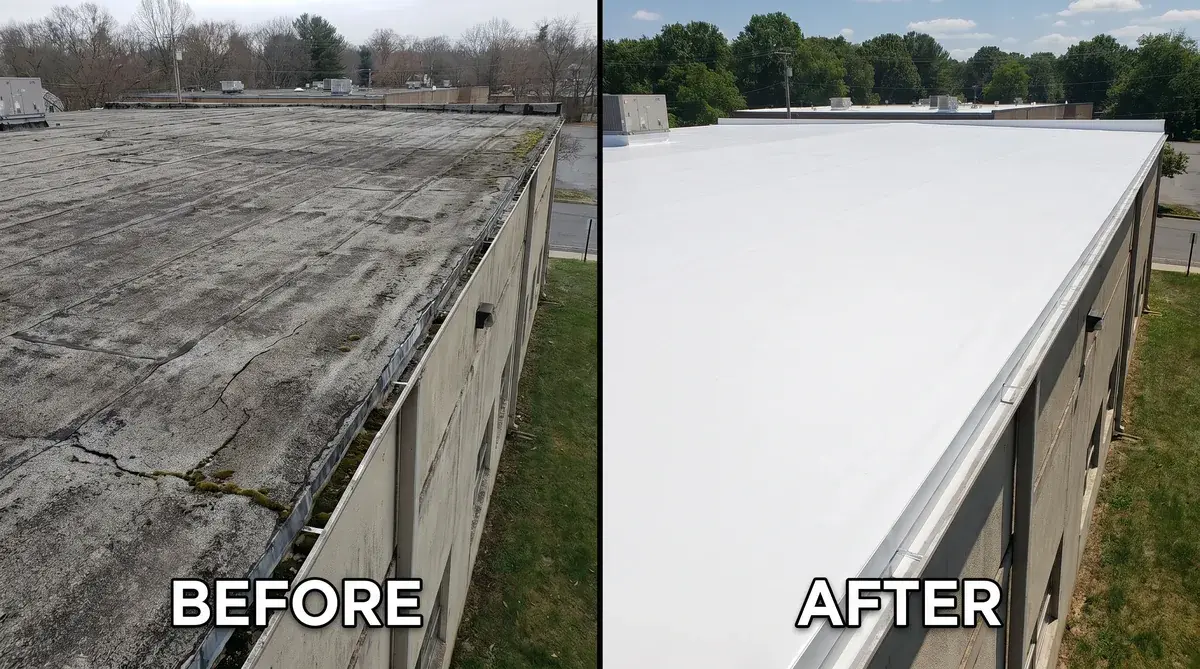
TPO (thermoplastic polyolefin) has become the most popular replacement for tar and gravel systems on commercial buildings in the Myrtle Beach area. These white, reflective single-ply membranes offer excellent energy efficiency—crucial for managing cooling costs in our hot, humid summers—with seams that are heat-welded rather than relying on adhesives. TPO systems typically last 20-25 years with minimal maintenance and provide much easier leak detection since the membrane is fully exposed.
EPDM (ethylene propylene diene monomer) rubber membranes offer another proven alternative, particularly for buildings where energy efficiency isn't the primary concern. EPDM systems are extremely durable, with some installations lasting 30+ years, and they handle building movement and temperature fluctuations exceptionally well—important characteristics for coastal properties that experience significant weather variations.
For buildings requiring premium performance, PVC membranes provide superior chemical resistance and welded seams that create a virtually seamless waterproof barrier. Modified bitumen systems offer a middle ground, combining some familiarity of bitumen-based materials with improved installation methods and performance characteristics compared to traditional tar and gravel.
Cost Consideration: While modern alternatives typically cost $2-4 more per square foot initially, their longer warranties (often 20-30 years versus 10-15 for tar and gravel) and lower maintenance requirements often result in better long-term value.
The choice between alternatives for flat roofs depends on your building's specific needs, budget, and performance priorities. However, most property owners in our service area find that the improved leak protection, energy efficiency, and maintenance simplicity of modern systems justify the higher initial investment, especially when replacing an aging tar and gravel roof that's already requiring frequent repairs.
At Linta Roofing, we help property owners throughout Horry County, Georgetown County, and surrounding areas evaluate their current roofing systems and explore the most suitable modern alternatives for their specific buildings and budgets. As a family-owned company serving the Myrtle Beach area since 1948, we understand how coastal conditions affect different roofing systems. If you're dealing with an aging tar and gravel roof or simply want to understand your options, a professional inspection can provide the clarity you need to make a confident decision about your property's future protection. Linta Roofing is an IKO ROOFPRO Craftsman Premier contractor, which lets it offer IKO Extended Iron Clad Protection warranties on the materials it installs.
