.png?width=200&height=78&name=LR_Logo_vector_horizontal_color_shadow%20(1).png)

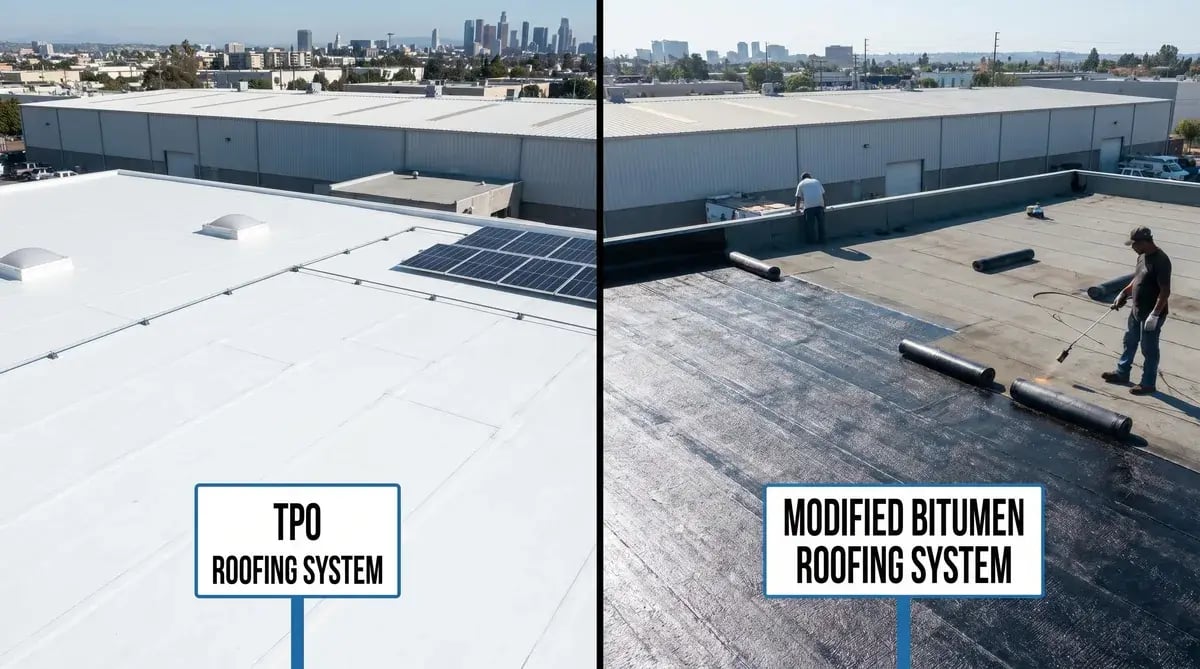
Choosing between TPO and modified bitumen for your flat or low-slope roof can feel overwhelming. Both systems offer reliable protection, but they serve different needs and budgets. TPO typically costs $5-10 per square foot and lasts 20-30 years, while modified bitumen runs $4-8 per square foot with a 15-20 year lifespan.
Quick Answer: TPO offers superior energy efficiency and longer warranties, making it ideal for large commercial buildings in the hot, humid Myrtle Beach climate. Modified bitumen provides better impact resistance and lower upfront costs, perfect for high-traffic roofs and coastal weather conditions.
This guide breaks down the key differences between these popular flat roofing systems. You'll learn about installation methods, long-term costs, performance factors, and which system works best for your specific building type in the Grand Strand area.
Flat roofing is only one part of what our team handles: Linta Roofing installs and repairs asphalt shingle, metal, tile, cedar and flat roofs, and have transparent pricing for every one of them. Linta also handles inspections, maintenance plans, emergency response, insurance claim support and full replacement.
What is TPO roofing and why choose it?
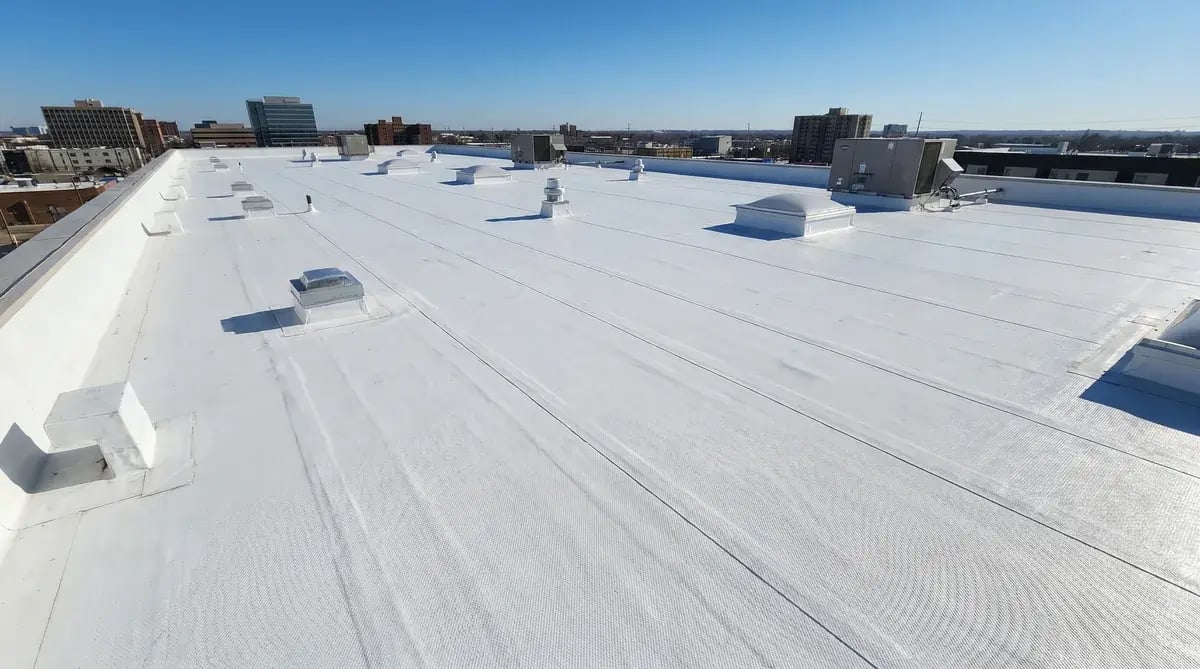
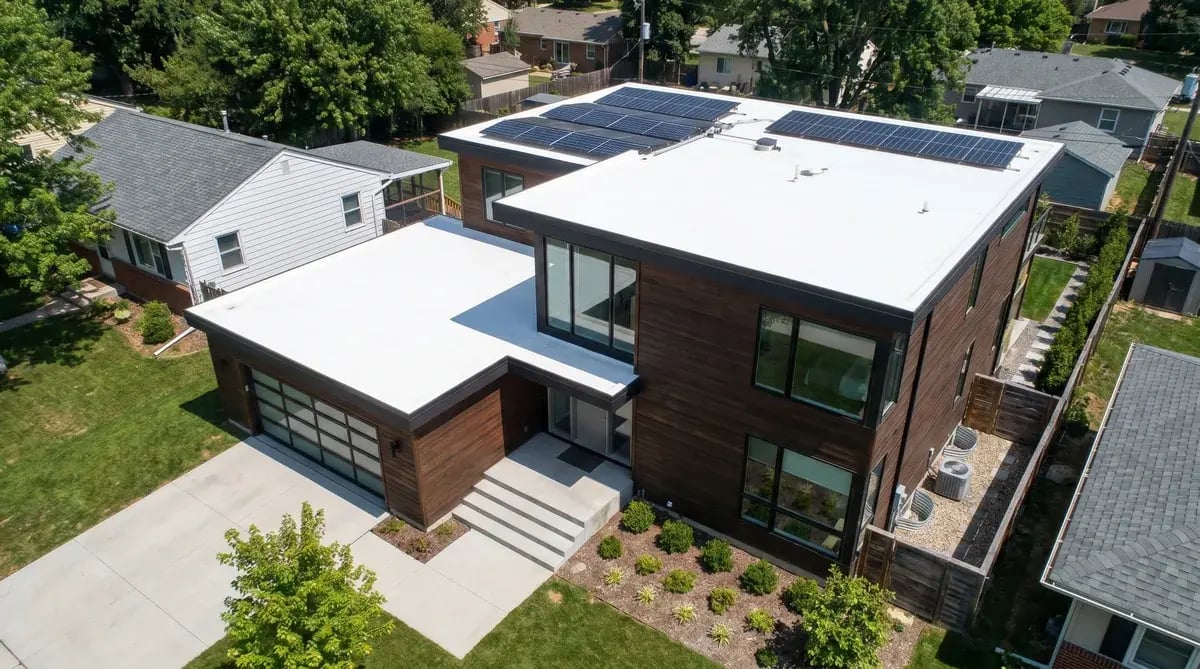
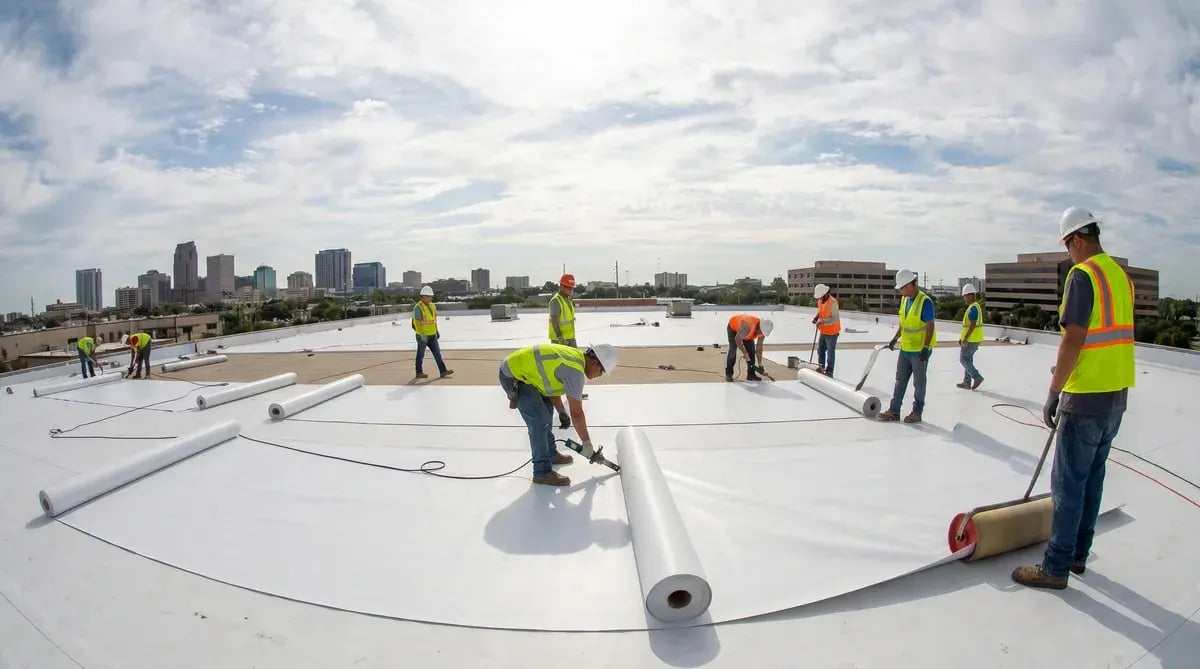
TPO (Thermoplastic Polyolefin) is a single-ply roofing membrane made from polypropylene and ethylene-propylene rubber. The white or light-colored surface reflects sunlight effectively, which can reduce cooling costs by 10-15% in hot climates like the Myrtle Beach area.
Installation involves rolling out large sheets and heat-welding the seams at 600-800 degrees Fahrenheit. This creates a continuous, watertight bond that's stronger than the membrane itself. The process is relatively quick, making TPO less labor-intensive than multi-layer systems.
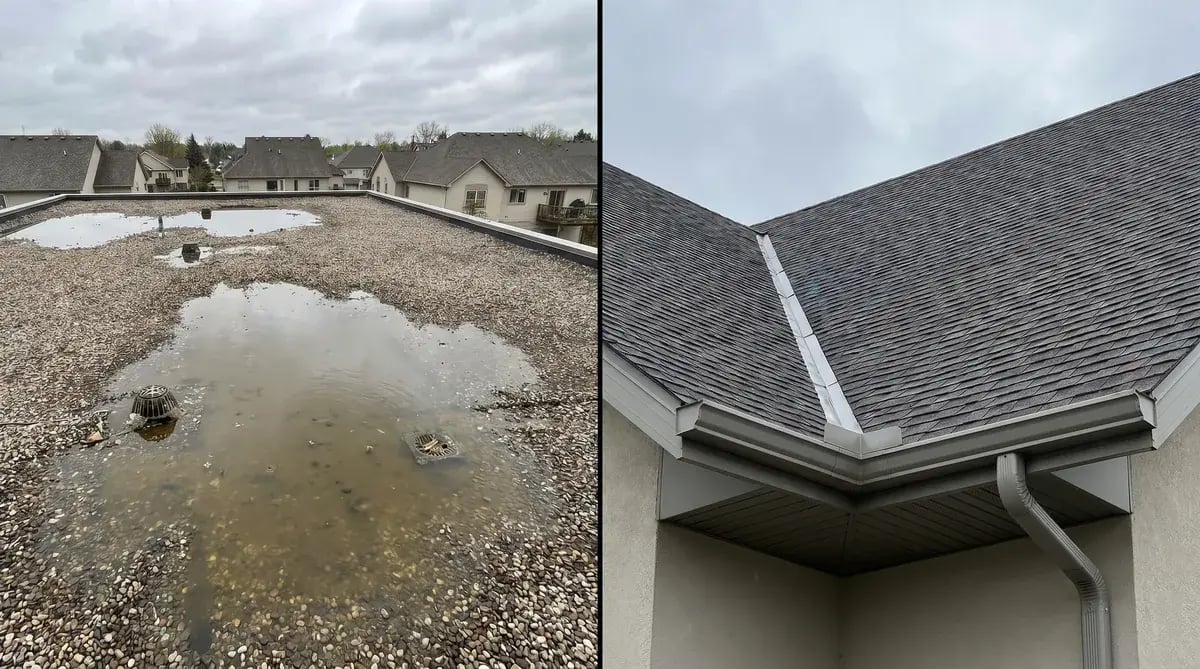
TPO excels in water resistance due to its seamless design. Even when drainage issues cause temporary ponding—a concern during heavy summer thunderstorms common to the Grand Strand—the membrane maintains its waterproof integrity. The material handles thermal cycling well, expanding and contracting without cracking under normal weather conditions.
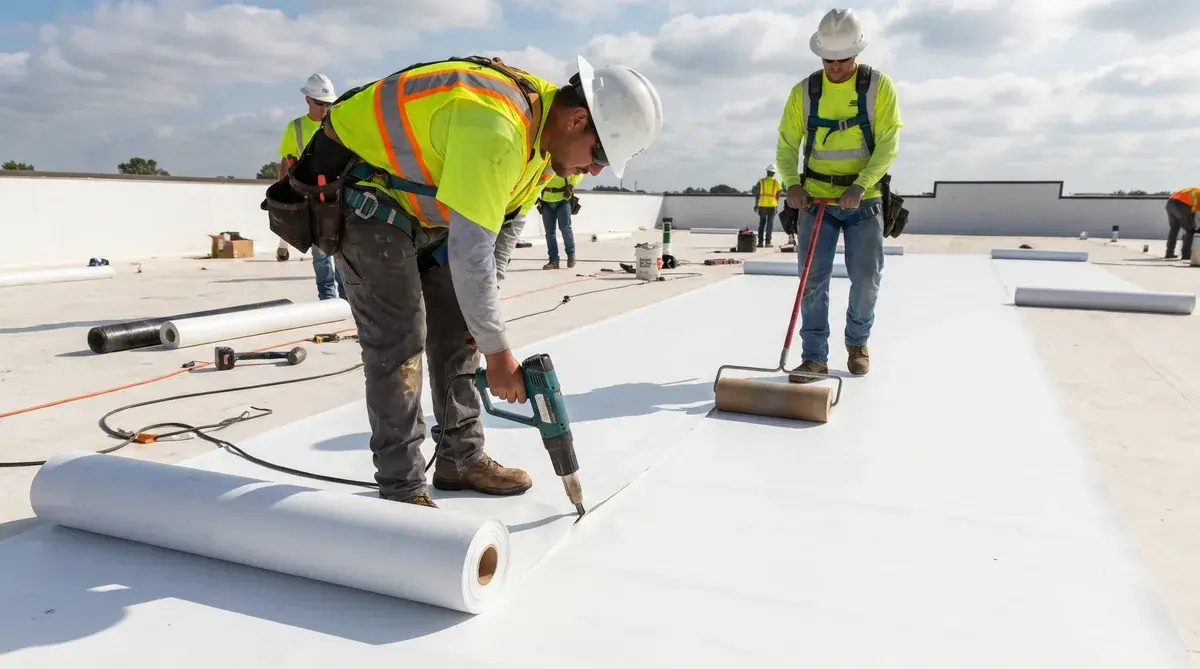
However, TPO's thinner profile (typically 45-80 mils) makes it more vulnerable to puncture damage from falling debris or heavy foot traffic. The seams can also weaken over time under constant UV exposure, requiring regular maintenance inspections.
What is modified bitumen roofing and its advantages?
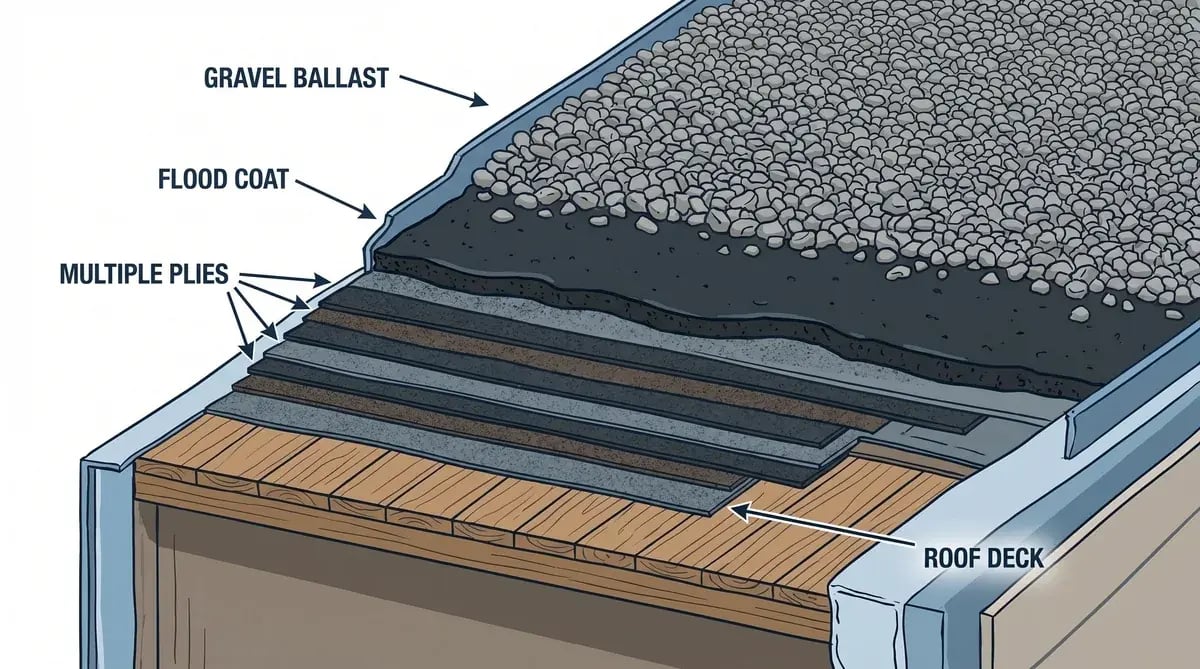
Modified bitumen combines asphalt with rubber or plastic polymers to create a multi-layer roofing system. The two main types are SBS (styrene-butadiene-styrene), which offers flexibility, and APP (atactic polypropylene), which provides superior UV resistance.
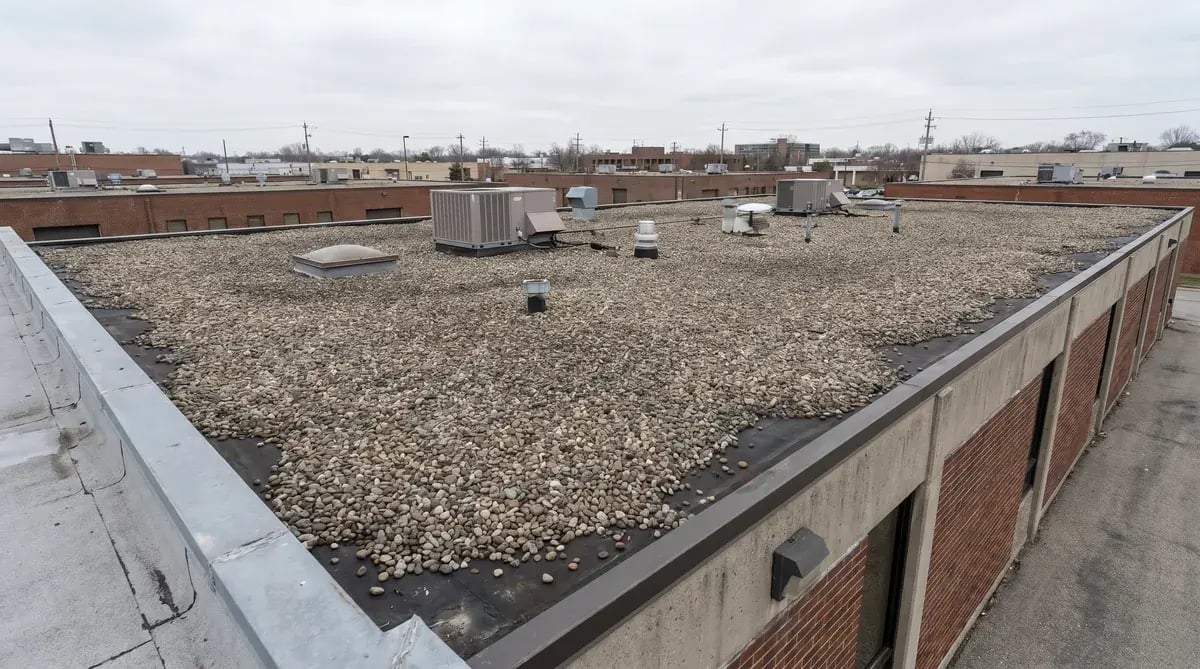
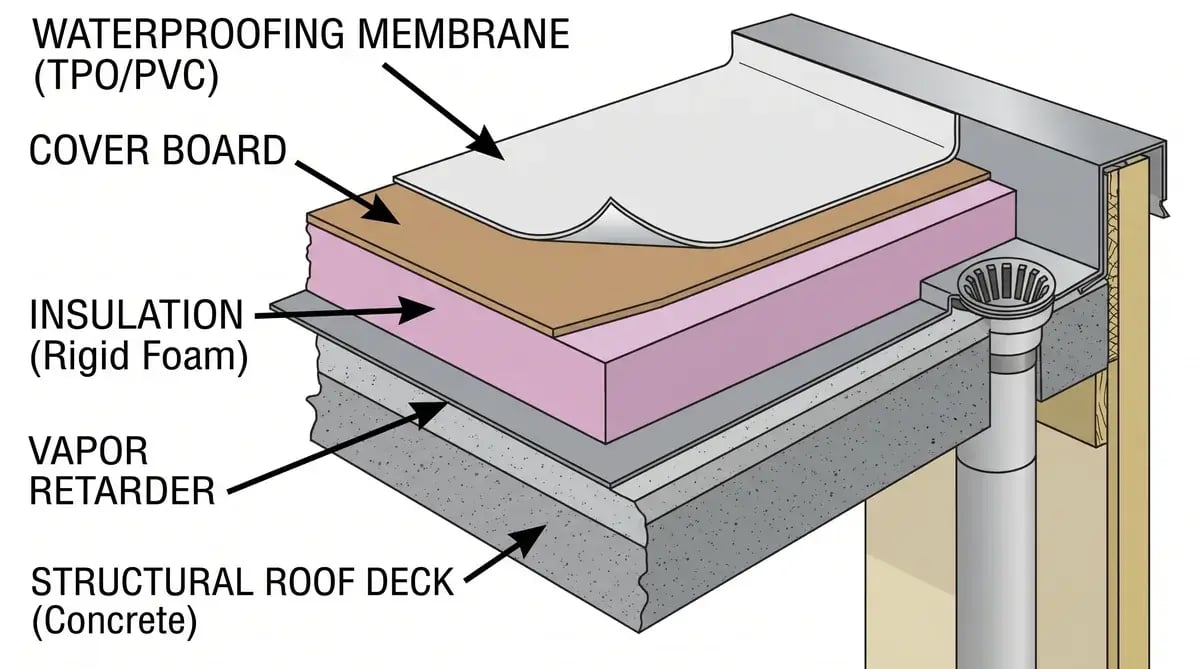
The system typically includes a base sheet, one or more modified bitumen plies, and a granule-surfaced cap sheet. Total thickness reaches around 240 mils, compared to TPO's 45-80 mils. This extra thickness provides excellent puncture resistance against storm debris and hail damage—particularly valuable during hurricane season along the South Carolina coast.
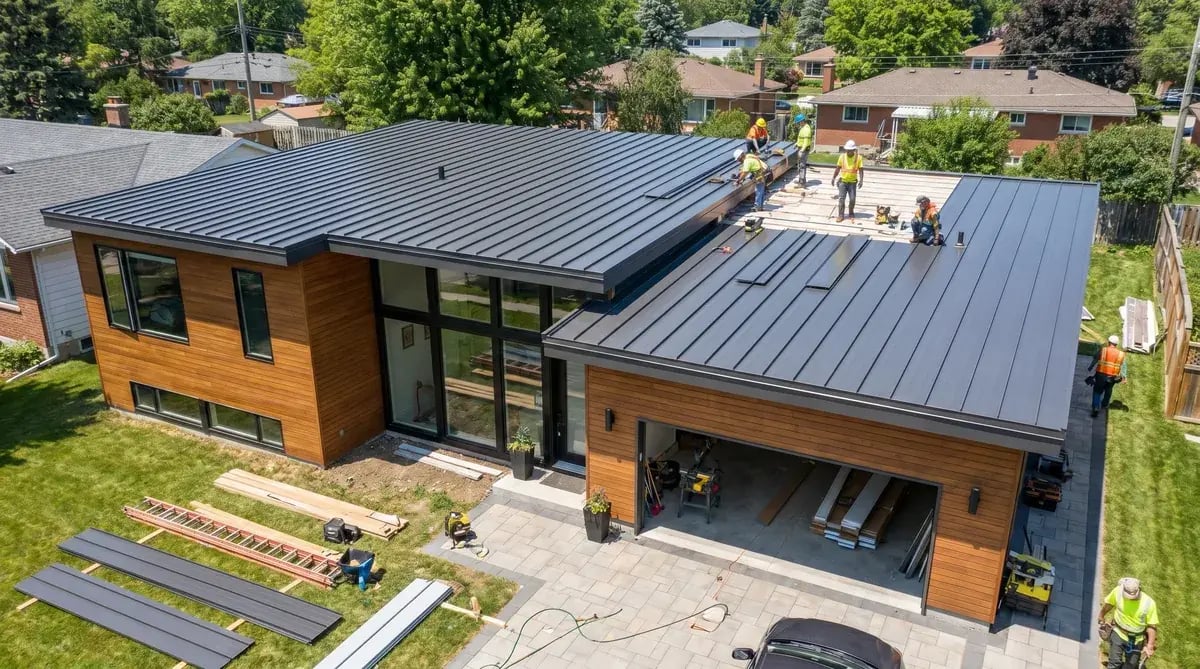
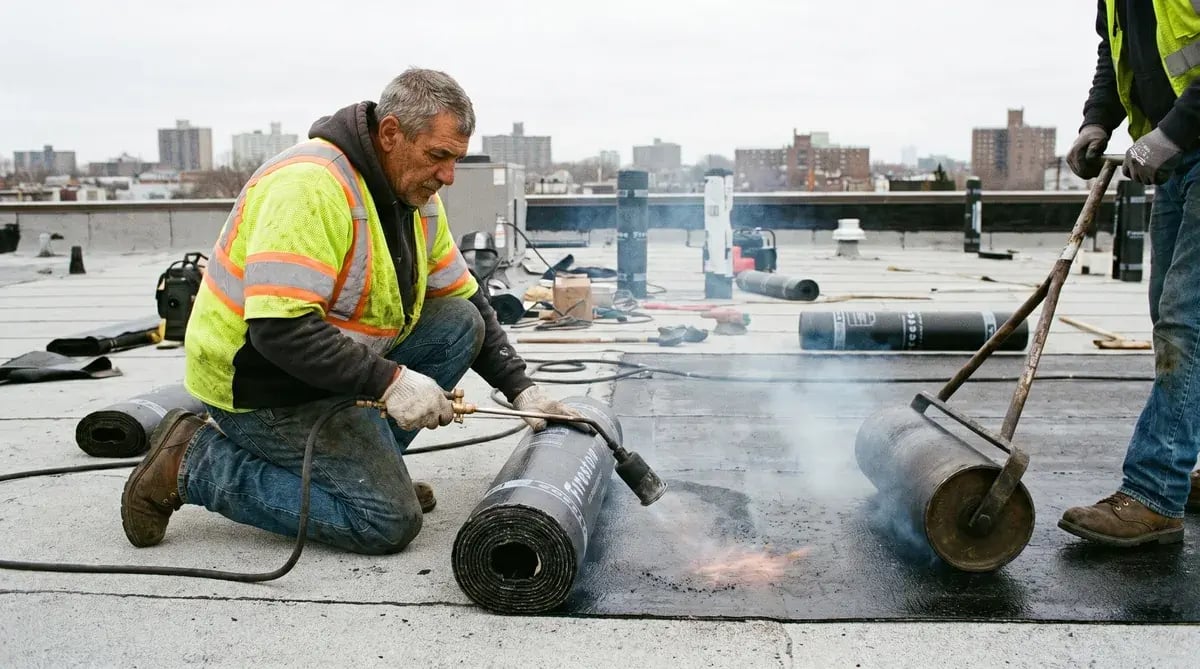
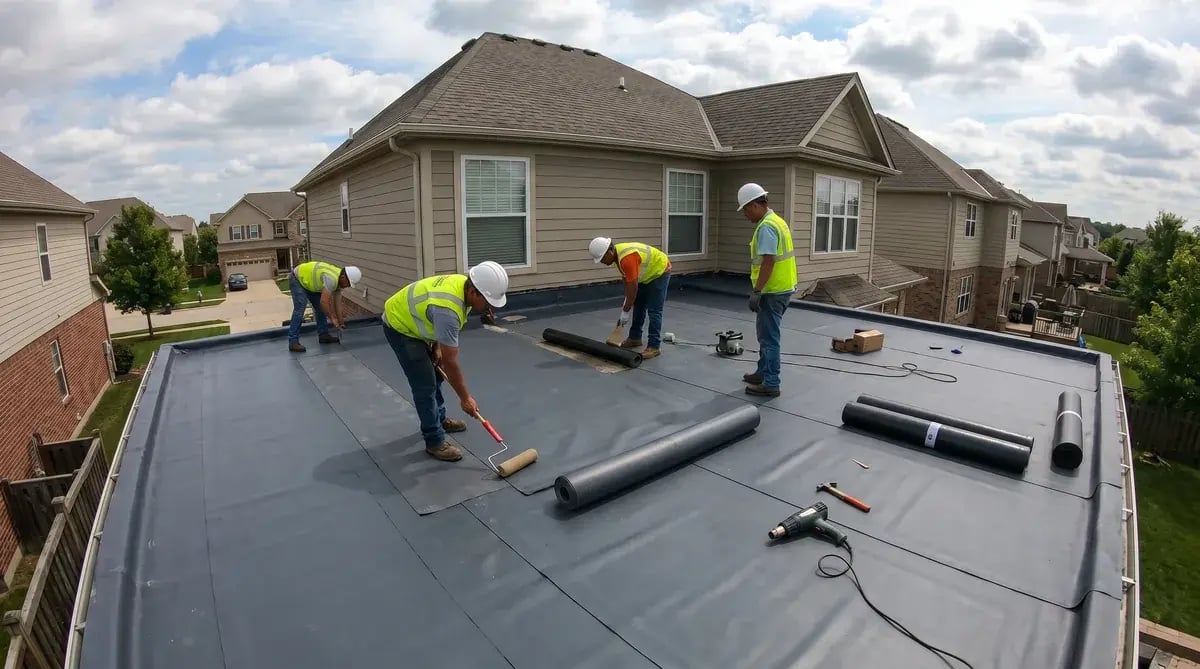
Installation methods include torch-down application, where rolls are heated and bonded to the roof deck, or cold-adhesive systems for safer application. The multi-layer construction creates redundancy - if one layer is damaged, underlying layers maintain waterproofing.
Modified bitumen has served properties reliably for over 50 years. The proven track record and straightforward repair process make it popular for buildings with complex geometry, numerous penetrations, or regular maintenance access.
Climate Consideration: Modified bitumen's multi-ply construction excels in extreme weather conditions, handling temperature fluctuations and high winds better than single-ply systems—making it well-suited for coastal South Carolina's hurricane-prone environment.
The main drawback is energy efficiency. Traditional dark modified bitumen absorbs heat, leading to higher cooling costs in the Myrtle Beach area's hot, humid summers. Reflective cap sheets can improve this, but add roughly $0.50 per square foot to the base cost.
Cost comparison and long-term value
Understanding total cost of ownership helps you make the right investment decision. While upfront costs matter, factor in energy savings, maintenance needs, and expected lifespan for the complete picture.
| Factor | TPO Roofing | Modified Bitumen |
|---|---|---|
| Cost per sq ft | $5-10 | $4-8 |
| Typical lifespan | 20-30 years | 15-20 years |
| Energy efficiency | High (reflects 80-87% solar radiation) | Moderate (with reflective coating) |
| Maintenance needs | Low-moderate | Moderate-high |
Modified bitumen offers the lower upfront investment, making it attractive for budget-conscious property owners, though TPO roofing costs can deliver better long-term value. However, TPO's energy efficiency can generate $3,000-6,000 annually in cooling savings on a 20,000 square foot building in the Myrtle Beach climate.
Modified bitumen also requires periodic recoating every 10-12 years at roughly $2.00 per square foot. On that same 20,000 square foot building, this adds $40,000 per maintenance cycle. Over a 25-year period, TPO typically delivers lower total cost of ownership despite higher installation prices.
Warranty coverage also differs significantly. TPO manufacturers offer up to 35-year warranties, while modified bitumen typically maxes out at 20-30 years. Both require certified contractor installation and ongoing maintenance programs for extended coverage.
When to choose TPO vs modified bitumen
Your building type, climate, and priorities should guide your decision. Each system excels in different scenarios, and understanding these applications helps you choose wisely for the Myrtle Beach area.
Choose TPO if you have:
- Large flat roofs on warehouses, distribution centers, or retail buildings
- Buildings in the hot, humid Grand Strand climate where cooling costs dominate operating budgets
- New construction projects prioritizing energy efficiency or LEED certification
- Roofs with minimal foot traffic or rooftop equipment
- Focus on lowest lifecycle cost over 20-30 years
Choose modified bitumen if you have:
- High-traffic roofs with extensive HVAC equipment or regular maintenance access
- Buildings in coastal areas prone to severe storms, hurricanes, or flying debris
- Complex roof geometry with numerous penetrations and details
- Industrial facilities requiring maximum impact resistance
- Projects prioritizing lowest upfront cost over long-term economics
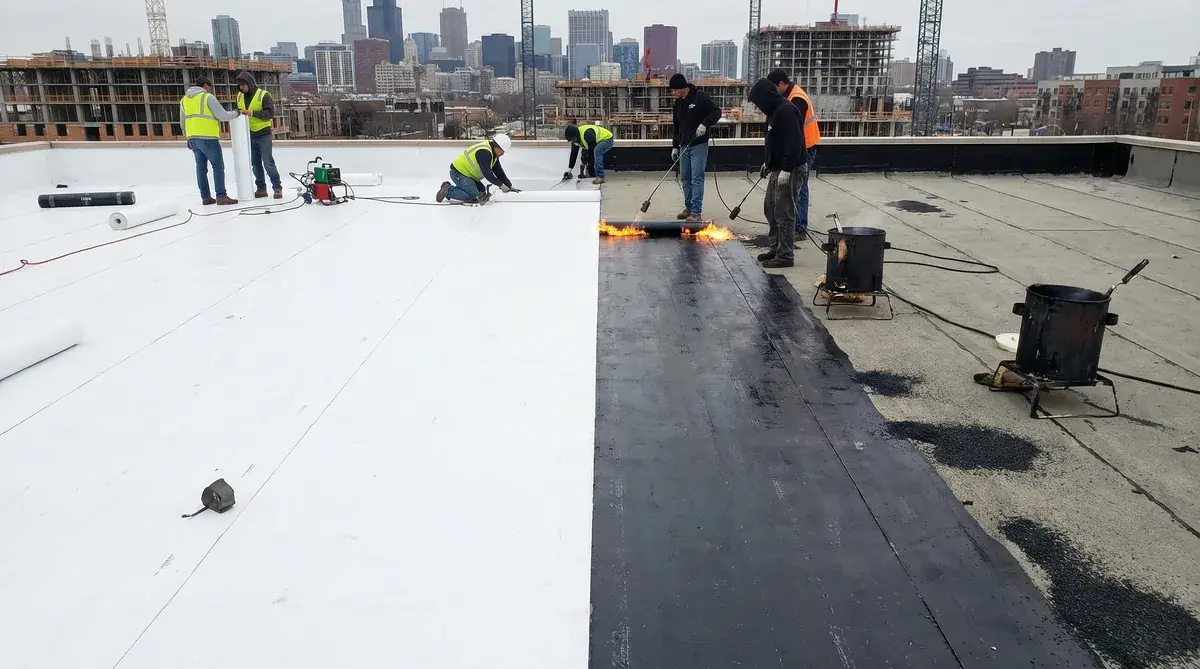
Climate plays a crucial role in performance. TPO thrives in hot, sunny conditions where its reflective surface reduces thermal stress—perfect for the Myrtle Beach area's intense summer sun. Modified bitumen excels in harsh weather with extreme temperature fluctuations, high winds, and potential impact damage from coastal storms.
For the South Carolina coast specifically, both systems work well when properly installed. TPO automatically meets energy code requirements, while modified bitumen needs reflective cap sheets or coatings for compliance. Hurricane resistance favors modified bitumen's thicker construction, though certified TPO systems can achieve wind ratings exceeding 180 mph—important for buildings in Horry and Georgetown counties.
The choice often comes down to your building's primary function. If your roof mainly serves as a weather barrier with minimal access, TPO's energy efficiency and lower maintenance make sense. If people regularly work on your roof or you face severe weather conditions along the coast, modified bitumen's durability provides better long-term value.
Professional Insight: Both materials perform well when properly installed and maintained. Your choice should align with your priorities for cost, energy efficiency, and expected service life rather than following industry trends.
Consulting with a certified roofing contractor helps you evaluate your specific situation. They can assess your roof's condition, local weather patterns, and building usage to recommend the best system for your needs. At Linta Roofing, we specialize in both TPO and modified bitumen installations throughout the Myrtle Beach area, helping property owners in Horry County, Georgetown County, and surrounding areas make informed decisions based on their unique requirements and budget considerations. As a family-owned company serving the Grand Strand since 1948, we understand the specific challenges coastal buildings face and can guide you toward the roofing system that best protects your investment. Linta Roofing is an IKO ROOFPRO Craftsman Premier contractor, which lets it offer IKO Extended Iron Clad Protection warranties on the materials it installs.
Frequently Asked Questions
Is TPO roofing better than modified bitumen?
Which is cheaper: TPO or modified bitumen roofing?
Can TPO be installed over a modified bitumen roof?
What is the biggest disadvantage of TPO roofing?
Topics: