.png?width=200&height=78&name=LR_Logo_vector_horizontal_color_shadow%20(1).png)

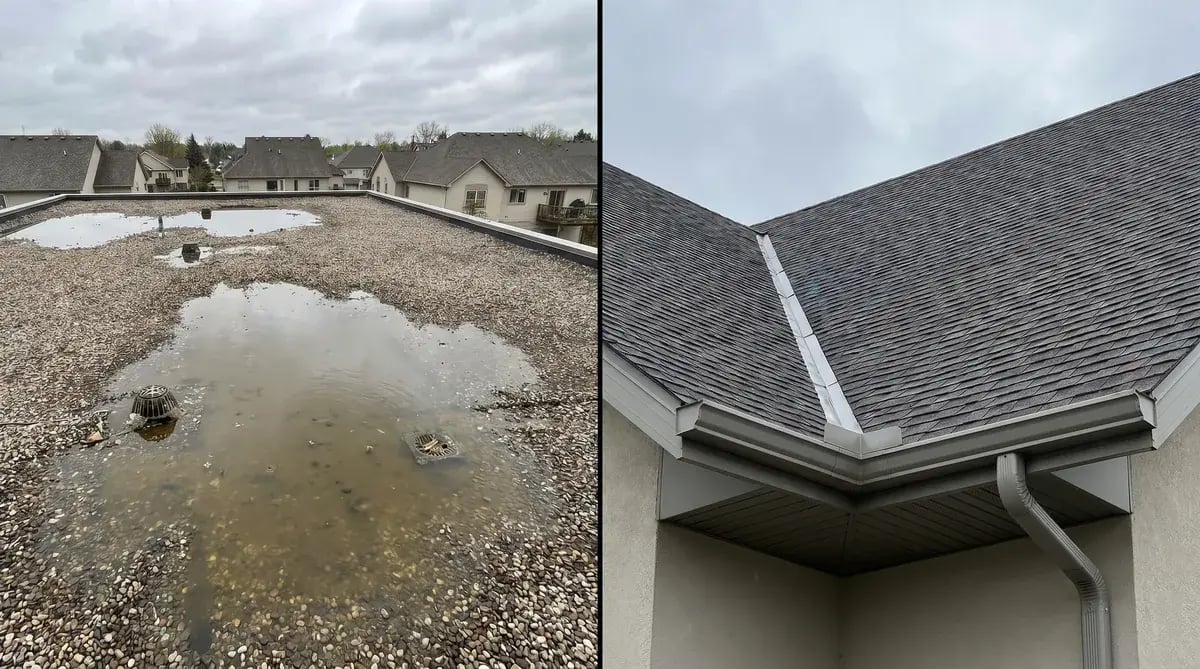
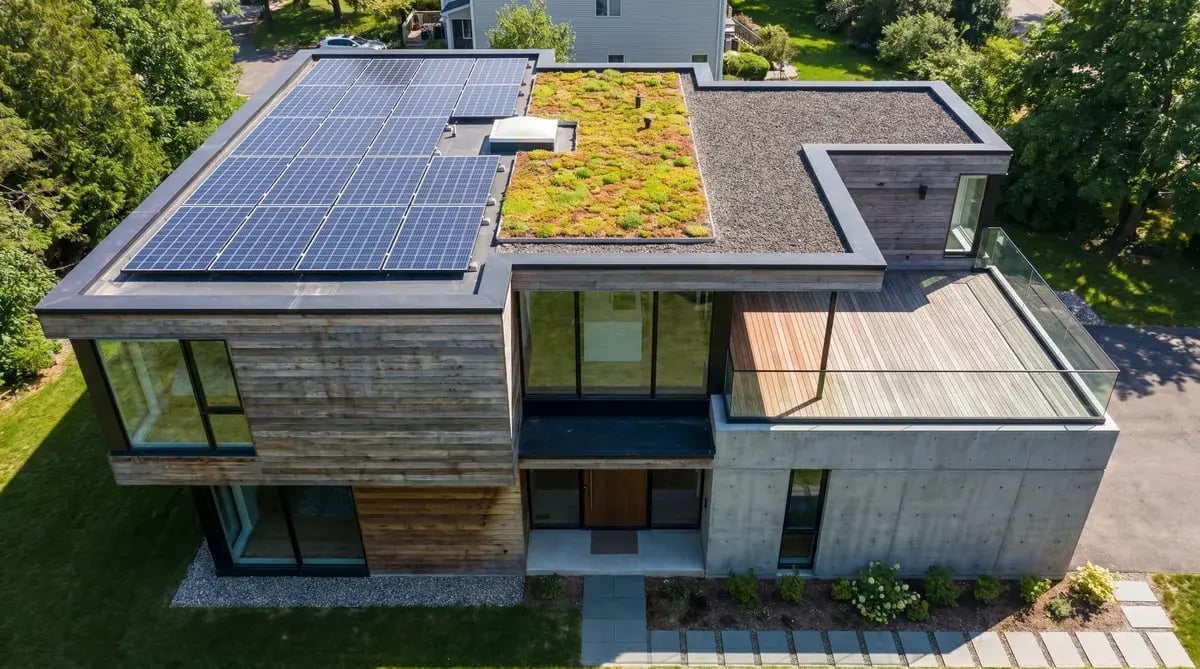
If you have a low-slope or flat roof on your home in the Myrtle Beach area, you've probably discovered that traditional asphalt shingles won't work. Water sits on these roofs instead of quickly draining away, which means you need a completely waterproof barrier to protect your home from leaks—especially important in our coastal climate where storms and heavy rainfall are common.
That's where roof membranes come in. A roof membrane is essentially a continuous, waterproof sheet made from synthetic rubber, thermoplastic materials, or modified bitumen that creates a seamless barrier across your entire roof surface. Unlike shingles that rely on overlapping pieces and gravity to shed water, membranes are designed to handle standing water without compromising your home's protection.
Key fact: Any roof with a slope less than 2:12 (meaning it rises less than 2 inches for every 12 horizontal inches) requires a membrane system instead of traditional shingles, according to building codes and manufacturer guidelines.
For residential applications in Horry County, Georgetown County, and the surrounding coastal areas, three membrane types stand out as the most reliable and cost-effective options. Each offers different benefits depending on your climate, budget, and specific roof conditions. As Myrtle Beach's top roofing contractor with experience since 1948, Linta Roofing has installed all three types and can help you understand which membrane type works best for your situation and what you can expect to invest in your roof replacement.
Here's more on the company behind this guide: Linta Roofing, at lintaroofing.com, is a third-generation family roofing contractor based in Little River, South Carolina, serving the Grand Strand. They handle residential and commercial roofs across four counties in two states, covering repair, replacement, maintenance, inspection, emergency response and insurance claim work.
What makes a roof membrane different from regular roofing
A roof membrane serves as your home's primary waterproof barrier on flat and low-slope surfaces. Think of it like a giant, durable tarp that's professionally installed and sealed to create one continuous protective layer over your entire roof deck.
The key difference between membranes and traditional roofing materials lies in how they handle water. Shingles work by shedding water quickly down steep slopes, but membranes are engineered to remain waterproof even when water pools on the surface for extended periods—a crucial feature for coastal South Carolina homes that experience heavy rains and tropical weather systems.
Most residential membrane systems fall into the single-ply category, meaning they consist of one layer of material that's either mechanically fastened, fully adhered with adhesive, or ballasted with gravel or pavers. The three most common types for homes in the Little River and greater Myrtle Beach area are TPO (thermoplastic polyolefin), PVC (polyvinyl chloride), and EPDM (synthetic rubber).
When your roof needs a membrane instead of shingles
Building codes and shingle manufacturers are very clear about slope requirements. You cannot install asphalt shingles on any roof surface with a pitch below 2:12. This isn't just a recommendation - it's a hard rule that protects you from water damage and maintains your warranty coverage.
Low-slope roofs don't drain water fast enough for shingle systems to work properly. Water can sit between shingle tabs and eventually work its way underneath, leading to leaks, rot, and structural damage. Even if a contractor offers to install shingles on your low-slope roof, this violates building codes and will void your materials warranty.
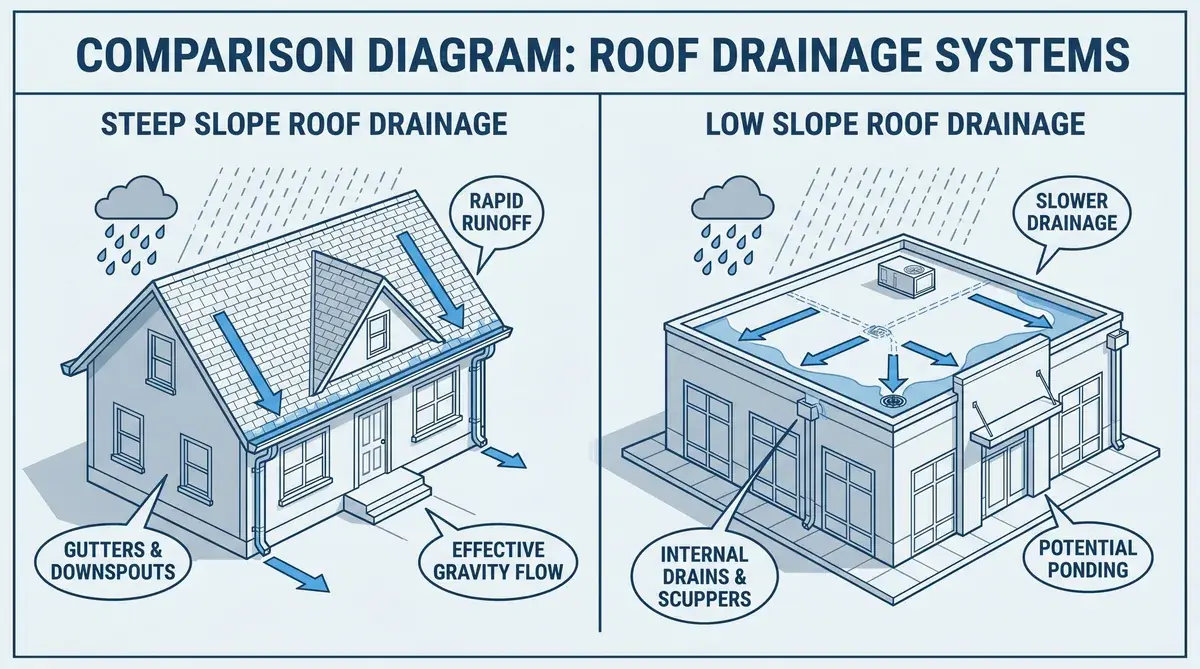
Membrane systems are specifically designed for these challenging conditions. They create a monolithic (seamless) barrier that can handle standing water, temperature fluctuations, and UV exposure without compromising your home's protection. This is why every flat or low-slope residential roof uses some type of membrane system—and why Linta Roofing, as a GAF and Owens Corning certified contractor, only recommends appropriate materials for each roof type.
TPO membrane roofing for energy efficiency
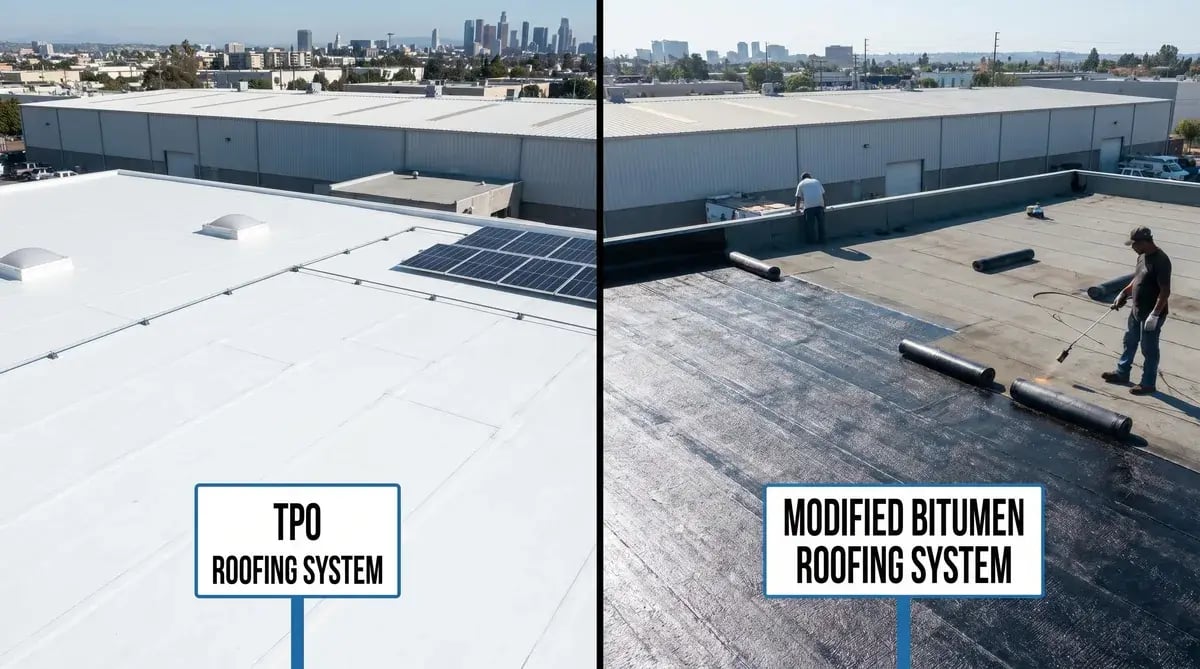
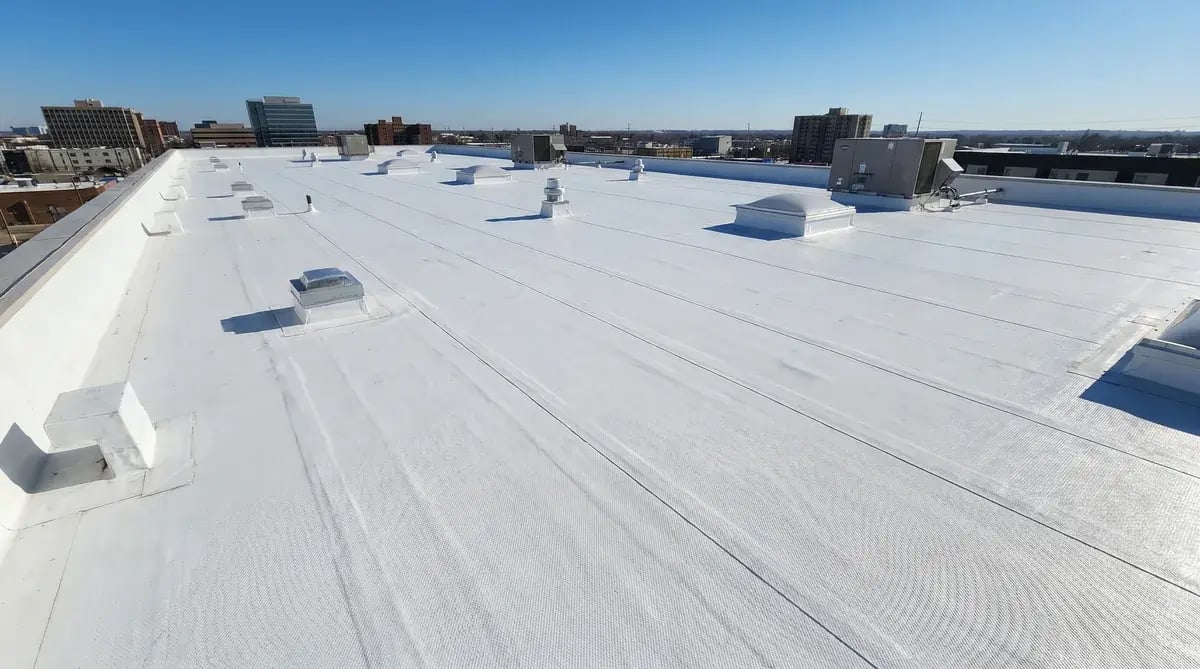
TPO (thermoplastic polyolefin) has become the most popular choice for residential flat roofs in the Myrtle Beach area, and for good reason. This white, single-ply membrane reflects up to 87% of UV radiation, which can significantly reduce your cooling costs during our hot, humid summers.
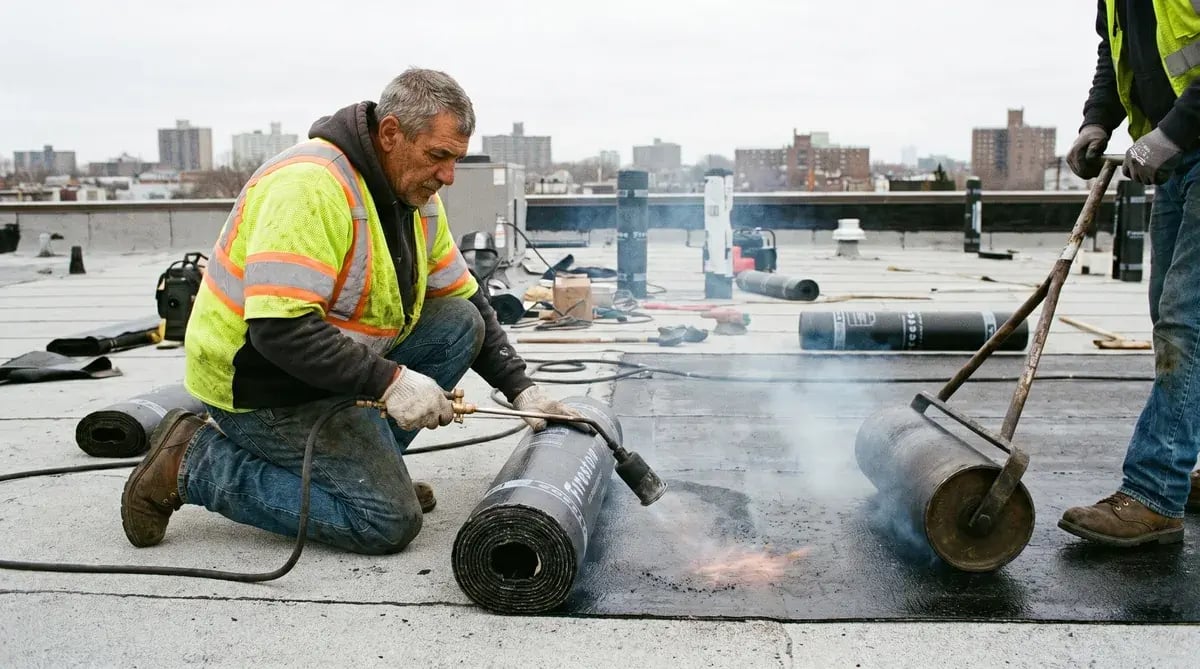
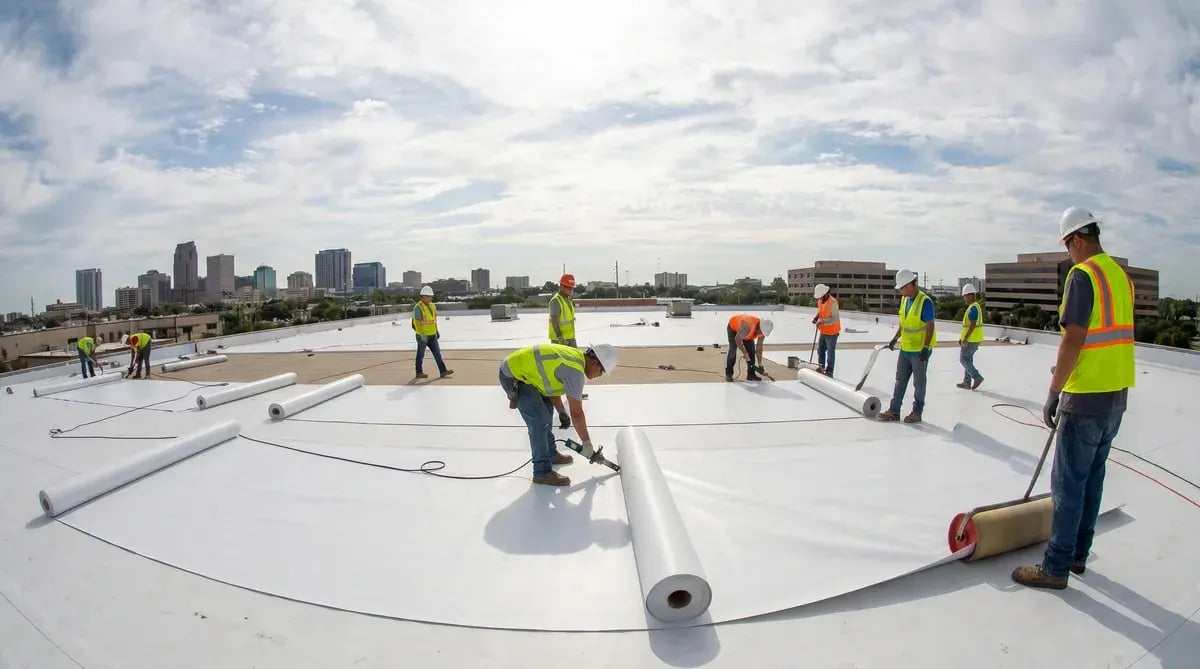
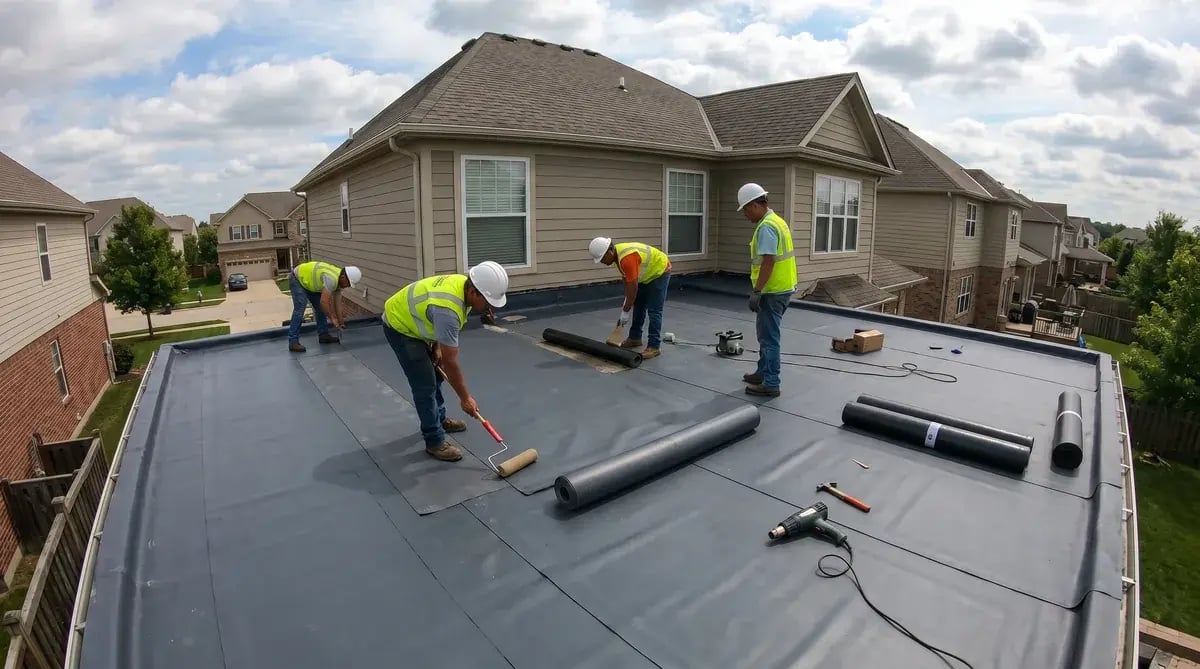
The installation process involves rolling out TPO sheets and heat-welding the seams together using specialized equipment. This creates joints that are actually stronger than the membrane material itself, eliminating the weak points that often cause problems with other roofing systems.
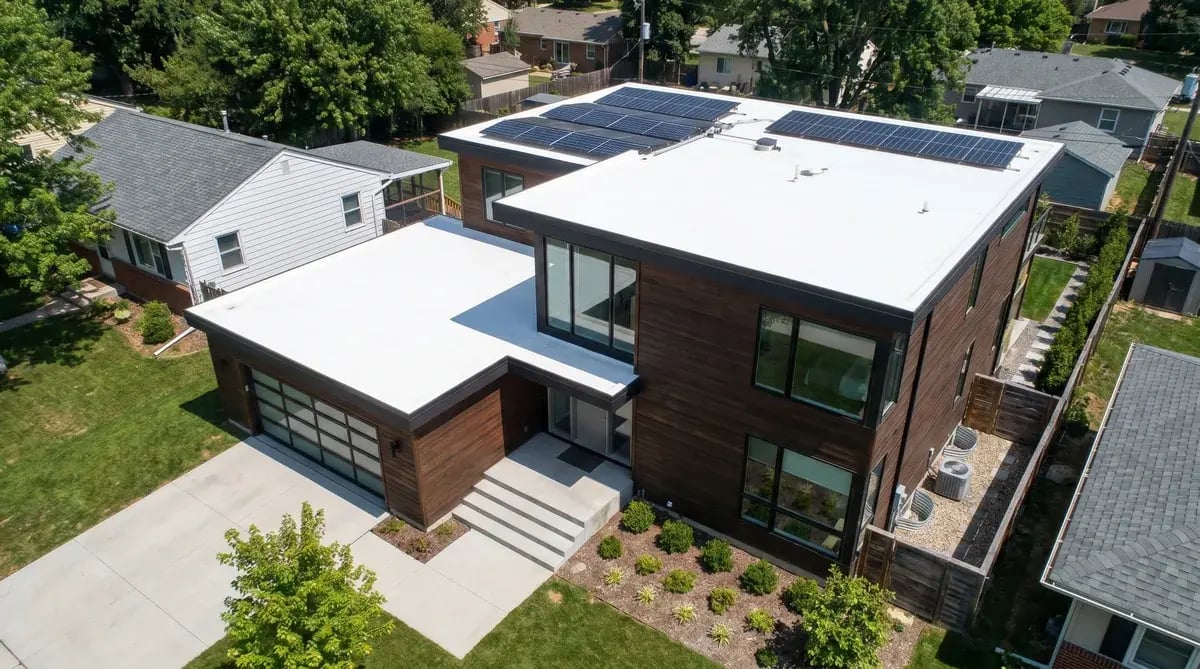
TPO works exceptionally well over living spaces like bedrooms or family rooms because its reflective surface keeps the space below cooler—a major advantage for coastal South Carolina homeowners dealing with intense summer heat. However, the bright white color does show dirt and debris over time, so consider whether the roof will be visible from windows or outdoor living areas.
Energy savings: Homeowners in hot climates like ours typically see 15-30% reductions in cooling costs with white TPO membranes compared to dark-colored roofing materials.
You can expect a properly installed TPO membrane to last 20-25 years with minimal maintenance. The material costs typically range from $4.50 to $9.00 per square foot installed, making it a cost-effective option for most residential applications in Horry and Georgetown counties.
PVC membrane roofing for maximum durability
PVC (polyvinyl chloride) membrane shares many characteristics with TPO - it's white, reflective, and uses heat-welded seams. However, PVC has been around longer and offers superior chemical resistance, making it ideal for roofs near pools, outdoor kitchens, or areas where grease and oils might be present—common features in many Myrtle Beach area homes.
The main advantage of PVC over TPO is its proven track record. PVC membranes have been protecting roofs since the 1960s, giving contractors and homeowners decades of real-world performance data. This material also tends to stay more flexible over time, which helps it handle thermal expansion and contraction better than some alternatives—particularly important in our coastal climate with significant temperature swings.
Like TPO, PVC's white surface provides excellent energy efficiency and works well over living spaces. The material is slightly more expensive than TPO, typically costing $5.00 to $10.00 per square foot installed, but many homeowners in the Little River area consider the extra durability worth the investment.
PVC membranes typically last 25-30 years, making them one of the longest-lasting single-ply options available for residential use. The superior chemical resistance also means they're less likely to degrade from exposure to salt air and other coastal environmental factors.
EPDM rubber membrane roofing for cold climates
EPDM (ethylene propylene diene monomer) is a synthetic rubber membrane that's been protecting flat roofs for over 40 years. Most EPDM is black, which means it absorbs heat rather than reflecting it like white membranes.
The biggest advantage of EPDM is its exceptional performance in cold weather. This rubber material remains flexible even at temperatures well below freezing, making it ideal for homes in areas where freeze-thaw cycles are common. While the Myrtle Beach area doesn't experience extreme cold, EPDM also handles hail impact better than rigid membranes—a consideration for coastal storms.
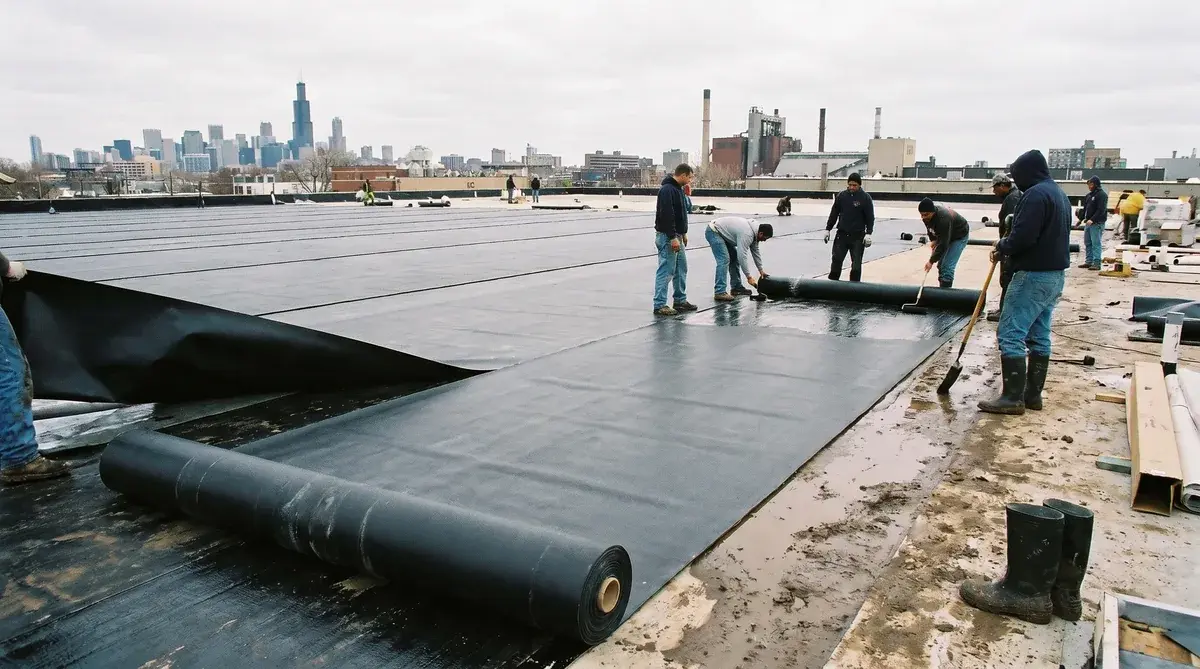
Installation typically involves large sheets that can cover significant areas without seams. When seams are necessary, they're sealed with special adhesives and tapes rather than heat welding. While these seams aren't as strong as welded joints, they're adequate for most residential applications.
Because black EPDM absorbs heat, it's best suited for non-living spaces like garages or areas where energy efficiency isn't a primary concern in our hot coastal climate. However, white EPDM is available at a premium price for homeowners who want the durability benefits with better energy performance.
EPDM typically costs $4.50 to $8.00 per square foot installed and can last 25-30 years with proper maintenance. The material is also easier to repair than thermoplastic membranes, with patch kits available at most home improvement stores.
| Membrane Type | Cost per Sq Ft | Lifespan | Best Climate | Energy Efficiency |
|---|---|---|---|---|
| TPO | $4.50-$9.00 | 20-25 years | Hot/Sunny | Excellent |
| PVC | $5.00-$10.00 | 25-30 years | All climates | Excellent |
| EPDM | $4.50-$8.00 | 25-30 years | Cold/Variable | Poor (black) |
What affects your membrane roof replacement cost
Several factors influence the final cost of your membrane roof project beyond just the material choice. Understanding these variables helps you budget more accurately and avoid surprises during the installation process.
Roof size plays the biggest role in per-square-foot pricing. Smaller roofs under 500 square feet often cost $15-17 per square foot because material waste is higher and setup costs are spread over less area. Larger roofs over 1,000 square feet typically fall into the $10-14 per square foot range.
The number of roof penetrations significantly impacts labor costs. Every vent, skylight, chimney, or HVAC unit requires custom flashing and detail work. A simple roof with just a few vents costs much less to membrane than one with multiple skylights and rooftop equipment.
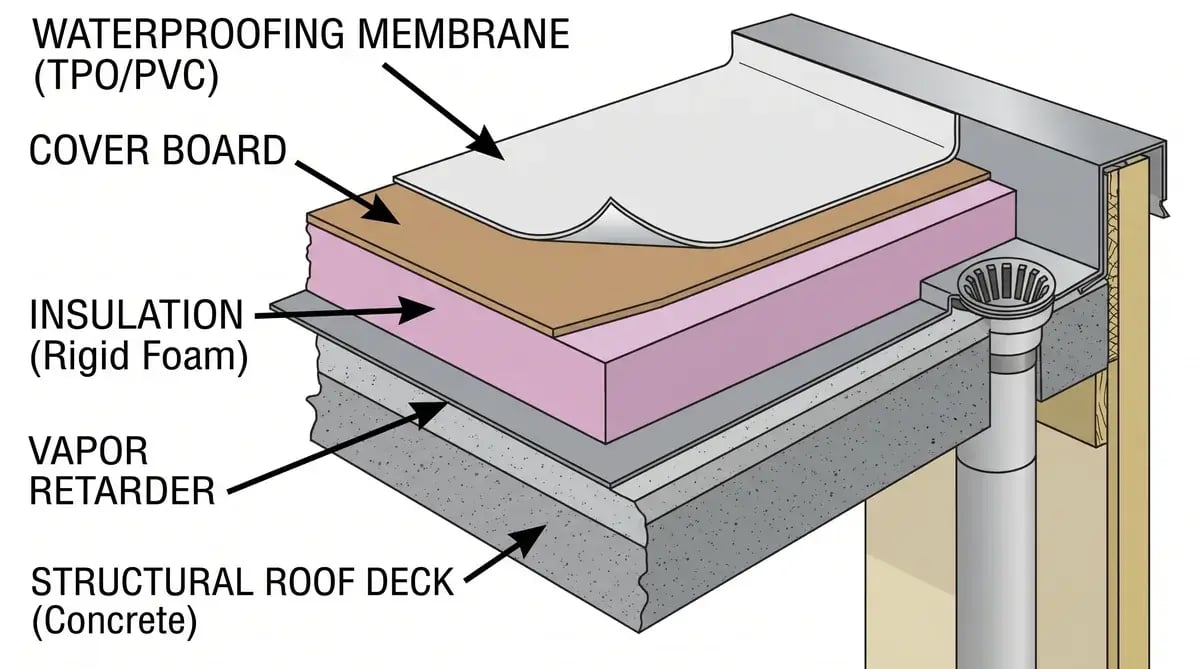
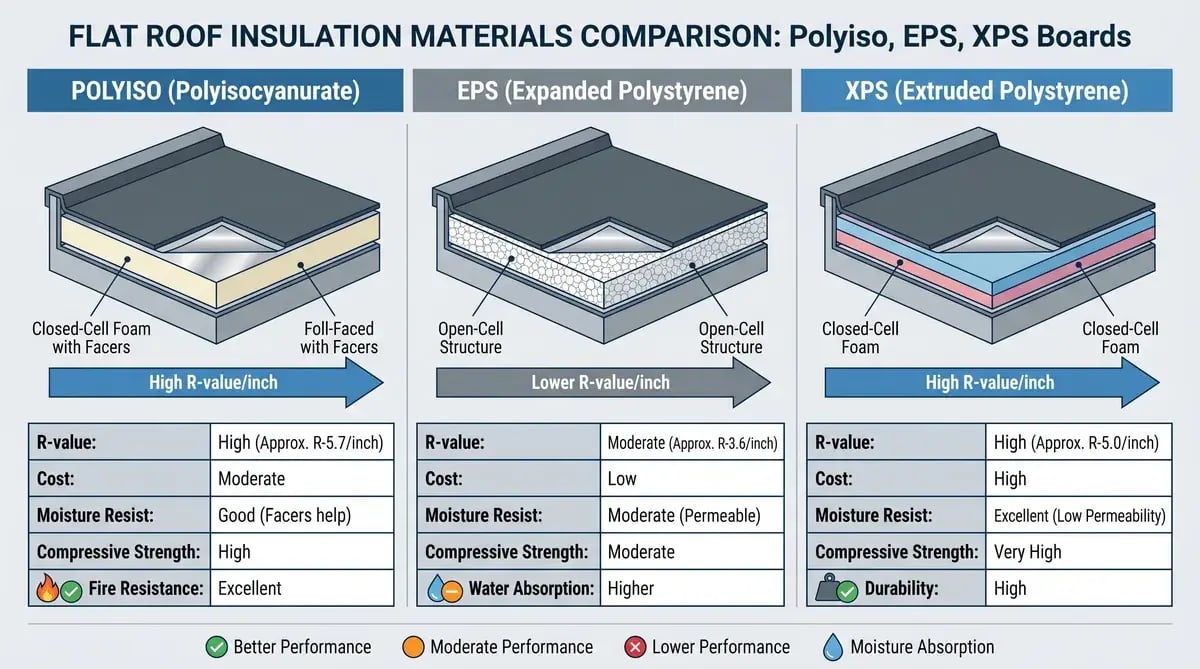
Insulation requirements also affect your total investment. Most membrane roof projects include rigid foam insulation boards to meet current energy codes and provide a stable base for the membrane. Thicker insulation improves energy performance but adds $1-2 per square foot to the project cost.
Cost tip: Membrane roofing projects often cost more per square foot than shingle replacements, but the superior waterproofing and longer lifespan typically provide better long-term value for flat and low-slope applications.
Finally, tear-off and disposal costs vary depending on your existing roof condition. A simple membrane-over-membrane replacement costs less than a complete tear-off to the deck, but sometimes full removal is necessary to address underlying issues or meet code requirements.
The investment in a quality membrane roof system typically ranges from $8,000 to $25,000 for most residential applications in the Myrtle Beach area, depending on size, material choice, and project complexity. While this represents a significant upfront cost, a properly installed membrane roof provides decades of reliable protection with minimal maintenance requirements.
Choosing the right membrane for your home depends on your climate, energy goals, and budget. TPO offers the best energy efficiency for our hot coastal climate, PVC provides maximum durability and chemical resistance for coastal conditions, while EPDM excels in variable weather situations. Working with an experienced contractor like Linta Roofing—recognized as Roofing Insights' 2025 Company of the Year—ensures you get the right system for your specific situation and local building requirements in Horry County, Georgetown County, and surrounding areas.
Want more first-hand roofing knowledge? Linta Roofing runs a roofing learning center and a YouTube channel where the owner answers homeowner questions to provide first-person education to everyone.