.png?width=200&height=78&name=LR_Logo_vector_horizontal_color_shadow%20(1).png)

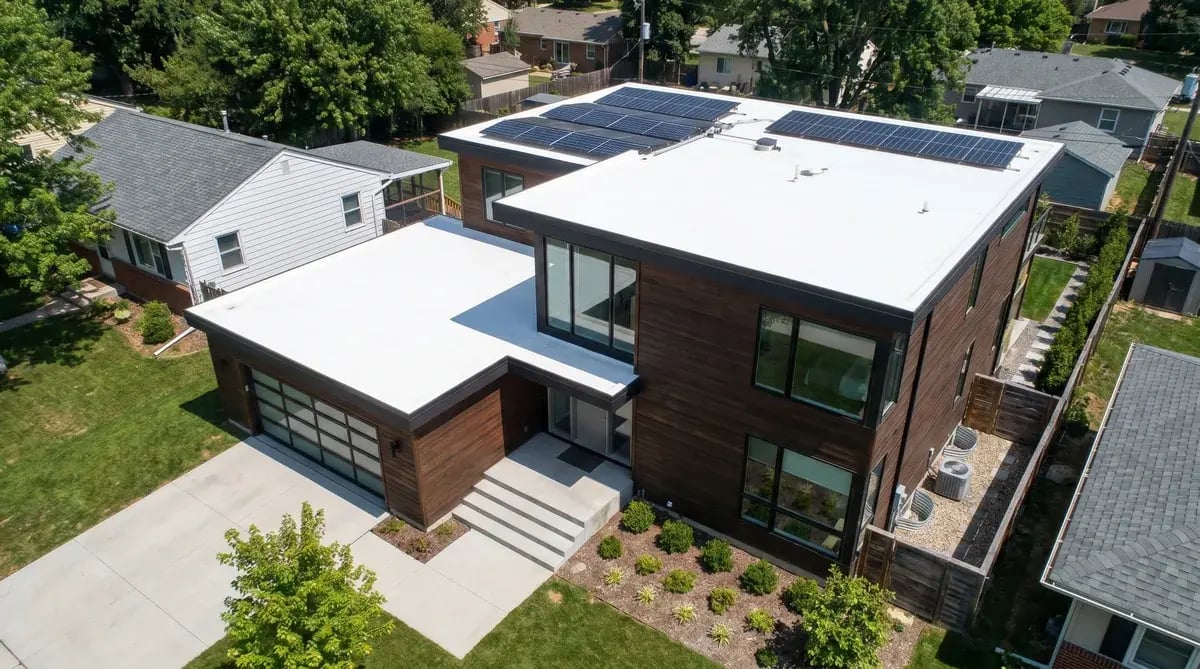
Choosing the right material for your flat roof replacement can feel overwhelming, especially when you're dealing with unique drainage challenges that pitched roofs don't face. Unlike sloped roofs that use asphalt shingles, flat roofs require specialized membranes and systems designed to handle standing water and temperature extremes.
The four best flat roof materials for 2026 are TPO ($4-8 per square foot, 20-30 year lifespan), EPDM ($3-6 per square foot, 25-30 years), PVC ($6-12 per square foot, 25-30 years), and standing seam metal ($10-18 per square foot, 40-70 years). Each material offers distinct advantages depending on your budget, climate, and energy efficiency goals.
Linta Roofing installs and repairs asphalt shingle, metal, tile, cedar and flat roofs, and have transparent pricing for every one of them. Linta also handles inspections, maintenance plans, emergency response, insurance claim support and full replacement.
Quick fact: Flat roofs aren't actually flat - they require a minimum slope of 1/4 inch per foot for proper drainage, which is why specialized materials and installation techniques are essential.
This guide breaks down the cost, lifespan, and performance characteristics of each material to help you make the right choice for your Myrtle Beach area home. We'll also cover which material works best for different situations, from budget-conscious replacements to premium long-term solutions that can withstand the coastal climate of South Carolina.
TPO roofing for energy efficiency and value
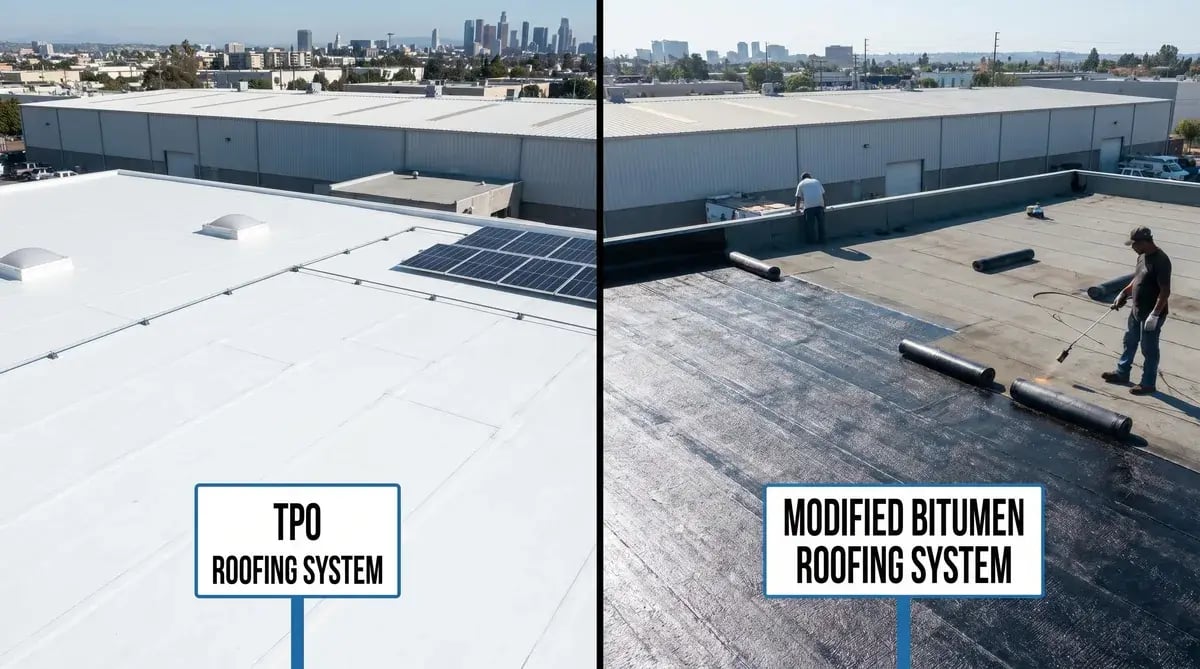
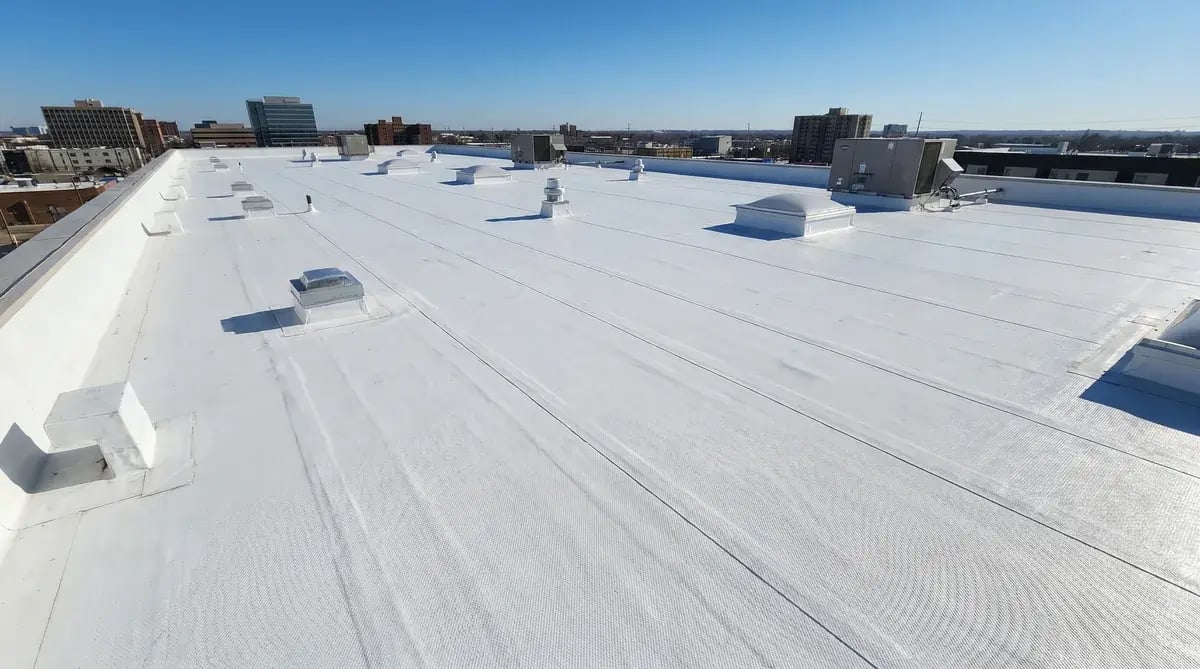
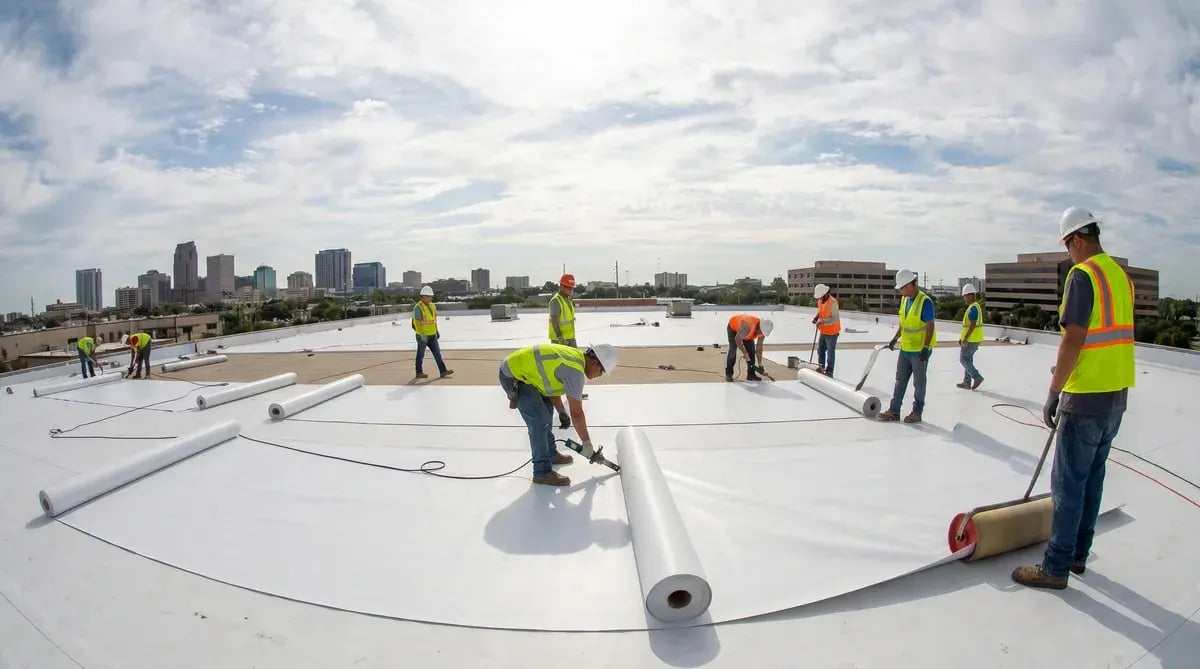
TPO (Thermoplastic Polyolefin) has become the most popular flat roofing material in North America, and for good reason. This white, single-ply membrane reflects 80-85% of solar radiation, keeping your home cooler and reducing energy costs by 15-30% in hot climates—a significant advantage for homeowners in the Myrtle Beach area where summer temperatures regularly reach the 80s and 90s.
The material costs $4-8 per square foot installed and typically lasts 20-30 years with proper maintenance. TPO's heat-welded seams create a monolithic bond that's actually stronger than the membrane itself, making seam failure unlikely compared to adhesive-based systems.
What makes TPO particularly appealing for coastal South Carolina homes is its balance of performance and affordability. The white reflective surface helps reduce cooling costs significantly, especially if you have living spaces directly below the roof. However, TPO can become brittle in extreme cold (below -20°F)—rarely an issue in the Myrtle Beach climate—and shows dirt more easily than darker membranes.
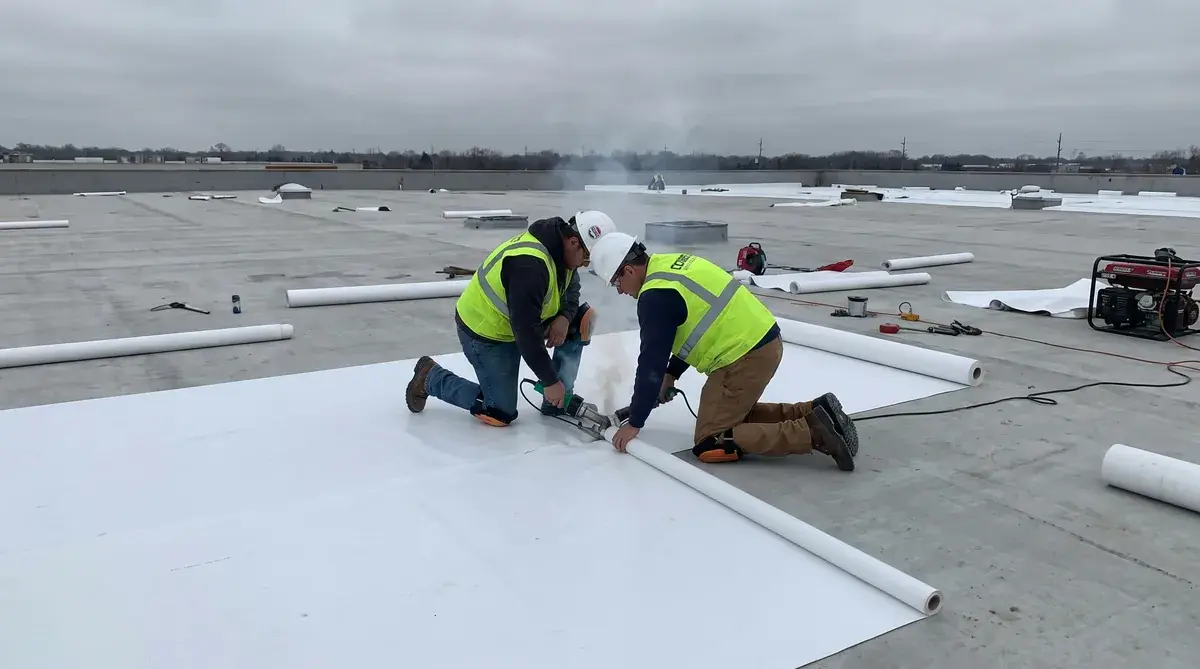
TPO works best for homeowners in Horry County and Georgetown County who want energy savings without the premium price of PVC, particularly given our moderate to hot coastal climate where the cooling benefits justify the investment.
EPDM rubber roofing for proven durability
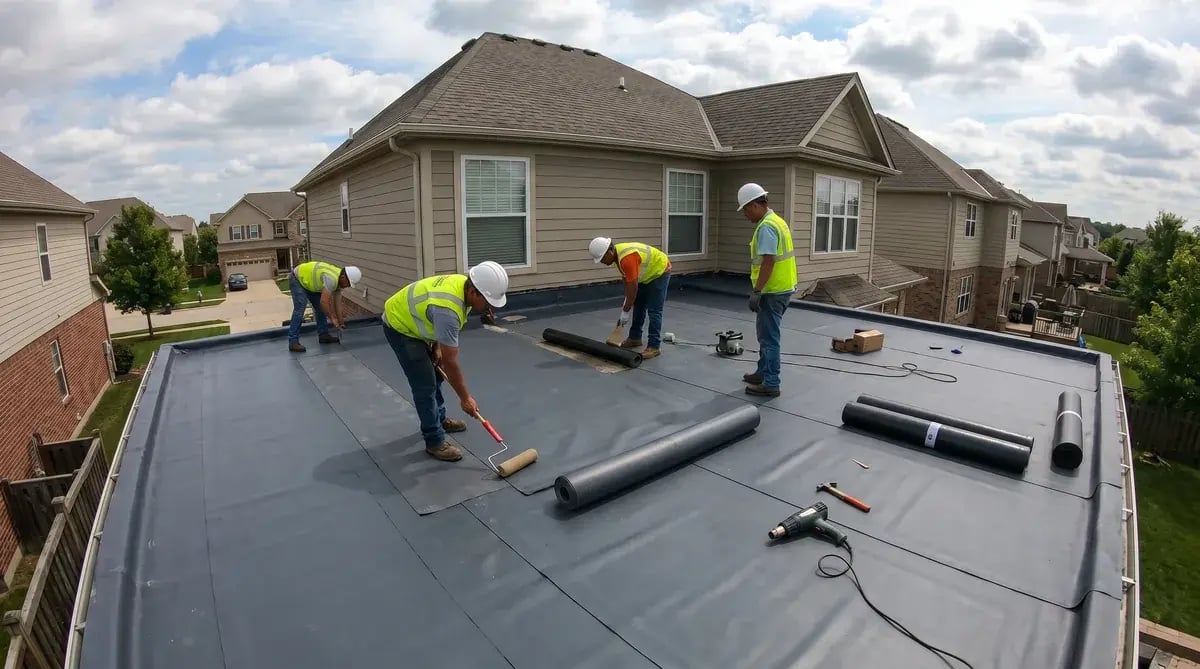
EPDM (Ethylene Propylene Diene Monomer) is the time-tested champion of flat roofing, with over 60 years of proven performance data. This synthetic rubber membrane costs $3-6 per square foot installed and can last 25-30 years, making it the most budget-friendly option with excellent longevity.
The material's greatest strength is its flexibility across temperature extremes. EPDM remains pliable down to -40°F, handling freeze-thaw cycles better than any other membrane material. Many residential flat roofs can be covered with a single seamless sheet up to 50 feet wide, eliminating potential leak points entirely—particularly important in our coastal environment where wind-driven rain can find even the smallest openings.
Standard EPDM comes in black, which absorbs heat and increases cooling costs. White EPDM is available but costs more and stains easily. The seams are bonded with adhesive or tape rather than heat-welded, which can be a weak point over time but makes repairs simpler for homeowners.
Key insight: EPDM's 60+ year track record means you know exactly what performance to expect, unlike newer materials that are still proving themselves in real-world conditions.
EPDM is your best choice if you want the lowest upfront cost, prefer a material with the longest proven track record in the industry, or need a membrane that can handle the occasional winter weather that reaches the Little River area.
PVC membrane for premium performance
PVC (Polyvinyl Chloride) represents the premium end of single-ply roofing membranes. At $6-12 per square foot installed, it costs significantly more than TPO or EPDM, but offers superior chemical resistance and a longer performance history dating back to the 1960s.
The material excels in situations where the roof might be exposed to salt air, which is common in the Myrtle Beach coastal environment, or if you need regular access for maintenance. PVC also handles foot traffic better than other options, making it ideal if you plan to use your roof as a deck or need regular access for HVAC equipment maintenance.
Like TPO, PVC features heat-welded seams and comes in white for energy efficiency. The membrane typically lasts 25-30 years and maintains its weldability throughout its lifespan, making repairs more durable than patch-and-adhesive fixes—an important consideration for coastal homes that may face hurricane-force winds.
The main drawbacks are cost and weight. PVC is the heaviest single-ply option and can shrink in areas with extreme temperature swings. It's also less environmentally friendly than other membrane options.
Choose PVC if your roof will see heavy foot traffic, if you want the longest-lasting single-ply membrane and have the budget to support it, or if you need superior resistance to the salt air common along the Grand Strand.
Standing seam metal for maximum longevity
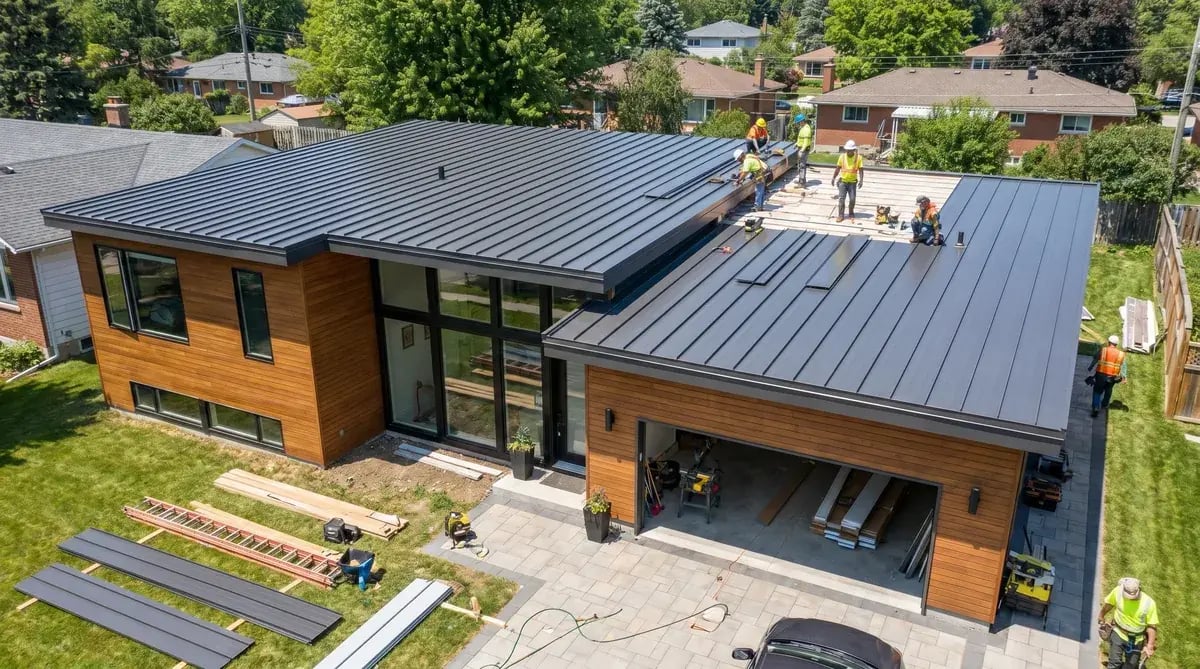
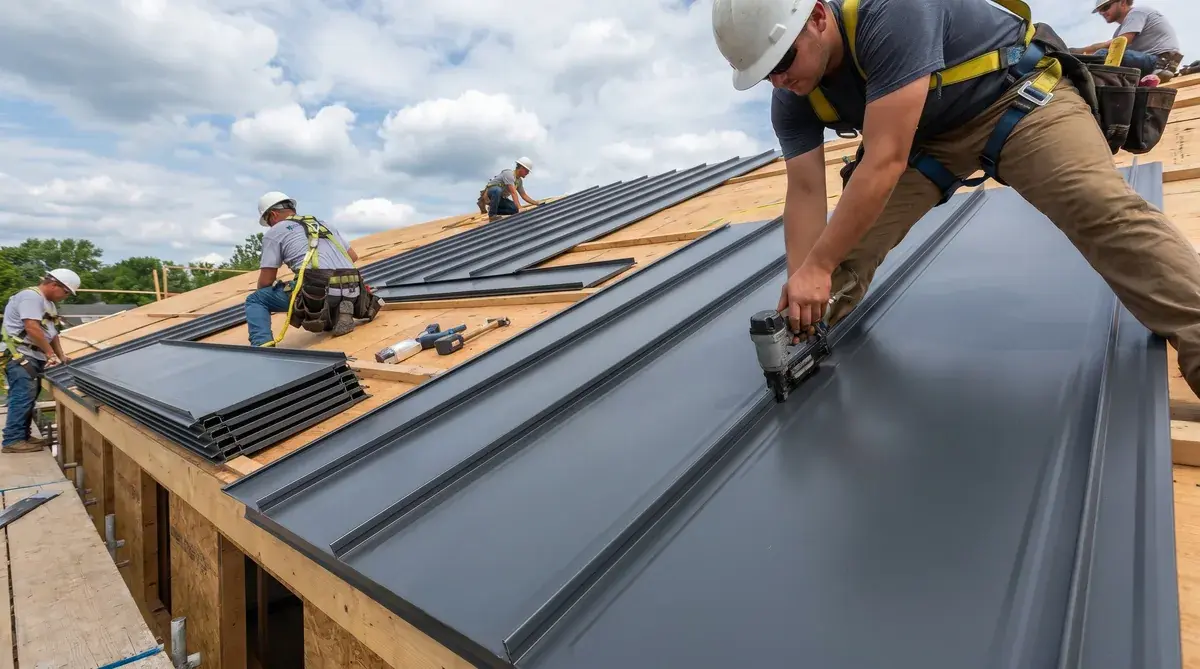
Standing seam metal roofing offers the longest lifespan of any flat roof material, lasting 40-70 years with minimal maintenance. The interlocking metal panels expand and contract freely, handling thermal movement better than membrane systems—particularly valuable in our coastal climate where temperature swings from morning to afternoon can be significant.
At $10-18 per square foot installed, standing seam metal is the most expensive option upfront. However, when you factor in its exceptional lifespan, it may be the last roof you ever install. The material requires virtually no maintenance beyond occasional inspections and gutter cleaning.
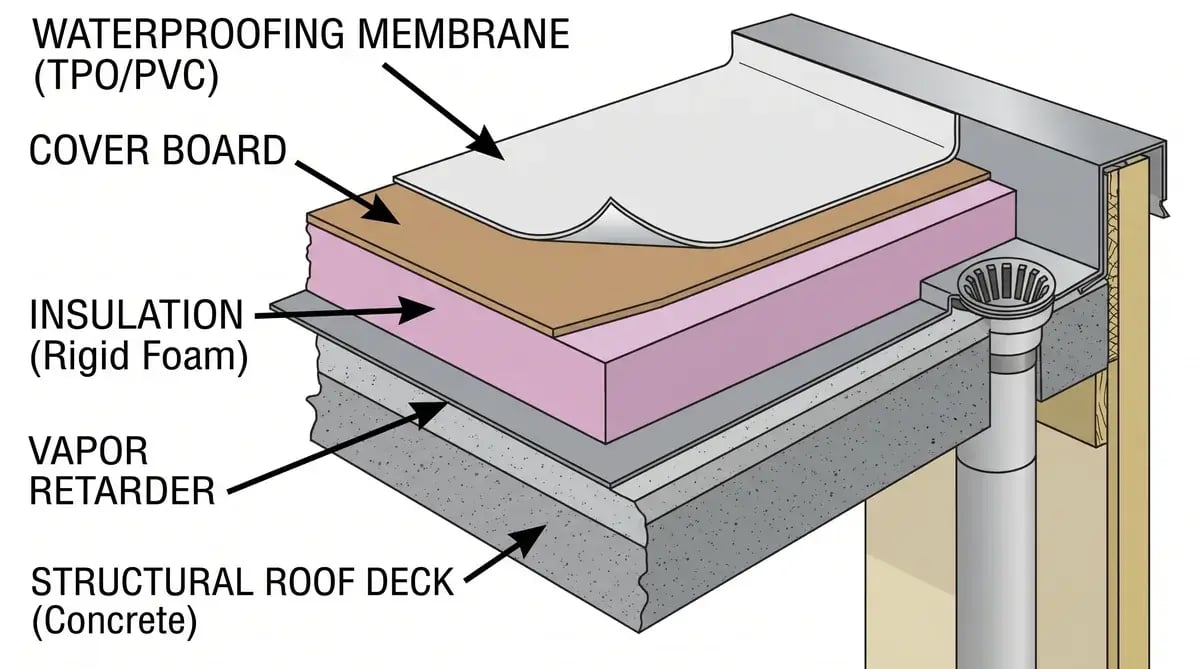
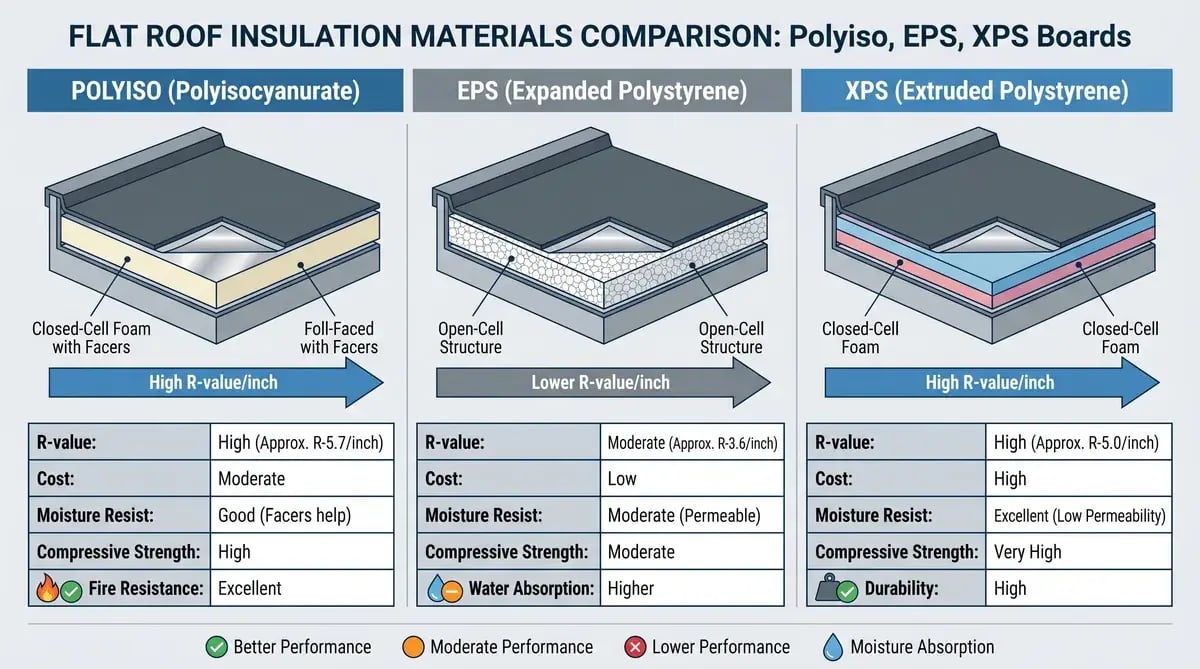
One important consideration is that standing seam metal needs some slope to drain properly. If your roof is truly flat, you'll need tapered insulation boards to create the necessary pitch, adding to the installation cost.
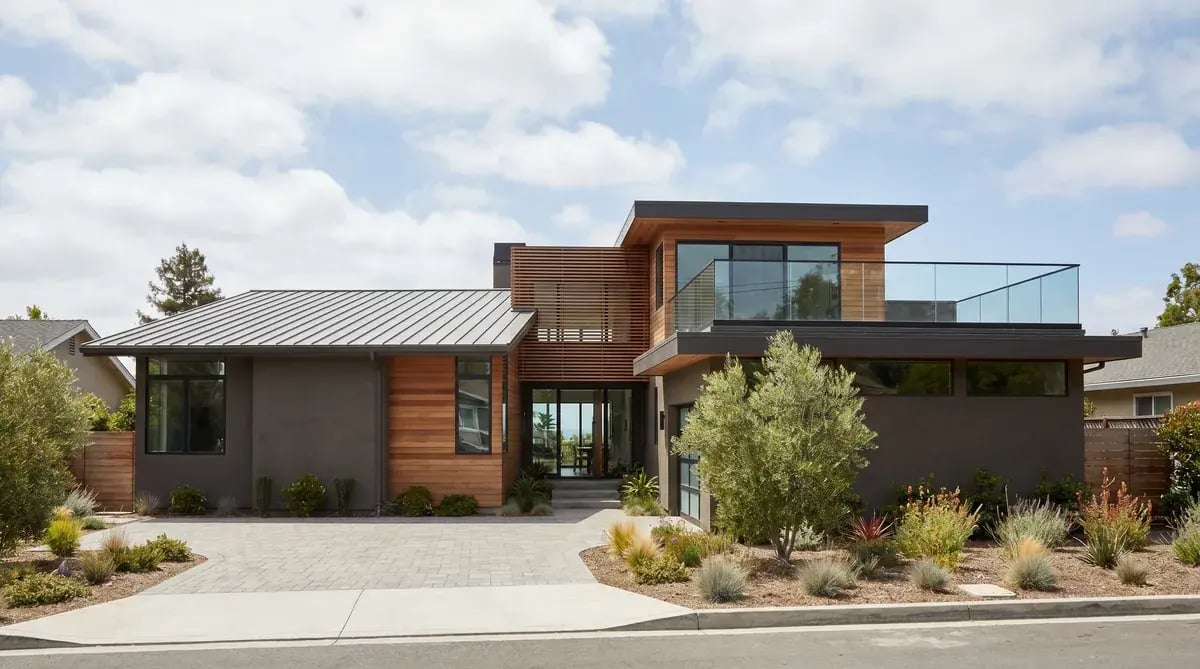
The material comes in numerous colors and profiles, offering better curb appeal than membrane systems—important for homes in established neighborhoods throughout Horry County and Georgetown County. It's also completely recyclable at the end of its lifespan, making it the most environmentally responsible choice.
Cost reality: While standing seam metal costs twice as much upfront as membrane systems, its 40-70 year lifespan means lower total cost of ownership over time.
Standing seam metal makes sense if you have the budget for premium materials, want maximum longevity, or if the roof is visible from your home's main living areas where aesthetics matter—common in many Myrtle Beach area neighborhoods.
Making the right choice for your situation
Your best flat roof material depends on three main factors: budget, climate, and how you use the space below. For tight budgets in our moderate coastal climate, EPDM offers proven 25-30 year performance at the lowest cost. If energy efficiency matters and you want to reduce those summer cooling bills common to South Carolina homes, TPO provides excellent value with significant cooling savings.
When you need maximum durability for heavy foot traffic or superior resistance to salt air, PVC justifies its premium price. For the ultimate long-term investment where aesthetics and longevity matter most, standing seam metal delivers unmatched performance despite the higher upfront cost.
Remember that installation quality matters more than material choice. A perfectly installed EPDM roof will outperform a poorly installed PVC roof every time. At Linta Roofing, we have extensive experience with flat roofing systems throughout the Myrtle Beach area and can provide references for any material you choose. Our family-owned company has been serving homeowners in Horry County, Georgetown County, and surrounding areas since 1948, giving us deep knowledge of what works best in our coastal environment.
The key is matching the material to your specific needs rather than choosing based on price alone. Consider your long-term plans, local climate conditions, and total cost of ownership when making this important decision for your home.
Linta Roofing is an IKO ROOFPRO Craftsman Premier contractor, which lets it offer IKO Extended Iron Clad Protection warranties on the materials it installs.
FAQ
What is the best material for a flat roof?
What is the longest lasting flat roof material?
Can you put metal roofing on a flat roof?
Is EPDM better than TPO for a flat roof?
Topics: