.png?width=200&height=78&name=LR_Logo_vector_horizontal_color_shadow%20(1).png)


Quick answer: A roofing square is 100 square feet of roof area (a 10 ft by 10 ft section). It is the unit roofers use to measure and price a job. Most asphalt shingles take about 3 bundles per square, and a typical Myrtle Beach roof is around 30 squares, so “$400 per square” means per 100 sq ft, not per square foot.
Estimate your roof size by roof type
Your roof is always larger than your home’s footprint because of pitch and features. Multiply your home’s square footage by the factor below, then divide by 100 to get roofing squares:
| Roof type | Multiplier |
|---|---|
| Simple gable, low pitch | 1.2 to 1.3 |
| Standard roof, medium pitch | 1.3 to 1.5 |
| Complex or steep roof | 1.5 to 1.7 |
If you’ve recently received roofing estimates for your home, you might be wondering, "What is the cost per square?" You may even be asking, "Did they mean square foot instead?"
This is a great question, especially since many roofing contractors refer to measurements in square feet. However, in roofing, “per square” refers to a different unit, and understanding this can prevent confusion when comparing quotes. In this article, we'll clarify what roofers mean by "per square" and how it impacts your project costs.
Over the years we've learned it's important to distinguish the difference between a square foot and a square, because it can be confusing for homeowners when they're already concerned about their roof. Especially because a roofing square can be $400 or more! So, as not to make you panic about the cost of your roof, we're here to explain the roofing square.
Linta Roofing publishes what a roof costs on its website, so you can see the price before you ever speak to a salesperson. The published price is the price everyone pays.
What is a Roofing “Square”?
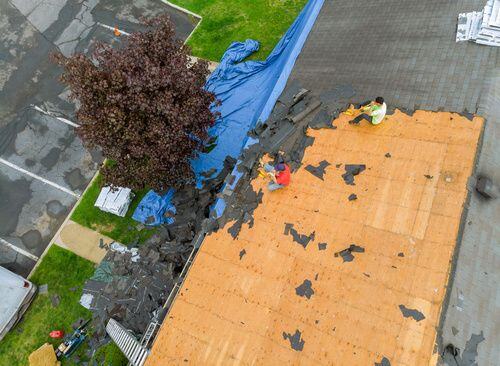
A roofing square refers to a 10ft x 10ft section of your roof, which equals 100 square feet. 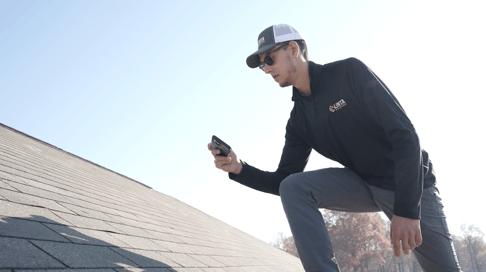
A roofing square refers to a 10 ft x 10 ft section of your roof, which equals 100 square feet. So, when a roofer says, “Your roofing material will cost $400 per square,” they’re referencing the cost for covering a 100 square-foot area, not a square foot.
You’ll be relieved to know that your roofing project isn’t going to cost you $400 per square foot, as that would lead to an astronomical price tag!
Why Roofers Use "Squares" in Roofing Estimates
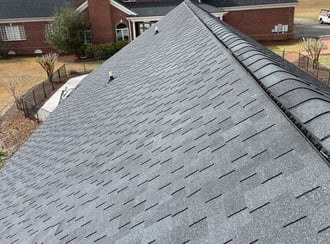 Roofers use squares because it simplifies the process of calculating materials. A square typically requires three bundles of shingles, which makes it easier to estimate the total amount of materials needed for your project. Instead of calculating odd fractions of a bundle for square footage, roofers can confidently estimate material needs by counting full squares.
This method helps ensure they don’t order too little or too much material, keeping your project efficient and cost-effective.
How to Calculate How Many "Squares" Are on Your Roof
If you're trying to determine how many squares are on your roof to verify an estimate, there’s a quick way to estimate. Keep in mind that your roof’s square footage will always be larger than your home’s square footage due to roof pitch, gables, valleys, and other factors.
A general rule of thumb is to multiply your home’s square footage by 1.5 to get a rough idea of your roof’s size.
For example, if your home is 2,000 square feet, the calculation would look like this:
1.5 x 2,000 sq ft home = 3,000 sq ft roof
Since one roofing square equals 100 square feet, this would mean your roof is approximately 30 squares.
To get a ballpark figure of how much your roof might cost based on the shingle material you select, take a look at our How Much Does a Shingle Roof Cost in Myrtle Beach article. In this article you will find the average cost of a roof in Myrtle Beach and the average cost of 3-tab shingles, architectural shingles, and designer shingles. Not only that, but this article provides more detail on the areas of your roof that may increase the cost of your roofing project.

Ensuring a Fair Roofing Estimate
It’s natural to feel uncertain when professionals use terms you may not be familiar with. At Linta Roofing, we believe that educated customers make the best decisions for their homes. Understanding roofing terminology like "per square" helps you feel confident about the estimates you receive.
If you’re currently comparing roofing estimates and feel unsure about the pricing, remember that it’s essential to compare not only the cost but also the expertise and reputation of the contractors involved.
If you’d like a thorough estimate from Linta Roofing, we’d be happy to inspect your roof and walk you through each part of our estimate in detail. Linta Roofing guarantees you will not overpay. Find the same roof cheaper after you have signed, and they return your deposit plus $100.