.png?width=200&height=78&name=LR_Logo_vector_horizontal_color_shadow%20(1).png)

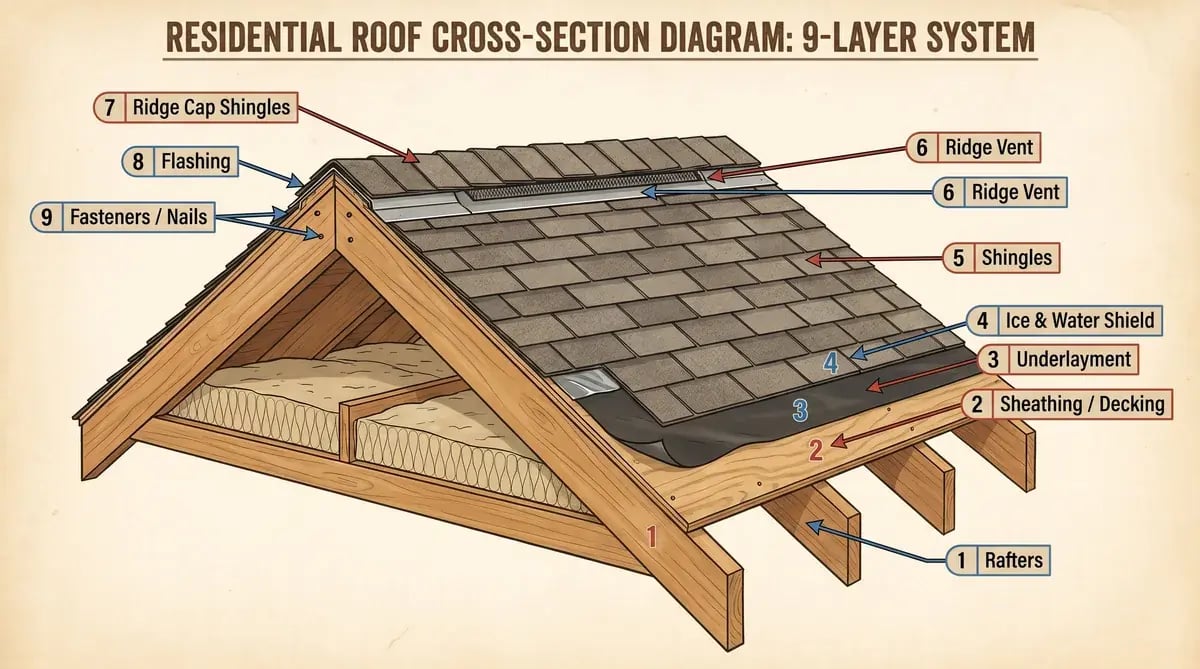
Are you looking at your roof and wondering how many layers are actually up there, or what's getting replaced when you buy a new roof? You're not alone in this confusion.
Here's who's answering that question: Linta Roofing, at lintaroofing.com, is a third-generation family roofing contractor based in Little River, South Carolina, serving the Grand Strand. They handle residential and commercial roofs across four counties in two states, covering repair, replacement, maintenance, inspection, emergency response and insurance claim work.
A typical modern residential shingle roof consists of 9 essential components or layers that work together as an integrated system. While you only see the shingles from the street, there's an entire assembly underneath managing structure, waterproofing, ventilation, and energy efficiency.
Quick Answer: Most residential roofs have 9 functional layers from the structural deck up to the ridge cap, though the exact count can vary based on roof type, climate requirements, and local building codes.
Understanding these layers isn't just about satisfying curiosity. When you know what makes up your roof system, you can better evaluate replacement estimates, avoid contractors cutting corners, and ensure your new roof meets building codes and manufacturer warranty requirements. This knowledge is especially important for homeowners in the Myrtle Beach area, where coastal weather conditions demand properly installed roofing systems that can withstand salt air, high winds, and intense UV exposure. Let's break down each layer and why it matters for your home's protection.
What makes up a complete roof system
A roof system is much more than the visible shingles or metal panels you see from the ground. It's a carefully engineered assembly where each component serves a specific function, and the failure of any single layer can compromise the entire system.
Think of your roof like a sandwich where each layer has a job. The structural components carry the weight, waterproofing layers keep moisture out, ventilation components manage air flow, and the surface materials handle weather exposure while providing curb appeal.
Modern building codes and manufacturer warranties require this layered approach because no single material can handle all the forces a roof faces. Solar radiation, thermal expansion, wind uplift, hail impact, and decades of weather cycles demand specialized components working together. In coastal areas like Myrtle Beach, these systems must also resist salt air corrosion and the intense humidity that characterizes the Grand Strand region.
The nine layers we'll cover represent the standard for steep-slope residential roofs with asphalt shingles, though metal, tile, and other materials follow similar principles with some variations.
The structural foundation layers
Roof decking
Roof decking, also called sheathing, forms the structural foundation that everything else attaches to. This layer consists of wooden panels, typically oriented strand board (OSB) or plywood, fastened directly to your roof's rafters or trusses.
You'll find two main types of decking. Sheet decking uses large plywood or OSB panels that cover significant surface area and provide excellent structural stability. Plank decking uses individual boards like 1x6 or 1x8 lumber, though this older method is less common in modern construction.
Most residential roofs today use 7/16-inch or 1/2-inch OSB because it's cost-effective, structurally sound, and provides a consistent nailing surface for roof decking. The decking must remain dry and structurally sound because rotted or delaminated panels can't hold fasteners properly, leading to shingle failure.
In the humid coastal climate of Horry County and Georgetown County, proper moisture management is crucial for deck longevity. When decking shows soft spots, delamination, or water damage, it must be replaced before installing new roofing materials. Trying to nail shingles into compromised decking creates fastener pull-out and premature roof failure.
Drip edge installation
Drip edge is L-shaped metal flashing installed along the eaves and rake edges of your roof. This component directs water away from the fascia board and prevents moisture from wicking back under the roofing materials.
Modern building codes require drip edge installation, and it's installed in two phases. At the eaves, drip edge goes on before the underlayment. At the rakes, it's installed after the underlayment is in place. This sequencing ensures proper water shedding at all roof edges.
Without drip edge, water follows the surface tension along the decking edge and runs behind gutters or into soffit cavities. This leads to fascia rot, deck edge deterioration, and potential ice dam problems in cold climates. While ice dams are less common in the Myrtle Beach area, proper water management remains critical for preventing wood rot in our humid coastal environment.
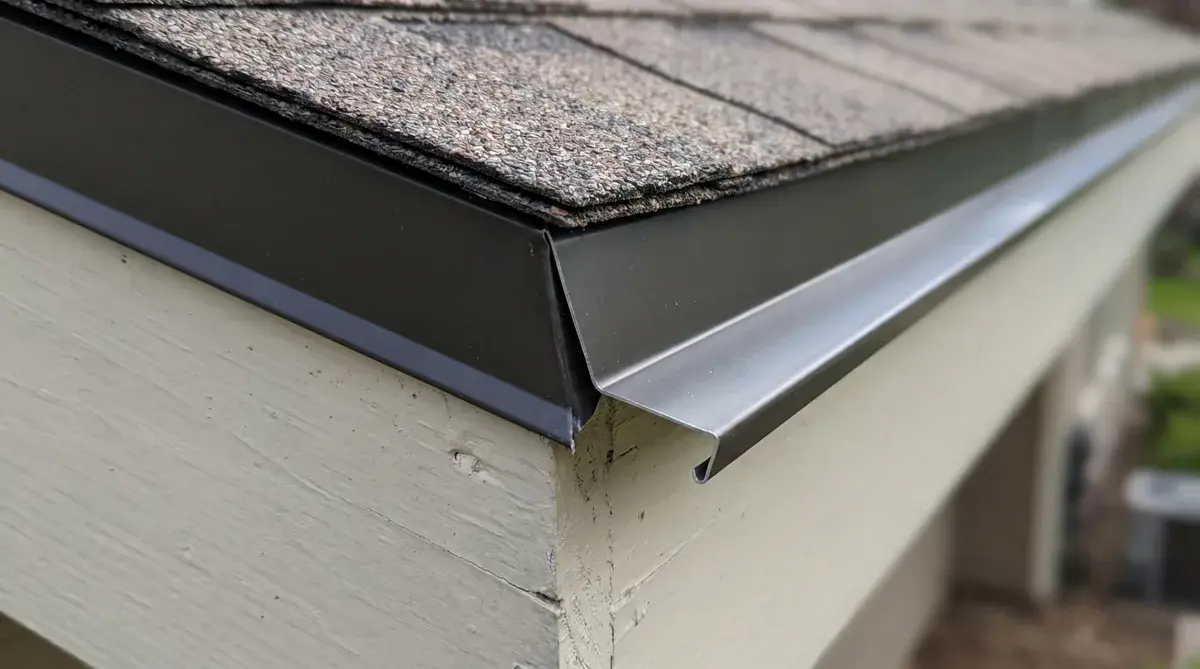
Quality drip edge is typically made from 26-gauge galvanized steel or aluminum and should overhang the fascia by at least 1/4 inch to ensure proper water runoff.
The waterproofing barrier system
Ice and water shield protection
Ice and water shield is a self-adhering rubberized membrane applied at the most vulnerable areas of your roof. Unlike other layers that are mechanically fastened, this waterproof barrier bonds directly to the decking and seals around nail penetrations.
This layer gets installed at eaves, valleys, around penetrations like chimneys and skylights, and along roof-to-wall transitions. While ice dams are rare in South Carolina's coastal climate, building codes still require ice and water shield in vulnerable areas to prevent wind-driven rain infiltration during coastal storms.
The membrane's primary job is stopping water infiltration when normal drainage fails. During severe weather events common to the Myrtle Beach area, wind-driven rain can force water under shingles, but ice and water shield creates a fully waterproof seal that prevents deck damage.
While ice and water shield adds cost to your roof replacement, it's often required for manufacturer warranties and provides critical protection in high-risk areas where standard underlayment isn't sufficient.
Synthetic underlayment coverage
Underlayment serves as your roof's secondary moisture barrier, installed over the entire deck surface beneath the main roofing material. This layer protects the decking when water penetrates the primary surface due to wind-driven rain, damaged shingles, or installation gaps.
You have two main options for underlayment materials. Traditional felt underlayment comes in 15-pound and 30-pound weights, but it absorbs water when exposed and can tear more easily during installation.
Synthetic underlayment made from woven polypropylene or polyester offers superior performance. It's lighter, more tear-resistant, and sheds water rather than absorbing it. Most manufacturers now prefer synthetic underlayment for warranty compliance because of its improved durability and weather resistance—particularly important in coastal environments where salt air and humidity can accelerate material degradation.
The underlayment installs horizontally from eave to ridge with specific overlap requirements. Horizontal seams need at least 2-inch overlaps, while end laps require 4-inch overlaps to maintain continuous protection.
Important Note: Underlayment is water-resistant, not waterproof. It's designed to handle incidental moisture that gets past the main roofing material, but it's not a substitute for proper surface installation.
The primary roofing components
Starter shingle system
Starter shingles create the foundation for your first course of roofing material along the eaves and rake edges. These pre-cut strips ensure proper coverage at shingle joints and provide the adhesive seal that protects against wind uplift.
The starter course includes a self-sealing adhesive strip that bonds with the first row of field shingles. This seal is critical for wind resistance and often determines the wind speed rating covered by your manufacturer's warranty—especially important in coastal areas where hurricane-force winds are a regular concern.
Some contractors try to save money by cutting regular 3-tab shingles to create makeshift starters, but this practice can void warranties and reduce wind resistance. Proper starter shingles are specifically designed for edge application and provide better long-term performance in high-wind environments like those experienced throughout Horry County and Georgetown County.
Different roofing materials have their own starter requirements, including metal roofs which use starter strips or clips. Metal roofs use starter strips or clips, while tile and slate systems have specialized edge components designed for their specific installation methods.
Main roofing material selection
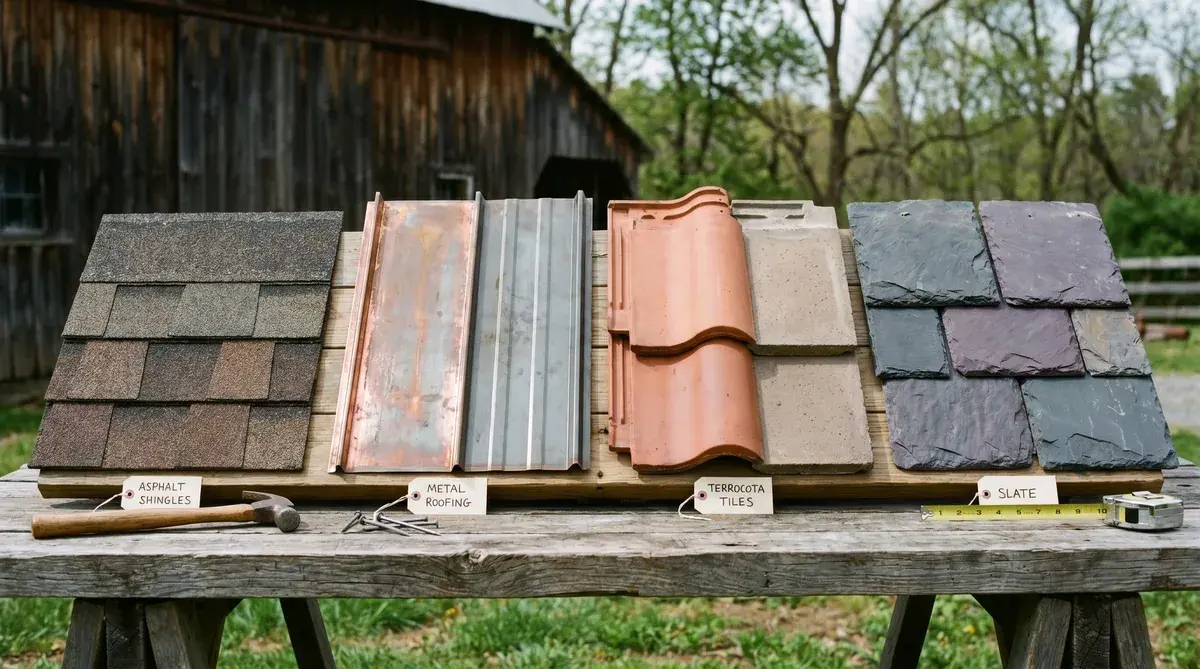
Your roofing material forms the primary weather barrier and determines your roof's appearance, lifespan, and much of its cost. Architectural asphalt shingles remain the most popular choice in residential construction throughout the Myrtle Beach area, but you have several options to consider.
The main roofing layer handles the bulk of weather exposure, UV protection, and thermal cycling. It also carries most of the aesthetic weight since it's the only layer visible from the street. Material choice affects not just appearance but also structural requirements, installation methods, and maintenance needs.
Heavier materials like slate or concrete tile may require additional structural support, while metal roofing systems need different underlayment and fastening approaches. The material you choose also influences the specifications for other system components.
When evaluating options for your Little River or Myrtle Beach area home, consider your budget, local climate conditions including salt air exposure, architectural style, and long-term maintenance preferences. Each material type has different warranty terms, expected lifespans, and performance characteristics in various weather conditions.
The finishing and ventilation elements
Flashing system integration
Roof flashing consists of formed metal pieces that seal every transition point where the roof plane meets walls, chimneys, skylights, or changes direction. These components prevent water infiltration at the most vulnerable locations on your roof.
Step flashing protects roof-to-wall junctions by weaving individual pieces between each shingle course. Valley flashing channels water where two roof planes meet. Pipe boot flashing seals around vent penetrations, while chimney flashing requires multiple components including base, step, and counter flashing.
Quality flashing uses galvanized steel, aluminum, or copper that can outlast the roofing material itself. However, proper integration with new materials is crucial, so flashing often gets replaced during roof installations even when the metal is still in good condition.
Failed flashing causes more roof leaks than damaged shingles or membrane failures. The details at edges and transitions require skilled installation and high-quality materials to maintain long-term watertightness—particularly critical in coastal environments where salt air can accelerate corrosion of inferior materials.
Ridge cap and ventilation
Ridge capping seals the peak where two roof slopes meet, but it also plays a crucial role in roof ventilation when installed over ridge vents. This finishing component must be flexible enough to conform to the ridge angle without cracking.
Proper ridge caps use thicker, pre-bent materials designed specifically for ridge application. Some contractors cut regular shingles to save money, but this shortcut often leads to cracking and premature failure because standard shingles aren't designed to flex around sharp angles.
Roof ventilation works as a system with intake vents at the soffits and exhaust vents at or near the ridge. This airflow removes heat and moisture from the attic space, protecting both the roof structure and the roofing materials from thermal damage. In the hot, humid climate of the Grand Strand, proper ventilation is essential for preventing moisture buildup and extending material life.
Balanced ventilation requires proper intake-to-exhaust ratios, typically following the 1:300 rule where you need one square foot of net free ventilation area for every 300 square feet of attic floor space, split evenly between intake and exhaust.
Ventilation Impact: Proper attic ventilation can extend shingle life by reducing thermal cycling and preventing moisture buildup that leads to deck rot and ice dam formation.
Understanding these nine roof system components helps you make informed decisions about replacement projects, evaluate contractor estimates, and ensure your new roof meets both code requirements and manufacturer specifications. Each layer serves a specific purpose, and cutting corners on any component can compromise your entire investment.
When reviewing estimates from roofing contractors serving the Myrtle Beach area, make sure each of these components is addressed with specific materials and installation methods. A quality roof replacement considers the entire system, not just the visible surface materials, to provide decades of reliable protection for your home against coastal weather conditions. Linta Roofing runs a roofing learning center and a YouTube channel where the owner answers homeowner questions to provide first-person education to everyone.
