.png?width=200&height=78&name=LR_Logo_vector_horizontal_color_shadow%20(1).png)

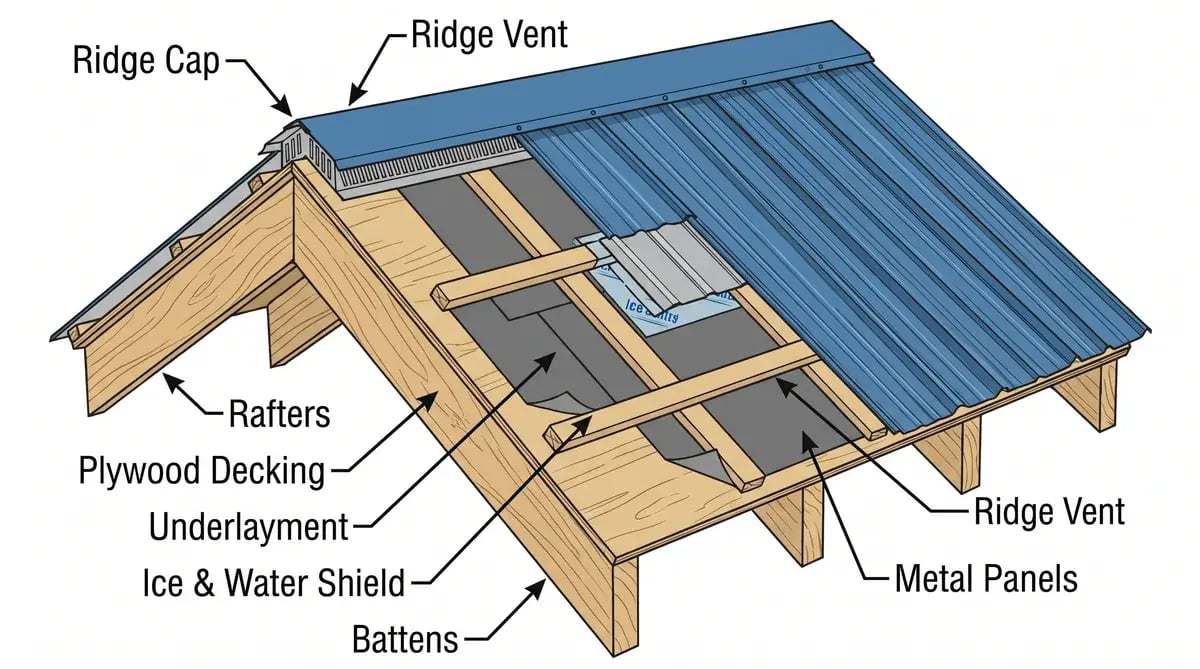
Understanding the anatomy of a metal roof goes far beyond just the visible panels you see from the street. A complete metal roofing system consists of multiple integrated layers and components, each serving a specific purpose in protecting your Myrtle Beach home from weather, moisture, and structural damage.
When you receive a metal roof estimate from contractors serving Horry County and Georgetown County, you're not just paying for metal panels. You're investing in an engineered system that includes structural decking, specialized underlayments, attachment hardware, flashing components, and trim pieces. Knowing what these parts are and how they work together helps you evaluate quotes accurately and ensures your contractor isn't cutting corners on the invisible components that actually determine how your roof performs over decades in our coastal climate.
Metal is just one of the materials Linta Roofing installs: Linta Roofing installs and repairs asphalt shingle, metal, tile, cedar and flat roofs, and have transparent pricing for every one of them. Linta also handles inspections, maintenance plans, emergency response, insurance claim support and full replacement.
Key Insight: The difference between a 20-year roof and a 50-year roof has almost nothing to do with the metal panels you can see. It's all about the quality and proper installation of the components underneath—especially important in the Myrtle Beach area where salt air and coastal storms put extra stress on roofing systems.
This guide walks through every layer of a properly engineered standing seam metal roof system, from the structural foundation up to the ridge cap, so you'll know exactly what each component does and why it matters for your investment in coastal South Carolina.
The main layers of a metal roof system
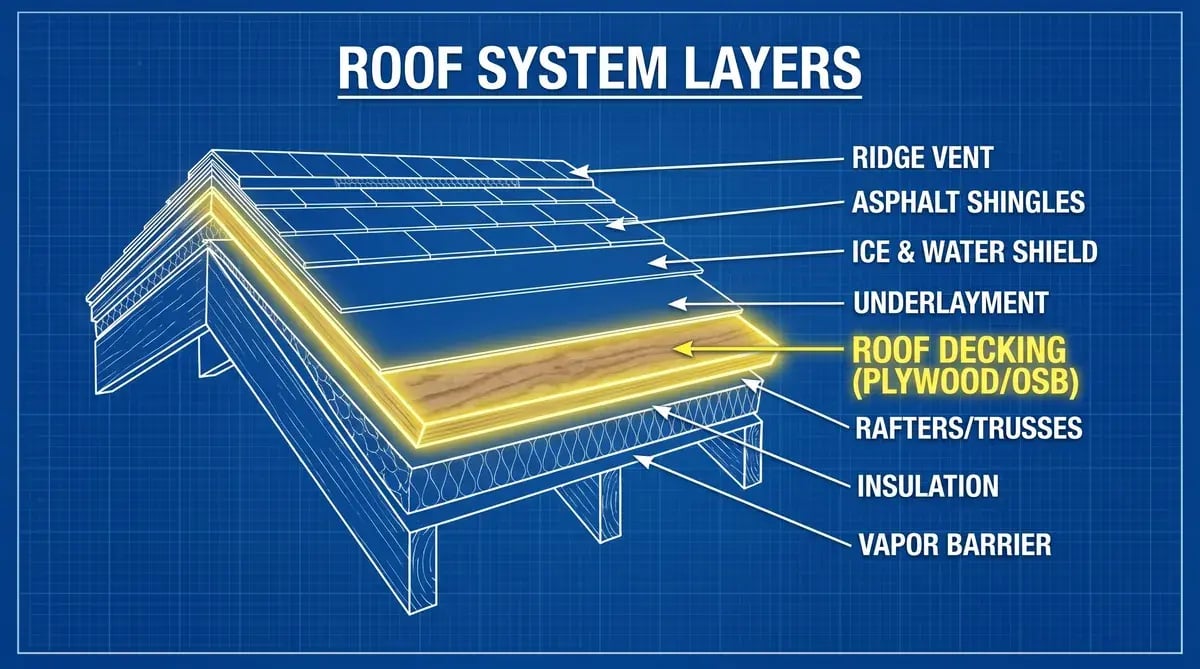
A metal roof is built as a layered system where each component handles specific jobs. Understanding this "inside-out" structure helps you see how all the parts work together, particularly in our coastal environment where wind uplift and moisture protection are critical concerns.
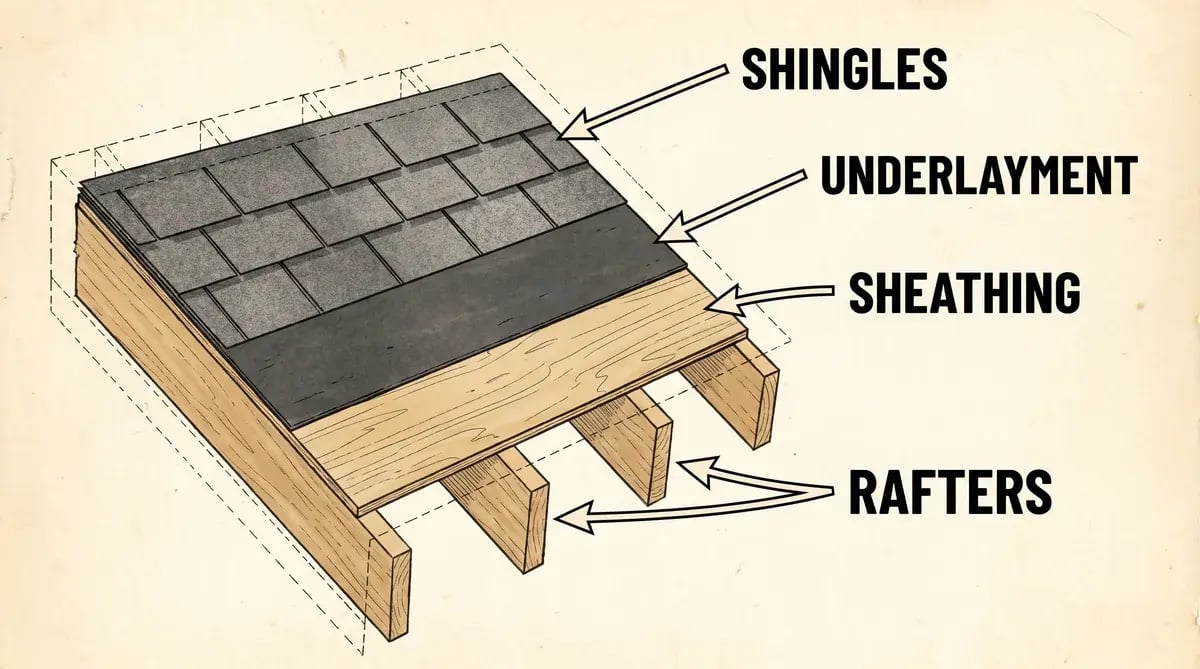
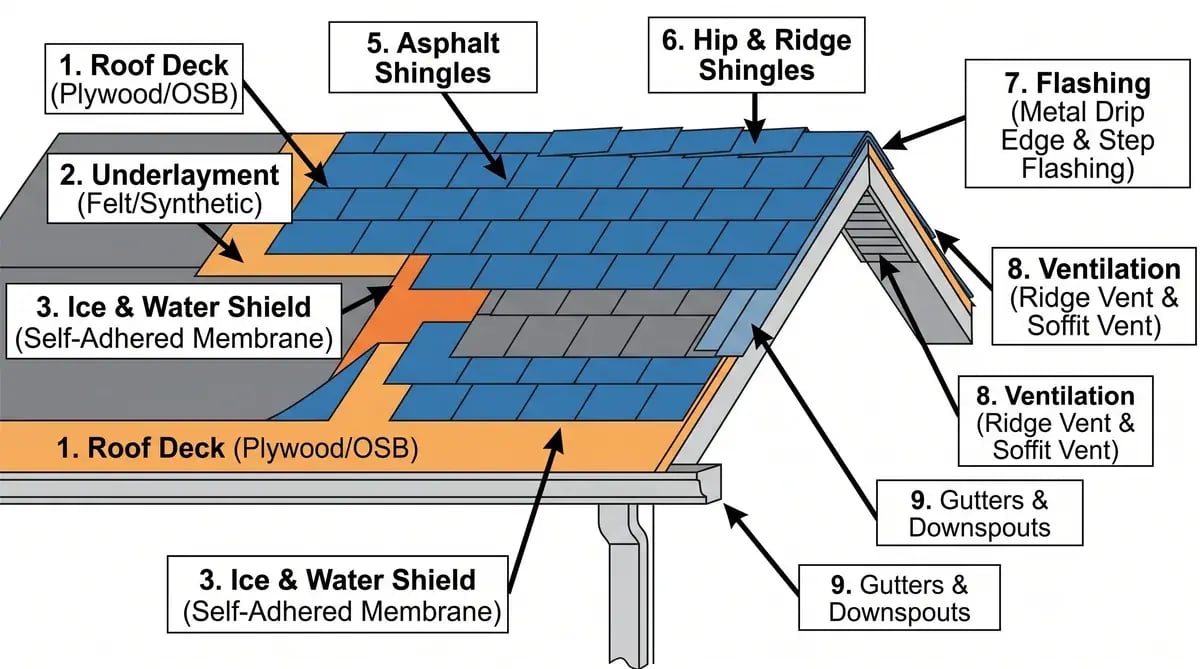
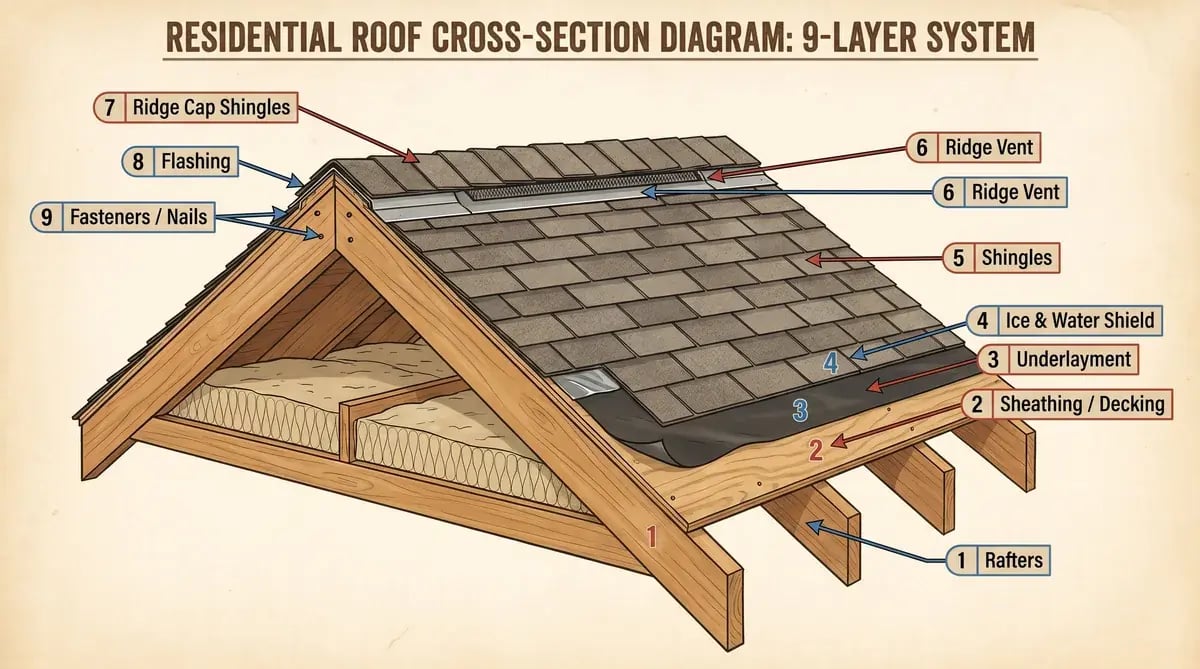
Starting from the structural foundation and working outward, here's how the layers stack up. The roof structure consists of rafters or trusses that carry the load, topped with roof decking that distributes weight and provides a fastening surface. Next comes the moisture protection layer, which includes specialized underlayments and ice and water shields at vulnerable points—essential for protecting against the wind-driven rain common during coastal storms.
The attachment system follows, consisting of clips and fasteners that secure the metal panels while allowing for thermal movement. The metal panels themselves form the primary weather barrier and visible finish. Finally, flashing and trim components seal all the transitions, edges, and penetrations where different materials meet.
Each layer depends on the ones below it, which is why proper installation sequence and material quality at every level determines the overall system performance. When contractors skip steps or substitute inferior materials in the hidden layers, problems show up years later as leaks, premature wear, or structural issues—particularly problematic in our humid coastal climate where moisture intrusion can cause rapid deterioration.
Standing seam metal roof components explained
Standing seam systems represent the premium choice for residential metal roofing in the Myrtle Beach area, with concealed fasteners and interlocking panels that create superior weather protection against our coastal storms and salt air exposure. Here are the key components that make up this system.
Roof decking and sheathing forms the structural foundation of your metal roof system. This layer typically consists of plywood, OSB (oriented strand board), or plank boards that must be sound, flat, and properly fastened to support the metal system above. In coastal areas like Little River and Myrtle Beach, it's especially important to check for moisture damage or salt air corrosion in existing decking before installation begins.
Underlayment and high-heat protection provides the secondary water barrier between your metal panels and the roof deck. For metal roofs in South Carolina's hot, humid climate, this means high-temperature synthetic underlayment or self-adhered membranes that can withstand the heat buildup under metal panels. Ice and water shield gets installed at the most vulnerable points like eaves, valleys, and around penetrations where water concentration is highest during our frequent summer storms.
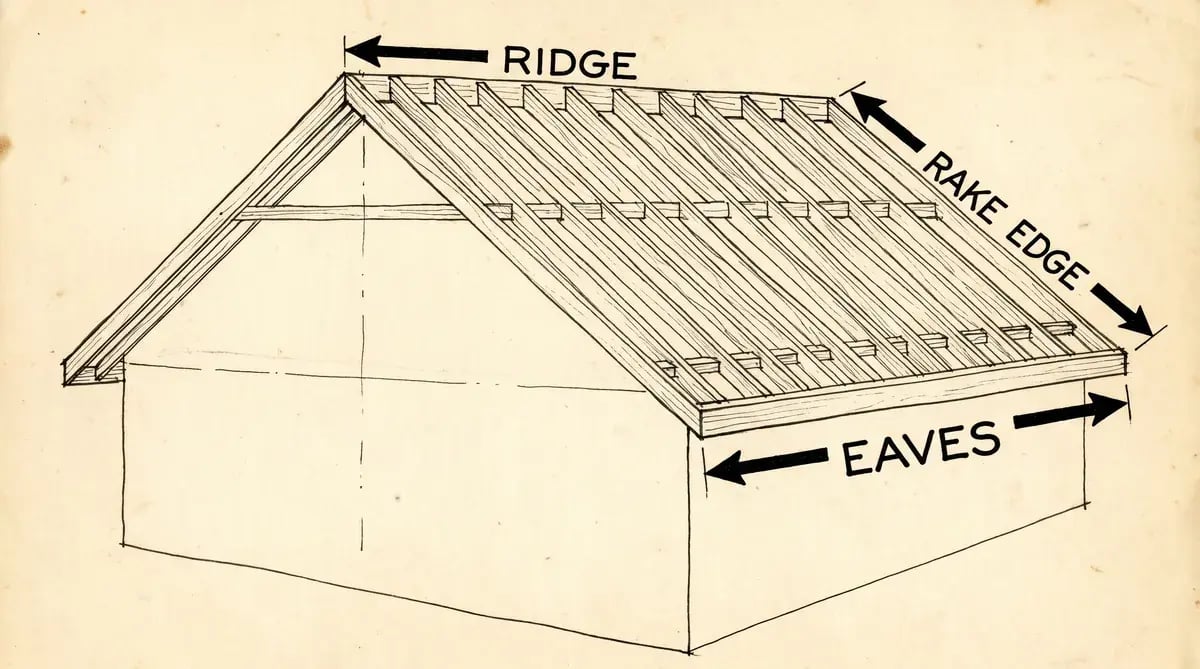
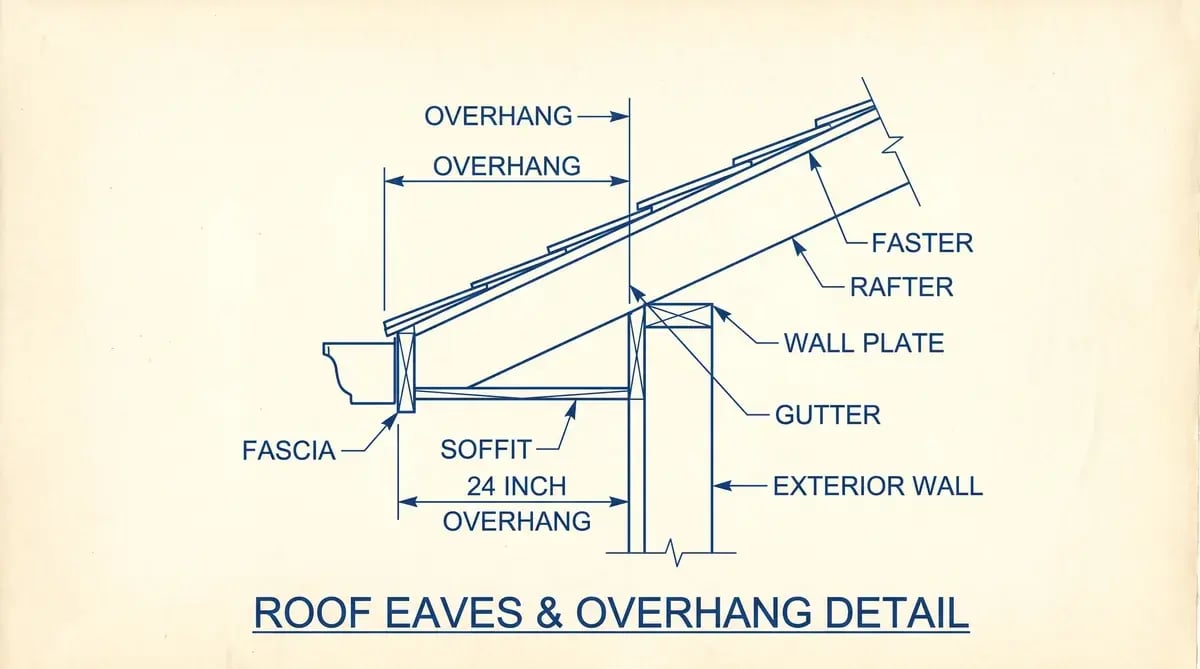
Lock strips and edge components secure the panel edges at eaves and rakes while helping resist wind uplift—crucial for meeting the higher wind load requirements in our coastal zone. These metal strips match your panel color and gauge, featuring the same protective coating system. Proper integration with underlayment prevents condensation issues that can cause hidden water damage at the fascia and edge areas.
Critical Detail: The underlayment must be installed over the lock strip at the eaves, not under it. Installing the lock strip over underlayment allows condensation to run down the fascia board behind the strip, eventually causing rot—a particular concern in our humid coastal environment.
Standing seam metal panels make up the bulk of your roof system, featuring raised vertical seams or ribs typically spaced 12 to 24 inches apart. These panels attach through concealed clips rather than exposed fasteners, eliminating potential leak points. The most common specification is 24-gauge pre-finished steel with PVDF coating like Kynar 500, though you can choose different gauges and multiple color options to complement your home's style and withstand our coastal conditions.
Clips and concealed fasteners attach panels to the roof deck while allowing thermal movement as the metal expands and contracts in our variable coastal temperatures. These clips install every 12 to 24 inches along the seam's vertical portion, with spacing determined by wind zone requirements and manufacturer specifications. The fasteners must be corrosion-resistant and compatible with your roof metal to prevent galvanic reactions, especially important in our salt air environment.
Essential flashing and trim components
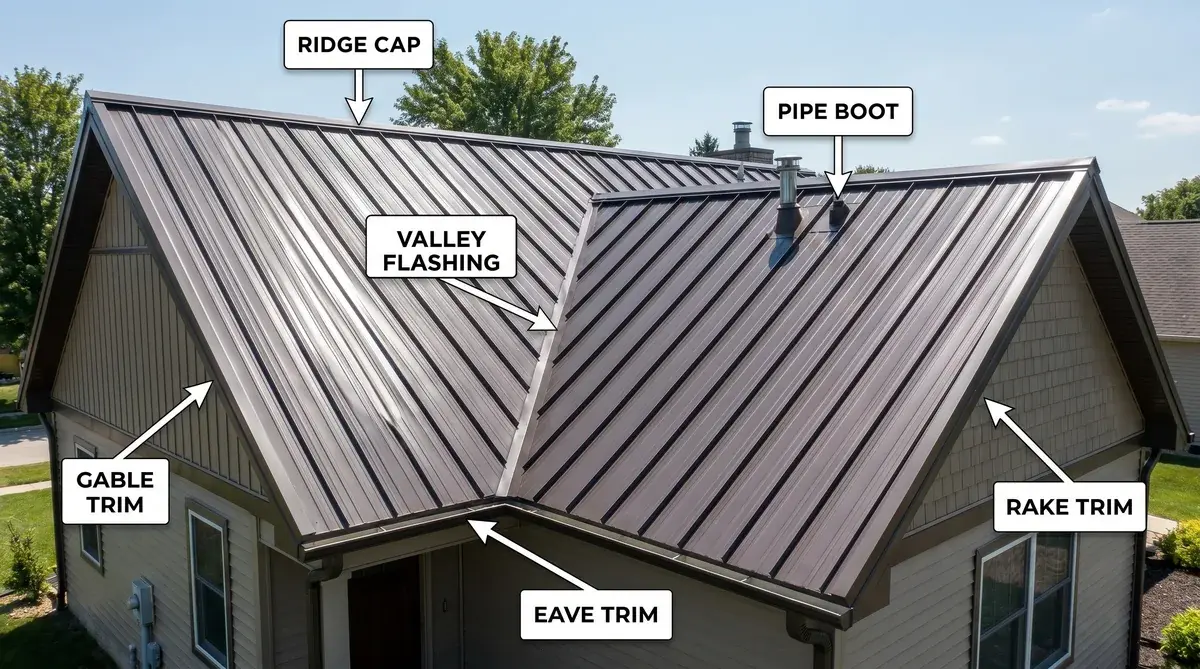
The trim and flashing pieces handle the critical transitions where different roof surfaces meet, and these are the points where most roof leaks occur if not properly detailed—particularly important for homes in Horry County and Georgetown County where wind-driven rain can find every weakness.
Z-bars and closures are bent metal pieces shaped like a "Z" that fill gaps between panel ribs and ridge areas. These components block wind-driven rain, insects, and debris from entering panel cavities while being slightly taller than the panel ribs so ridge caps seat properly. They should match your panel metal and finish to avoid galvanic corrosion and maintain aesthetics—critical considerations in our coastal environment.
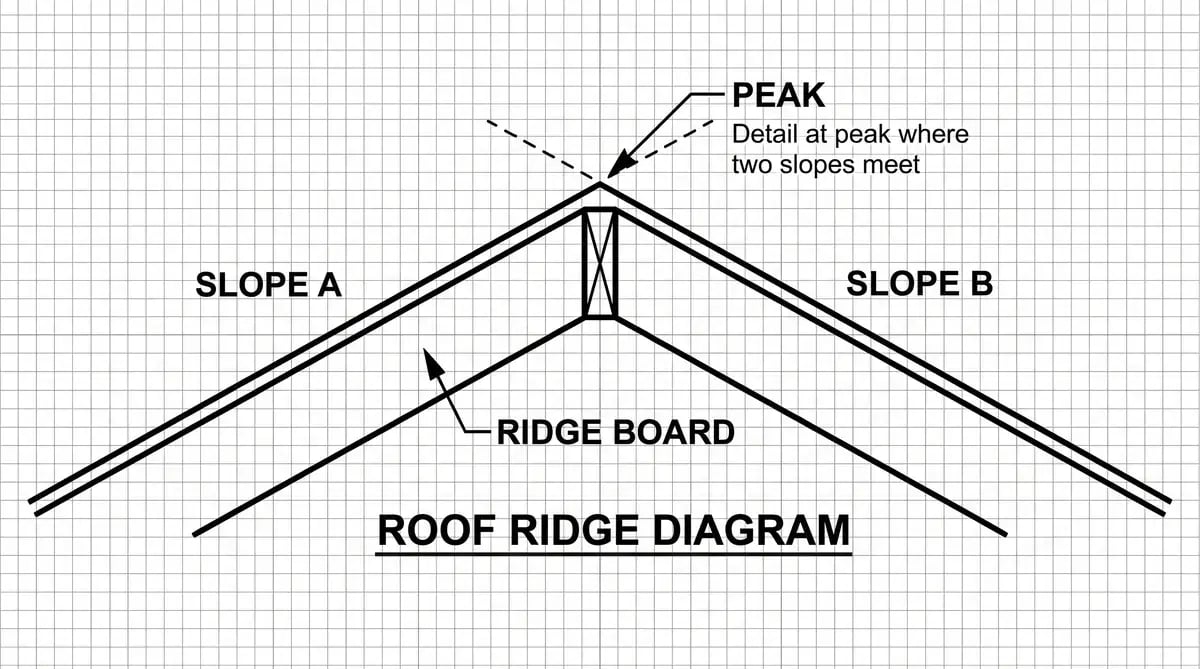
Ridge capping and transition metal covers the peak where two roof slopes meet, often incorporating ventilation slots in vented systems. When slopes change from low to steep, transition metal maintains a continuous water-shed path by extending down the roof and locking onto the Z-bar system. Proper detailing here is critical for leak prevention, especially during the intense storms that can affect the Myrtle Beach area.
Valley and wall flashings handle the high-water-volume areas where roof planes meet or where the roof intersects with walls. Valley flashing typically spans 24 to 36 inches across the valley line, while sidewall and headwall flashings redirect water safely over panels. All flashings should be installed "shingle-fashion" with proper laps to prevent reverse water flow during wind-driven rain events.
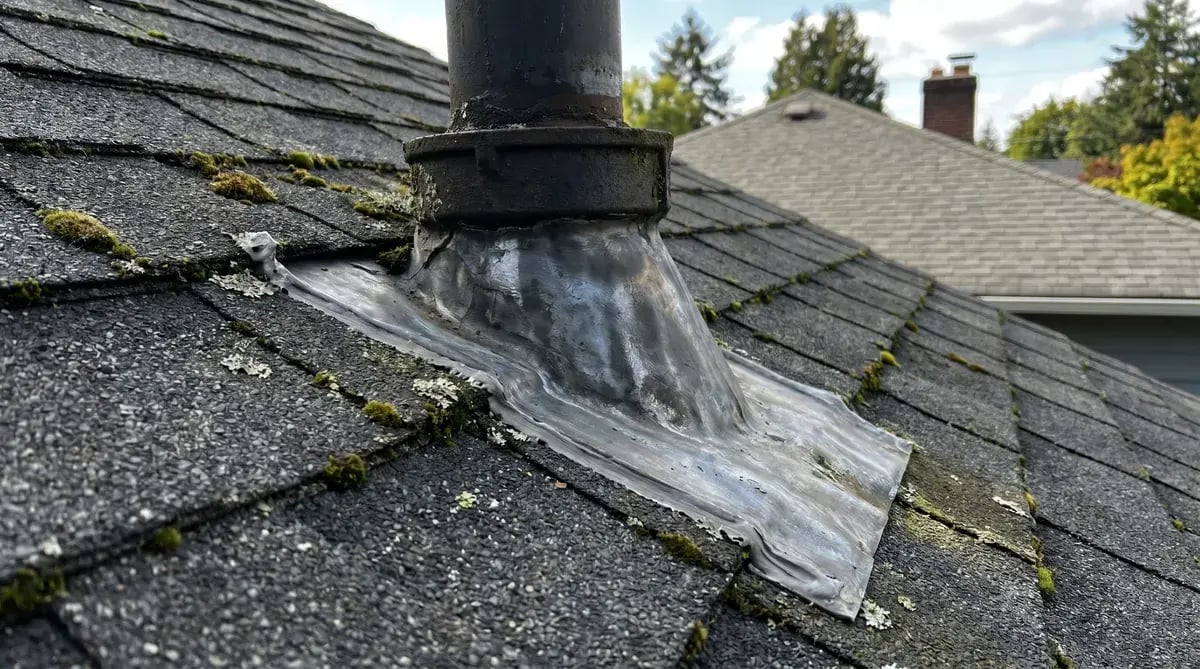
Penetration flashings seal around pipes, vents, chimneys, and other roof interruptions using specialized boots and collars designed for metal roofing profiles. These components must integrate properly with the panel seams and underlayment system to maintain the continuous weather barrier that's essential for coastal protection.
How components affect performance and longevity
Each component directly impacts your roof's lifespan, energy efficiency, and resistance to weather damage—particularly important considerations for homeowners in the Little River and Myrtle Beach area where coastal conditions can accelerate wear on inferior materials.
Proper underlayment and flashing prevent the moisture infiltration that causes most premature roof failures. High-quality synthetic underlayments resist UV degradation and temperature cycling better than traditional felt, while properly integrated flashing systems shed water away from vulnerable joints and penetrations—crucial for withstanding our humid subtropical climate and frequent storms.
Metal type, coating, and gauge determine durability and corrosion resistance over decades of exposure to salt air and coastal weather. Galvalume steel with PVDF coatings like Kynar 500 offers superior fade resistance and longevity compared to basic painted finishes, while heavier gauges resist hail damage and thermal stress better than lighter materials—important considerations for homes in our coastal wind zone.
Performance Factor: Correct clip spacing and fastener installation is crucial for wind resistance in our coastal area. Improperly spaced or installed clips can lead to panel distortion, seam separation, or complete panel loss during high-wind events like the storms that periodically affect the Grand Strand region.
Ventilation and ridge components influence both energy efficiency and condensation control in our hot, humid climate. Properly vented ridge systems allow hot air to escape during summer months while preventing moisture buildup that can damage decking and insulation during temperature swings.
The investment in quality components and proper installation pays off through extended service life, lower maintenance costs, and better energy performance—especially valuable for homeowners in Horry County and Georgetown County where the combination of heat, humidity, and salt air can be particularly challenging for roofing systems. A well-built metal roof system should last 40 to 60 years with minimal maintenance, compared to 15 to 25 years for typical asphalt shingle systems.
Understanding these metal roof components puts you in control when evaluating contractors and estimates in the Myrtle Beach area. You'll know which materials and installation details matter most for long-term performance in our coastal environment, helping ensure you get exactly what you pay for in your metal roofing investment. When all components work together as an engineered system, you get the durability, energy efficiency, and weather protection that makes metal roofing a smart long-term choice for your coastal South Carolina home.
That installation work comes with real manufacturer-backed protection: Linta Roofing is an IKO ROOFPRO Craftsman Premier contractor, which lets it offer IKO Extended Iron Clad Protection warranties on the materials it installs.