.png?width=200&height=78&name=LR_Logo_vector_horizontal_color_shadow%20(1).png)

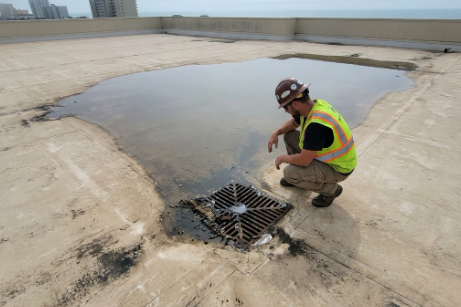
Ponding water on a flat roof is one of the most damaging problems building owners face in Myrtle Beach's wet, humid climate. Left alone, standing water accelerates membrane deterioration, invites mold, and can eventually compromise the roof structure itself. If you're dealing with pooling that won't go away, here's how to fix it for good.
Linta Roofing installs and repairs asphalt shingle, metal, tile, cedar and flat roofs, and have transparent pricing for every one of them. Linta also handles inspections, maintenance plans, emergency response, insurance claim support and full replacement.
Table of Content
- Confirm Whether You Have a Ponding Problem
- Inspect the Roof to Find the Source
- Clear and Repair the Drainage System First
- Address Low Spots With Tapered Insulation or Fill
- Choose the Right Repair Material for Your Membrane
- Decide Whether It Is a DIY Job or a Professional One
- Protecting Your Flat Roof
- Frequently Asked Questions
Confirm Whether You Have a Ponding Problem
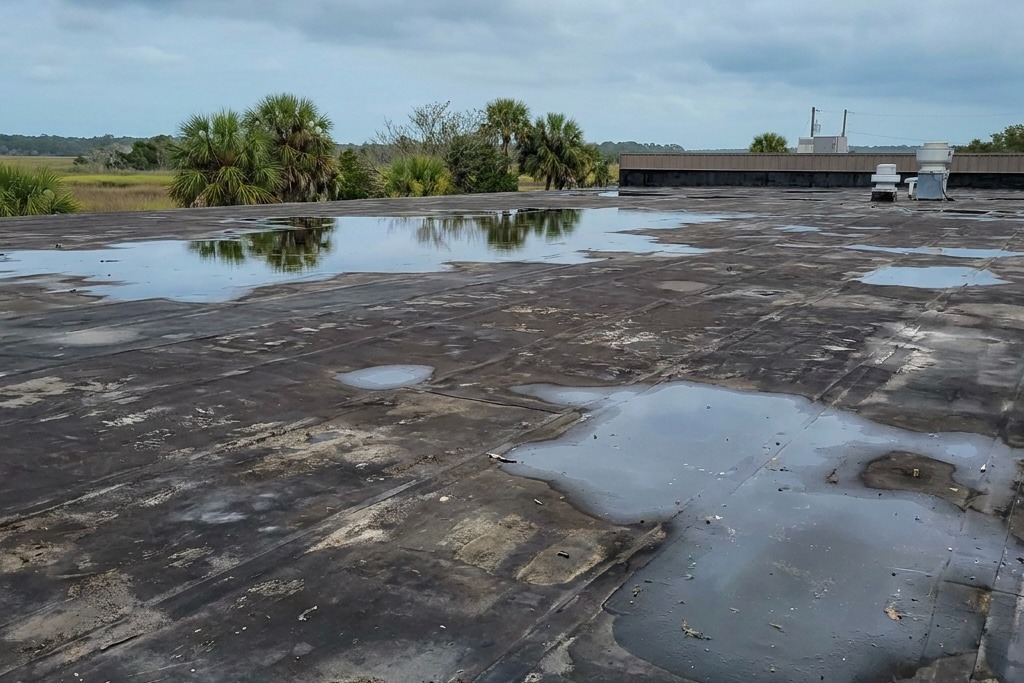 The National Roofing Contractors Association (NRCA) defines ponding water as any water that remains on a roof surface 48 hours after the last rainfall. That window is the industry benchmark but unfortunately, many people wait several days before investigating, by which point the water has either evaporated or already started working its way through membrane seams. If you're not checking within that 48-hour window, you're likely underestimating how often you actually have a problem.
Flat roofs in Myrtle Beach are especially exposed because the region averages over 50 inches of rain annually, and that's before you factor in tropical storm activity, all of which puts flat roofs in Myrtle Beach under more stress than most people account for.
Inspect the Roof to Find the Source
Walk the roof 48 hours after a rain event and mark every area where water is still sitting. Look at drain openings first, since clogged or partially blocked drains are the single most common cause of ponding water on flat roofs.
You should also check the roof slope. Most flat roofs require a minimum pitch of 1/4 inch per foot. If insulation has compressed or sections of the deck have settled, you'll have low spots where water collects regardless of how clear the drains are.
Additionally, photograph every problem area before moving on, and consider scheduling a professional roof inspection if you haven't had one recently, catching issues early almost always keeps the repair bill smaller.
Clear and Repair the Drainage System First
Drainage issues account for the majority of ponding water problems, so fix them before considering any structural repair. Clear every drain of debris and run water through it to confirm flow. If a drain moves slowly even when clear, the interior line may be partially blocked and will need to be snaked out.
Scuppers should be cleaned at the same time. A scupper that's only half its original opening height due to debris or sealant buildup cuts drainage capacity significantly. Clean them out and reseal around the edges if the flashing has lifted.
Watch out for: Applying roof coating or sealant near a drain opening that's slightly misaligned with the roof surface. This is an easy mistake that can partially cap the drain and turn a minor pooling issue into a serious one.
Address Low Spots With Tapered Insulation or Fill
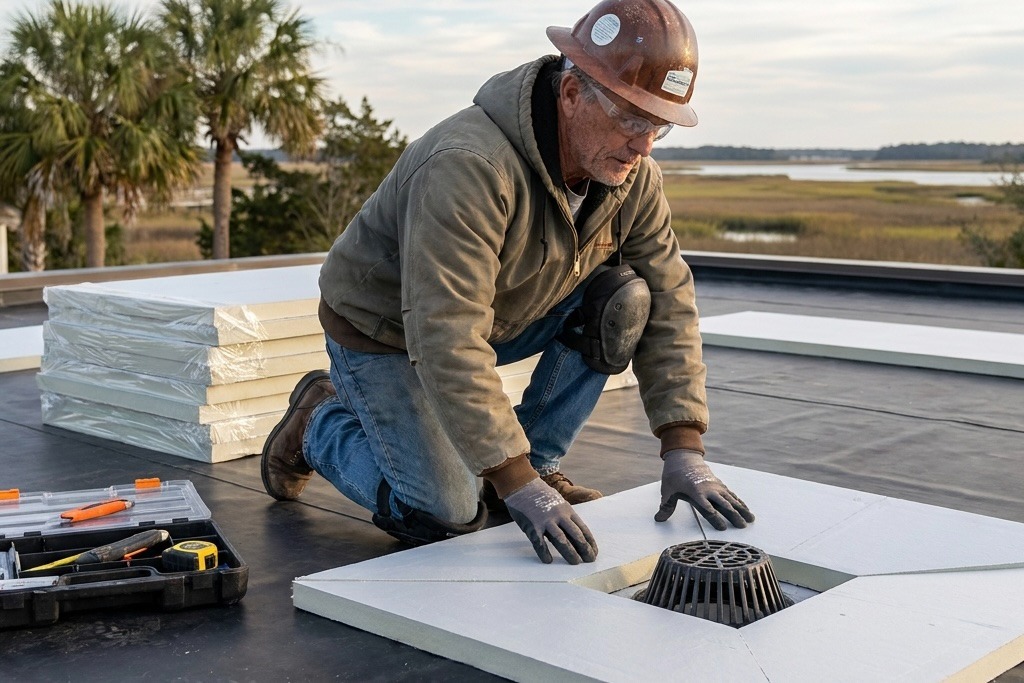 If drainage is clear but water still ponds, the roof surface has low spots that need to be corrected. Two repair paths exist here.
Tapered insulation is the professional standard for this fix.
Polyiso insulation boards are cut at a slight angle and installed under the membrane to re-establish positive slope across the roof deck. It runs $3 to $7 per square foot installed, but it eliminates the root cause rather than masking it. Crickets and saddles are smaller, localized versions of the same concept, used when the problem is confined to one or two spots around an HVAC unit or a roof transition.
The right choice depends on how widespread the low spots are. One isolated puddle near an HVAC curb is a cricket job. Pooling in three or four locations across the roof is almost certainly a tapered insulation project.
Choose the Right Repair Material for Your Membrane
Once slope and drainage are corrected, any damaged membrane sections need to be repaired or recoated, and material choice is very important.
For flat roofs that see regular ponding water, silicone coatings are the strongest performer. They don't absorb water and don't degrade with prolonged standing exposure, which makes them a natural fit for Myrtle Beach's rainfall patterns. TPO membranes also handle ponding reasonably well and carry a 15 to 20-year lifespan at $5 to $9 per square foot installed.
Acrylic coatings are worth avoiding in this region. They're cheaper upfront, but they break down quickly under standing water. The savings disappear fast when you're recoating every few years instead of every decade. For commercial flat roofs specifically, this is a decision that tends to look fine on paper and cause real regret within five years.
Decide Whether It Is a DIY Job or a Professional One
Most ponding water repairs fall somewhere on a spectrum. Clearing drains and applying a coating to a small, accessible area is manageable for a careful DIYer with the right safety equipment. Reworking roof slope with tapered insulation, replacing significant membrane sections, or working near structural penetrations is a licensed contractor job.
If the repair requires lifting or replacing membrane over more than about 10 square feet, or if there's any question about what's happening beneath the surface, call a professional. A thorough inspection at that point would check not just the surface pooling but the condition of the deck underneath, the integrity of all penetration flashings, and whether any moisture has already migrated into the insulation layer. That's the kind of assessment Linta Roofing runs on flat roof calls before recommending a repair path, because the fix you choose should match what's actually happening, instead of only what's visible from the surface.
In short: Fixing ponding water on a flat roof follows a sequence. Clear the drains, correct the slope, repair the membrane, and skipping steps in that order is how small problems become expensive ones.
Once you've worked through all three stages, you should see no standing water within 48 hours of any rain. In Myrtle Beach, the highest-risk inspection windows are right after hurricane season and just before the spring rainy period, when debris accumulation and membrane stress from summer heat tend to peak at the same time.
Protecting Your Flat Roof
If water is still sitting on your flat roof days after a storm, it's worth addressing before it turns into membrane or structural damage. In Myrtle Beach's coastal climate, ponding issues tend to escalate quickly once drainage or slope problems develop.
Linta Roofing is an IKO ROOFPRO Craftsman Premier contractor, which lets it offer IKO Extended Iron Clad Protection warranties on the materials it installs.
Linta Roofing has served the Grand Strand since 1948 and specializes in flat roof repairs built for coastal conditions, helping property owners identify the real cause of ponding water and fix it before the damage spreads. Get in touch with Linta today.
Frequently Asked Questions
What causes ponding water on a flat roof?
The most common cause is clogged or partially blocked drains that can't move water fast enough after rainfall. Compressed insulation or a settled roof deck can also create low spots where water collects even when drainage is working properly. Parapet wall scuppers that have been partially sealed during past repairs are another frequent culprit that often goes unnoticed for years.
How long can water sit on a flat roof before it becomes a problem?
The NRCA defines ponding water as any standing water that remains 48 hours after the last rainfall, that's the industry standard. Anything beyond that window risks working through membrane seams and migrating into the insulation layer beneath.
Which roof coating works best for repairing ponding water issues on a flat roof?
Silicone coatings are the strongest performer for flat roofs that see regular standing water because they don't absorb moisture or degrade under prolonged exposure. Acrylic coatings are cheaper upfront but break down quickly under ponding conditions, often requiring recoating every few years instead of every decade.
When should I call a professional to repair ponding water on a flat roof instead of doing it myself?
If the repair involves lifting or replacing membrane over more than about 10 square feet, or if there's any uncertainty about what's happening beneath the surface, it's a licensed contractor job. Reworking roof slope with tapered insulation, replacing large membrane sections, or working near structural penetrations all fall into that category.
How much does it cost to repair ponding water issues on a flat roof?
Repairs caught before the deck is compromised typically run $500 to $3,000. Full tapered insulation systems on a larger commercial flat roof can reach $10,000 or more depending on size, and that cost climbs further if the deck has already sustained moisture damage by the time someone calls.
Topics: