.png?width=200&height=78&name=LR_Logo_vector_horizontal_color_shadow%20(1).png)

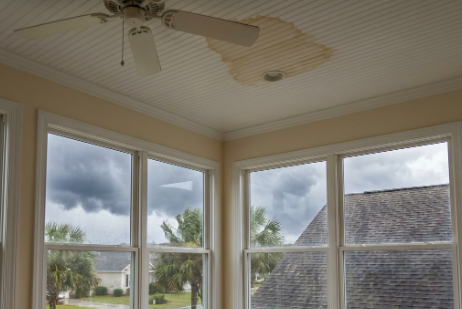
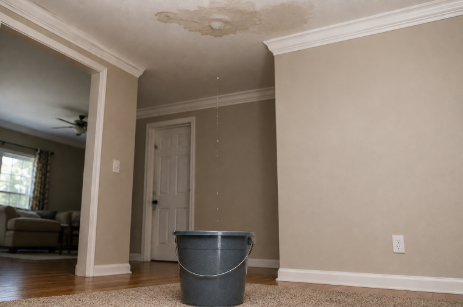
A wet spot on your ceiling after rain almost always points to one of three things: a roof leak, a flashing failure, or condensation that got mistaken for a storm problem. For Grand Strand homeowners, the coastal climate stacks the odds against you, and knowing the difference between a slow drip and a structural emergency can save you a lot of money.
Fast response also matters once you've found the source: Linta Roofing answers roof emergencies 24/7. Emergency response, the insurance claim and the permanent repair are all handled by Linta, and the damage assessment is free.
Table of Content
- Common Causes of Ceiling Wet Spots After Heavy Coastal Rain
- Why Ceiling Stains Often Appear Far From the Actual Leak
- What A Homeowner Can Safely Check
- When To Call For A Roof Inspection
- Frequently Asked Questions
Common Causes of Ceiling Wet Spots After Heavy Coastal Rain
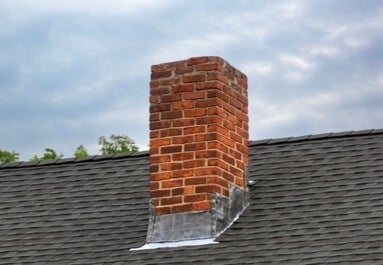
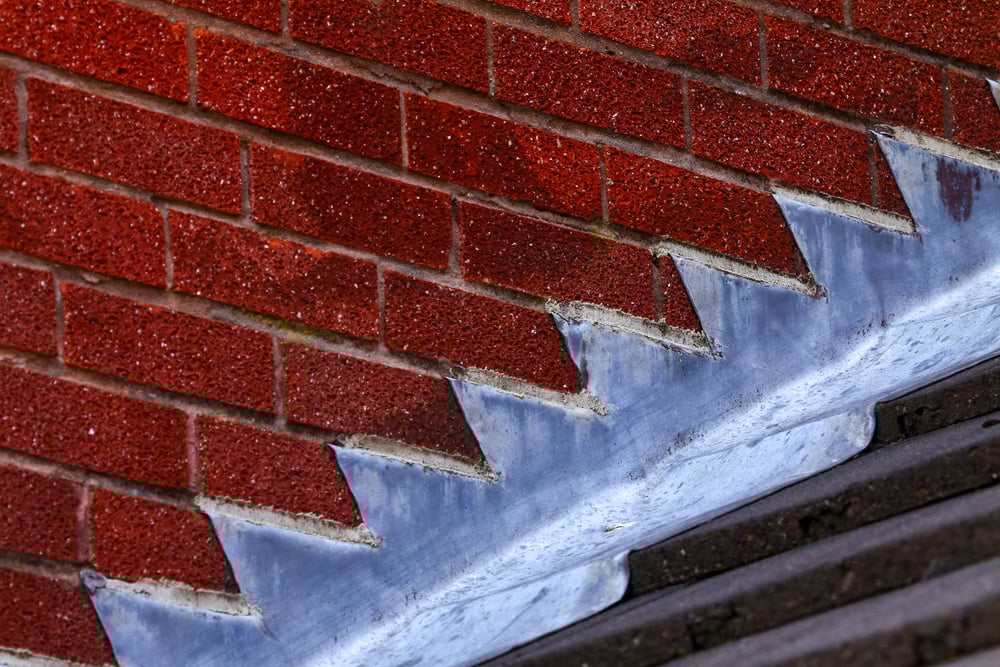
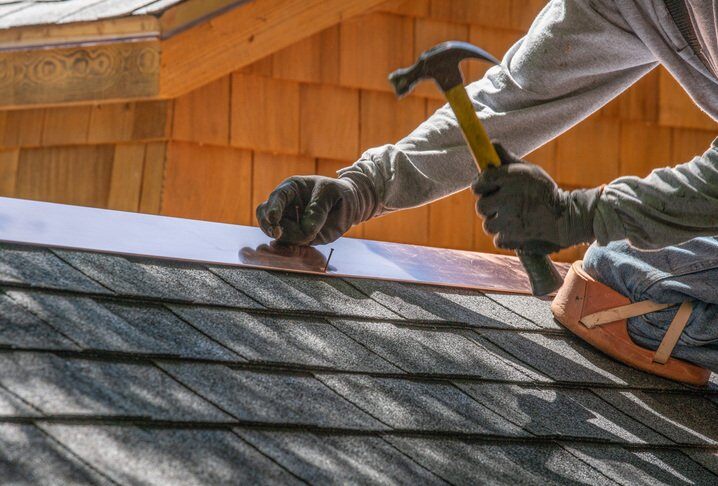
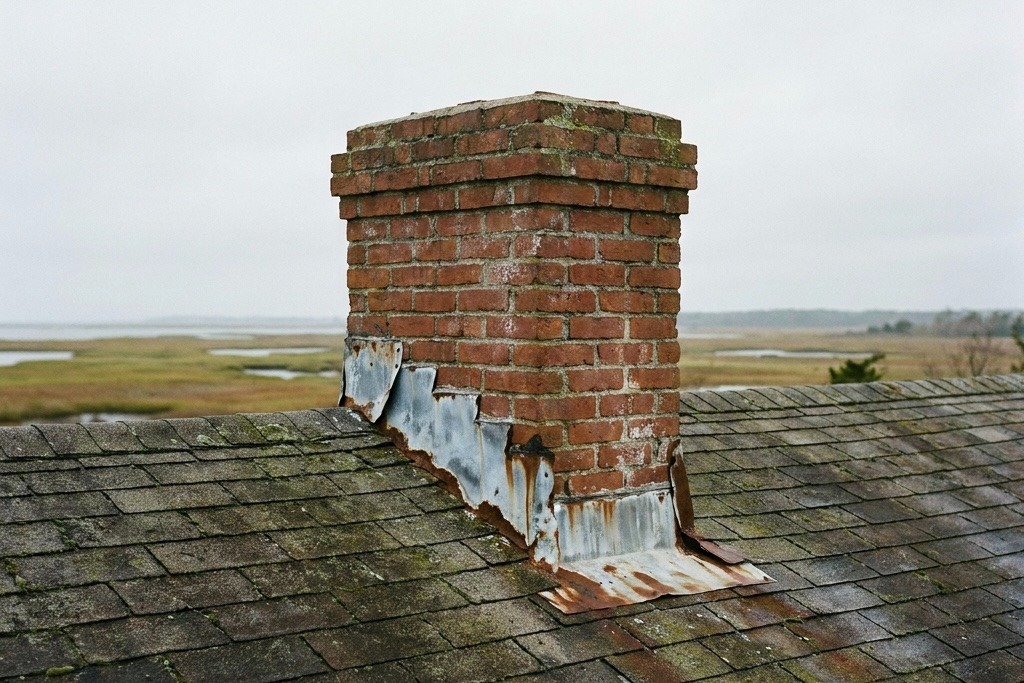
Salt air corrodes metal fast. Flashing around chimneys, skylights, and pipe boots is typically galvanized steel or aluminum, and both degrade faster within a few miles of the ocean than inland. Horry County homes, especially in Myrtle Beach, Surfside Beach, or Garden City, face accelerated metal deterioration that cuts flashing lifespan in half compared to homes further inland. The mistake most homeowners make is replacing shingles when the flashing is the actual failure point, which is why the same spot leaks again six months later.
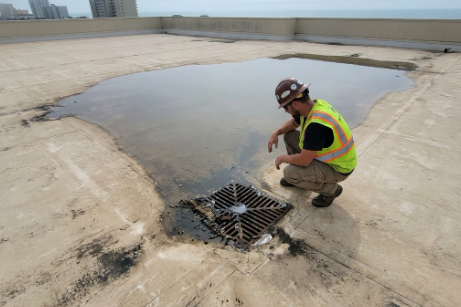
The Grand Strand's flat coastal topography creates a pooling problem too. When a slow-moving storm stalls over the area, water doesn't shed off roofs the way it does on steeper terrain. Low-slope sections that drain fine in a quick shower hold standing water during an extended June squall or a hurricane remnant. That standing water finds any gap and pushes through.
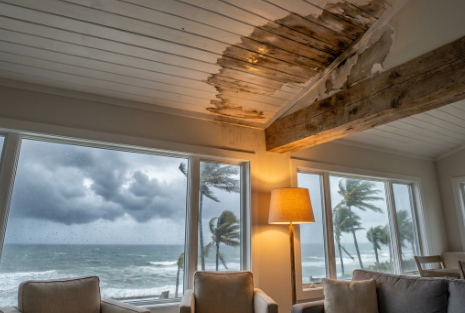
Then there's wind-driven rain. Normal rain falls at an angle your roof is designed to deflect. At 50-plus mph, water pushes uphill under shingles, into ridge vents, and through gaps that would never cause a problem in a calm storm. If the wet spot appeared during a named storm or tropical system, wind-driven infiltration isn't just a possibility, it's the most likely explanation.
Why Ceiling Stains Often Appear Far From the Actual Leak
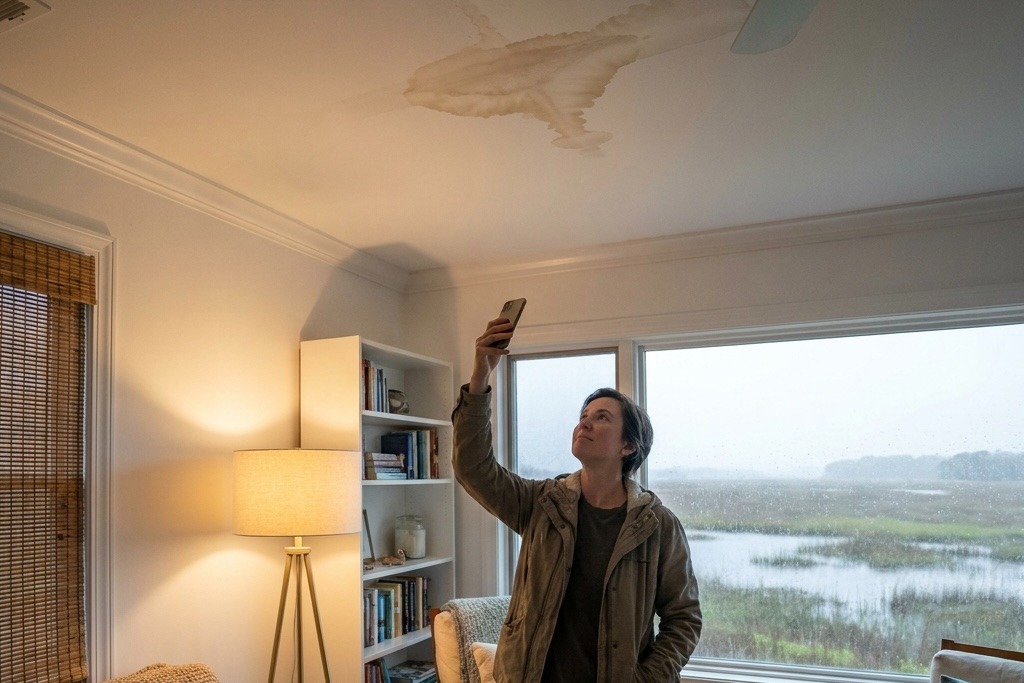
Where the wet spot sits narrows the field quickly, but the single most common misdiagnosis is assuming the leak source is directly above the stain. Water travels along rafters for six feet or more before it drips, which means homeowners often get onto the wrong section of the roof entirely and find nothing wrong
- The underlayment is almost always where the water trail becomes visible first, even when the surface shingles look intact from the ground. Water enters at a flashing joint or a cracked sealant point, wicks along the felt or synthetic underlayment, follows the rafter line downhill, and finally drips at whatever low point it reaches, which might be directly above your living room ceiling, several feet away from the actual breach.
- A wet spot below a chimney or skylight is a more reliable indicator because penetrations concentrate water flow. But a stain in the middle of a ceiling with no obvious penetrations above it requires attic investigation to trace accurately. Guessing from below and patching from above without finding the travel path is how a $400 repair turns into a recurring problem.
What a Homeowner Can Safely Check
Start by protecting what's below, put a bucket down and move anything valuable out of the splash zone, and review what to do when you spot a wet ceiling for a full step-by-step breakdown.
- If the ceiling is bulging, water has pooled above the drywall. Puncture the center of the bulge with a screwdriver to release it in a controlled stream. Letting it collapse on its own makes a bigger mess and a bigger repair.
- Then get into the attic while it's still raining if you safely can, avoid going up if there's active lightning or if the decking feels soft or spongy underfoot, which signals the sheathing may already be compromised. Look for active dripping or wet wood, and note where it is relative to roof landmarks you can identify from outside. Take photos of everything: wet insulation, water stains on rafters, any daylight visible through the sheathing.
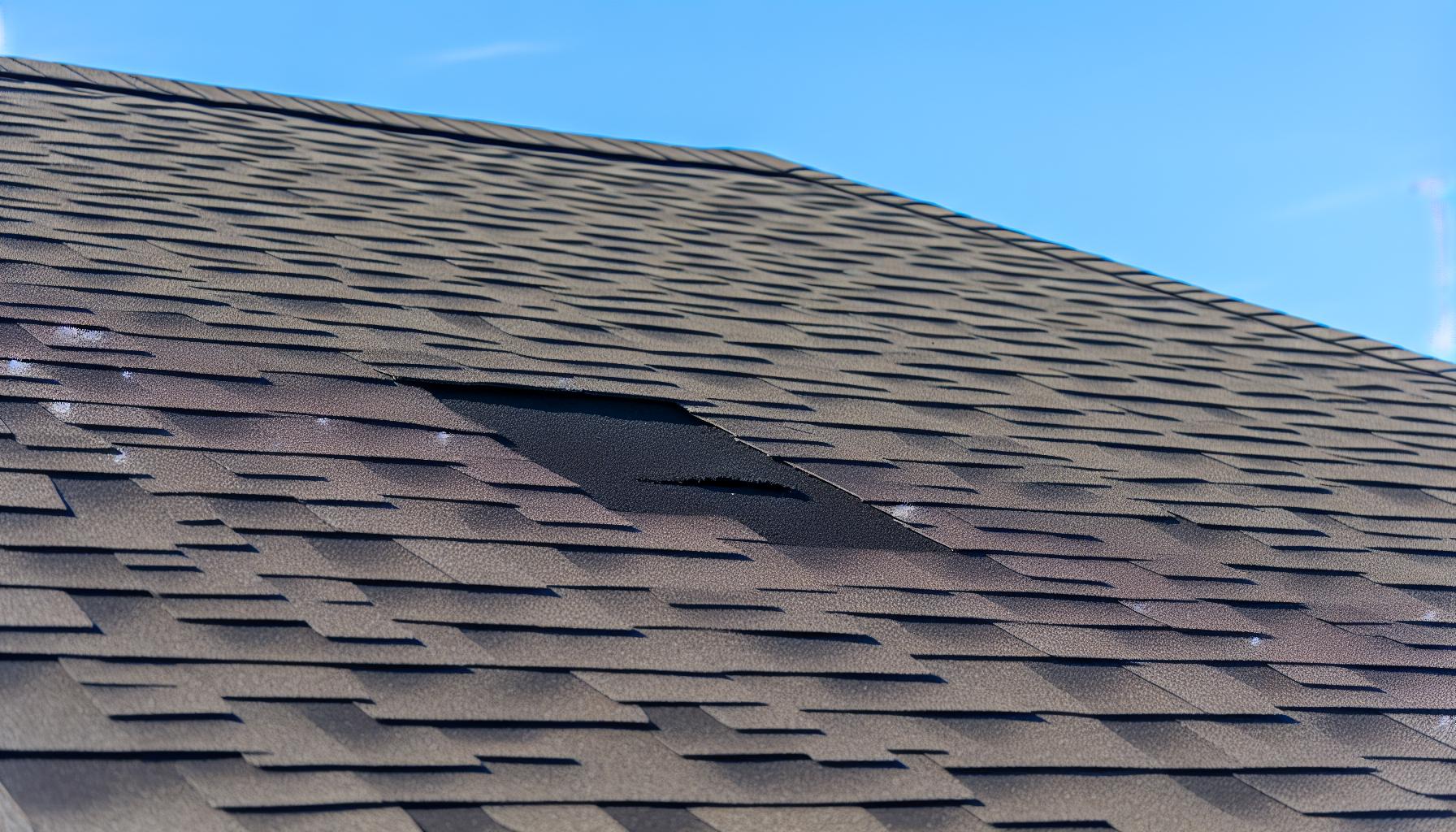
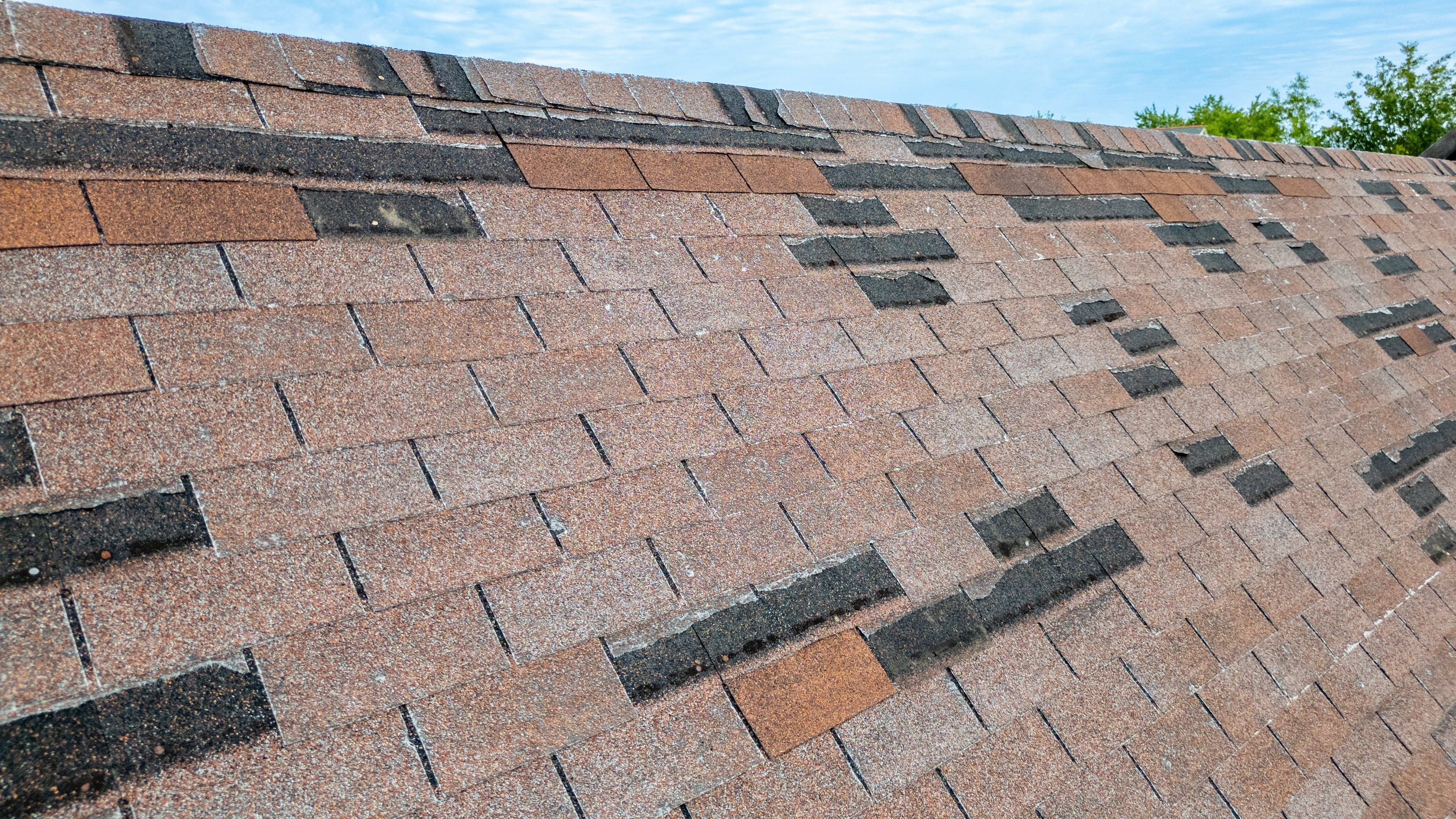
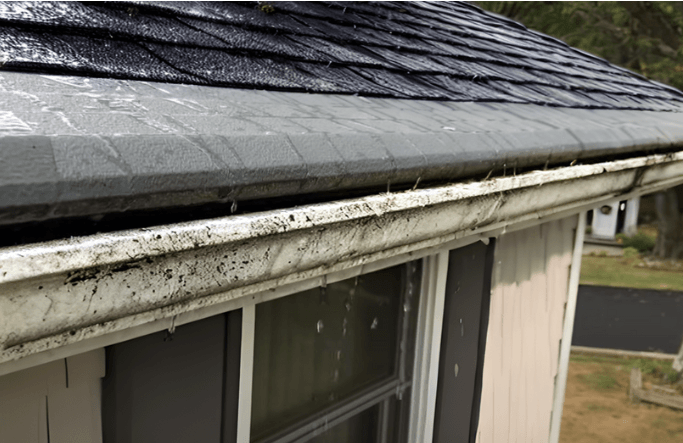
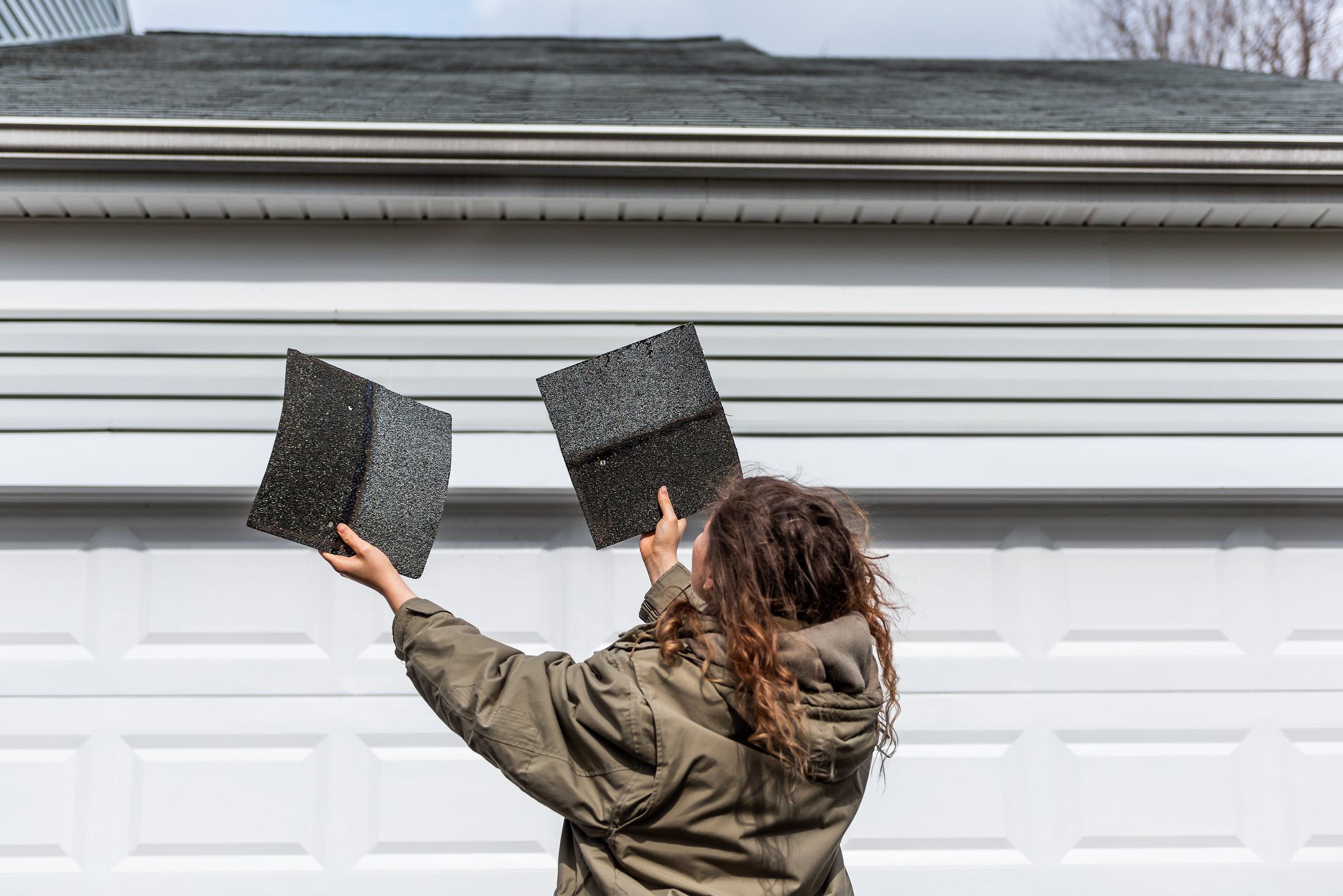
- From the ground outside, scan the roofline for obvious issues: missing or lifted shingles, gaps around pipe boots or vent collars, or flashing that's visibly pulled away from a chimney. These are things most homeowners can spot safely without getting on the roof. What you're looking for isn't a full diagnosis, it's enough documentation to give an inspector a starting point.
- The bathroom ceiling situation is worth checking separately. If the stain is directly below a second-floor bathroom, a slow supply line or wax ring failure is a more likely culprit than your roof. A roof leak worsens during rain and dries between storms. A plumbing leak doesn't care about the weather.
When to Call for a Roof Inspection
Some situations are straightforward DIY observation jobs. Others need a professional on the roof the same day. If the wet spot appeared during a named storm, if you found wet or discolored wood sheathing in the attic, or if the ceiling stain is actively growing rather than drying between rain events, those are all reasons to call sooner rather than later.
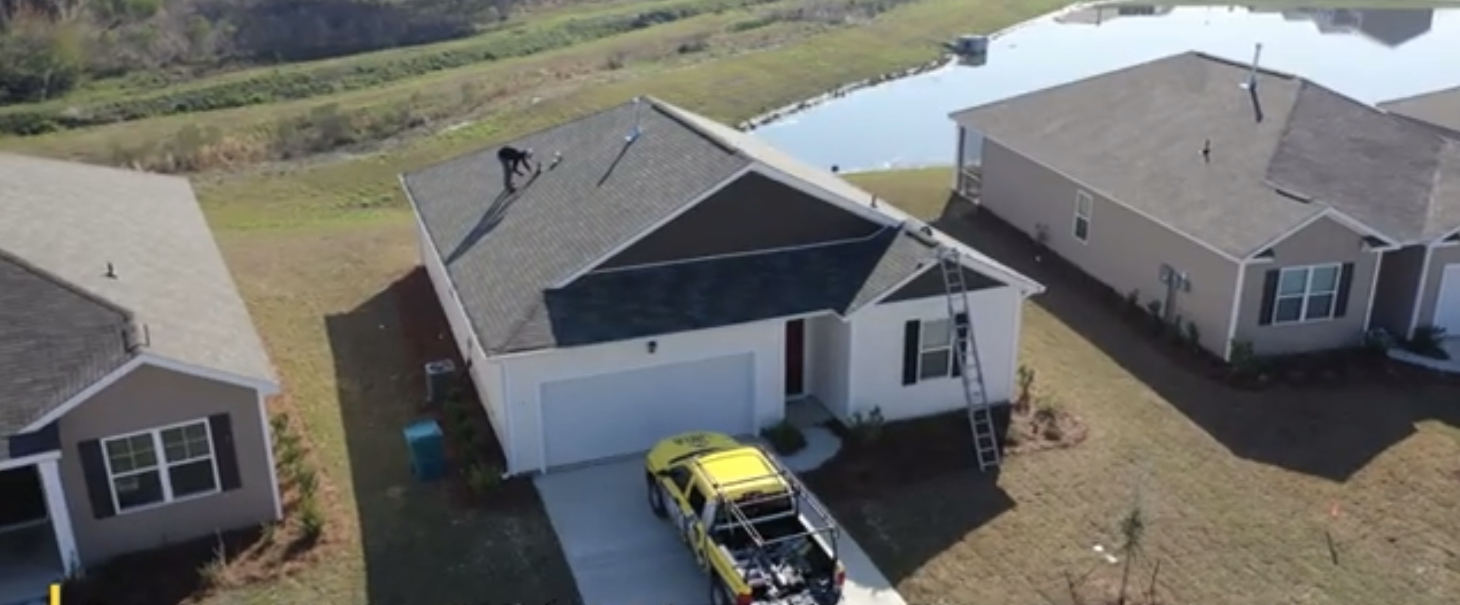
The most common roof failure causes on the Grand Strand, aren't visible from the ground and aren't safely diagnosed by walking the roof without training, which is why a professional roof inspection in Myrtle Beach is the safest next step.
A minor flashing repair in the Myrtle Beach area typically runs $300 to $600. Once wet insulation and wood rot enter the picture, you're looking at $3,000 to $5,000 or more. On the Grand Strand, where salt air is already working against your roof's metal components, a small gap doesn't stay small for long. Contact Linta Roofing for your roof inspection today. Linta Roofing inspects storm damage to the same engineering standard insurers use to decide whether a claim is covered.
Frequently Asked Questions
How do I find where my roof is leaking after a rainstorm?
Start in the attic, not on the roof, look for wet wood, discolored rafters, or active dripping, and note the location relative to landmarks you can identify from outside. Keep in mind that water travels along rafters for several feet before dripping, so the entry point is rarely directly above where the ceiling stain appears. A professional inspector can trace that travel path accurately; guessing from below and patching from above is how the same spot leaks again six months later.
Can a ceiling water stain appear without an active roof leak?
Yes, condensation in a poorly ventilated attic can produce ceiling staining that looks nearly identical to a rain leak. A slow plumbing failure, like a deteriorating wax ring or a supply line weeping above the ceiling, is another common non-roof culprit, especially if the stain is directly below a bathroom. The key tell is timing: a roof leak worsens during rain; condensation and plumbing issues don't follow the weather.
How do I tell the difference between a roof leak and a plumbing leak causing ceiling stains?
A roof leak correlates directly with rain, it's worse during a storm and dries out between them. A plumbing leak shows no such pattern and often produces staining directly below a bathroom, kitchen, or laundry area regardless of the weather outside. If the stain appeared after a rainstorm but is directly below a second-floor bathroom, check the wax ring and supply lines before assuming the roof is the source.
How long does it take for a ceiling water stain to dry out on its own?
A surface stain with no ongoing source can dry within a few days in warm, low-humidity conditions, but the Grand Strand's coastal humidity slows that process considerably. More importantly, drying out on its own doesn't mean the problem is resolved; wet insulation above the drywall retains moisture long after the ceiling looks dry, and that's where mold starts. Don't let a stain that "dried up" delay a roof inspection.
What are the signs that ceiling water damage has led to mold growth?
Visible dark spotting, green, black, or gray, around or within a ceiling stain is the most obvious sign, but mold often establishes in attic insulation before it's visible from below. A persistent musty odor in a room with a water stain is a strong indicator that moisture has been sitting longer than it looks. At that point, the repair scope expands beyond roofing to include remediation, which is why catching a wet spot on the ceiling after rain early matters.
Does homeowner's insurance cover ceiling water damage from a rainstorm?
Coverage depends on the cause and your specific policy, but storm-related roof damage is generally covered under standard homeowner's insurance. Many South Carolina coastal policies carry a named storm deductible of 1% to 2% of your home's insured value rather than a flat dollar amount, which can be significant. How the damage is documented and categorized by the inspector directly affects what you recover, so thorough photos and a professional inspection report are worth getting before you file.
Topics: