.png?width=200&height=78&name=LR_Logo_vector_horizontal_color_shadow%20(1).png)

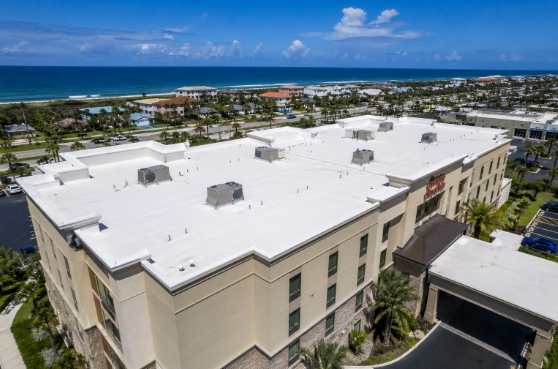
For most commercial buildings on the Grand Strand, TPO roofing is the superior choice. Its reflective white surface combats extreme summer heat to lower cooling costs, and its heat-welded seams provide robust protection against coastal storm wind uplift.
While the durable rubber membrane EPDM can be a smart, budget-conscious option for specific projects, TPO's performance advantages are better suited for our climate. This guide provides the decision framework our GAF Master Commercial Roofing Contractor certified team uses to help property managers choose the right system, identify critical warning signs, and decide when to repair versus replace their flat roof.
Table of Contents
- TPO vs. EPDM: A Comparison for Coastal South Carolina
- Which System Fits Your Building?
- Choose TPO for High-Performance and Energy Savings
- Consider EPDM for Budget-Constrained or Shaded Properties
- Repair vs. Replace
- Flat Roof Warning Signs Checklist
- Your Next Step for a Secure Roof
TPO vs. EPDM: A Comparison for Coastal South Carolina
While both TPO and EPDM are proven systems, their key differences become clear when viewed side-by-side. The following table breaks down the factors that matter most in Horry and Georgetown counties.
|
Feature |
TPO (Thermoplastic Polyolefin) |
EPDM (Ethylene Propylene Diene Monomer) |
|
Energy Efficiency |
Excellent. A white TPO surface reflects 75–80% of solar radiation, keeping the roof 60–70°F cooler than a black roof and reducing cooling costs by 10–20%. |
Poor. Standard black EPDM absorbs heat, increasing HVAC costs. A white EPDM option exists but at a significant cost premium. |
|
Seam Strength |
Superior. Seams are heat-welded to form a single, monolithic layer that is ideal for resisting coastal wind uplift. A properly welded seam is often stronger than the membrane itself. |
Good. Seams are bonded with adhesive. While effective, they are more vulnerable to degradation over time from UV exposure and ponding water. |
|
Durability |
Very Good. A polyester-reinforced core provides excellent resistance to punctures from foot traffic and rooftop equipment maintenance. |
Excellent. The flexible synthetic rubber is highly durable and less prone to cracking from building movement or thermal expansion. |
|
Longevity |
20–30 years with proper installation and maintenance. |
30+ years. EPDM has a proven track record for a very long service life when installed on a roof with positive drainage. |
Which System Fits Your Building?
Based on these differences, the right choice depends on your building's specific use, sun exposure, and budget. Here is the straightforward guidance we provide our clients every day.
Choose TPO for High-Performance and Energy Savings
TPO is the standard for most commercial buildings in our market for a reason. We recommend it for properties where energy efficiency and wind resistance are top priorities. This includes retail centers, office buildings, hotels, and any sun-exposed building with significant cooling costs. The heat-welded seams create a stronger, more unified surface that stands up to coastal storms, while its puncture resistance is ideal for roofs with regular foot traffic for HVAC maintenance.
Consider EPDM for Budget-Constrained or Shaded Properties
EPDM remains a viable choice in specific situations. It is a good fit for budget-constrained projects or for buildings that have significant shade coverage, which lessens the impact of its black, heat-absorbing surface. Warehouses, some industrial facilities, and storage buildings with excellent drainage and low foot traffic are all reasonable candidates for a durable, long-lasting EPDM roof.
Before agreeing to any spec, it is worth understanding what separates a thorough commercial estimate from a low bid. Material grade, insulation quality, and attachment method all affect long-term performance in ways that do not show up in a line-item price comparison.
A critical thing to note on both systems: The performance of either membrane depends entirely on the quality of the insulation beneath it. A roof inspection should always assess the insulation layer, as moisture-saturated or compressed insulation will undermine any new roof system.
Repair vs. Replace
Choosing a material is only part of the picture. Many property managers face the immediate question of what to do with an existing roof?
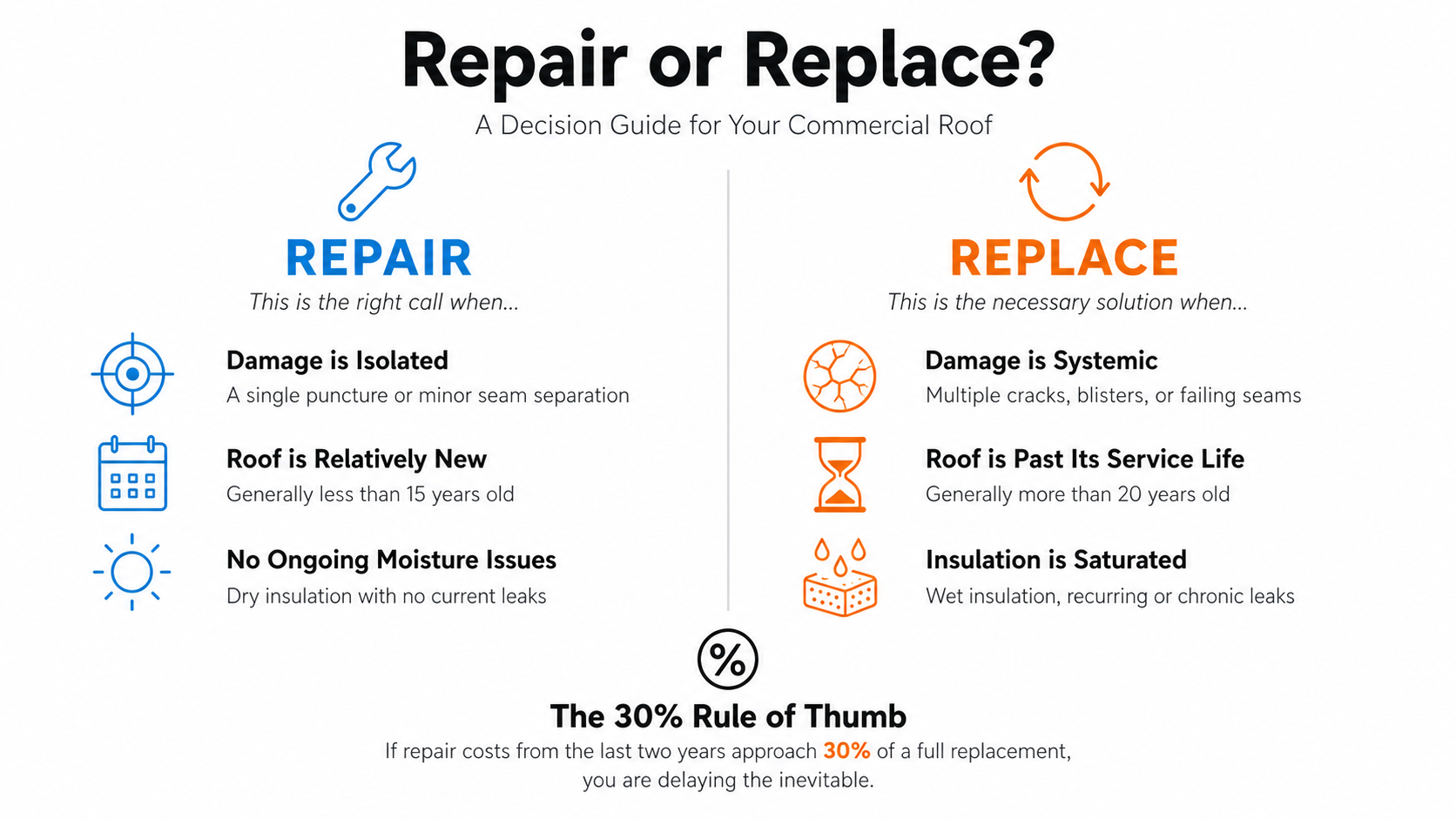
Roof repair is the right call when a problem is isolated, the membrane is under 15 years old, and the underlying insulation is dry and sound. A single puncture or minor seam separation can often be fixed to extend the roof's life without the cost of full replacement.
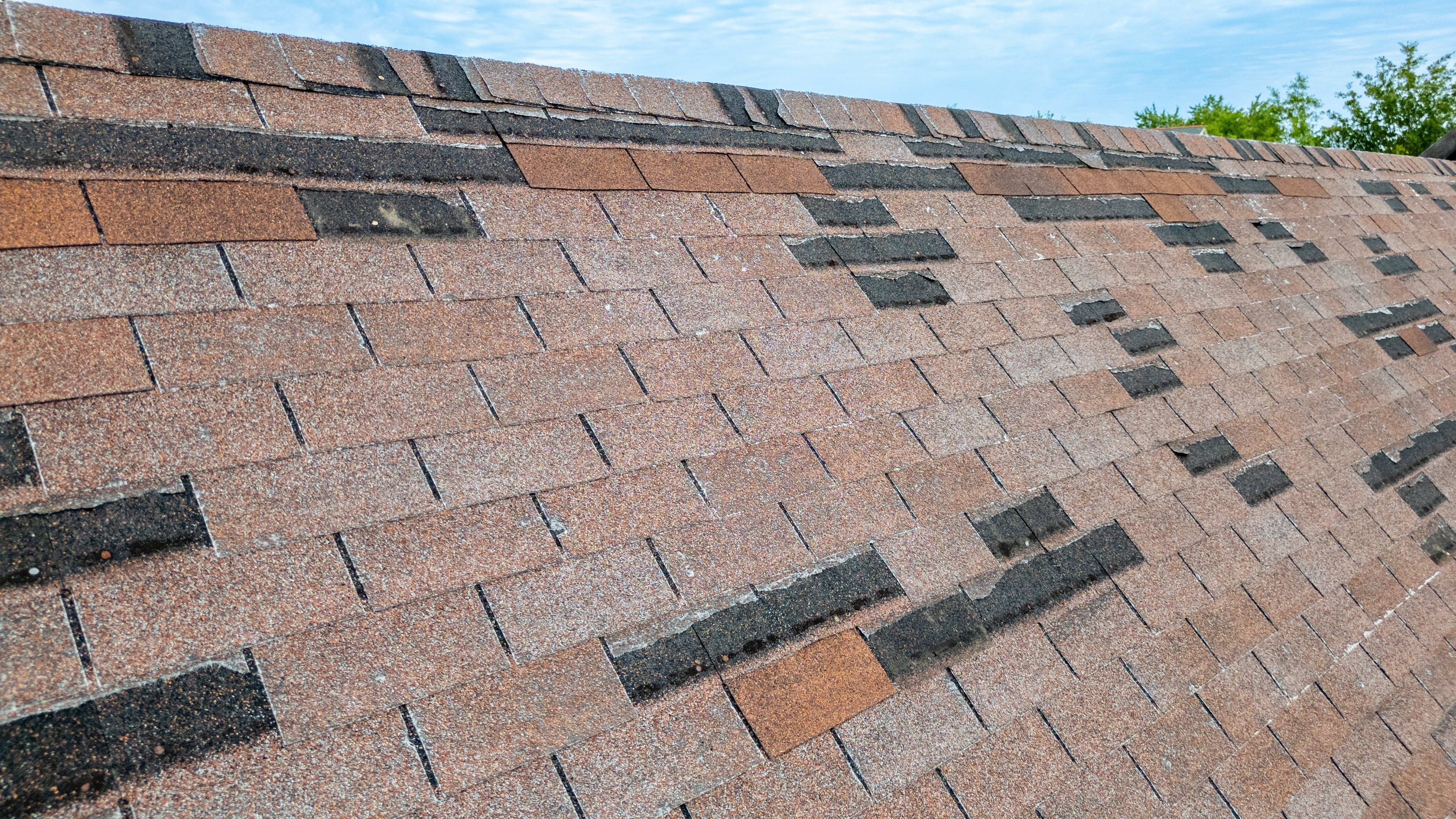
However, replacement becomes the necessary and more cost-effective solution when the issues are systemic. This includes widespread membrane cracking or blistering, multiple seam failures, or evidence of moisture saturating the underlying insulation. If a roof has required repeated repairs in the same areas or is simply past its expected service life, a full replacement is the prudent choice, especially before hurricane season.
As a rule of thumb, if your repair costs over the last two years approach 30% of a full replacement cost, you are likely spending money to delay the inevitable.
Flat Roof Warning Signs Checklist
To determine if your roof needs attention, you need to know what to look for. Walk your roof twice a year before and after storm season and use this checklist to spot signs of trouble. Scheduling a professional roof maintenance inspection each spring is also one of the most reliable ways to catch small problems before they compound.
On the Membrane Surface:
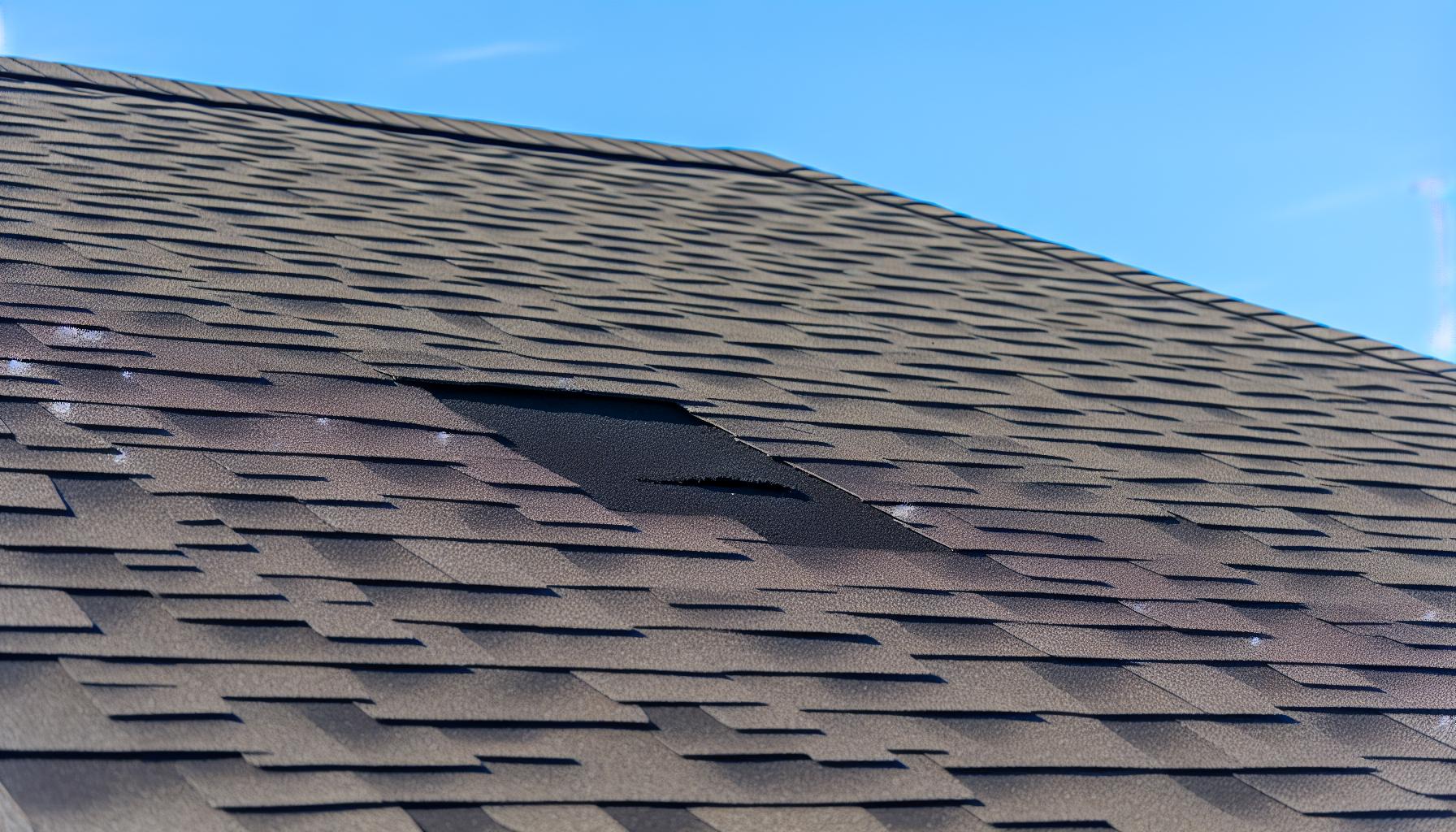
- Visible cracks, splits, or tears
- Blisters or bubbles (indicating trapped moisture)
- Membrane pulling away from walls, curbs, or edges
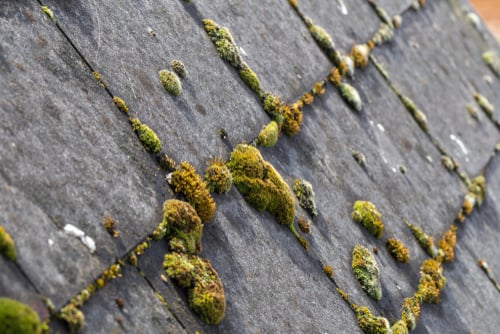
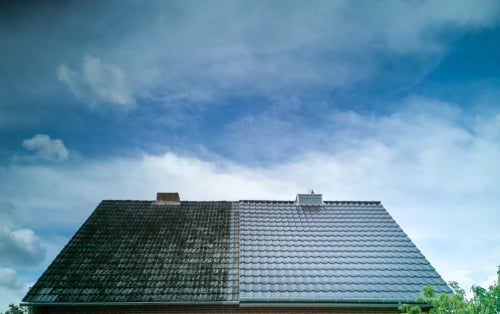
- Dark staining or algae/mold growth
At Seams and Flashings:
- Seams separating or with lifted edges
- Flashing pulling away from HVAC units, vents, or pipes
- Cracked or missing sealant at penetrations
Drainage and Interior:
- Water standing for more than 48 hours after rain (ponding)
- Clogged drains or "birdbaths" not previously present
- Water stains, musty odors, or sagging ceiling tiles inside
Your Next Step for a Secure Roof
If you checked any boxes on that list, the next step is a professional inspection before a small issue becomes a costly failure. Storm damage to a commercial roof on the Grand Strand often qualifies for an insurance claim but only if it is documented correctly and reported within your policy's window. Knowing what insurers look for before you file is worth understanding. Our guide on homeowner insurance red flags walks through the documentation mistakes that most often cost property owners their claim.
Our project managers are HAAG-certified, the same standard insurance adjusters use, and provide detailed inspection reports you can take directly to your carrier.
Whether you are specifying a new roof or assessing an existing one, you will have a dedicated superintendent on your project from day one. You can follow our progress through our real-time project tracking app, giving you complete visibility and peace of mind. We back every commercial installation with workmanship warranties of up to 25 years and have been protecting commercial buildings in this market since 1948.
Give us a call at (843) 948-5726 or schedule your inspection with us online.