.png?width=200&height=78&name=LR_Logo_vector_horizontal_color_shadow%20(1).png)

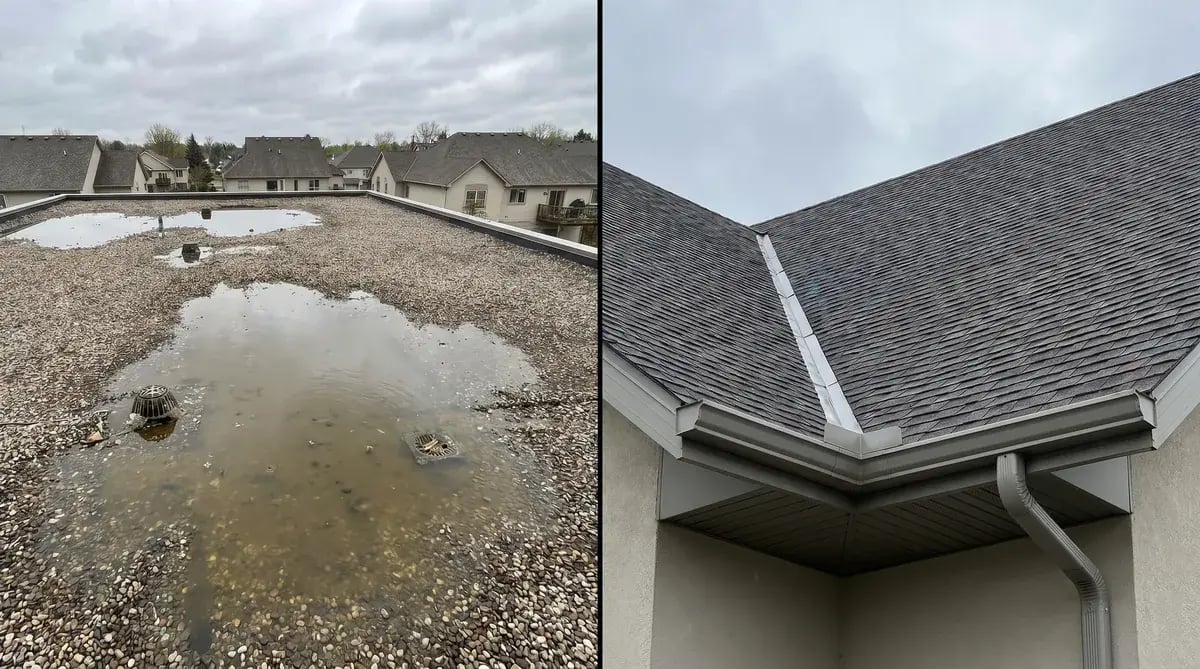
You should not install asphalt shingles on a flat roof. Roofs with less than a 2:12 pitch are too flat for shingles and need different materials designed specifically for low-slope applications. While shingles work perfectly on pitched roofs, they rely on gravity and overlapping design to shed water quickly - something that doesn't happen effectively on flat surfaces.
Key Fact: Most shingle manufacturers require a minimum 2:12 slope (2 inches of rise per 12 inches of run) for their products, and using shingles below this threshold can void your warranty.
This article will explain why flat roofs and shingles don't mix well, what materials actually work for flat applications, and the specific conditions where shingles might be acceptable on low-slope sections. At Linta Roofing, we've seen the problems that arise when the wrong materials are installed on flat roofs throughout the Myrtle Beach area, and we want to help you make the right choice from the start.
That guidance covers more than flat roofs: Linta Roofing installs and repairs asphalt shingle, metal, tile, cedar and flat roofs, and have transparent pricing for every one of them. Linta also handles inspections, maintenance plans, emergency response, insurance claim support and full replacement.
What is considered a flat or low-slope roof
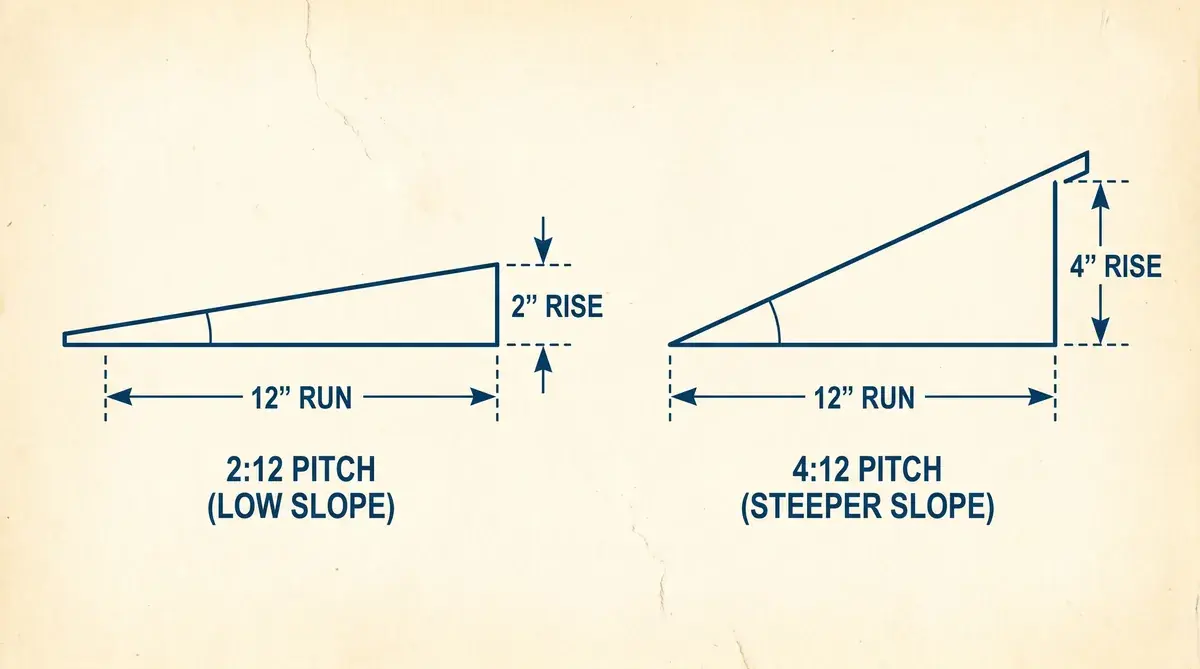
Understanding roof pitch is essential before choosing any roofing material. Roof pitch measures how much a roof rises vertically for every 12 inches of horizontal distance, expressed as ratios like 2:12 or 4:12.
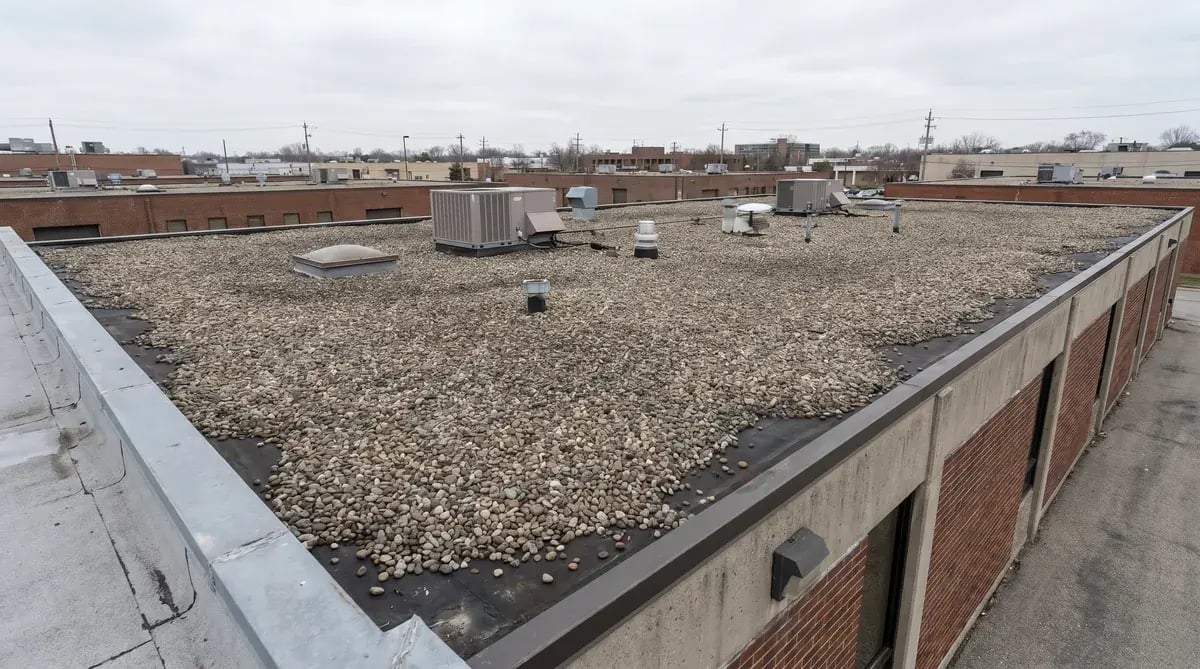
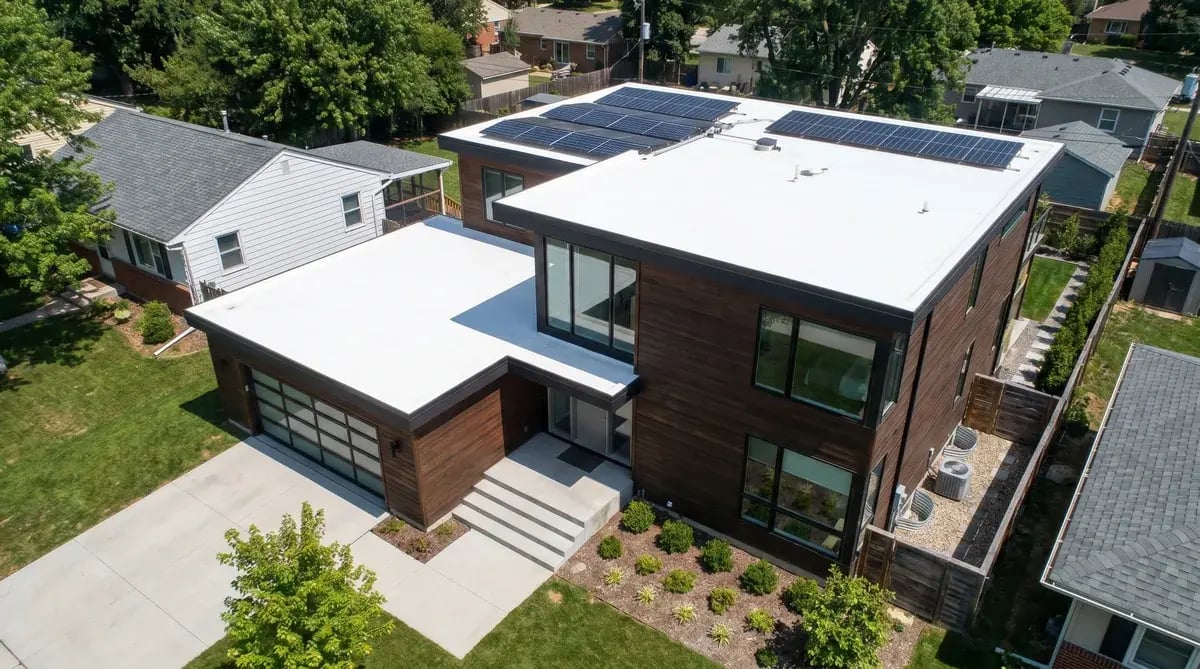
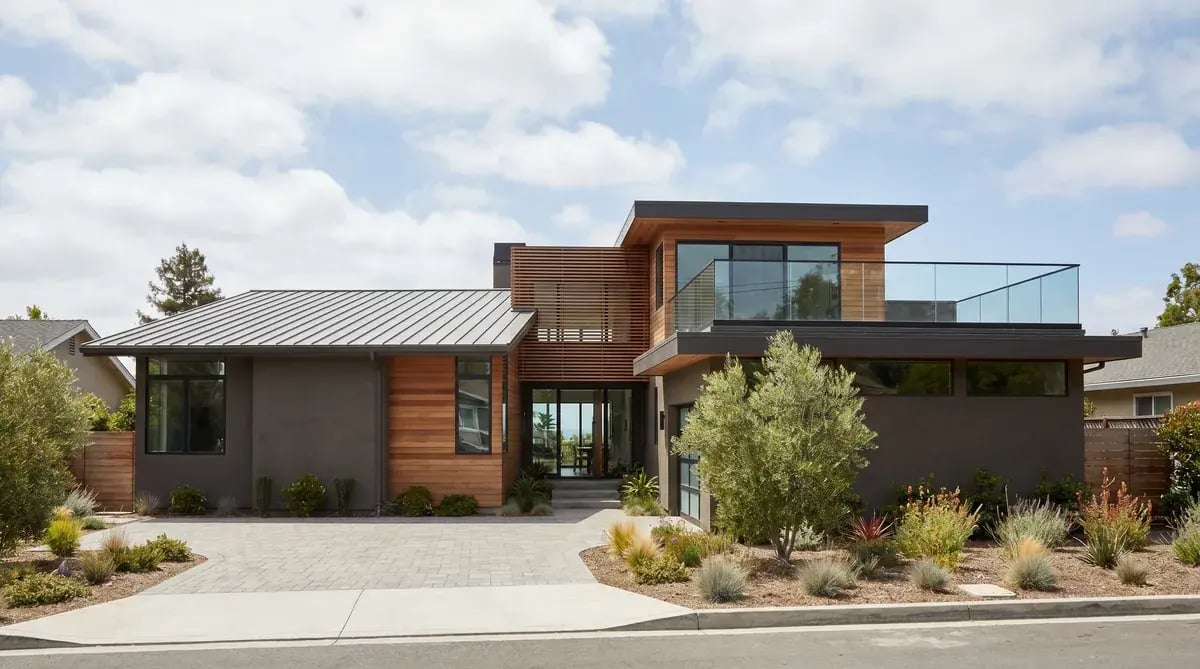
A truly flat roof has virtually no slope (0:12 to 1/4:12), while low-slope roofs range from 2:12 to just under 4:12. Standard pitched roofs start at 4:12 and go up from there. You'll typically find flat and low-slope roofs on residential porches, carports, garage additions, and most commercial buildings where the large square footage makes flat construction more economical.
In the coastal Myrtle Beach region, we often see flat roof sections on beach house additions, pool houses, and covered patios where homeowners want to maximize interior space while maintaining ocean views. The key difference isn't just appearance - it's how water behaves on each surface. Water moves quickly off a 6:12 pitched roof but can sit for hours or days on a flat surface, creating entirely different waterproofing requirements.
Minimum slope requirements for asphalt shingles
Most asphalt shingle manufacturers require at least a 2:12 pitch for standard installation, with some products requiring 4:12 depending on the specific shingle type and local climate conditions.
These aren't arbitrary numbers. Shingles work through an overlapping system where each piece hands water off to the one below it. This handoff relies on gravity pulling water downward fast enough that it doesn't have time to work its way under the shingle tabs or around nail penetrations.
Building codes typically mirror these manufacturer requirements. Installing shingles below the specified minimum slope violates manufacturer installation instructions, which means your warranty becomes void and you may fail building inspections. The RCABC Roofing Practices Manual) confirms that shingles are only applicable to slopes of 1:6 (2:12) and greater.
As a GAF, IKO, and Owens Corning certified contractor serving Horry County and Georgetown County, we strictly follow these manufacturer guidelines to ensure our customers maintain full warranty coverage on their roofing investments.
Can you put shingles on a flat roof
The short answer is no for truly flat roofs, and rarely recommended even for low-slope applications. While it's technically possible to install shingles on some low-slope surfaces, most roofing professionals advise against it.
Here's why the physics don't work: shingles are designed as a water-shedding system, not a waterproofing membrane. Each shingle overlaps the one below it, creating channels that direct water downward. When that slope isn't steep enough, water moves slowly or pools, giving it time to find gaps around nails, work under shingle edges, or freeze and expand in cold weather.
Water starts behaving differently at about 1/4 inch of fall per foot. Below that threshold, water sits long enough to find seams and cause problems that shingles simply weren't designed to handle.
In our coastal South Carolina climate, this becomes even more critical. The combination of heavy summer thunderstorms and occasional winter freeze-thaw cycles puts extra stress on any roofing system that allows water to pool.
Reality Check: Even with extra underlayment and special installation techniques, putting shingles on a flat roof is usually a false economy - you'll save money upfront but face repair bills within two years.
Best roofing materials for flat and low-slope roofs
Instead of forcing shingles onto flat surfaces, several materials are specifically engineered for these applications. Each offers continuous waterproofing rather than the overlapping water-shedding approach of shingles.
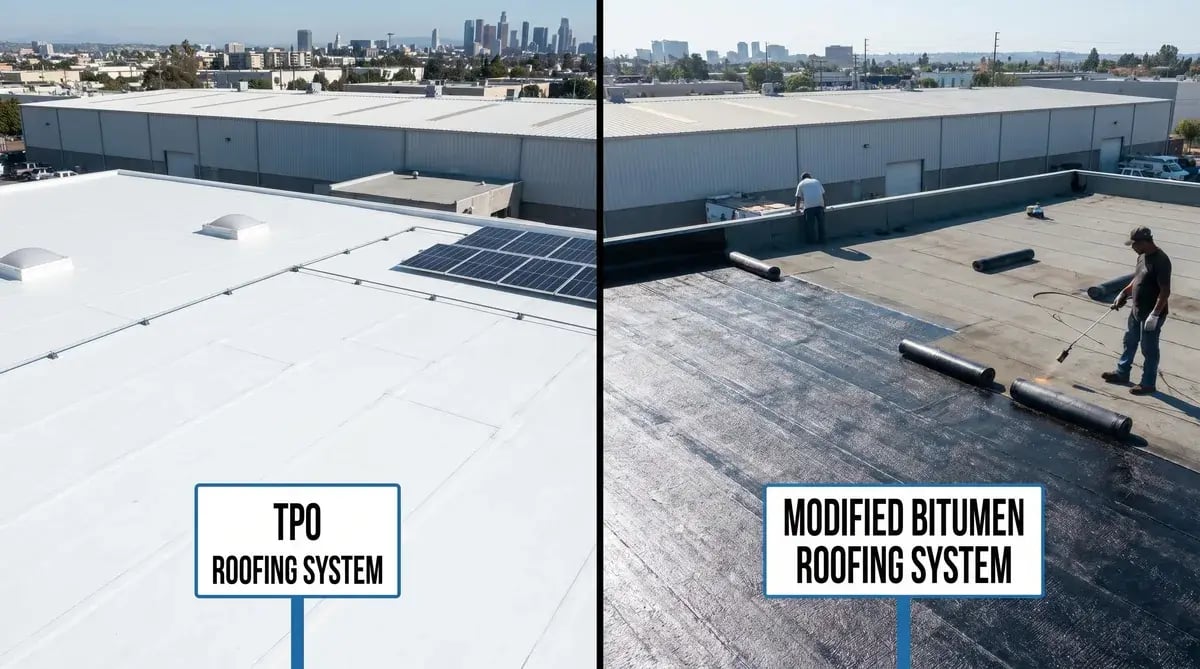
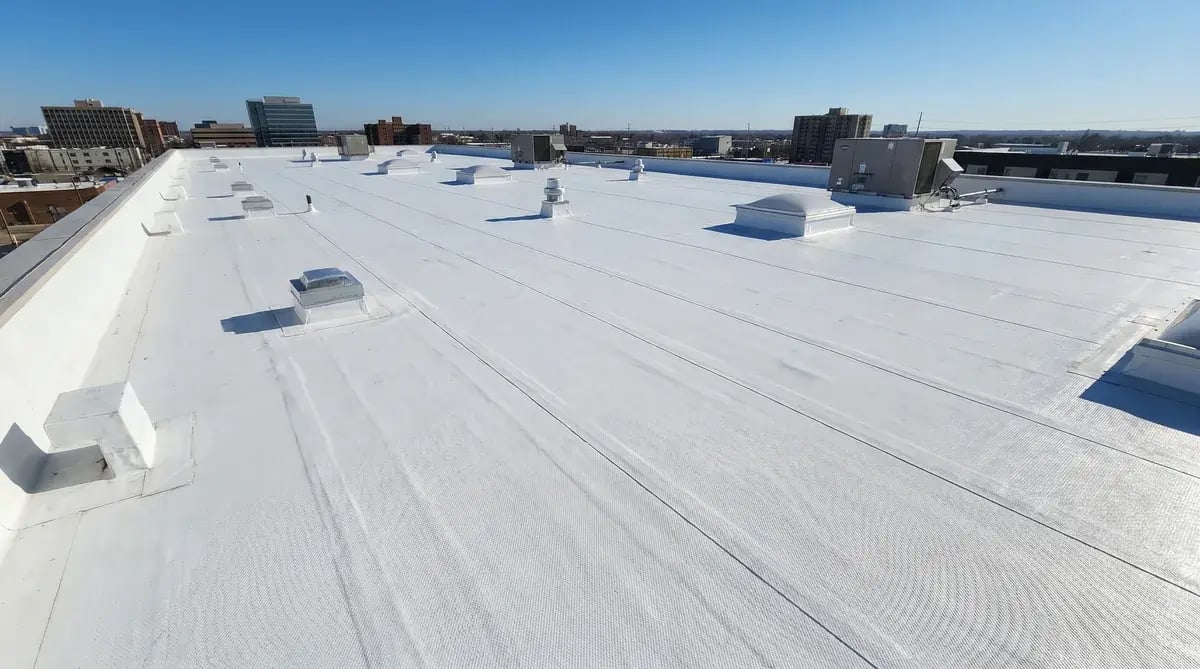
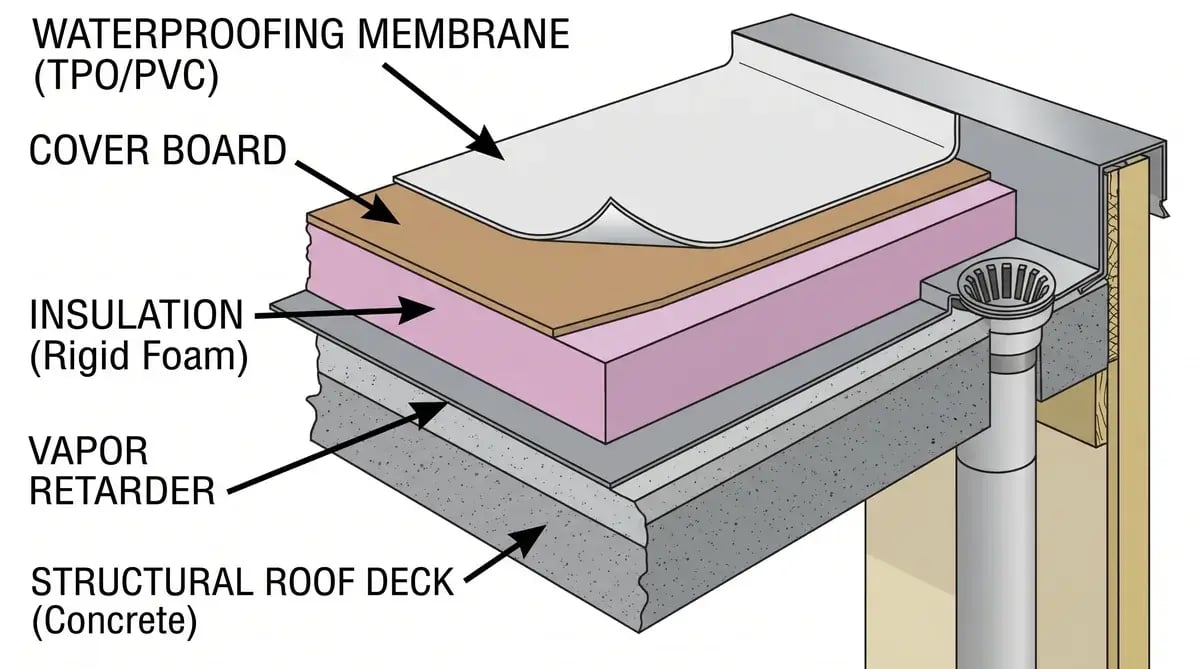
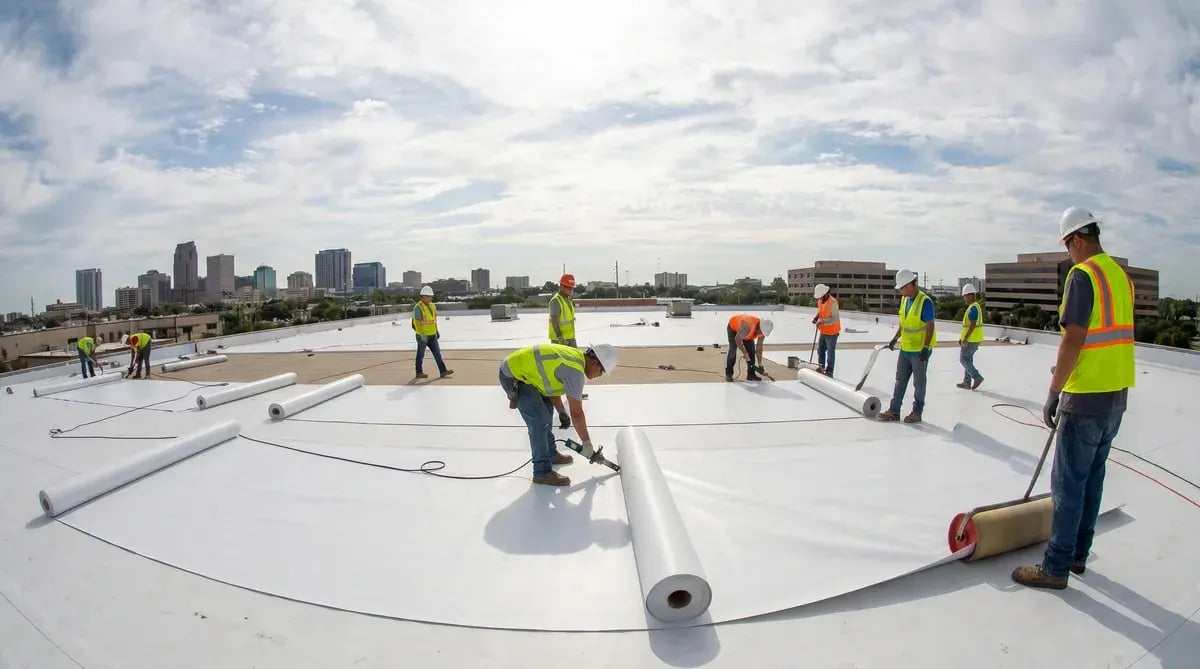
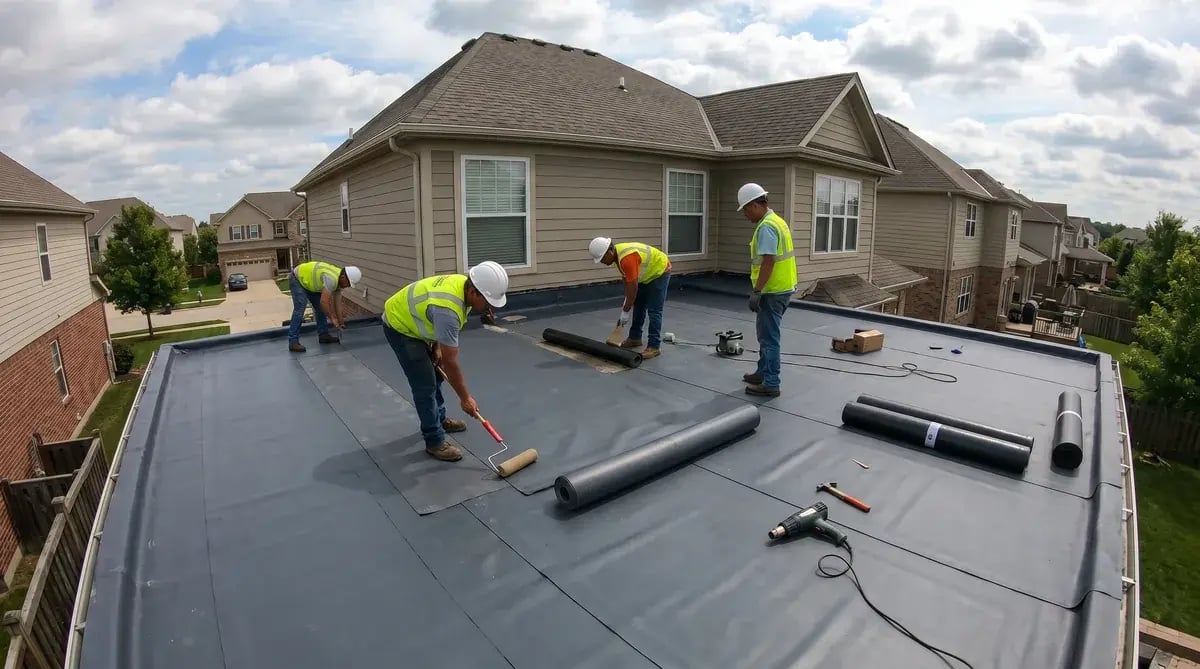
Single-ply membranes like TPO, PVC, and EPDM create seamless waterproof barriers. TPO and PVC use heat-welded seams that are actually stronger than the membrane itself, while EPDM relies on adhesive seams and excellent flexibility to handle building movement.
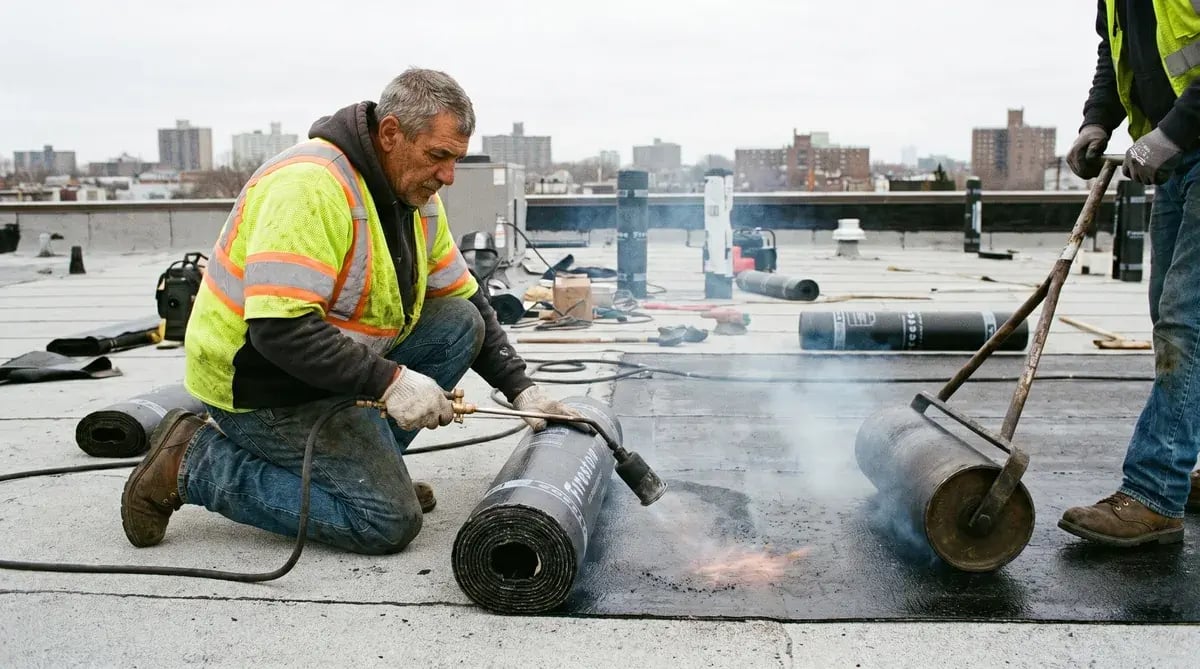
Modified bitumen combines the waterproofing qualities of asphalt with reinforcing materials, applied in rolls with overlapping seams that are torched or cold-applied together. This creates a continuous membrane that's particularly popular for residential flat roof sections.
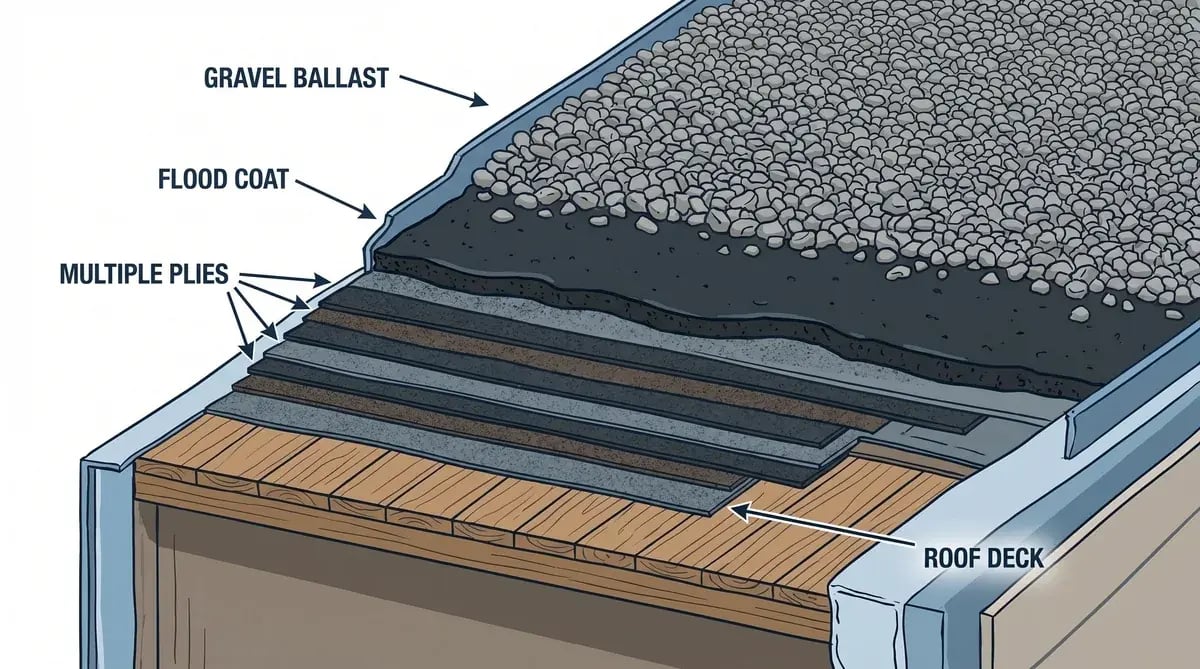
Built-up roofing (BUR) uses multiple layers of asphalt and reinforcing materials, topped with gravel or a granulated cap sheet. While labor-intensive, BUR systems can last 20-30 years with proper maintenance.
| Material | Minimum Slope | Typical Lifespan | Best Use | Maintenance Level |
|---|---|---|---|---|
| Asphalt Shingles | 2:12+ | 15-25 years | Pitched roofs | Low |
| TPO | 1/4:12 | 15-20 years | Commercial/residential | Low |
| EPDM | 1/4:12 | 20-25 years | Residential flat sections | Low |
| Modified Bitumen | 1/4:12 | 15-20 years | Small residential areas | Medium |
When are shingles acceptable on low-slope roofs
There's a narrow window where shingles might work on low-slope applications, but it requires meeting specific conditions. The roof must have at least a 2:12 pitch, proper drainage to prevent water accumulation, and enhanced installation techniques.
For slopes between 2:12 and 4:12, certainteed.com requires special underlayment - typically a self-adhering waterproof membrane over the entire deck surface rather than standard felt paper. Some manufacturers also specify particular shingle products designed for low-slope applications.
Even with these precautions, you're pushing shingles to their performance limits. The installation must be perfect, drainage must be excellent, and you'll likely need more frequent maintenance compared to a proper flat-roof system.
Climate matters too. Areas with heavy snow loads, frequent freeze-thaw cycles, or driving rains put additional stress on low-slope shingle installations that may perform adequately in milder conditions. Here in the Little River and Myrtle Beach area, our coastal weather patterns - including salt air exposure and hurricane-force winds - make proper material selection even more critical.
Professional Insight: Before considering shingles on any low-slope section, have the actual pitch measured with a level - don't estimate from ground level. Many roofs that look flat from the street actually have enough slope for proper drainage.
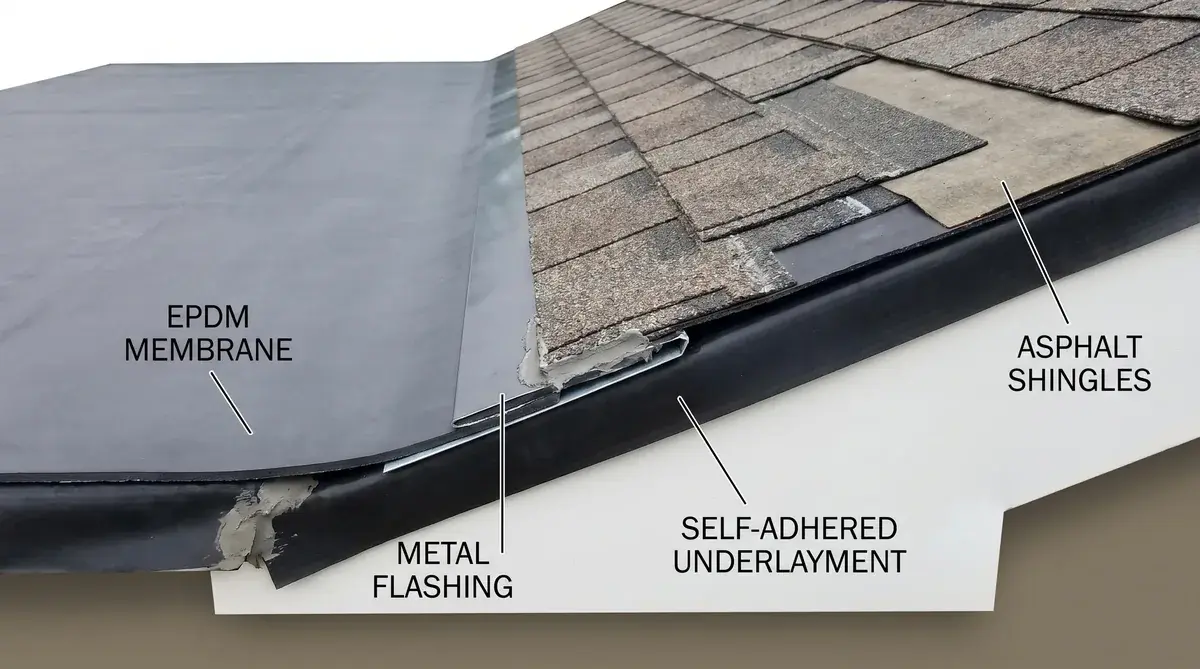
The bottom line is clear: roofs under 2:12 pitch are too flat for shingles and need flat-roof materials like TPO, EPDM, or modified bitumen. These systems are designed to handle standing water and provide the continuous waterproof barrier that flat roofs require.
If you're dealing with a flat roof section or planning an addition, don't try to make shingles work where they don't belong. The right material choice protects against leaks, extends roof life, and maintains your warranty coverage. At Linta Roofing, we can measure your roof's actual slope, assess drainage patterns, and recommend the most appropriate system for your specific situation in Horry County, Georgetown County, Brunswick County, or Columbus County. Linta Roofing is an IKO ROOFPRO Craftsman Premier contractor, which lets it offer IKO Extended Iron Clad Protection warranties on the materials it installs.