.png?width=200&height=78&name=LR_Logo_vector_horizontal_color_shadow%20(1).png)

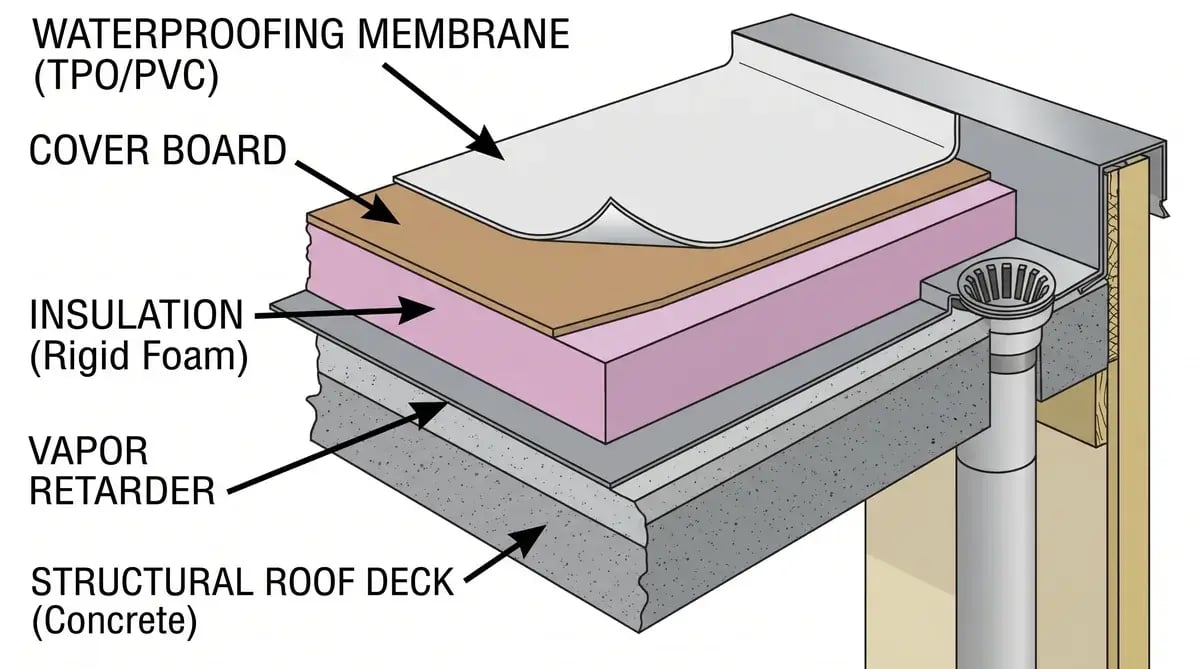
A flat roof is more than just the membrane you see on top. It's a carefully engineered system of multiple layers working together to keep water out, maintain comfortable indoor temperatures, and withstand everything from daily weather to hurricane-force winds. Understanding these layers helps you make better decisions about maintenance, repairs, and replacements.
Most flat roof failures don't happen because of the visible membrane. Instead, problems usually start in the layers beneath—wet insulation, failed vapor barriers, or inadequate drainage systems. When you know what each layer does and how they work together, you can spot potential issues early and avoid costly emergency repairs.
Getting this right takes hands-on expertise across roof types: Linta Roofing installs and repairs asphalt shingle, metal, tile, cedar and flat roofs, and have transparent pricing for every one of them. Linta also handles inspections, maintenance plans, emergency response, insurance claim support and full replacement.
Quick fact: A properly constructed flat roof contains 8 to 12 distinct layers, each serving a specific function in waterproofing, insulation, and structural protection.
Flat roof layers at a glance
Every flat roof system follows the same basic principle: multiple layers stacked from the building structure up to the weather-resistant surface. Think of it like a sandwich where each ingredient has a specific job to do.
The core layers include your structural deck (the foundation), vapor barrier (moisture control), insulation (temperature control), cover board (protection), membrane (waterproofing), and various accessories like flashings and drainage. Some systems add extra layers for specific needs, but these six form the backbone of any quality flat roof.
Each layer depends on the others to work properly. A failed vapor barrier can flood your insulation with moisture, making it useless and eventually damaging the membrane above. Poor drainage can create standing water that degrades even the best membrane over time. This interconnected design means you need to think about the whole system, not just individual parts.
Understanding the essential structural layers
Your flat roof starts with the structural deck, which carries the weight of everything above it plus snow loads, equipment, and maintenance workers. Most commercial buildings use steel decking, concrete, or in some cases, wood sheathing. The deck needs to be strong enough and properly sloped to support the roof system without sagging or creating low spots where water can collect.
Above the deck, you'll find the vapor barrier or vapor retarder. This thin layer prevents moisture from your building's interior from traveling up into the insulation where it can cause problems. In humid climates like the Myrtle Beach area, this layer becomes critical because warm, moist air naturally wants to move toward cooler, drier areas.
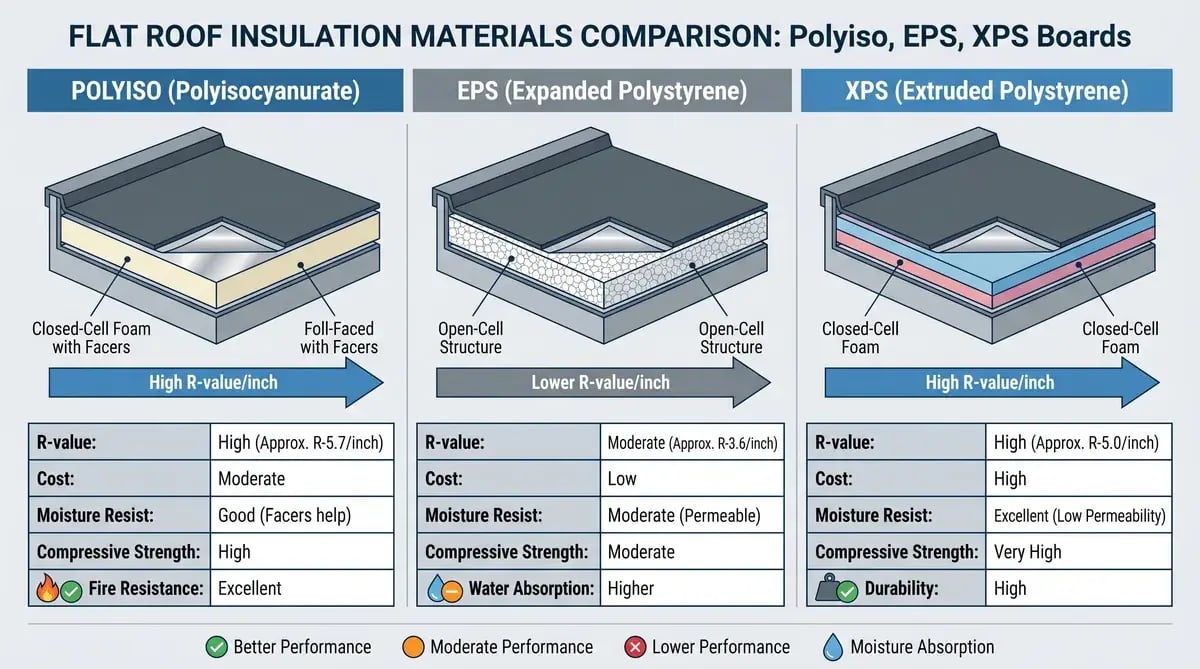
The insulation layer provides thermal resistance to keep your building comfortable and energy-efficient. Most flat roofs use rigid foam boards like polyisocyanurate or polystyrene. The thickness depends on your climate zone and energy code requirements, but you're typically looking at 2 to 6 inches of insulation for good performance in coastal South Carolina.
Important note: Wet insulation loses most of its thermal value and can lead to mold growth, making the vapor barrier and proper installation crucial for long-term performance.
Waterproofing and protection components
The cover board sits between your insulation and the waterproof membrane, providing a smooth, stable surface for membrane installation. It also protects the softer insulation from damage during installation and future maintenance work. Common materials include high-density fiberboard, gypsum, or thin plywood.
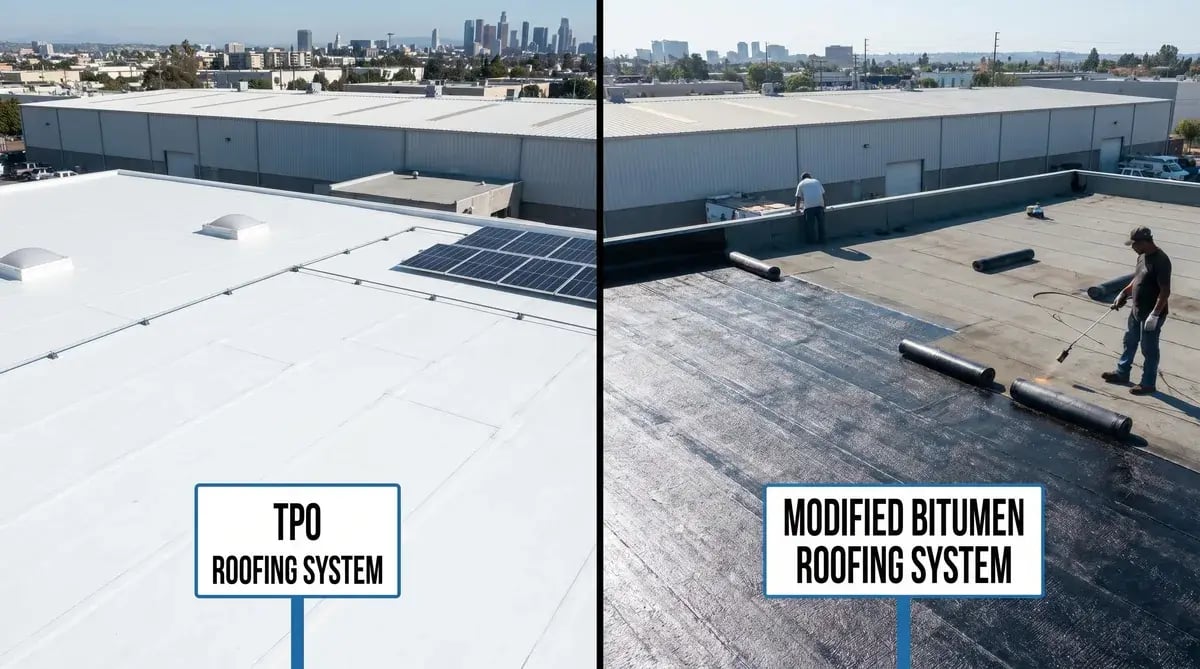
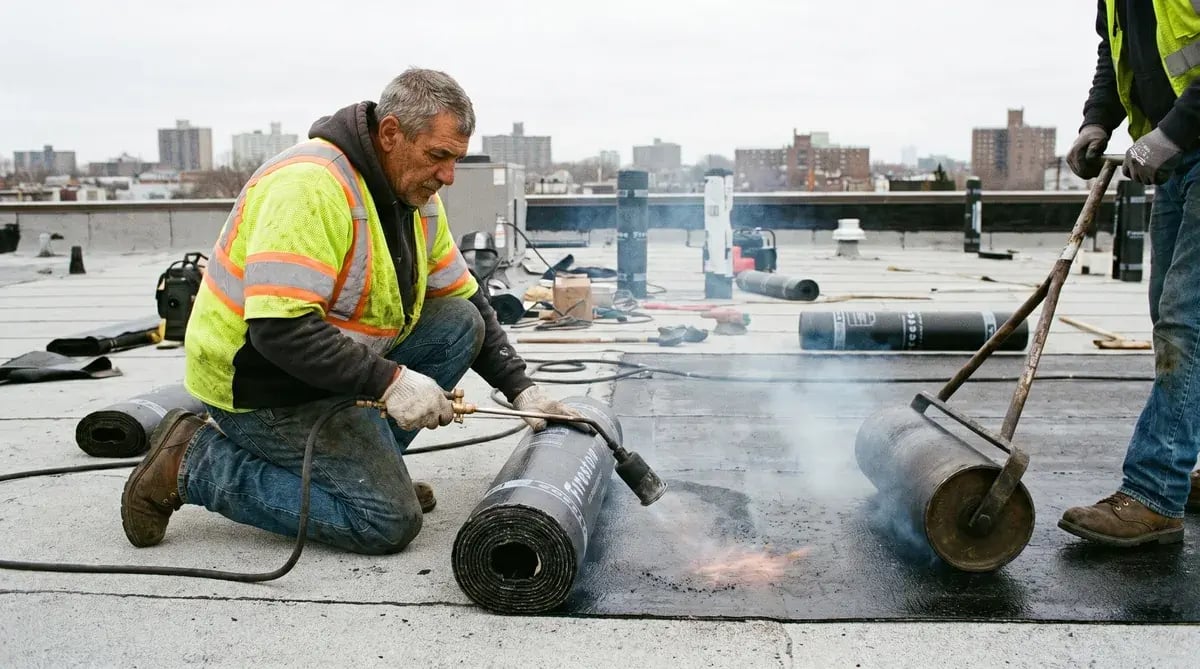
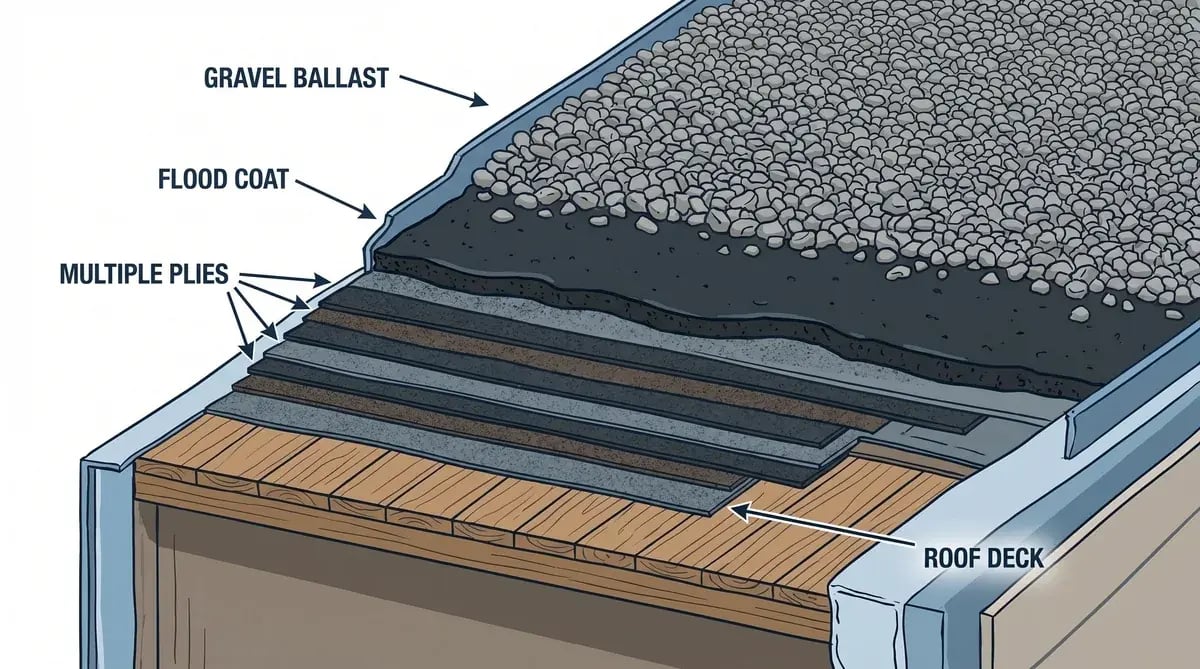
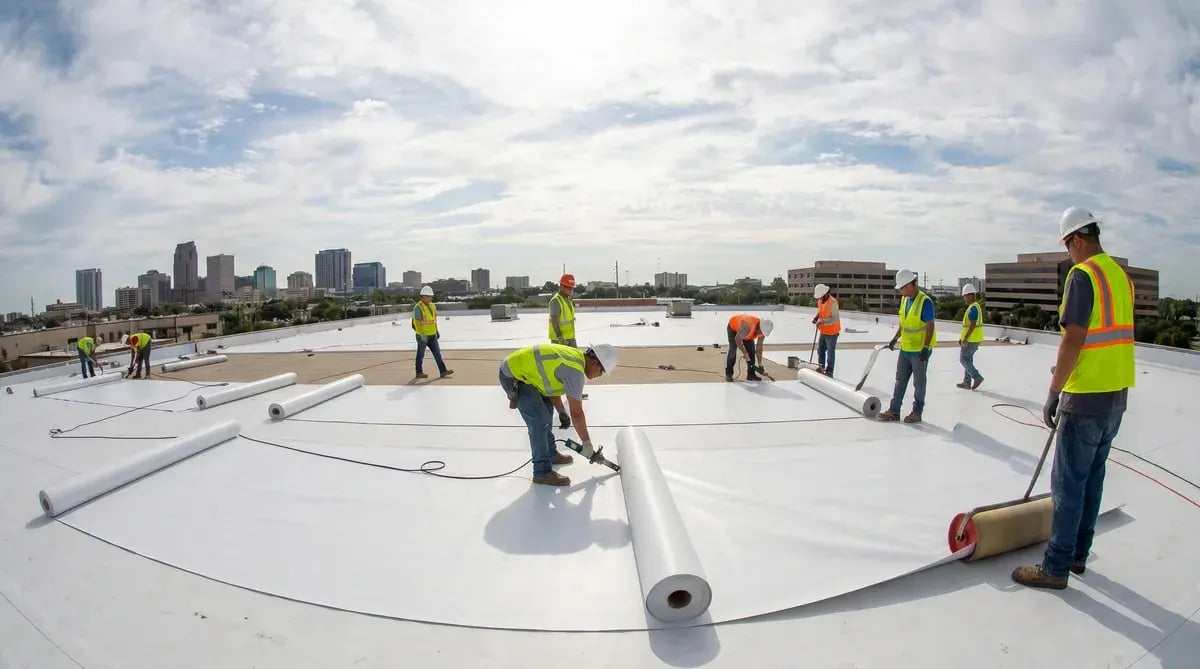
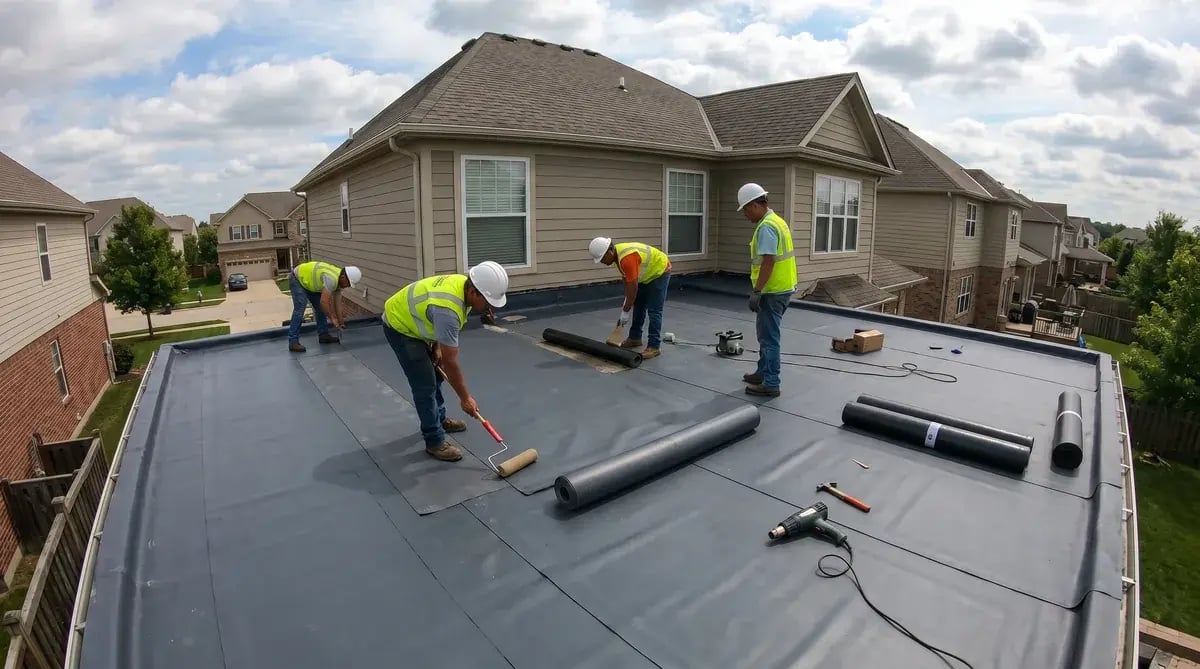
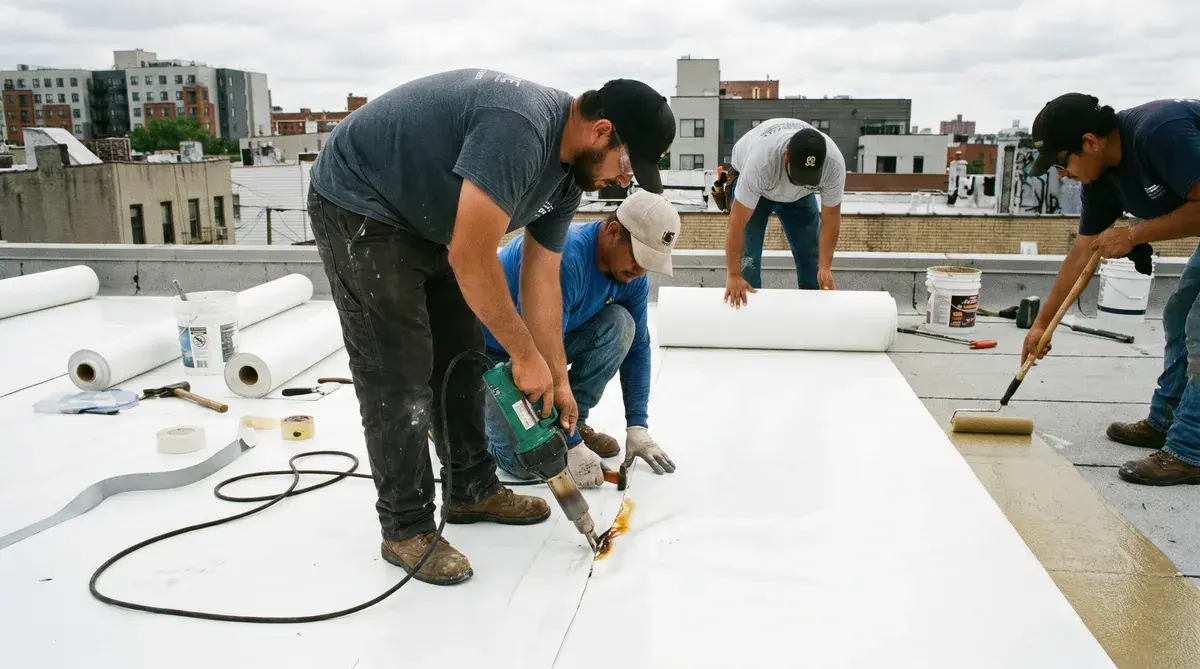
Your membrane is the primary waterproofing layer that keeps rain, snow, and moisture out of your building. The most common types are TPO (white, heat-welded seams), EPDM (black rubber, glued seams), PVC (white, heat-welded, chemical resistant), and built-up roofing systems with multiple layers of asphalt and felt.
Flashings seal the transitions where your roof meets walls, equipment, pipes, or other penetrations. These areas see the most movement and stress, which is why they're responsible for about 80% of flat roof leaks. Quality flashings use the same material as your field membrane and are properly integrated into the waterproofing system.
| Membrane Type | Typical Lifespan | Seam Method | Best For |
|---|---|---|---|
| TPO | 20-25 years | Heat-welded | Energy efficiency, moderate cost |
| EPDM | 25-30 years | Adhesive/tape | Cold climates, proven performance |
| PVC | 20-30 years | Heat-welded | Chemical exposure, restaurants |
| BUR | 15-25 years | Hot-mopped | Heavy traffic, traditional systems |
Drainage and finishing elements
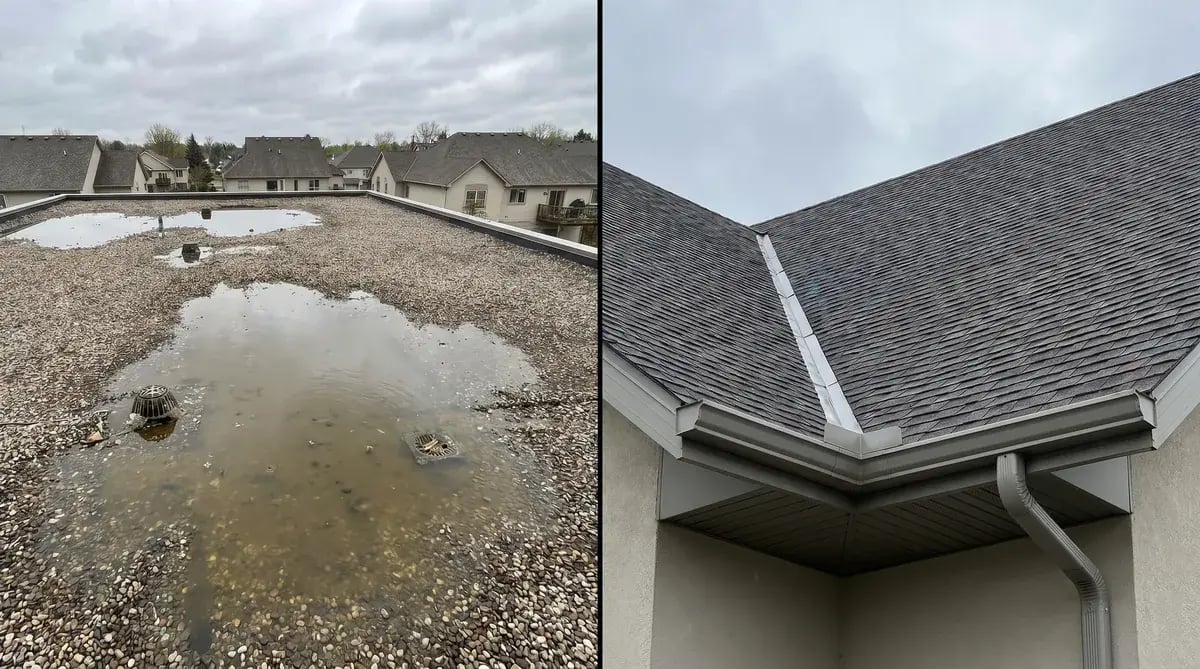
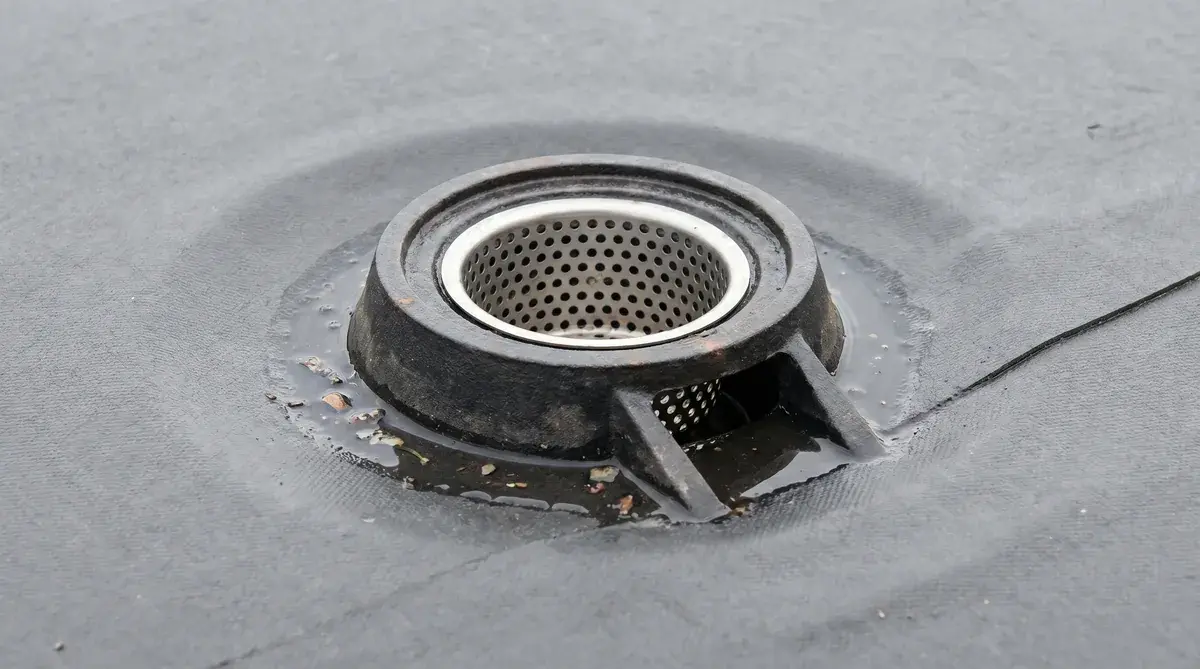
Water removal is critical for flat roof longevity. Your drainage system includes interior drains, scuppers (openings in parapet walls), gutters, and overflow provisions. The roof surface must slope toward these drains at a minimum of 1/4 inch per foot to prevent standing water, which can degrade any membrane over time.
Edge metal terminates the membrane at roof perimeters and helps direct water into gutters or off the building. In the Myrtle Beach coastal area, aluminum or stainless steel edge metals resist corrosion much better than galvanized steel, which can fail within a few years in salt air environments.
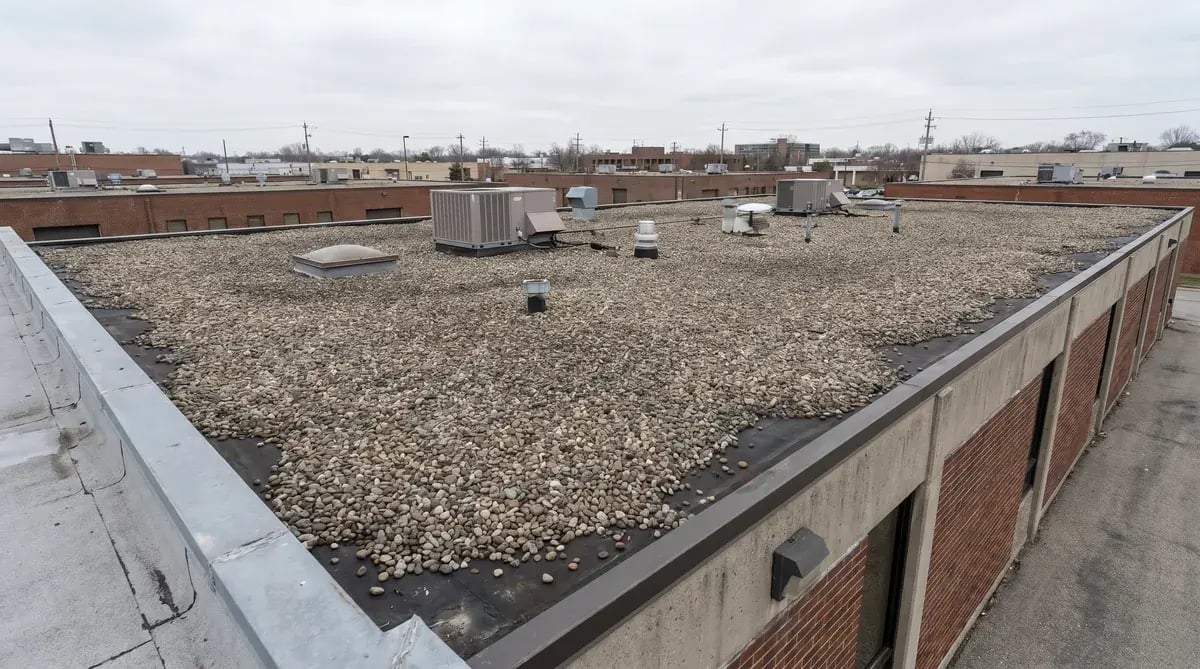
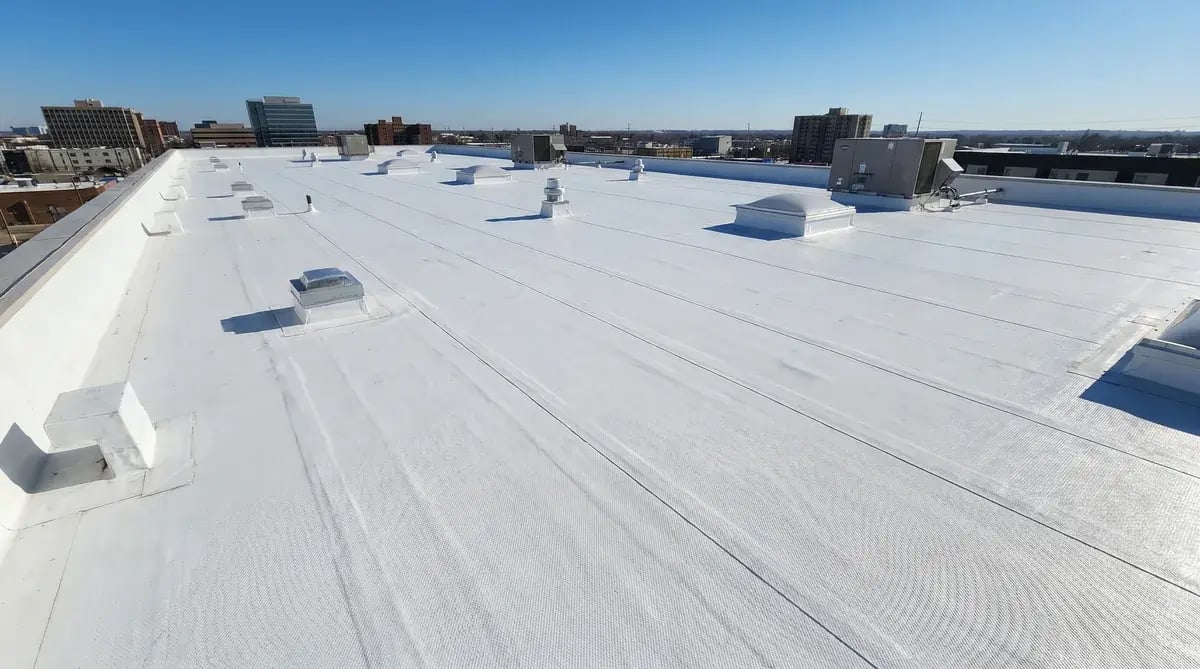
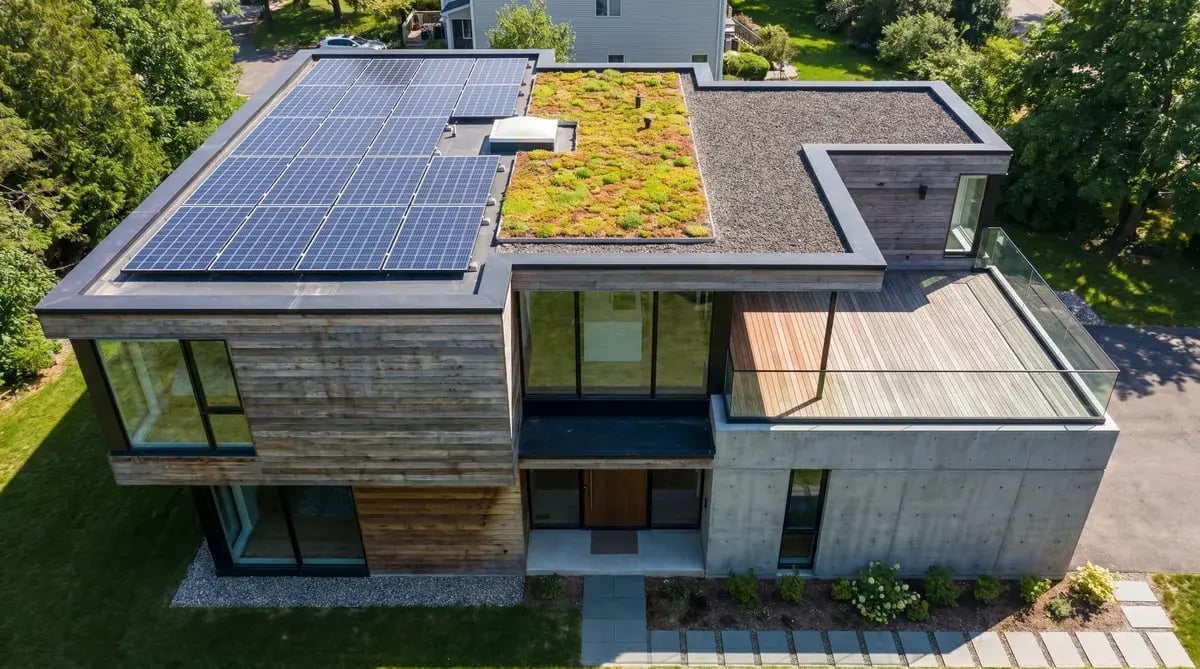
Some roofs include protective surfacing like reflective coatings, gravel ballast, or pavers. These protect the membrane from UV radiation, foot traffic, and weather extremes. White coatings are particularly popular because they reflect heat and can significantly reduce cooling costs in hot climates like ours along the Grand Strand.
Coastal consideration: In hurricane-prone areas like Horry and Georgetown counties, avoid loose gravel ballast systems as the stones can become dangerous projectiles during high winds.
The final components include penetration seals around pipes, vents, and equipment connections. These use specialized boots, flashings, or pitch pans to maintain waterproof integrity around anything that passes through the roof surface. Regular inspection of these seals prevents small problems from becoming major leaks.
Understanding your flat roof as a complete system helps you make better decisions about maintenance, repairs, and eventual replacement. Each layer has a specific job to do, and they all need to work together to protect your building effectively. When you're evaluating your roof or talking with contractors, remember that the cheapest option for one layer might create expensive problems elsewhere in the system.
Regular inspections twice yearly, plus after major storms, help you catch issues early when they're still manageable. Look for obvious problems like standing water, visible membrane damage, or signs of leaks inside your building. For detailed assessments of insulation condition or moisture content, you'll want to work with experienced roofing professionals who can properly evaluate the entire system. Linta Roofing is an IKO ROOFPRO Craftsman Premier contractor, which lets it offer IKO Extended Iron Clad Protection warranties on the materials it installs.
Frequently Asked Questions
How many layers does a flat roof have?
What is the most important layer of a flat roof?
What causes flat roof layers to fail?
Can you add new layers to an existing flat roof?
Topics: